About Stereo Binocular Microscope
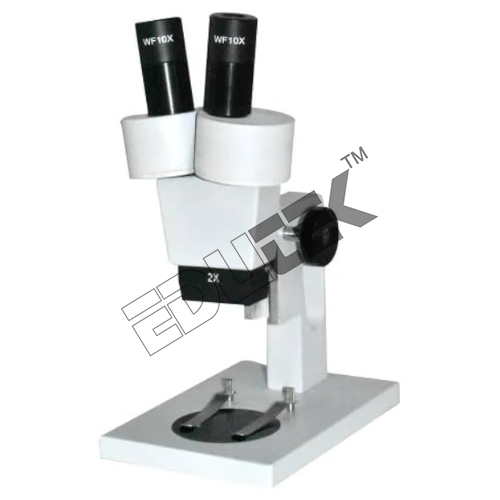
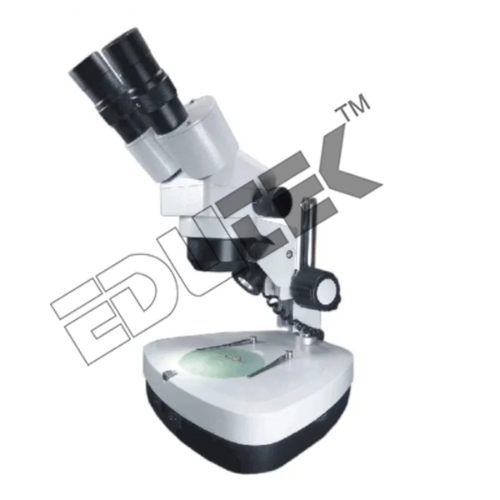
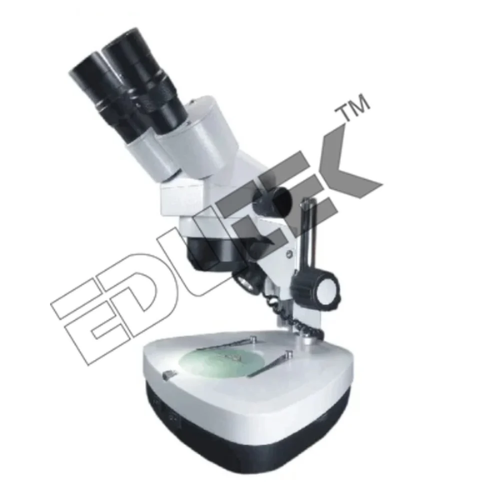
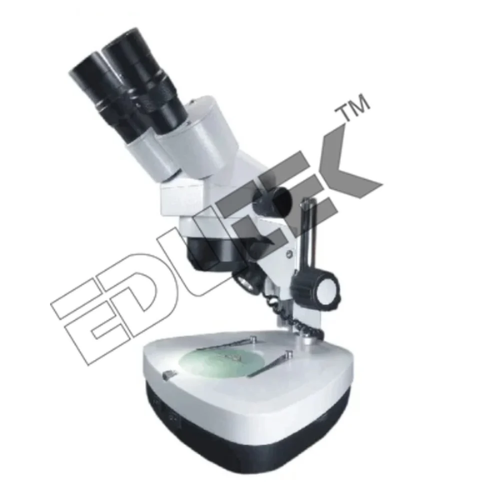
Stereo Binocular Microscope ETMS-136
Stereo Binocular Microscope is a versatile microscope to observe objects upto 50mm with trans-illumination base having 100mm dia-interchangeable with milky or transparent round glass plate. Binocular Head with Inter-pupillary adjustment from 55° to 75°.
Advanced Stereo Imaging TechnologyEmploying stereo microscopy, this instrument presents users with sharp, three-dimensional, and laterally correct images. The combination of paired achromatic objectives and wide-field eyepieces enables versatile viewing, essential for both detailed scientific inspection and routine laboratory work. This technology is particularly valued in quality control, educational demonstrations, and assembly inspection.
Sturdy Build with User-Friendly FeaturesConstructed with a robust die-cast metal body and anti-rust finish, this microscope promises durability and longevity. The substantial base ensures stability and minimizes vibrations, making it ideal for environments where precision is crucial. The 360 rotatable head and inclined binocular tubes offer ergonomic comfort over long sessions.
Versatile Illumination and Power OptionsOutfitted with incident and transmitted LED lighting, this microscope adapts to various specimen types and lighting requirements. The built-in rechargeable battery and compatibility with both 220V and 110V AC allow seamless operation in different settings, from class laboratories to field stations or assembly lines.
FAQs of Stereo Binocular Microscope:
Q: How does the die-cast metal construction benefit users of the stereo binocular microscope?
A: The die-cast sturdy metal body with an anti-rust finish enhances durability and protects the microscope from wear, ensuring stable performance even with frequent handling and in diverse laboratory or industrial settings.
Q: What is the purpose of the 360 rotatable head on this microscope?
A: The 360 rotatable binocular head allows multiple users to share the instrument easily and observe specimens from different angles, improving collaborative work and teaching demonstrations.
Q: When should I use incident versus transmitted LED illumination?
A: Incident LED illumination is best used for opaque specimens, while transmitted LED lighting is suitable for transparent or thin samples. Switching between these modes allows optimal lighting for various inspection tasks.
Q: Where is this microscope commonly used?
A: This microscope is versatile and is commonly used in educational institutions, biology and entomology labs, mineralogy studies, electronic assembly quality control, and similar fields requiring detailed, three-dimensional observation.
Q: What is the process for adjusting the focus and interpupillary distance?
A: Focus is achieved through the precise rack and pinion system with a 45 mm coarse adjustment range. The interpupillary distance can be adjusted between 54 mm and 76 mm, accommodating individual user preferences and comfort.
Q: How does stereo microscopy enhance specimen analysis?
A: Stereo microscopy provides a true three-dimensional and laterally correct image, allowing users to perceive depth and detail not possible with standard compound microscopes. This is particularly beneficial for assembly work, inspection, and biological studies.
Q: What accessories and spare parts are included for convenience and upkeep?
A: The microscope comes with a dust cover, instruction manual, cleaning cloth, spare eyepiece pair, spare glass stage plate, spare bulb, and both black-and-white contrast and frosted glass stage plates for flexible use and easy maintenance.