About Split System Air Conditioner
SPLIT SYSTEM AIR CONDITIONER
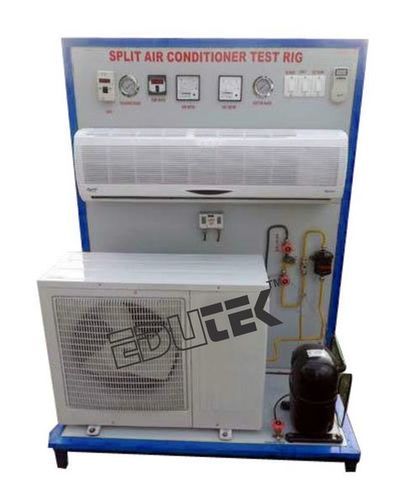
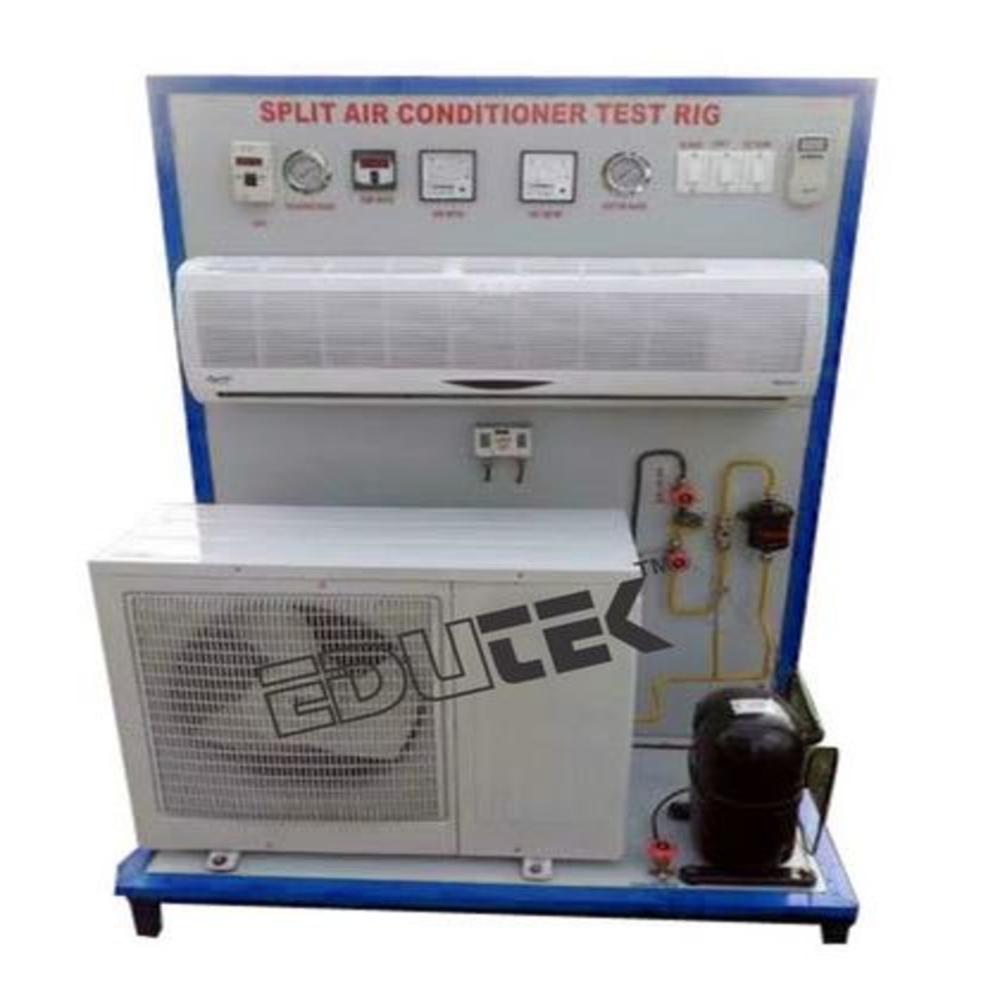
Split system air conditioners are used to cool, dehumidify and also heat rooms. The consist of an inner and outer unit.
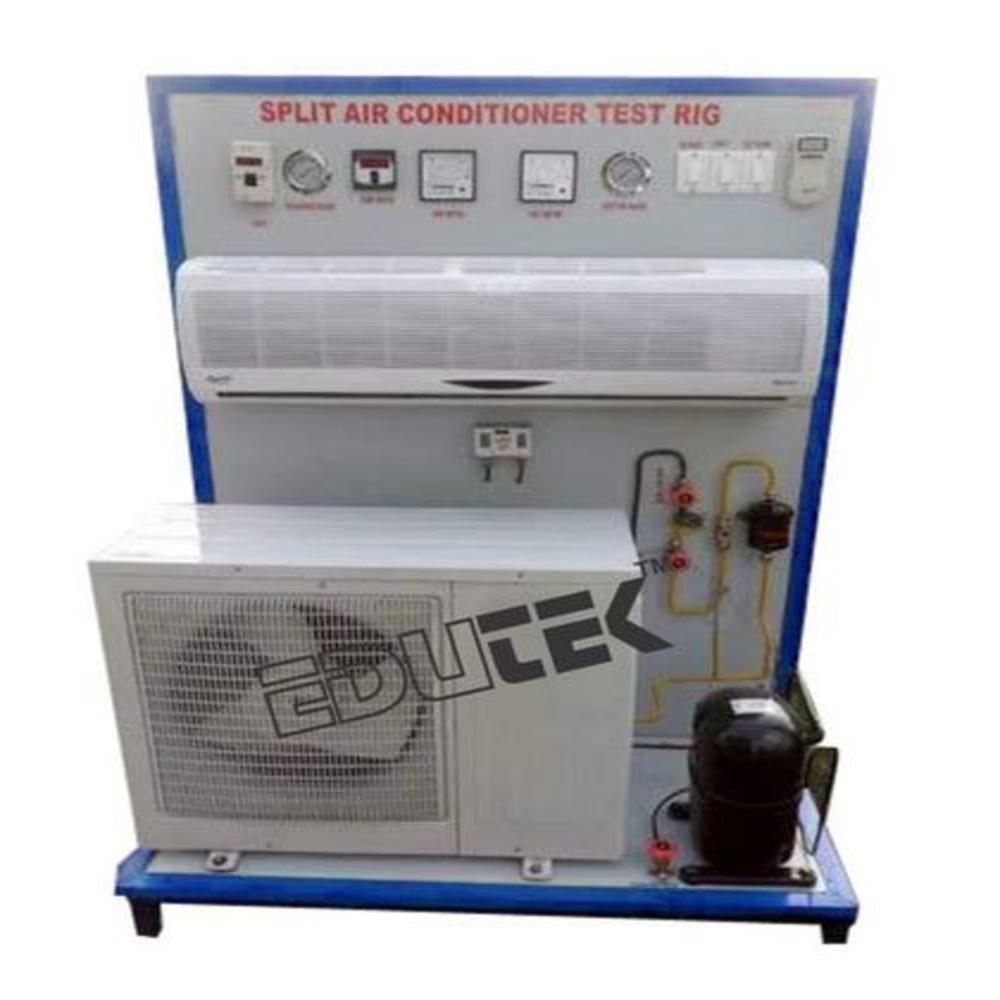
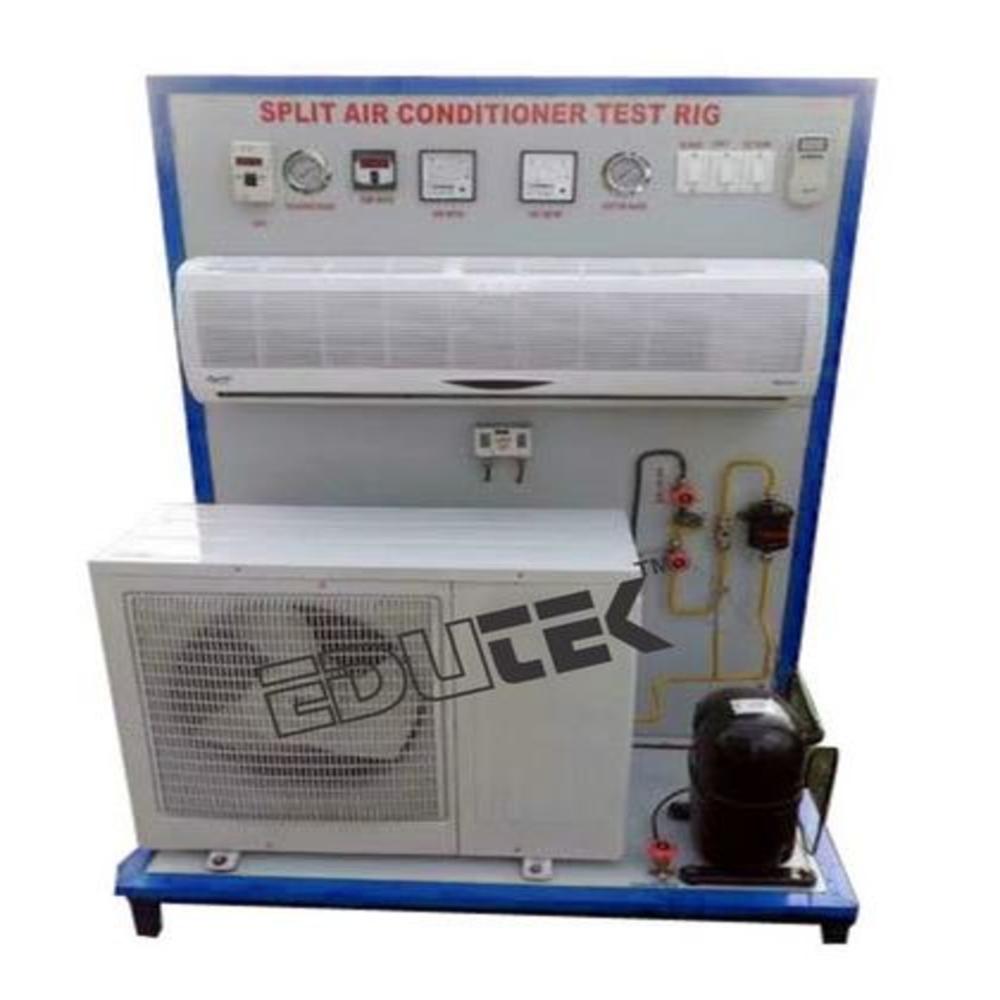
In the inner unit there is a heat exchanger with fan working as an evaporator in the refrigeration circuit during cooling operation. During heating operation it works as a condenser. The outer unit contains a compressor, another heat exchanger, expansion element (e.g. capillary tube) and an element enabling the change-over from cooling to heating operation. In cooling operation the evaporating refrigerant in the heat exchanger of the inner unit withdraws heat from the room air. In the outer unit the heat in the heat exchanger is discharged to the ambient air by condensing the refrigerant. During heating operation the heat transport is reversed. includes a dividing wall onto whose front and rear panel a modern split system air conditioner has been mounted. To better demonstrate its operation, an additional two pressure displays are available for the refrigerant. The operating mode, fan stage of the inner unit (fan operation) and desired room temperature are selected via a remote control. During automatic operation the actual room temperature is recorded and an operating mode automatically selected to achieve the specified room temperature.
The unit shall perform the following experiments and investigations:
Learning Objectives / Experiments
- Design and operation of a split system air
- Conditioner
- 6 operating modes
- Cooling
- Dehumidifying (slight cooling)
- Heating
- Ventilation (only the fan of the inner unit)
- Automatic (operating mode suitable for the
- Room temperature)
- Test of cooling function
- 3 additional functions
- "sleep" (switch-off after several hours)
- "swing" (air outlet lamella position)
- Timer for switching on and off
- Remote control functions
Specification
- Trainer from the practical series for the training of mechatronics engineers for refrigeration
- Design and operation of a commercial split system air conditioner
- Illustration of the split principle using a dividing wall
- 6 Different operating modes: heating, cooling, dehumidifying, ventilation, automatic, test
- 3 Additional functions configurable via remote control: sleep, swing, timer
- 2 Refrigerant manometers indicate the low and high pressure of the compressor
- Refrigerant R410A, CFC-free
- Battery operated remote control
Technical Data
- Split system air conditioner
- Power consumption: approx. 1,7kW
- Cooling capacity: approx. 3,3kW
- Heating capacity: approx. 3,4kW
- Max. volumetric air flow rate (inner unit):
- Approx. 420m/h
- Dehumidification (inner unit): approx. 0,8L/h
- Timer: 24h
Measuring range
- Pressure (low and high pressure): -1...40bar
Dimensions and Weight
- LxWxH: 1000x1000x1500mm
- Weight: approx. 80kg
This Split System Air Conditioner is engineered to meet the stringent requirements of laboratory environments. With highly efficient cooling capability and 100% accuracy, it maintains stable conditions for sensitive experiments and equipment. Robust design and precise controls ensure your laboratory operates at optimal temperatures around the clock.
Efficient, Reliable, and AdaptableCombining compact dimensions (1000x1000x1500 mm) with a strong 80 kg frame, this system is adaptable for various laboratory layouts without compromising efficiency. Built to the highest manufacturing standards in India, it guarantees reliability and longevity while being easy to install and maintain.
FAQs of Split System Air Conditioner:
Q: How does the Split System Air Conditioner ensure 100% accuracy for laboratory environments?
A: This air conditioner is specifically calibrated for laboratory use, utilizing advanced controls and sensors to maintain precise temperature and humidity, thereby ensuring 100% accuracy crucial for sensitive research and experiments.
Q: What benefits does this highly efficient Split System Air Conditioner provide for laboratory applications?
A: It delivers stable, energy-efficient cooling, vital for protecting lab equipment and maintaining accurate experimental conditions. High efficiency also helps reduce operational costs, contributing to a sustainable laboratory environment.
Q: When should this system be used in laboratory settings?
A: It is ideal for use whenever consistent climate control is necessary, such as when working with temperature-sensitive samples or equipment that requires a stable environment to function optimally.
Q: Where can this Split System Air Conditioner be installed and who can benefit from it?
A: This unit is designed for laboratory settings and can be installed in research institutions, hospitals, healthcare centers, and any facility with strict climate control needs. It benefits scientists, technicians, and researchers requiring reliable environmental stability.
Q: What is the installation and usage process for this air conditioner?
A: Professional installation is recommended for optimal performance. Once installed, the system operates with user-friendly controls, providing precise temperature regulation with minimal maintenance requirements.
Q: How long does the warranty last and what does it cover?
A: The product includes a comprehensive one-year warranty that covers manufacturing defects, ensuring peace of mind and dependable operation throughout the warranty period.




 Send Inquiry
 Send Inquiry

