About Francis Turbine
FRANCIS TURBINE
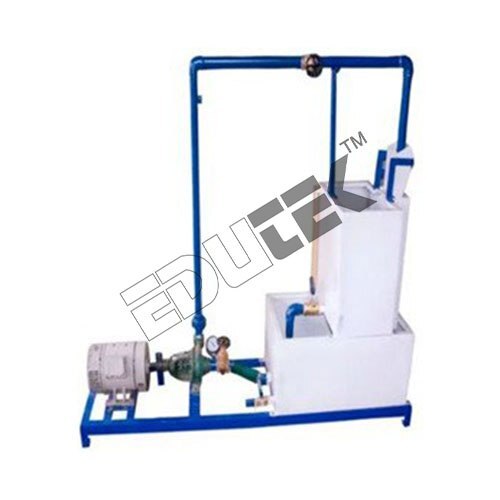
- Water turbines are turbomachines utilising water power. The Francis turbine is a type of reaction turbine which converts the pressure energy of the water into kinetic energy in the distributor and in the rotor. The water is fed in the distributor by means of a spiral housing. The flowing water is accelerated in the distributor by the adjustable guide vanes and directed onto the blades. The redirection and further acceleration of the water in the rotor generates an impulse which is transmitted to the rotor.
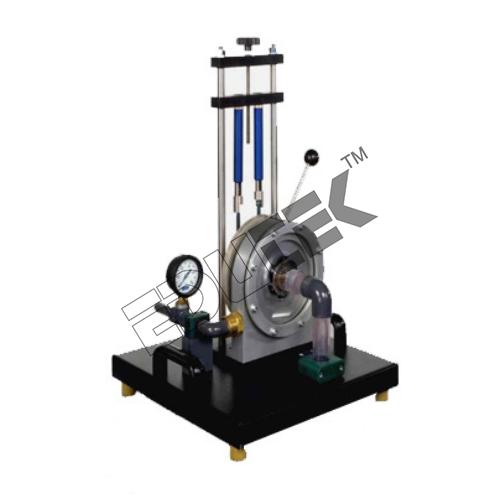
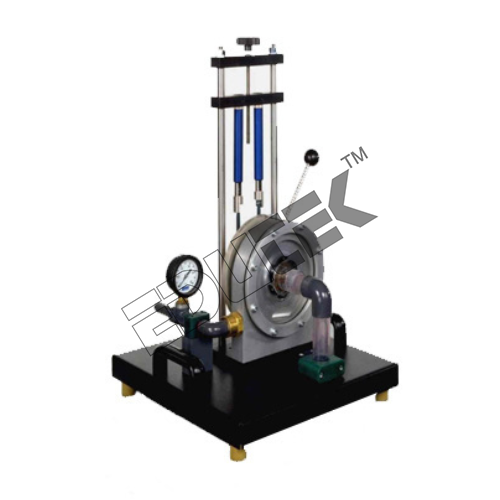
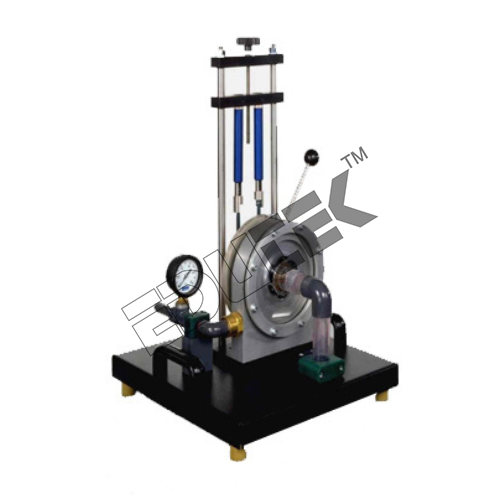
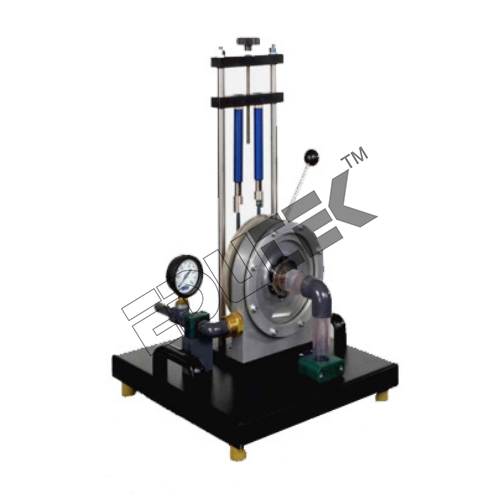
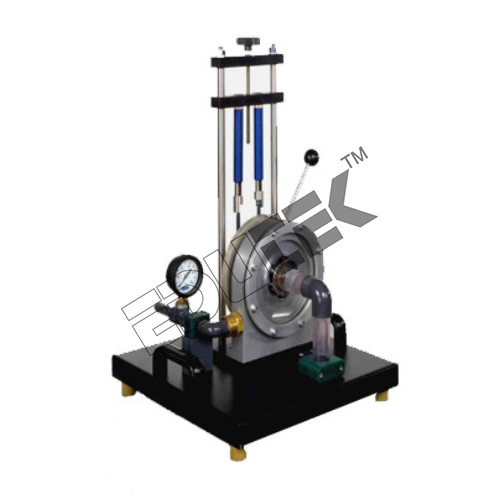
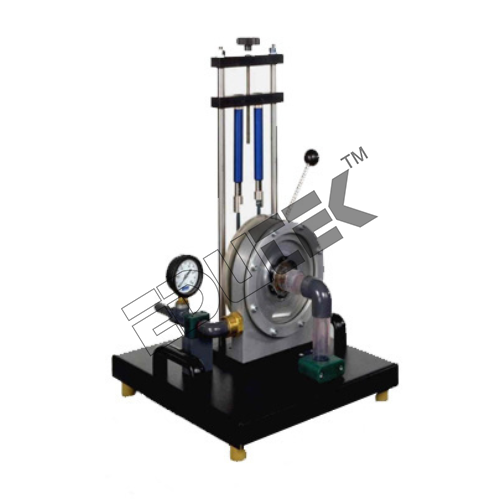
- The experimental unit consists of the rotor, the distributor with adjustable guide vanes, a band brake for loading the turbine and a housing with a transparent front panel. The transparent cover enables to observe the water flow, the rotor and the guide vanes during operation. The angle of attack and thus the power of the rotor are modified by adjusting the guide vanes.
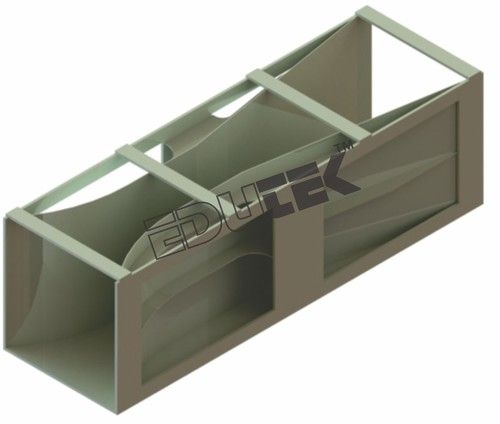
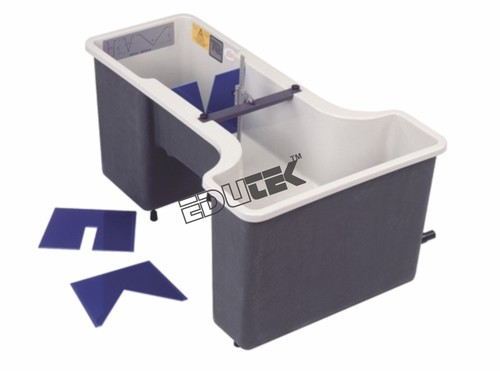
- The structure easily installed in the basic hydraulic bench,
- The unit composed of a small size Francis turbine,
- Made of stainless steel,
- Transparent plexiglass cover for flow visualization,
- Develop a power of about 3 W,
- A bourdon type manometer (range 01 bar) measure the inlet pressure,
- A portable digital tachometer allow the speed measurement,
- Two dynamometers allow the torque measurement,
Following characteristics:
- Spring type dynamometer,
- Range 010 N with 0.1 N division.
Boasting up to 94% efficiency and constructed with high-strength stainless steel, the Francis-2024 turbine delivers long-term reliability even in demanding hydropower settings. Heavy-duty ball and roller bearings ensure smooth operation, while IP54 protection and water-cooled design maintain optimal conditions under variable loads.
Advanced Blade Angle AdjustmentThis turbine offers both manual and automatic blade angle adjustments, allowing engineers to optimize performance for varying flow conditions. Such flexibility enhances accuracy and allows the equipment to meet the needs of laboratory testing and robust industrial applications alike.
Versatility in Installation and OperationDesigned for both horizontal and vertical installation, and available with customizable dimensions, the Francis-2024 adapts seamlessly to diverse site requirements. With analog display, a measurement range up to 30 m head, and support for voltage specifications of 380V/415V and frequency of 50/60 Hz, this turbine is suitable for a wide range of hydropower environments.
FAQs of Francis Turbine:
Q: How is the runner material beneficial for the Francis Turbines performance?
A: The runner is made from high-strength stainless steel, which offers superior resistance to corrosion, improves longevity, and ensures efficiency is maintained even during heavy use in water-rich environments typically found in hydropower plants.
Q: What applications are best suited for this Francis Turbine model?
A: This turbine is tailor-made for hydropower plants and engineering laboratories due to its high efficiency, customizable installation, and robust build. It can handle significant power generation tasks as well as critical testing roles in educational and research environments.
Q: When should blade angle adjustment be carried out?
A: Blade angle adjustment, whether manual or automatic, should be performed during flow or load changes to maximize efficiency and adapt to variable operating conditions. This ensures that the turbine operates at optimum settings for different discharge rates or head levels.
Q: Where can the Francis-2024 turbine be installed?
A: The Francis-2024 can be installed in a variety of hydropower plant sites or lab settings, thanks to its flexible orientation options (horizontal or vertical) and customizable dimensions. Its adaptable design supports straightforward integration into both new and retrofitted facilities.
Q: What is the typical process for maintaining this turbine?
A: Routine maintenance involves checking the water-cooled system, inspecting heavy-duty bearings, and ensuring the protection components like the casing and seals are intact. Regular monitoring helps maintain accuracy, uphold efficiency, and extend the operational life of the equipment.
Q: How does the water-cooled system enhance turbine performance?
A: The integrated water-cooling system prevents overheating during extended operation, maintains noise levels below 80 dB, and supports consistent performance by dissipating heat effectivelycritical for both laboratory and large-scale hydropower applications.
Q: What are the major benefits of choosing the Francis-2024 turbine for power generation?
A: Key advantages include remarkably high efficiency (up to 94%), robust construction with accurate analog measurement, the capacity to generate up to 250 MW, flexible installation, and comprehensive protection features, making it a dependable choice for demanding hydropower generation needs.




 Send Inquiry
 Send Inquiry

