About Optional Accessories for Microscopes
Optional Accessories for Microscopes
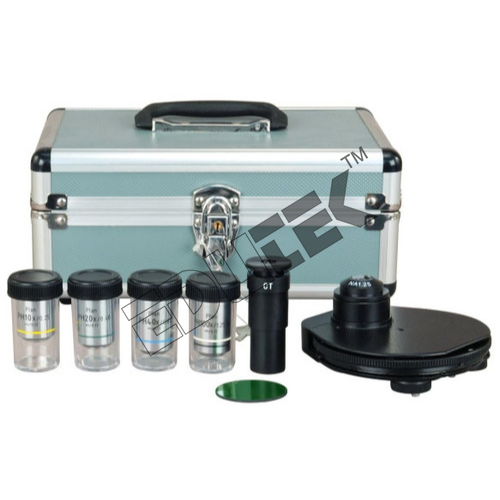
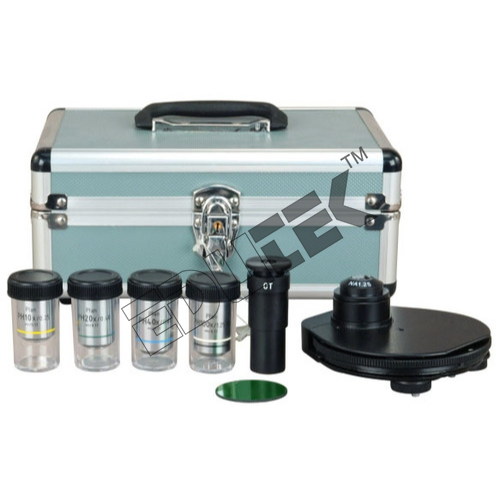
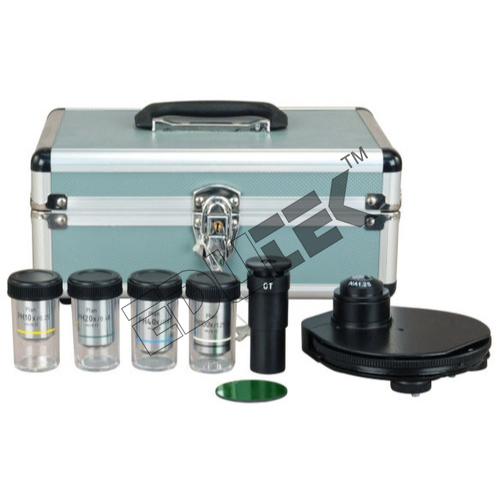
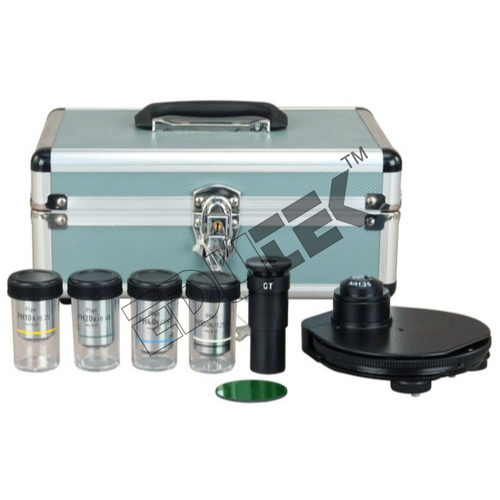
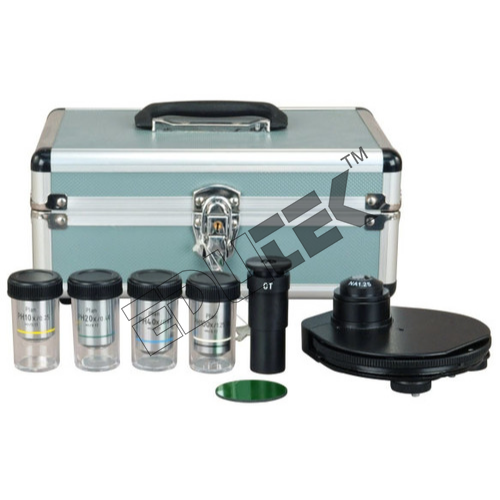
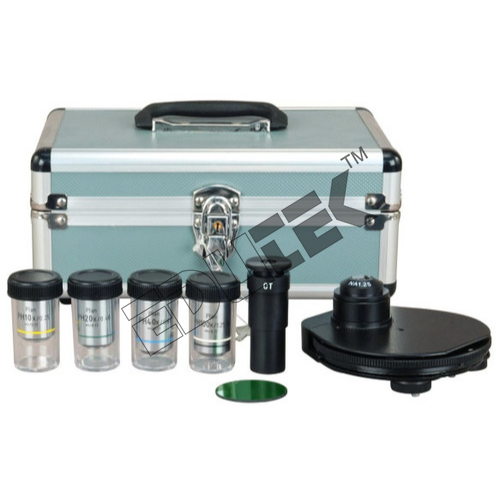
- Phase Contrast Attachment:
- Micrometer eye piece, Stage and Graph:
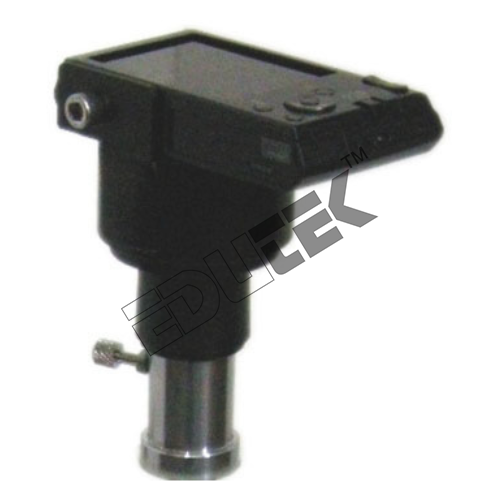
- Photomicrography:
- Double demonstration eye-piece:
- Camera lucida (prism type):
- Camera lucida (mirror type):
- Microscope lamp (substage):
- Pointer Eyepiece:
For observation of inner structures of living and unstained micro-organisms and tissue cells.
for measuring microscopic structures & drawings.
SLR 35 mm camera, cable release cord, microscopic adapter or digital camera / CCD. for dual observation for making drawings of a slide material for making drawings
- Eye-piece 10x coated wide field. Pointer eye-piece 10x, 15x, 5x
Whether measuring microscopic structures or capturing high-resolution images, our accessories such as stage micrometers, adapters, and focus enhancers ensure detailed results. Each component is engineered to integrate smoothly with standard and advanced microscopes, optimizing both workflow and research outcomes.
Enhanced Protection and PortabilitySafeguard your equipment with hard-shell carrying cases and durable PVC dust covers. These protective solutions ensure your investment remains secure during transport and storage, maintaining your microscopes calibration and longevity over extended use.
Versatile Imaging and Analysis ToolsConnect with various digital, SLR, or video cameras using specialized adapters and amplify analytical capabilities with supported image analysis software. Achieve superior imaging with supported resolutions up to 12MP and real-time frame rates up to 60 fps, suited for both stills and video documentation.
FAQs of Optional Accessories for Microscopes:
Q: How do optional filter holders benefit phase contrast and fluorescence microscopy?
A: Accessory filter holders enable quick insertion and exchange of color and neutral density filters, allowing for improved image contrast and selective wavelength isolation in phase contrast and fluorescence applications. This supports more precise sample observation and imaging.
Q: What is the main purpose of a polarizer/analyzer set in a microscope?
A: Insertable polarizer and analyzer sets are essential for performing polarizing microscopy, which reveals birefringent structures and directional properties in samples such as minerals and polymers. They are invaluable for materials science and geology applications.
Q: When should I use an immersion oil dispenser with my microscope?
A: An immersion oil dispenser is used when working with oil immersion objective lenses, typically at magnifications from 60x to 100x. The oil increases the numerical aperture, improving resolution and image clarity for extremely fine specimen details.
Q: Where can I attach a camera to my microscope setup?
A: Cameras are attached using specialized adapters compatible with SLR, digital, and video cameras. These adapters fit monocular, binocular, or trinocular microscope drawtubes and support CCD or CMOS sensors, providing flexibility for documentation and analysis.
Q: How does a mechanical stage attachment improve microscope usage?
A: Adding an XY mechanical stage allows precise, smooth slide manipulation. This upgrade is especially beneficial for systematic scanning, digital imaging, and micro-measurements, improving accuracy and user ergonomics during extended microscopy sessions.
Q: What is the process for calibrating measurement with a stage micrometer?
A: Place the stage micrometer on the microscope stage and bring it into focus. Align the micrometer scale with your eyepiece reticle, then calculate the calibration factor. This enables accurate measurement of sample dimensions during routine or quantitative microscopy.
Q: What are the benefits of using image analysis software with digital modules?
A: Optional image analysis software enhances digital microscopy by allowing users to capture, process, measure, and share microscope images in multiple formats (JPEG, BMP, TIFF). It streamlines workflows, improves accuracy in data analysis, and supports efficient documentation.




 Send Inquiry
 Send Inquiry

