About TUNED OSCILLATOR
Specification:
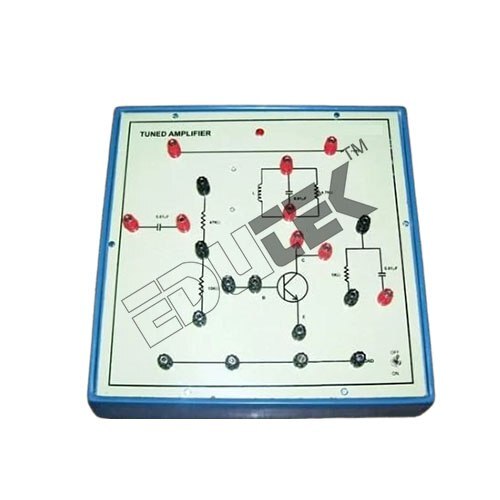
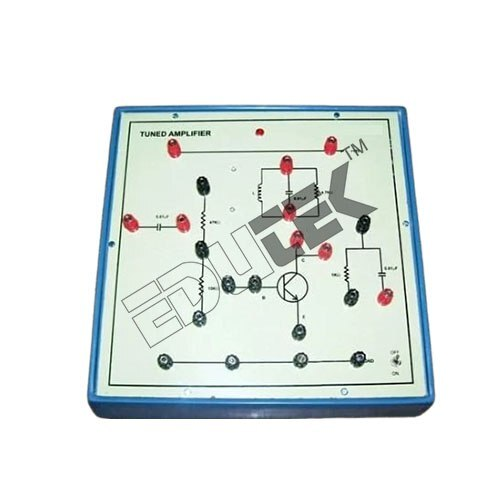
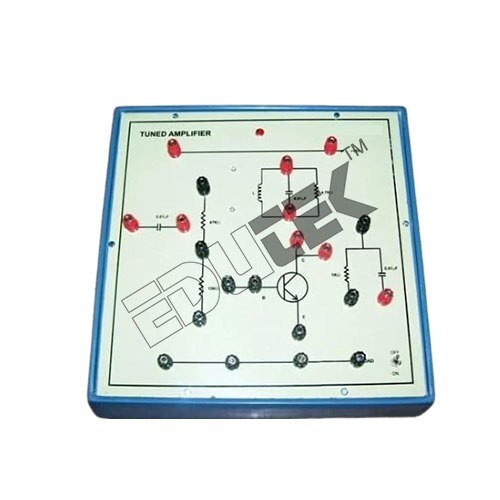
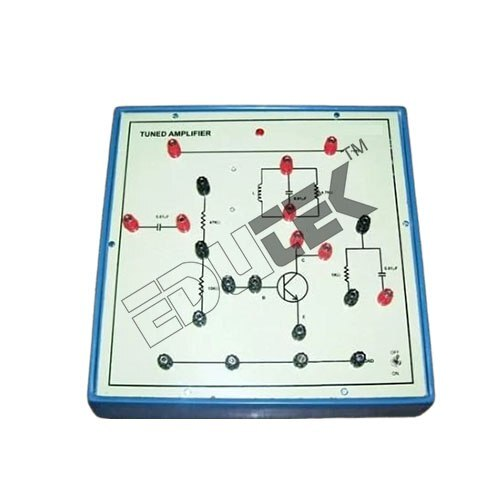
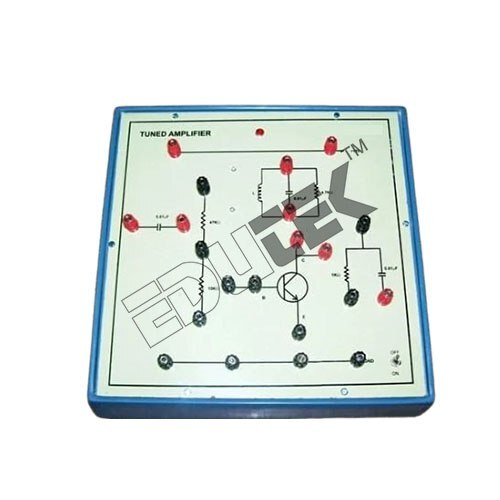
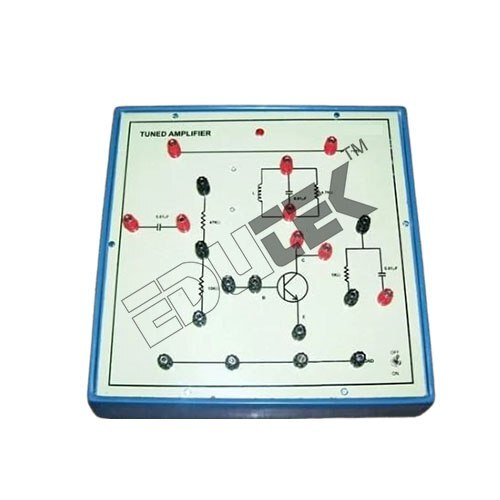
TUNED OSCILLATOR
To calculate the resonant frequency (at which there is maximum amplitude at the output).
Horizontal oscillations (to deflection yoke) results to a given input signal by parallel combination of R & C (or) L & C at the collector.
The resonant frequency is calculated by theoretical formula and verified by this experiment.
To plot the curve voltage gain versus frequency.
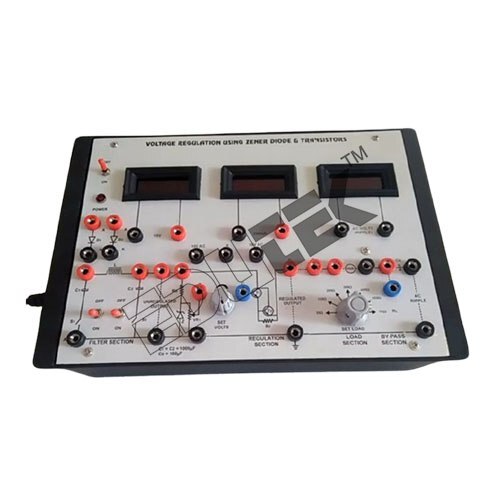
Robust Construction and DesignEncased in a green, powder-coated metal enclosure, the oscillator ensures both physical durability and optimal heat dissipation through natural air cooling. With standard dimensions (31 cm x 22 cm x 15 cm) and a weight of 2.5 kg, it is portable yet stable for desktop use, making it suitable for diverse engineering lab environments.
Precision Manual ControlThe manual frequency adjustment knob allows users to fine-tune the oscillation frequency with high resolution and stability. The analog interface provides instant response, facilitating precise control for experimentation or circuit analysis.
Versatile Signal OutputDepending on the model, the oscillator can output sine, square, or triangle waves, supporting a variety of electronic applications. The single-channel output is ideal for educational demonstrations, troubleshooting, and research projects in electronics engineering.
FAQ's of TUNED OSCILLATOR:
Q: How does the Tuned Oscillator maintain high frequency stability?
A: The oscillator achieves high stability through its tuned LC (inductor-capacitor) circuit configuration, combined with quality components such as transistors, capacitors, resistors, and a robust PCB design. The powder-coated metal case also shields against external interferences, ensuring consistent performance.
Q: What is the process for adjusting the frequency on this oscillator?
A: You can manually adjust the frequency using the dedicated frequency adjustment knob on the front panel. By turning the knob, you alter the tuned LC circuit characteristics, which directly changes the output frequency with immediate analog response.
Q: When should this oscillator be used within engineering electronics applications?
A: This instrument is ideal for laboratory experiments, circuit analysis, research, and educational demonstrations where precise and stable frequency generation is essential. It can be used during design verification, troubleshooting, and teaching sessions.
Q: Where is the Tuned Oscillator best mounted or placed?
A: Designed for desktop use, the oscillator is best positioned on a stable, flat surface within lab or workbench environments to facilitate easy access to controls and outputs while ensuring proper cooling and safety.
Q: What types of signal outputs are available, and how are they selected?
A: The available output waveforms include sine, square, and triangle waves, which are model-dependent. Refer to your specific model specifications to determine supported output types. Output is accessed via the analog output interface for signal integration into test circuits.
Q: What are the main benefits of using this oscillator in an engineering lab?
A: The oscillator provides high-frequency stability, low noise operation, manual precision control, portability, and robust construction. These characteristics enable reliable experimental setups, efficient troubleshooting, and effective instruction in engineering electronics.





 Send Inquiry
 Send Inquiry

