About Synchronous Machine Trainer
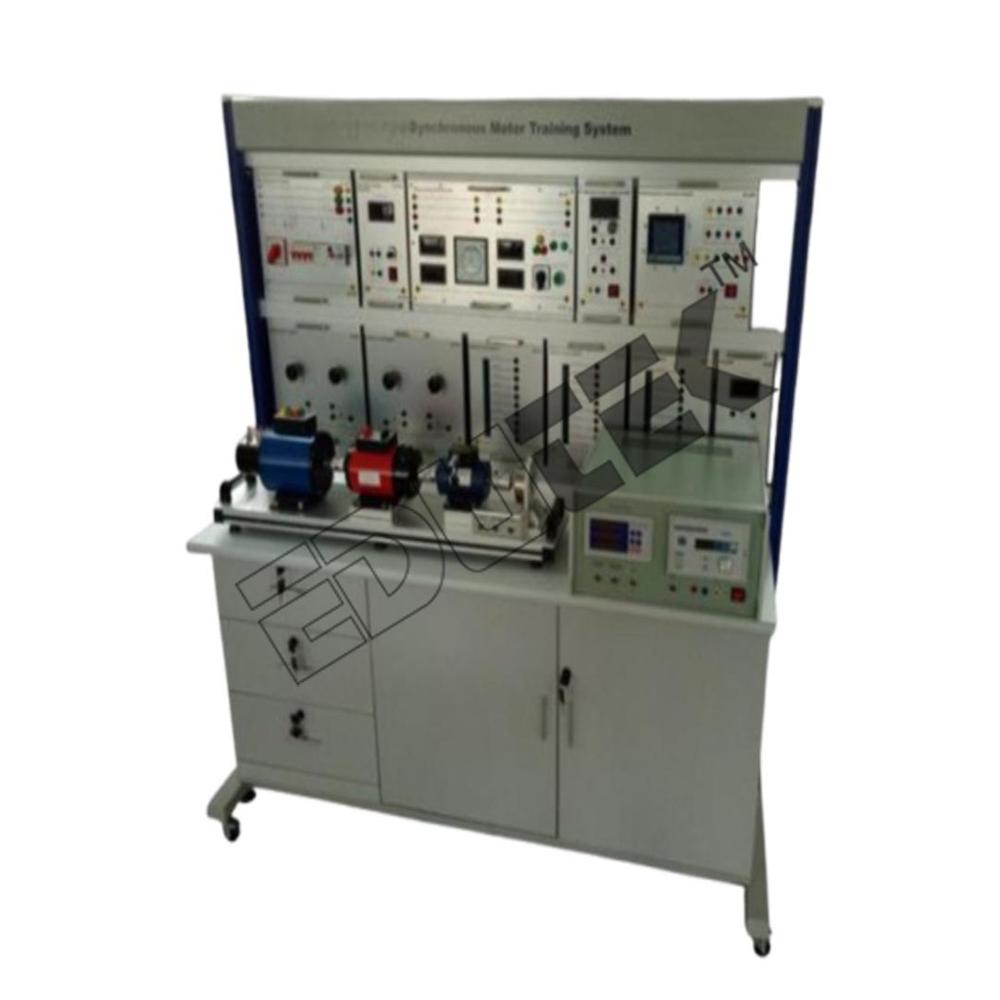
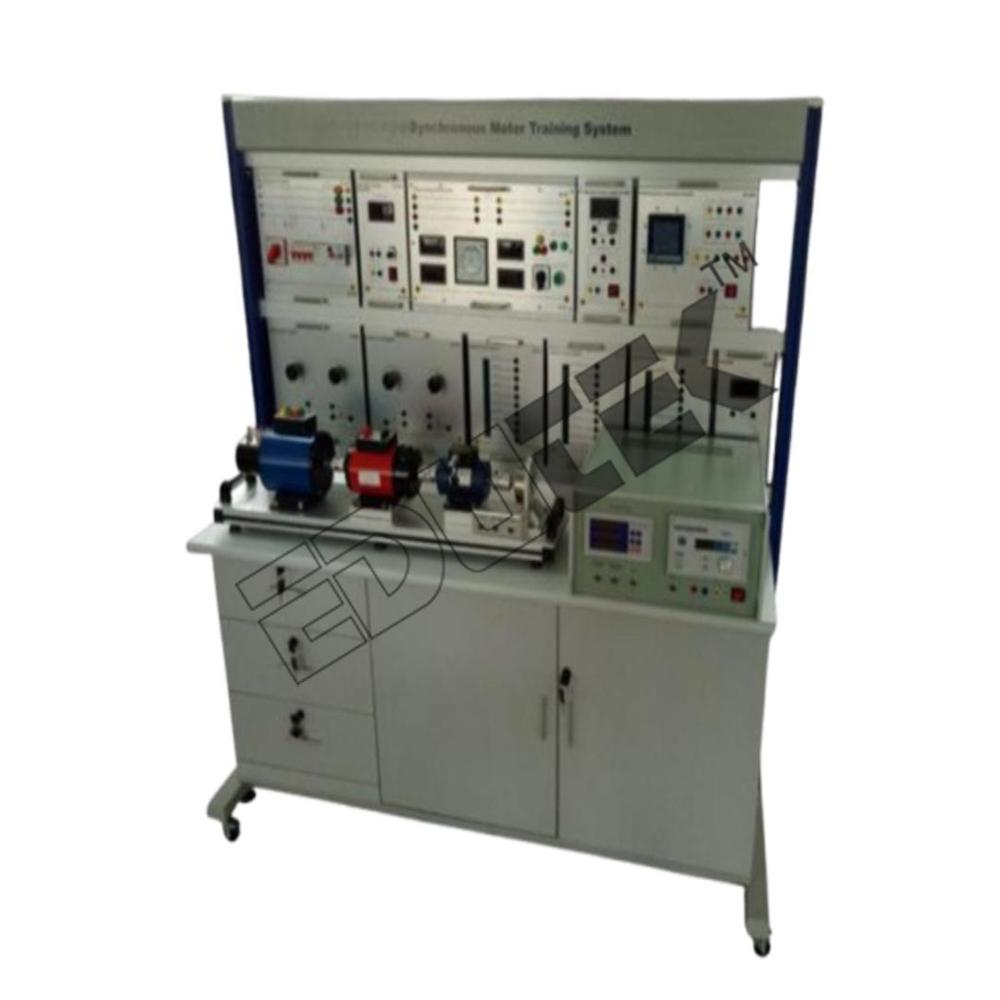
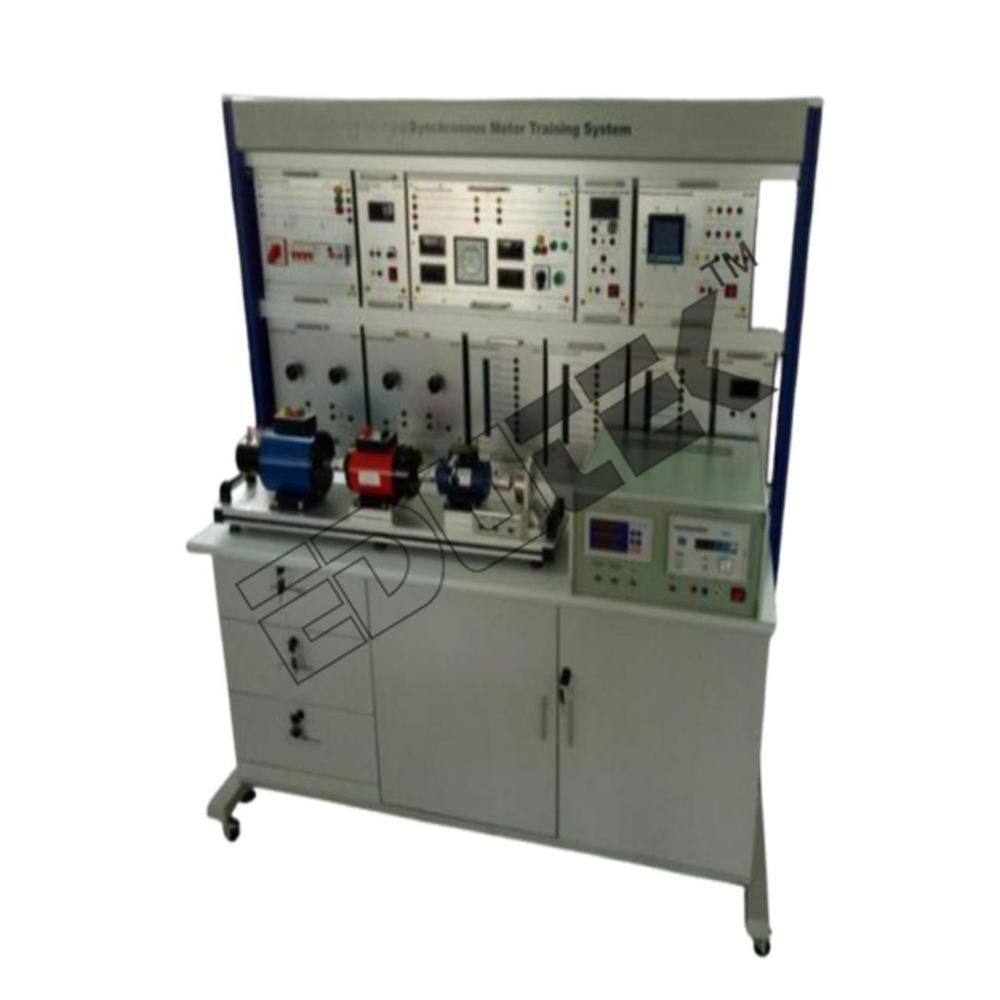
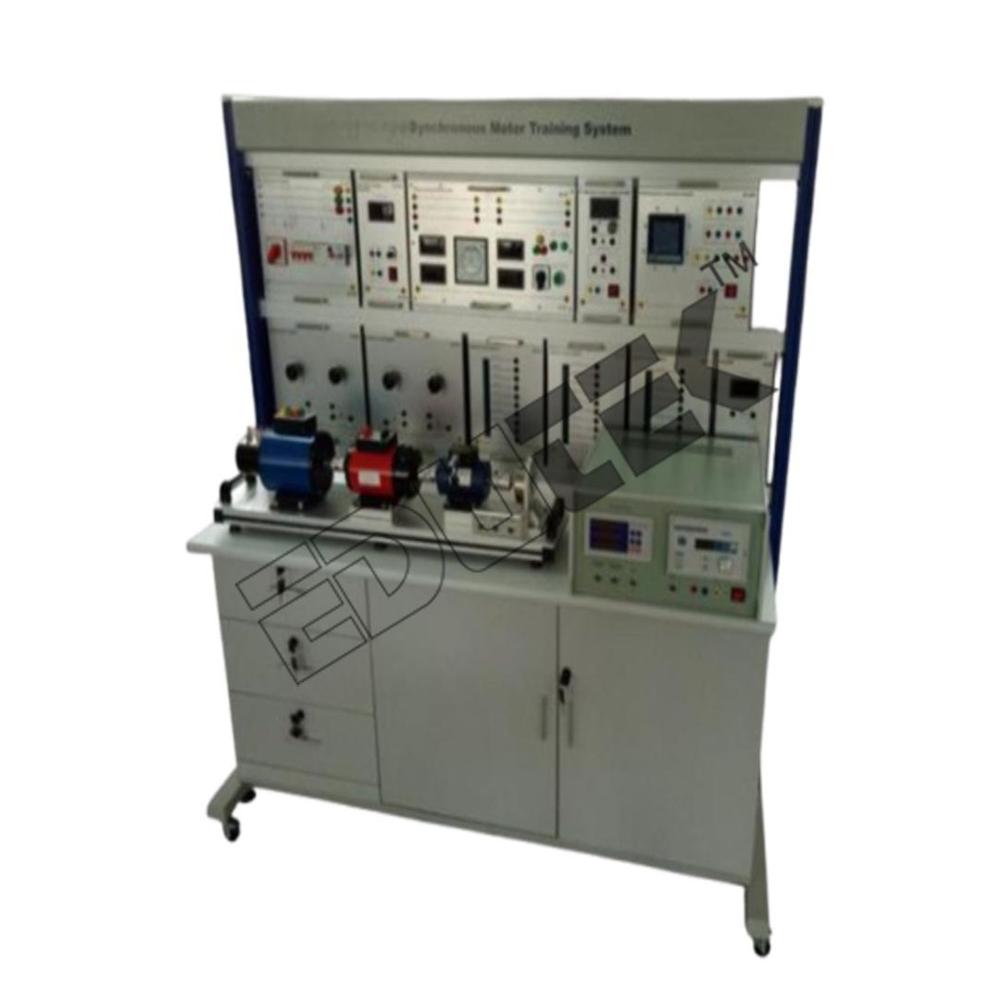
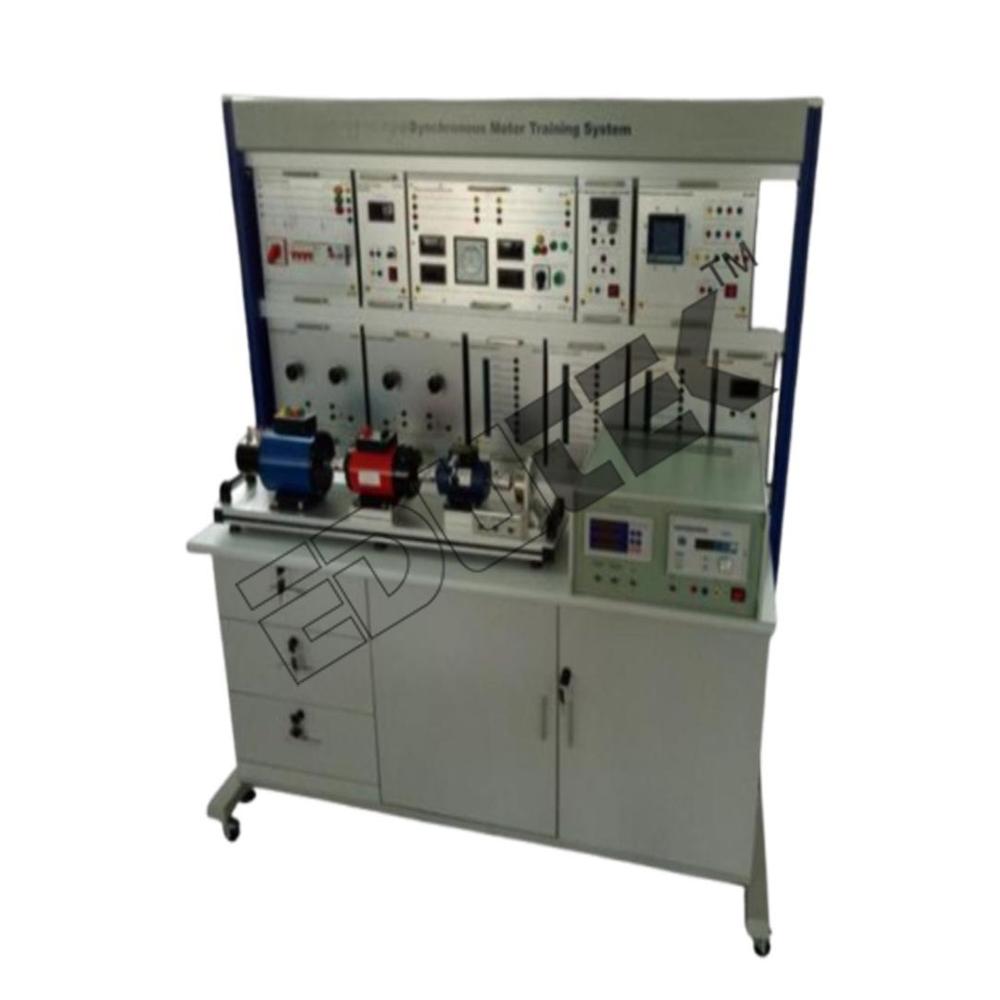
Synchronous motor training system is composed of three-phase synchronous motor or alternator, torque sensor, torque limiter, magnetic particle brake, tension controller, as well as all kinds of meters and electronic components. Synchronous motor training system allows the controlling towards all kinds of measurements towards three-phase synchronous motor or alternator, such as motor's torque, output power, rotate speed, the reading of motors' parameter changes at no load or loading condition, and etc.
Technical Parameters
1. Input power: three-phase five-wire AC380V 10% 50HZ
2. Working environment: temperature -10 C - +40 C, relative humidity <85% (25 C), altitude <4000m
3. Power control: automatic air power switch with over and under voltage protection, overcurrent protection, as well as a leakage protection system.
4. Output power: Three-phase AC 380V 10% 50HZ; single-phase AC 220V 10% 50HZ.
5. Dimensions: 1600mm 700mm 1750mm
Training Content
1. The influence of resistance, capacitance and inductance value on the power factor
2. Torque control
3. Synchronous motor control
4. Excitation system debugging of synchronous motors
5. Power generation training of synchronous generators
6. Synchronous generator control
7. DC motor control
Unit complete with all required accessories
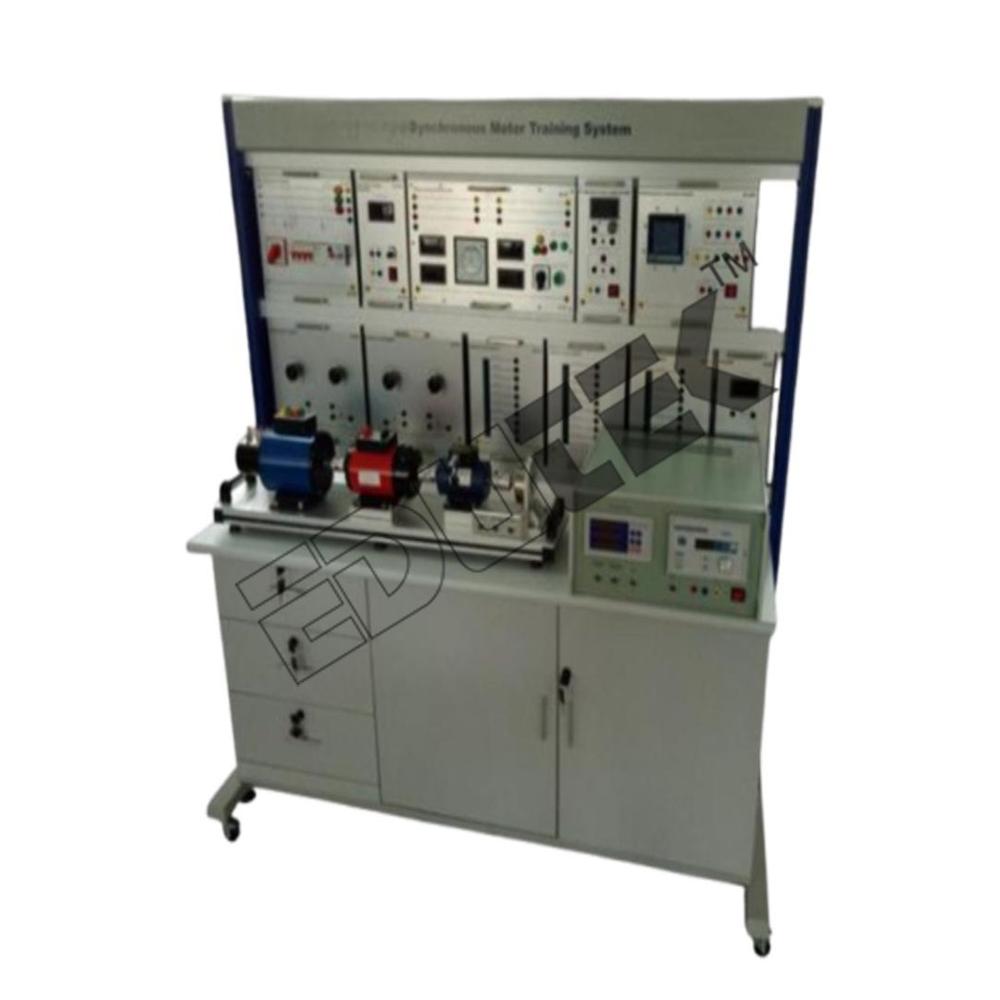
Comprehensive Training CapabilitiesThis Synchronous Machine Trainer offers extensive training opportunities in the fields of motor and generator operation. Users can explore how resistance, capacitance, and inductance impact power factor, develop torque management skills, and learn about both synchronous motor and generator control. Additional modules focus on excitation system tuning and DC motor operation, providing a holistic learning experience.
Robust and User-Centric DesignEngineered from stainless steel, the trainer is designed for both durability and user safety. The electric-powered system supports a wide range of experiments thanks to its versatile input and output options. Its sizable working area (1600mm x 700mm x 1750mm) ensures convenience and accessibility, making it ideal for classroom and laboratory environments.
Efficient Power Supply and Output OptionsThe system operates on a three-phase five-wire 380V AC input and provides both single-phase (220V) and three-phase (380V) AC outputs. This flexibility enables the simulation of real-world electrical scenarios, supporting skills development for students and professionals alike. All outputs adhere to the 50Hz standard, accommodating common industrial requirements.
FAQ's of Synchronous Machine Trainer:
Q: How does the Synchronous Machine Trainer enhance electrical engineering education?
A: The trainer provides practical, hands-on experience with both synchronous motors and generators. It allows users to perform real-time experiments on power factor influence, torque control, and excitation system tuning, helping students and professionals deepen their understanding of electric machine operation.
Q: What are the main features included in this training system?
A: Key features include three-phase synchronous motor or alternator, torque sensor, torque limiter, magnetic particle brake, tension controller, and a variety of meters and electronic components. It supports studies in power factor, torque and synchronous motor control, generator training, and DC motor management.
Q: When should this trainer be used in a learning curriculum?
A: This trainer is best utilized during advanced stages of electrical engineering courses or vocational training programs where students have already grasped theoretical foundations and need to develop practical, hands-on skills with AC and DC machines.
Q: Where can this trainer be effectively implemented?
A: It is ideal for engineering colleges, technical institutes, research laboratories, and workforce training centers, particularly those with a focus on power systems, electrical machinery, and automation.
Q: What steps are involved in conducting a synchronous generator power generation experiment with this trainer?
A: Begin by connecting the generator module as per the manual, set the desired excitation and load conditions, and monitor system parameters using the integrated meters. Adjust resistive, capacitive, and inductive loads to observe their effects on generator performance.
Q: How does the warranty benefit end-users?
A: The one-year warranty assures users of product quality and provides support for repair or replacement in case of component failures within the initial year of use, minimizing downtime and ensuring consistent training delivery.