About Polarizing Microscopes
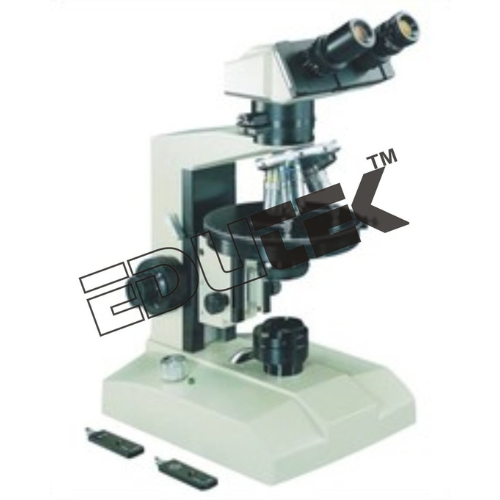
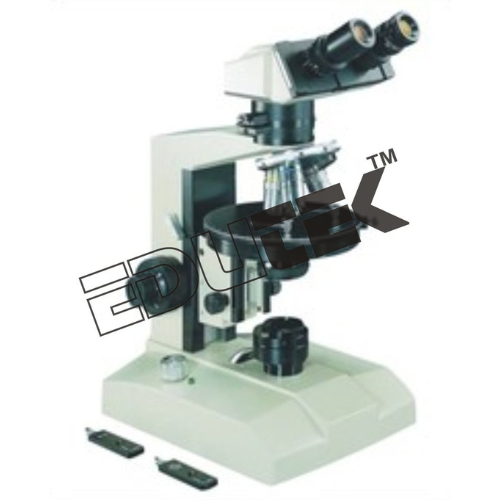
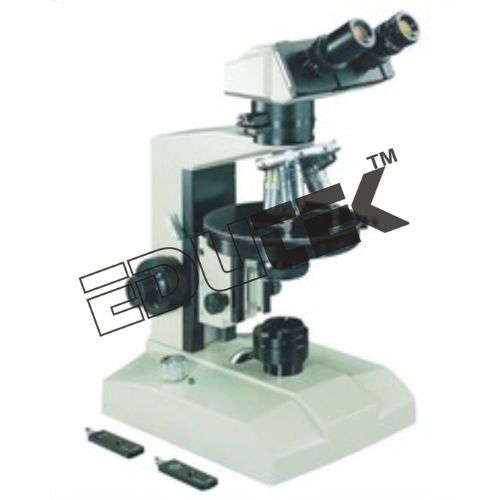
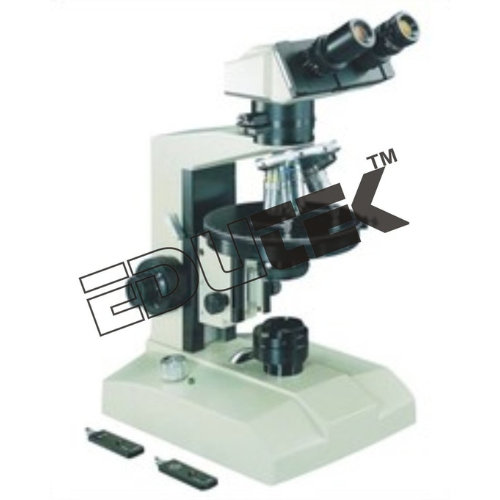
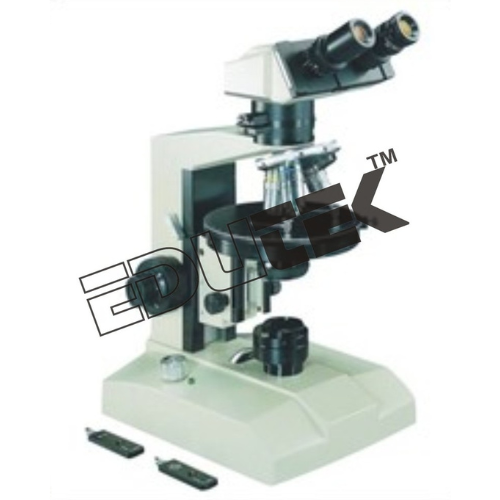
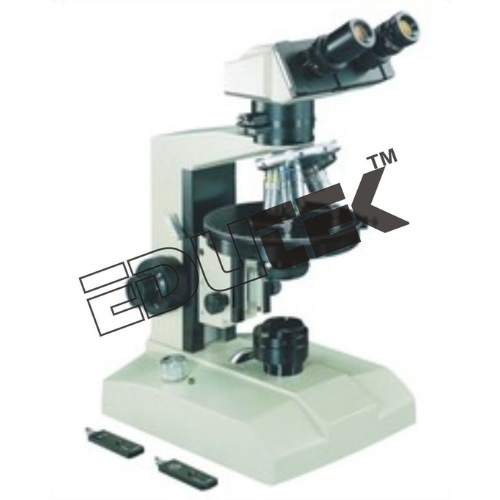
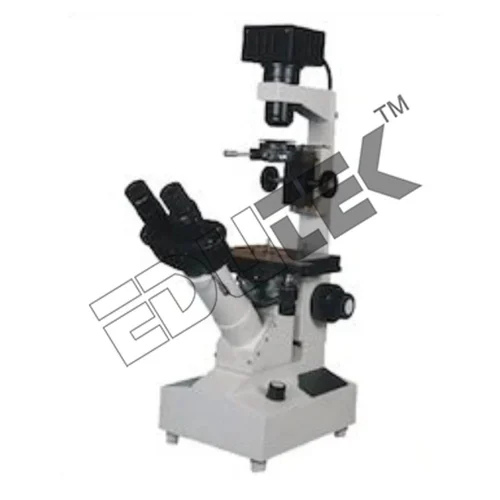
Polarizing Microscopes ETMS-141Polarising Microscopes are standard polarising microscopes equipped with strain-free plan achromatic objectives for transmitted light observation. Built-in halogen illumination system and high quality coated optics make the equipment versatile and high quality instrument.
Polarising intermediate has attachment magnification of 1.2X and has built-in Bertrand lens unit on a rotating turret for colonoscopy, a swing in / swing out analyser and DIN standard compensatory slot accommodating 1st order red sensitive tint plate and wave length radiation plate.
The microscope stand has a quadruple ball bearing nose-piece, co-axial coarse and fine motions moving on ball bearing guide. Sub-stage polariser on strain-free Abbe condenser Numerical Aperture of 1.25.
ETMS-141: : Monocular Inclined Polarising MicroscopeSpecifications as above with 45 inclined monocular observation tube with following optical combinations :
Focusing eye pieces : HWF 10X with cross & HMF 10X
Plan achromatic objectives : M5X, M10X, M40X
Magnification : 50X to 400X
Integrated Polarization FeaturesThe built-in rotatable polarizer and analyzer facilitate comprehensive polarization studies, essential for investigating birefringence and optical properties of minerals. The detachable Bertrand lens supports conoscopic observation for advanced interference pattern analysis, expanding the scope of mineralogical and crystallographic research.
Precision and Safety in ObservationWith a mechanically graduated stage offering 0.1 accuracy, users can measure and analyze specimens with exceptional precision. The stage safety stop prevents accidental contact between slides and objectives, safeguarding the instruments integrity during usage.
User-Friendly and Durable DesignThis microscope boasts a rotatable trinocular head inclined at 30 for comfortable, prolonged observation, with adjustable interpupillary distance. Its cast metal body and anti-dust features ensure longevity under rigorous use, while a universal power adapter supports reliable operation across laboratories globally.
FAQs of Polarizing Microscopes:
Q: How does the built-in polarizer and analyzer enhance polarization studies?
A: The rotatable polarizer and analyzer allow users to precisely control and analyze polarized light passing through mineral samples, making it easier to observe optical properties like birefringence and extinction angles crucial for petrographic and mineralogical investigations.
Q: What is the function of the detachable Bertrand lens during observation?
A: The Bertrand lens enables conoscopic observation, allowing users to examine interference figures and optical axes in anisotropic minerals, which is essential for identifying mineral species and studying their internal structure.
Q: When should compensator plates like gypsum or quartz wedge be used?
A: Compensator plates are used during advanced polarization studies to determine optical sign and measure retardation. Insert them into the optical path when analyzing birefringence or confirming mineral identification through optical compensation methods.
Q: Where can this polarizing microscope be advantageously used?
A: This microscope is highly effective in laboratories focused on petrography, mineralogy, geology, and material sciences, including educational institutions, research centers, and industrial QA/QC labs requiring precise mineral analysis.
Q: What processes are supported by the mechanical rotating stage and graduated vernier scale?
A: The 150mm rotating stage with 0.1 graduations and a vernier scale permits accurate measurement of angles and systematic rotation of specimensvital for studies involving optical orientation and morphological analysis of mineral grains.
Q: How does the instrument ensure longevity and minimize maintenance?
A: A robust cast metal body, anti-dust system, and protective cover shield the instrument from wear and environmental contaminants, while the stage safety stop and included spare parts, like bulbs and fuses, keep it functioning reliably over time.
Q: What are the main benefits of using this system for optical mineralogy and petrographic analysis?
A: It provides high-quality polarized light for precise mineral examination, flexible observation options (orthoscopic and conoscopic), ergonomic design for comfortable use, and comprehensive accessories, making it a valuable tool for both routine and specialized analyses.



 Send Inquiry
 Send Inquiry

