About Osborne Reynold Demonstration Apparatus
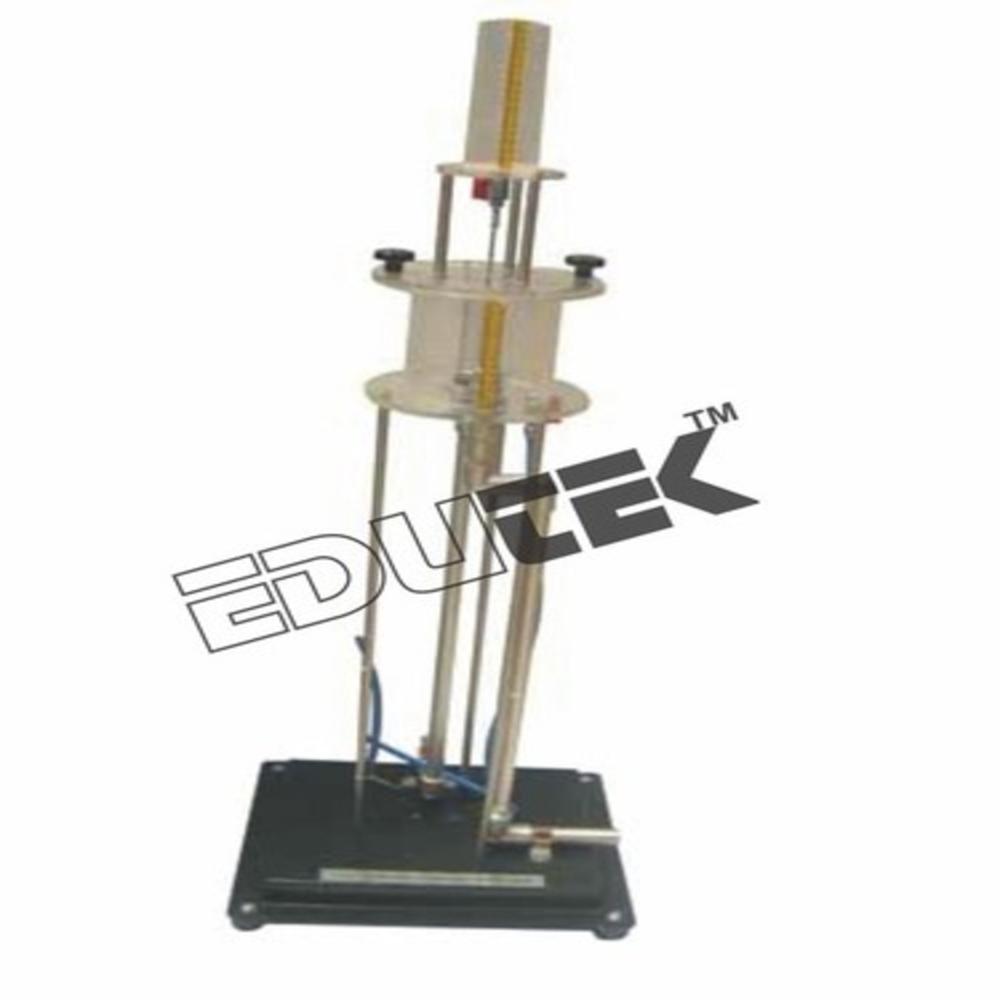
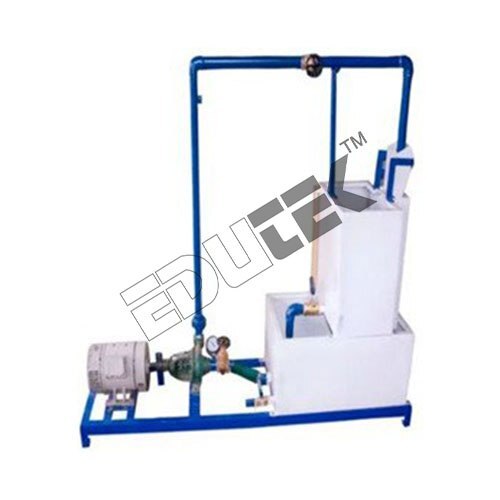
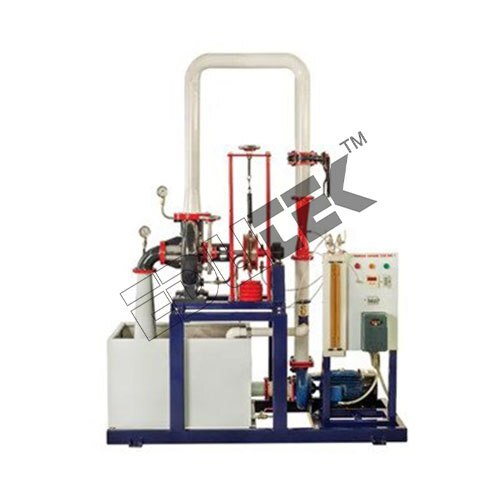
Osborne Reynold Demonstration Apparatus
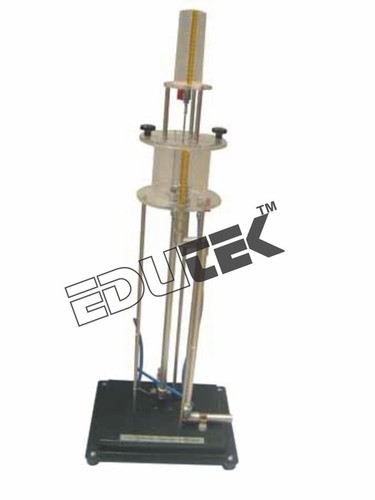
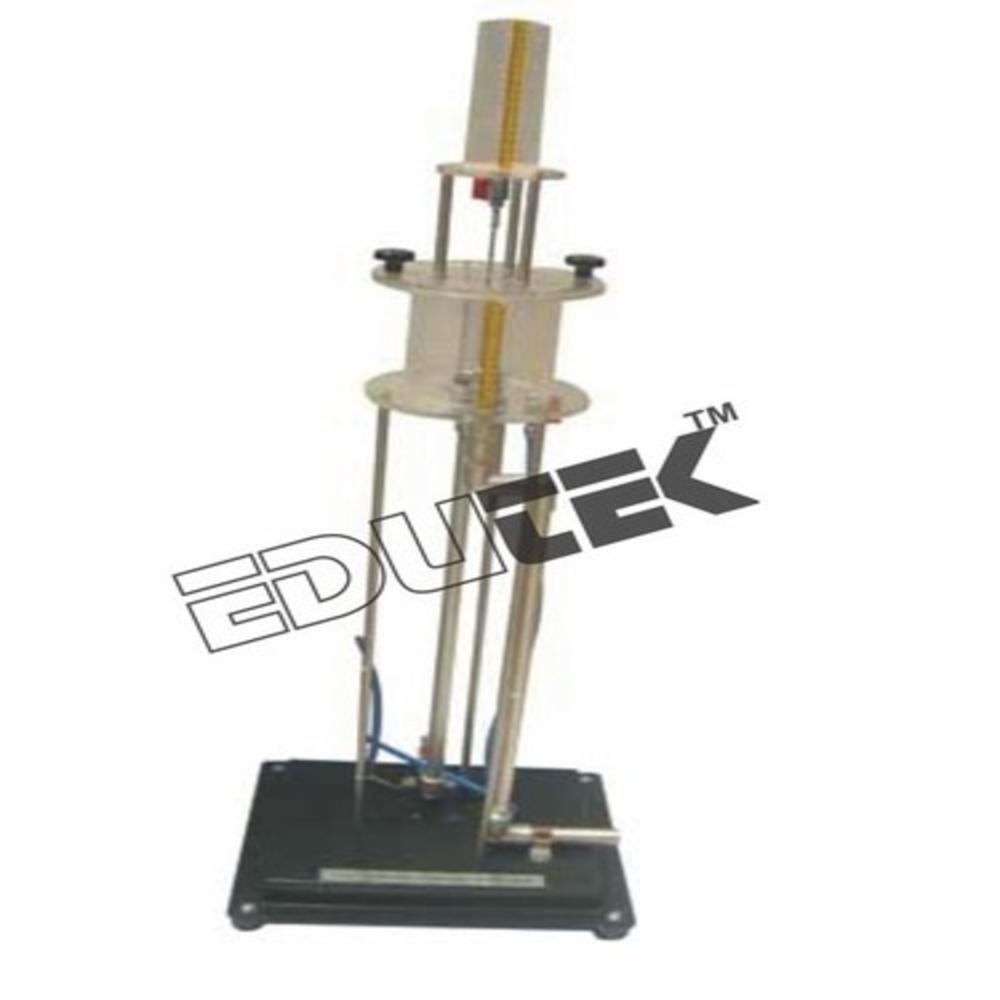
Description of Osborne Reynold Demonstration Apparatus:
The Osborne Reynolds experiment is used to display laminar and turbulent flows. During the experiment it is possible to observe the transition from laminar to turbulent flow after a limiting velocity. The Reynolds number is used to assess whether a flow is laminar or turbulent.
With the streamlines during laminar or turbulent flow are displayed in colour with the aid of an injected contrast medium (ink). The experimental results can be used to determine the critical Reynolds number.
Specification of Osborne Reynold Demonstration Apparatus
- Visualization of laminar and turbulent flow in the Osborne Reynolds experiment.
- Water as flowing medium and ink as contrast medium.
- Vertical glass pipe section.
- Water tank with glass beads to stabilize the flow.
- Flow rate in the pipe section can be adjusted via a valve.
- Flow rate determined by base module.
Efficient Laboratory Learning ToolSpecially designed for laboratory use, the Osborne Reynolds Demonstration Apparatus simplifies the study of fluid flow dynamics. Its robust construction assures long-term use, while high efficiency enhances experiment outcomes. Benefiting both educators and students, the product ensures clear and accurate demonstrations, fostering a better understanding of fluid mechanics principles.
Reliable Accuracy and Indian ExpertiseWith a remarkable 100% accuracy rating, this apparatus guarantees dependable results for every experiment. Proudly manufactured and exported from India, it meets international quality standards. Institutions can trust its durable build and effective functionality, further strengthened by a 1-year warranty and expert support from providers.
FAQs of Osborne Reynold Demonstration Apparatus:
Q: How does the Osborne Reynolds Demonstration Apparatus work in laboratory experiments?
A: The apparatus enables users to observe the transition between laminar and turbulent flow by introducing dye into moving water. By precisely controlling the rate of flow, it visually demonstrates Reynolds numbers, making it highly effective for practical understanding in fluid dynamics courses.
Q: What features make this apparatus highly efficient for laboratory usage?
A: Its design allows for seamless setup and operation without the need for a display, ensuring focused and accurate demonstrations. The apparatus offers 100% measurement accuracy, streamlining fluid mechanics experiments and supporting consistent educational outcomes.
Q: When is it most appropriate to use the Osborne Reynolds Demonstration Apparatus?
A: This device is best utilized during laboratory sessions that require the study of fluid behavior, particularly when teaching or researching the difference between laminar and turbulent flows. It is valuable both for introductory courses and advanced fluid mechanics labs.
Q: Where is this Osborne Reynolds Demonstration Apparatus manufactured and supplied from?
A: The apparatus is expertly manufactured, exported, and supplied by reputable companies in India, meeting high standards for laboratory equipment in both domestic and international markets.
Q: What is the process for demonstrating Reynolds number with this apparatus?
A: Users set up the apparatus, adjust water flow rates, and introduce dye to visibly trace the flow profile. By varying the velocity, the transition point between laminar and turbulent flow is observed, providing a clear demonstration of Reynolds number principles.
Q: How does laboratory usage of this apparatus benefit students and researchers?
A: Utilizing this highly efficient and accurate apparatus enhances learning experiences by providing direct, visual confirmation of fluid mechanics theories. Students and researchers gain hands-on understanding, improving comprehension and retention of key concepts.
Q: What warranty is provided with the Osborne Reynolds Demonstration Apparatus?
A: Users benefit from a 1-year warranty, ensuring reliable performance and manufacturer support for troubleshooting or maintenance during the warranty period.




 Send Inquiry
 Send Inquiry

