About MICROPROCESSOR CONDUCTIVITY TDS METER
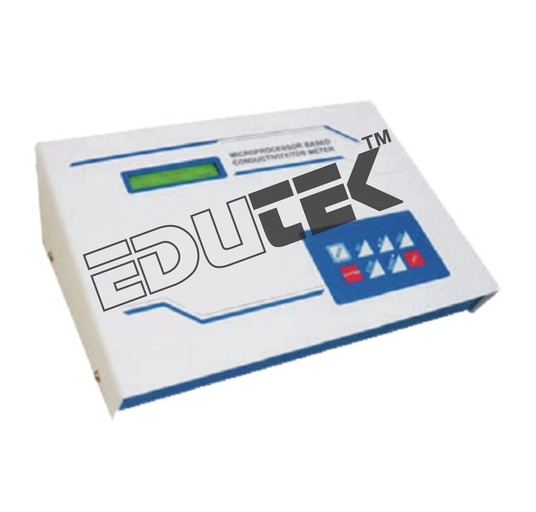
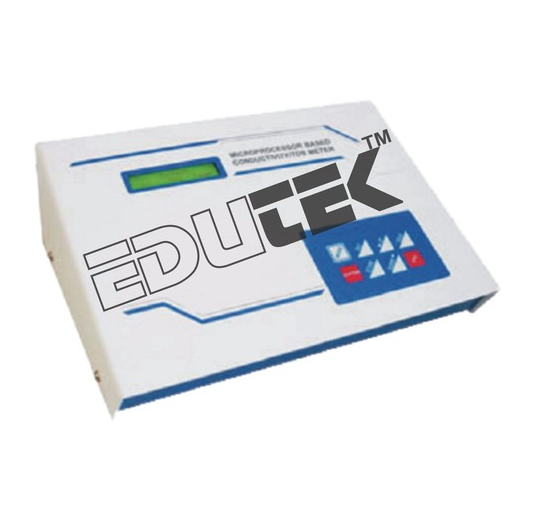
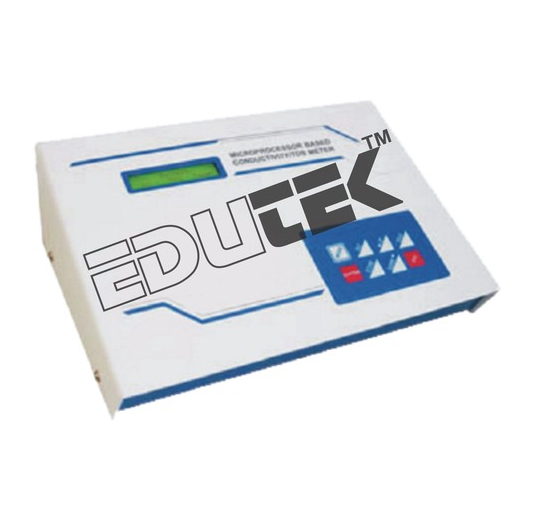
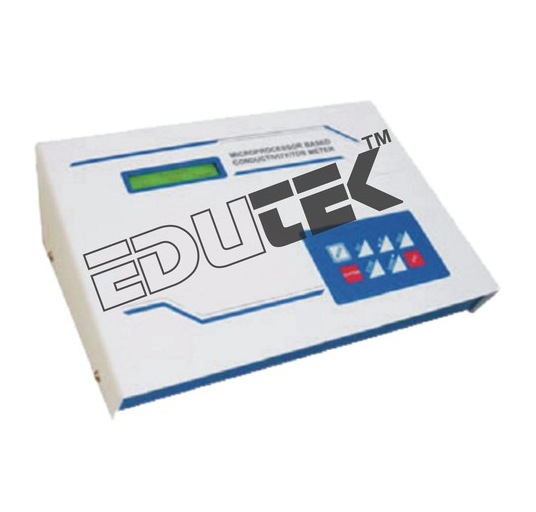
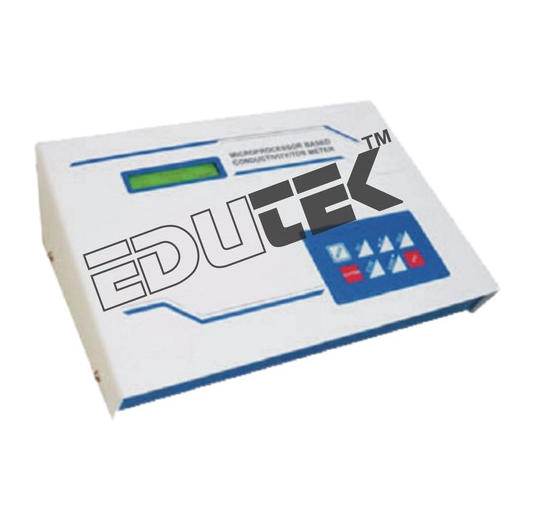
MICROPROCESSOR CONDUCTIVITY/TDS METER ETA-23
Specification:
CONDUCTIVITY
- Range : 0 to 1000 m mho in 6 ranges.
TDS
- Range : 0 to 1000 ppt in 6 ranges.
SALINITY
TEMPERATURE
- Range : -20.0 to +200C.
- Display : 16 character 2 line. alphanumeric LCD.
- Display Format : Temp & Cond or Temp & TDS TEMP & SAL Simultaneously
- Interface : RS-232, Centronics & Computer.
- Error indication : T-ERROR, CAL ERROR.
- Digital output : a) Serial RS-232 b)Parallel Centronics
- Print format : a) All data b) Date wise
This TDS meter efficiently measures both conductivity and TDS within extensive ranges, ensuring suitability for a variety of laboratory applications. The adjustable cell constant and high resolution enhance its versatility, allowing for precise measurement in different sample types.
Effortless Calibration and OperationBuilt with microprocessor control, the meter offers both auto and manual calibration, simplifying setup and ensuring consistent accuracy. Push-button operation and intuitive display make it accessible for routine analyses and detailed studies alike.
Comprehensive Data ManagementEquipped with memory to store up to 100 samples and a printer interface (RS-232/Parallel), the meter facilitates effective data tracking and reporting. This function is valuable for research records and quality assurance documentation requirements.
FAQs of MICROPROCESSOR CONDUCTIVITY TDS METER:
Q: How does the MICROPROCESSOR CONDUCTIVITY TDS METER measure liquid samples?
A: The meter utilizes a platinum conductivity cell and a PT-100 temperature probe to assess the conductivity and TDS levels in liquid samples with precise resolution. Measurements are automatically or manually compensated for temperature, providing accurate and reliable results.
Q: What benefits does automatic temperature compensation offer in this meter?
A: Automatic temperature compensation ensures that conductivity and TDS readings are accurate regardless of temperature fluctuations in the sample. This feature enhances reliability, especially in environments where sample temperature varies frequently.
Q: When should I use auto versus manual calibration?
A: Auto calibration streamlines setup and is recommended for routine measurements. Manual calibration allows for customization, ideal when working with non-standard samples or when further accuracy is required in specialized testing situations.
Q: Where can this meter be used and what applications does it support?
A: The meter is suitable for laboratories, water treatment facilities, quality control departments, and research institutes. It supports analytical tasks such as monitoring water purity, testing chemical solutions, and verifying compliance with quality standards.
Q: What is the process for storing and retrieving measurement data?
A: Data is automatically stored in the meters memory for up to 100 samples. Users can retrieve this information for review or output data using the built-in RS-232 or Parallel printer interface, simplifying record-keeping and reporting.
Q: How do I maintain or clean the platinum conductivity cell and temperature probe?
A: Routine rinsing of the conductivity cell and temperature probe with distilled water helps prevent contamination. Periodic inspection and following the care instructions in the manual will prolong the accuracy and life of the electrodes.
Q: What are the advantages of using a microprocessor-based meter over analog models?
A: Microprocessor-based meters provide higher accuracy, easier calibration, automated data management, and enhanced consistency. Their digital interface and intelligent features result in more dependable measurements and streamlined laboratory workflow.





 Send Inquiry
 Send Inquiry

