About ENERGY BAND GAP APPARATUS WITH BAKELITE PANEL & ROUND METERS
Specification:
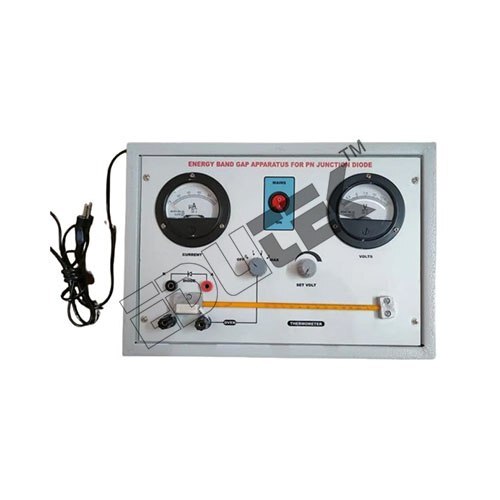
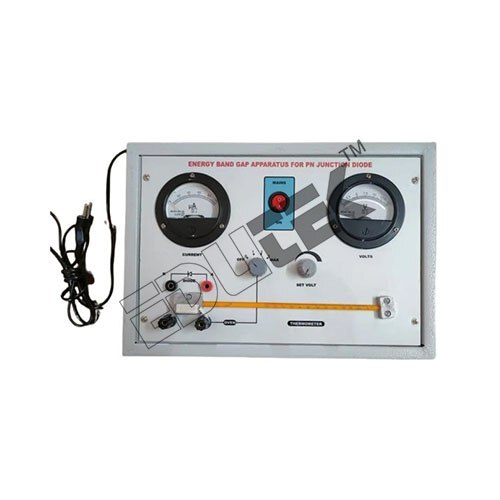
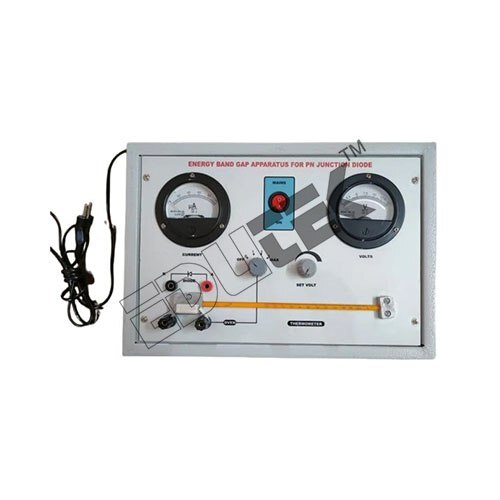
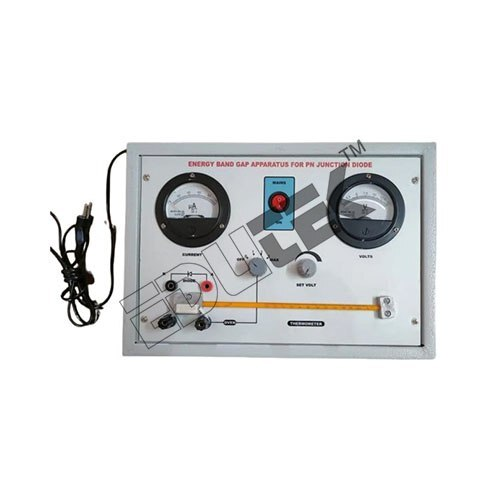
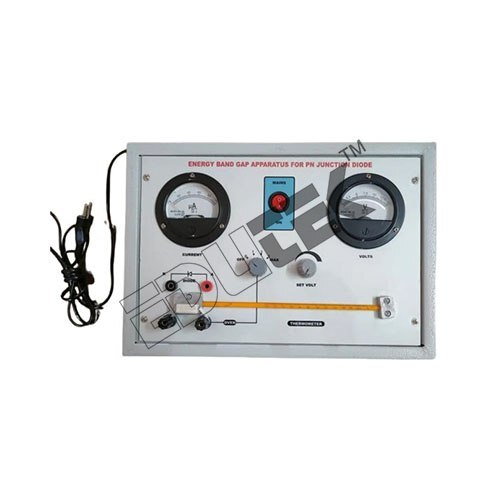
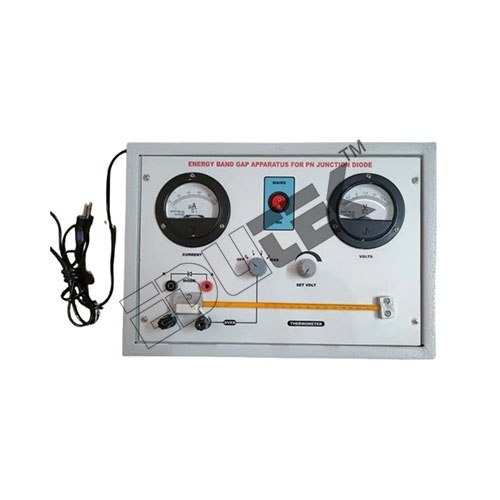
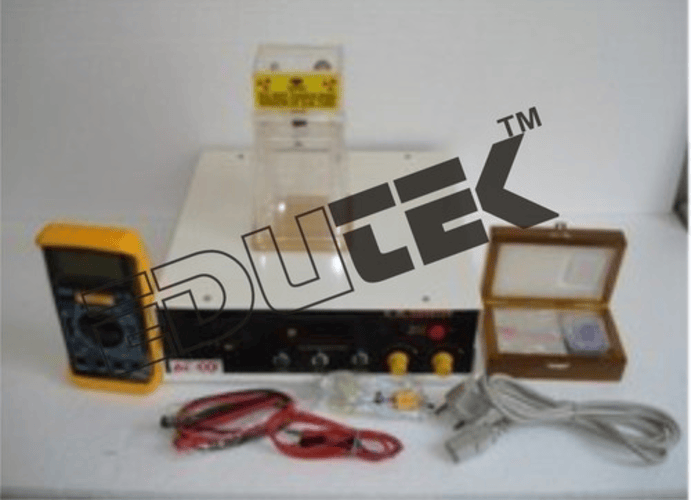
ENERGY BAND GAP APPARATUS WITH BAKELITE PANEL & ROUND METERS
Inbuilt Variable DC Regulated Power Supply of 0-20V DC.
Temperature Controlled Electric oven to heat up the Diode.
Mercury thermometer is mounted on front panel to measure the temperature of oven.
Volt Meter Range of 20V DC for measure the Voltages.
Current Meter Range of 500mA for measure the Current.
Robust Construction & User-Friendly DesignCrafted with a 5mm thick high-grade bakelite panel, this apparatus ensures long-term durability even at elevated temperatures. The clear black panel markings and round analog meters provide precise readability during experiments. Anti-slip rubber foot mounts stabilize the unit, while ergonomic controls facilitate straightforward operation.
Advanced Testing & Measurement FeaturesThis instrument is equipped with an inbuilt oven, platinum resistance thermometer, and analog meters for accurate measurement of voltage and current. Factory calibration and traceability to national standards guarantee reliable results. Multiple test points enable real-time observation or integration with external equipment, enhancing experimental versatility.
Comprehensive Safety & ComplianceEngineered for laboratory safety, the device includes a fused power input, high insulation resistance exceeding 20 M at 500V DC, and an earth terminal. The design meets IP20 standards for indoor laboratory use, ensuring compliance and peace of mind for academic and research environments.
FAQs of ENERGY BAND GAP APPARATUS WITH BAKELITE PANEL & ROUND METERS:
Q: How does the ENERGY BAND GAP APPARATUS determine the band gap of a semiconductor diode?
A: The apparatus measures voltage and current across a semiconductor diode as it is gradually heated in a controlled oven. By using the provided analog meters and temperature sensor, users collect data at different temperatures, then plot a graph to calculate the energy band gap based on changes in diode characteristics.
Q: What safety features ensure the devices safe operation in laboratory settings?
A: It includes a fused power input to prevent overload, an earth terminal for grounding, high insulation resistance above 20 M at 500V DC, and is constructed with heat-resistant bakelite, making it safe for indoor laboratory environments.
Q: When should the apparatus be calibrated, and is recalibration required?
A: The unit is factory-calibrated and traceable to national standards at shipment. For routine academic use, annual calibration is recommended. If the device is subjected to heavy usage or critical research, recalibration interval may be shortened to ensure ongoing measurement accuracy.
Q: Where can I connect external instruments or probes for additional measurements?
A: Test points are provided on the panel, allowing users to connect external voltmeters, ammeters, or data loggers for extended analysis or observation during experiments.
Q: What is the typical process for conducting an experiment with this apparatus?
A: The process involves biasing the in-built semiconductor diode using the variable power supply, gradually increasing the oven temperature, and recording voltage/current readings at specific intervals via analog meters and the platinum thermometer until the analysis range (up to 150C) is achieved.
Q: How is the temperature of the semiconductor diode controlled and measured?
A: Temperature is regulated through an in-built oven powered by an encapsulated nichrome heating element, with precise measurement provided by an inbuilt platinum resistance thermometer displayed on the panel.
Q: What are the main benefits of using this apparatus in engineering and electronics laboratories?
A: Benefits include reliable, direct analog measurement, durable and heat-resistant construction, highly accurate temperature control, quick response time under 2 seconds, straightforward operation, and comprehensive safety features, making it ideal for educational and research applications.




 Send Inquiry
 Send Inquiry

