About DARLINGTON PAIR AMPLIFIER
Specification:
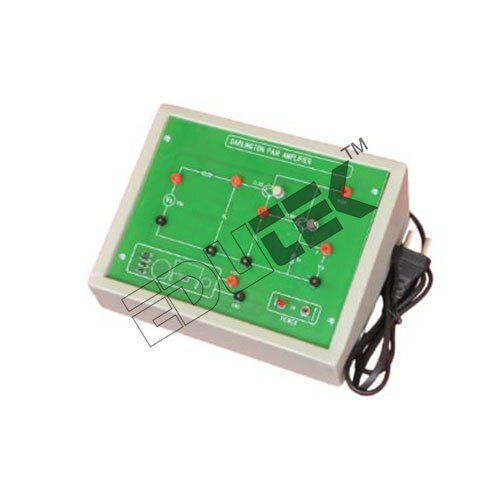
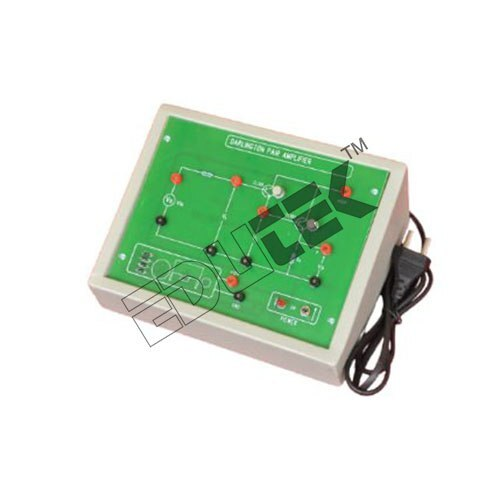
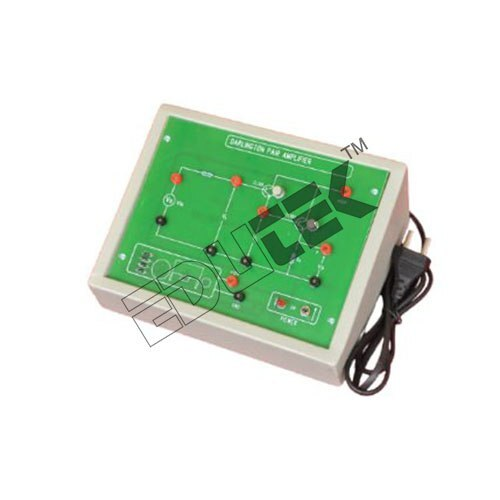
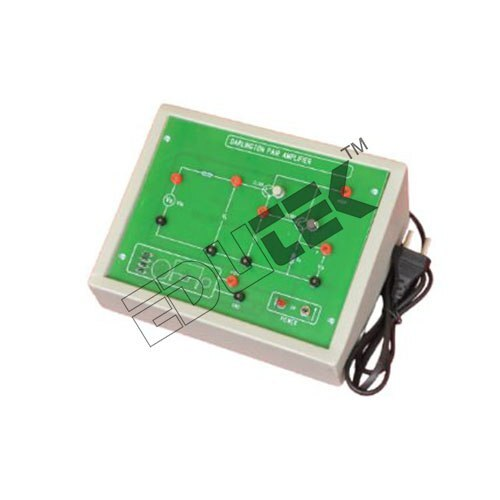
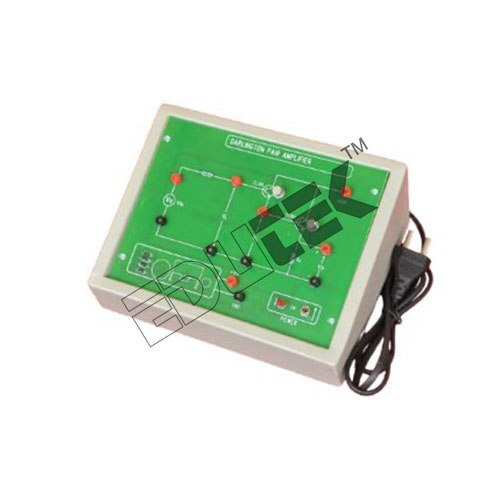
DARLINGTON PAIR AMPLIFIER
The board consists of the following built-in parts:
24V D.C. at 600mA, IC regulated Power Supply internally connected.
Transistors, fitted on adequate heat sinks.
Adequate no. of other electronic components.
Mains ON/OFF switch, Fuse and Jewel light.
The unit is operative on 230V 10% at 50Hz A.C.
High-Gain Audio Amplification for Electronics ProjectsThis Darlington Pair Amplifier is crafted for applications demanding excellent signal amplification, such as engineering electronics instruments. With its substantial current gain, compact PCB, and ease of use, it's perfect for students, educators, engineers, and developers creating or testing audio circuits. The green FR-4 substrate, along with clearly marked connectors, ensures durability and straightforward assembly for project work.
Flexible Integration and User-Friendly DesignEquipped with through-hole mounting and standard interface connectors-screw terminals and header pins-this amplifier fits seamlessly in breadboard setups or instrument panels. Its input and output accommodate standard audio signal levels, making it suitable for a range of multimedia or instrumentation applications. The modest quiescent current and robust output capability (up to 500 mA) further enhance its utility in compact, battery-powered, or lab environments.
FAQ's of DARLINGTON PAIR AMPLIFIER:
Q: How can the Darlington Pair Amplifier be used in engineering electronics instruments?
A: The amplifier is designed to enhance weak input signals-such as audio-making them suitable for further processing or output stages within engineering electronics devices. It is widely used in demonstration circuits, lab experiments, and prototype development for its high current gain and reliability.
Q: What is the typical process for connecting this amplifier module to my circuit?
A: Connect your input audio signal to the dedicated input terminal (microvolts to millivolts range), ensuring correct orientation. Use the screw terminal or male pins for output and power connections, and supply a DC voltage (9-12V) via the power input. The output can then be linked to the next stage of audio processing or a speaker load.
Q: When should I choose a Darlington Pair Amplifier over standard transistor amplifiers?
A: Select the Darlington Pair Amplifier when high current gain is essential for boosting extremely weak input signals, particularly where a compact, easy-to-mount solution is required. Its design excels in educational and experimental setups that require reliable, high-gain amplification.
Q: Where is the best location to mount and operate this amplifier module?
A: Given its lack of an IP rating and no integrated short-circuit protection, the amplifier is intended for indoor, dry environments such as labs, classrooms, or electronics benches. It should be protected from moisture, dust, and potential electrical shorts for optimal longevity.
Q: What are the main benefits of using this specific Darlington Pair Amplifier?
A: The key benefits include remarkably high gain (up to 10,000 hFE), compact and breadboard-friendly dimensions, standardized connector interfaces, and compliance with RoHS. This makes it valuable for hands-on learning, prototyping, and instrument integration, particularly where space and performance are equally prioritized.
Q: How does the amplifier handle input and output signals?
A: It accepts low-level audio signals at the input, amplifies them via the NPN Darlington configuration, and delivers a strong analog signal capable of driving typical load impedances (600 Ohms). The output connects easily to further signal processing stages or transducers.




 Send Inquiry
 Send Inquiry

