About Basic Hydrology Apparatus
BASIC HYDROLOGY APPARATUS
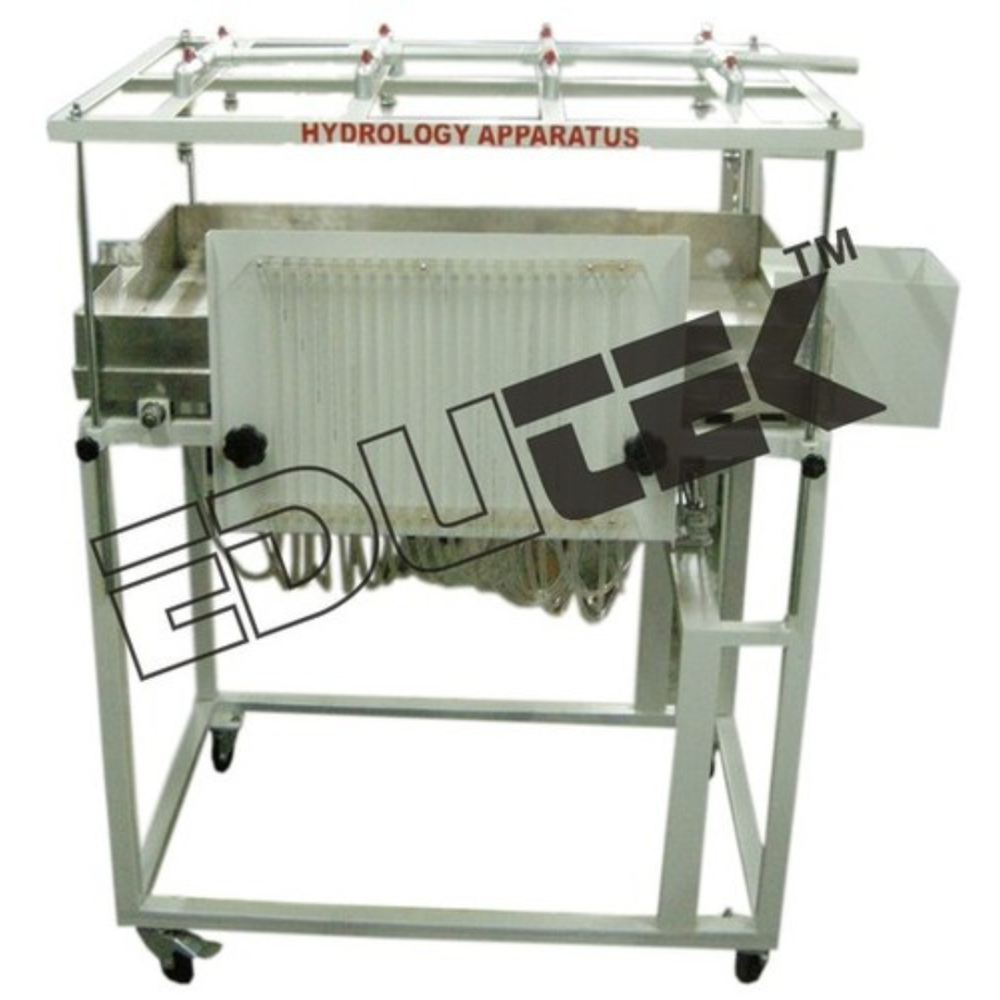
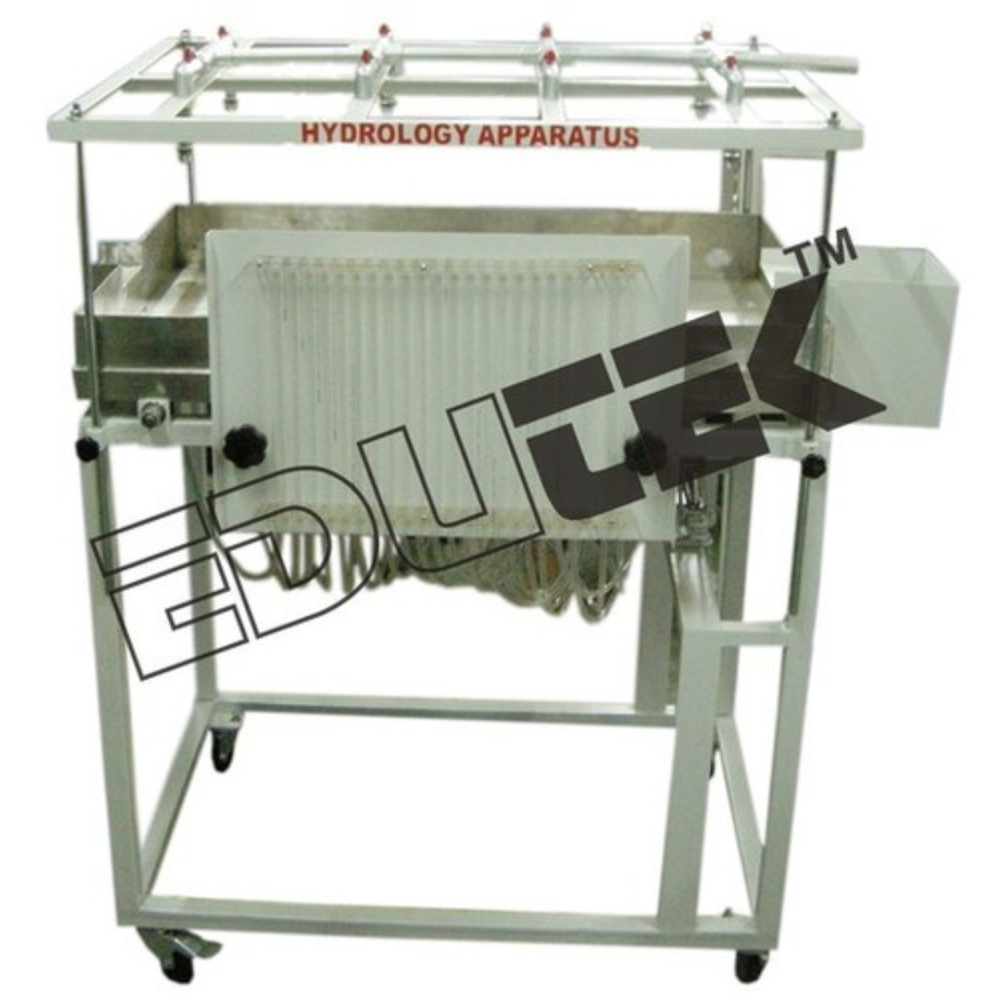
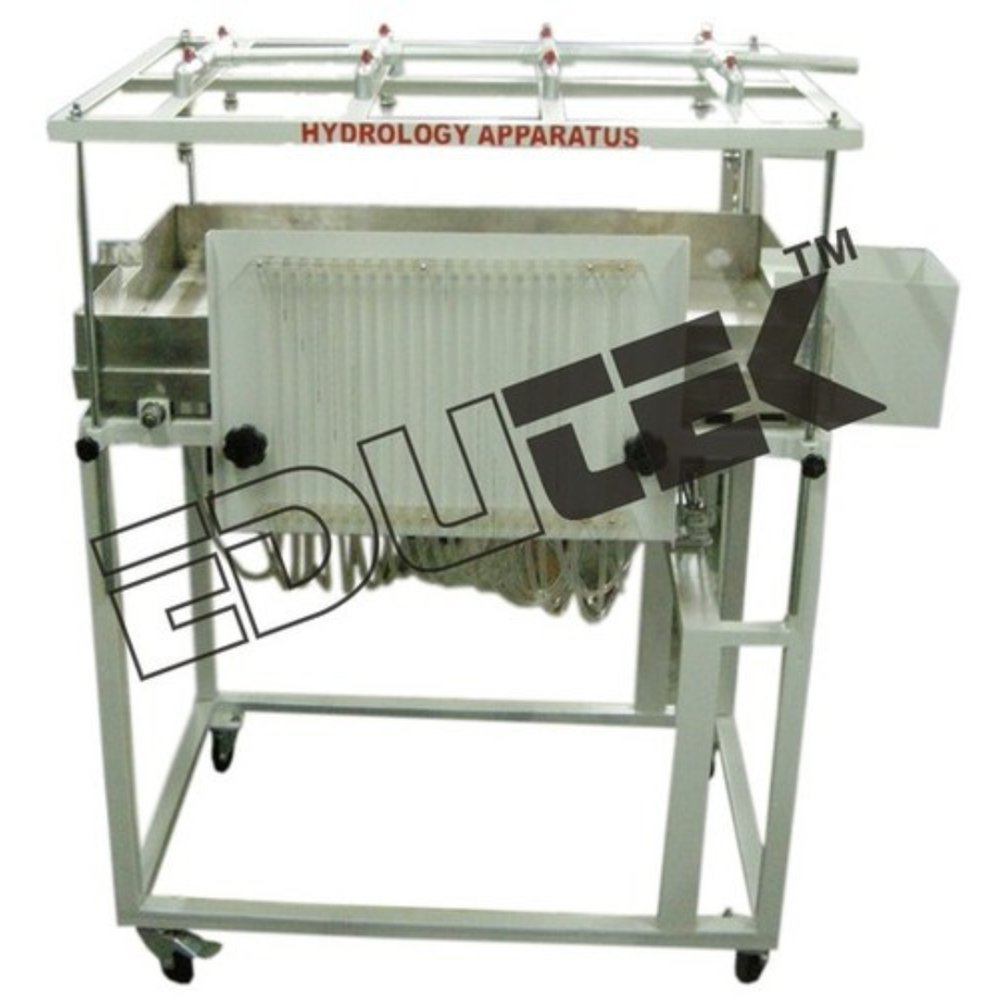
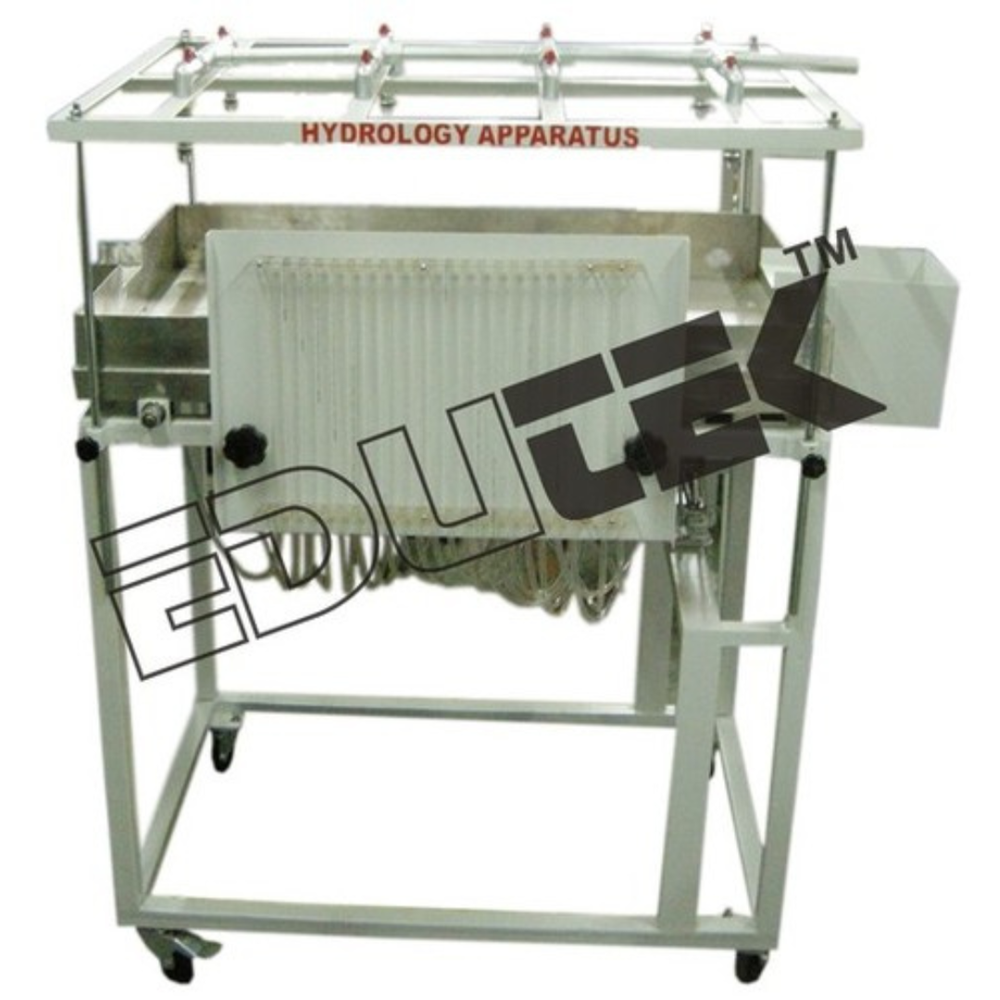
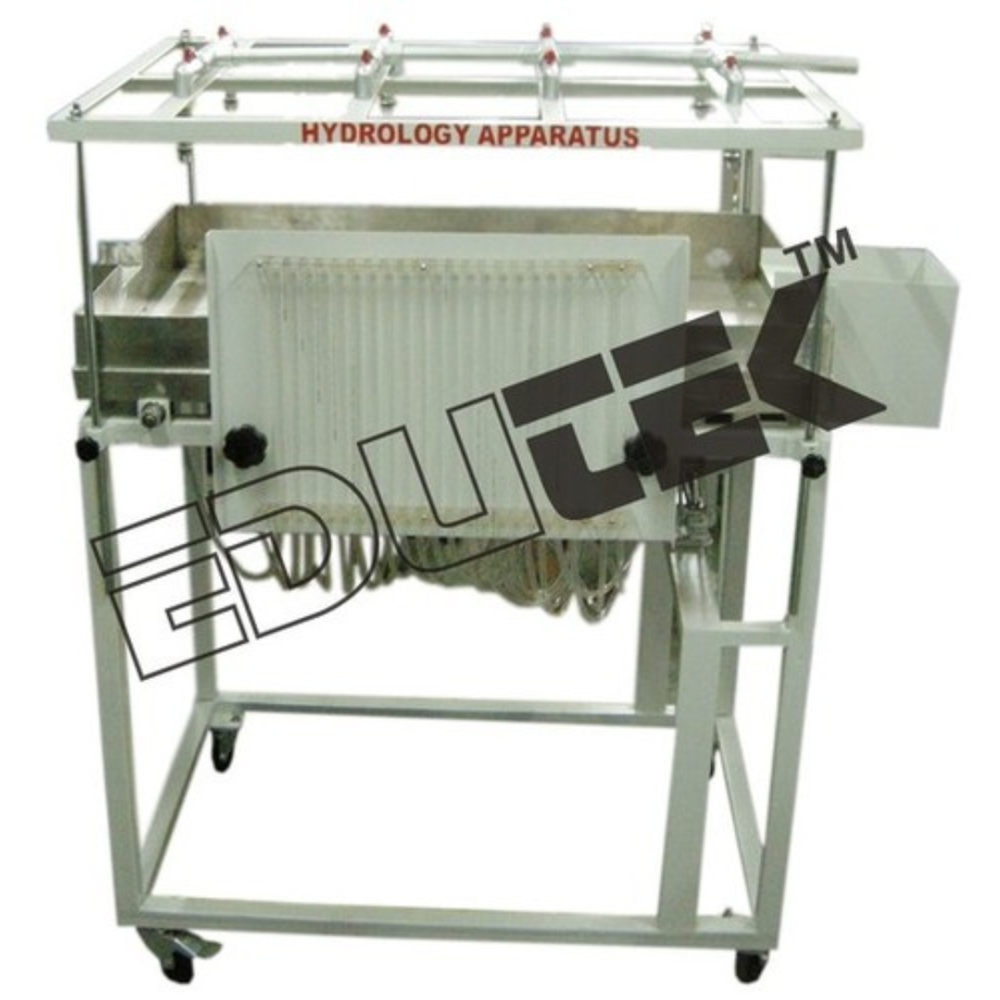
The apparatus is a self contained unit for studying basic hydrology. It consists of a large stainless steel rectangular tank with adjustable tilting mechanism. The tank is filled with a granular medium. Two separate sets of four spray nozzles above the tank simulate rain fall on the catchments. The tank upper walls are transparent. Valve control of the nozzles varies the lag time on the hydro-graph to simulate a moving storm. The compartments at each end of the tank are connected to the catchment area by wire mesh to allow flow between the compartment and the catchment. Two wells with valve control are also provided at the middle of the tank. Twenty pressure tapping along the orthogonal axes of the tank to measure water table profile by a manometer bank.
TECHNICAL DATA :
- Tank : Stainless steel 100 cm wide x 200 cm long x 19 cm high.
- Inclination : 0-3% .
- End compartments : 2 ea.
- Wells : 2 ea.
- Spray nozzles : 8 nozzles with separate shutoff valves.
Flow measurement :
- Rain water : Variable area flow meter.
- Run off : Calibrated weir.
- Manometer : 1 ea.
- Upper walls : Clear acrylic.
Accessories : - Rectangular ring, circular ring, confined aquifer, cylindrical pier.
Power supply :- 220 V, 1 Ph, 50 Hz. Other power supply is available on request.
Comprehensive Flow and Rainfall SimulationThis apparatus equips students and researchers to demonstrate and analyze various hydrologic phenomena, including controlled channel flow, rainfall simulation, and infiltration studies. Its transparent Perspex tank lets users observe water movement and flow patterns, reinforcing theoretical understanding with practical visualization. The clearly marked liter graduations and volumetric flow measurement make data collection straightforward and accurate.
Robust and Versatile ConstructionBuilt with a stainless steel frame, Perspex observation tank, and brass/plastic fittings, the HYDRO-BS10 is corrosion-resistant and built for longevity. Its MS powder-coated stand ensures stability during use, and the compact, portable size makes it suitable for most indoor laboratories. With a quick-draining feature and leak-proof design, maintenance is minimal and downtime is reduced.
FAQs of Basic Hydrology Apparatus:
Q: How is the water flow measured in the Basic Hydrology Apparatus?
A: Water flow is measured volumetrically using the clearly graduated tank and collection vessel. The analog/manual scales allow users to determine flow rates from 0.1 L/min to 10 L/min with an accuracy of 1% of full scale.
Q: What experiments can be conducted with this hydrology apparatus?
A: You can perform a variety of experiments, including measuring water flow, simulating rainfall and infiltration, channel flow observation, and studying different types of weirs. These capabilities make the apparatus well-suited for both fluid mechanics and hydrology lessons.
Q: When should this apparatus be used?
A: The Basic Hydrology Apparatus is ideal for use during laboratory classes focused on fluid mechanics and hydrology, as well as for research projects that require the visual and quantitative study of flow phenomena. It is suitable for demonstrations, practical assignments, and research measurements.
Q: Where is the optimal environment to operate this equipment?
A: It is specifically designed for indoor laboratory use, ensuring controlled conditions and easy access to power and drainage. The sturdy, compact design allows placement on lab benches or dedicated workstations.
Q: What is the process for rainfall simulation using this apparatus?
A: To simulate rainfall, water is pumped from the overhead tank through flow regulators and special rainfall simulation outlets into the observation tank, where infiltration and distribution can be observed and measured accurately.
Q: What benefits does the transparent observation tank offer?
A: The clear Perspex tank enables visual monitoring of water movement and flow dynamics during experiments. This transparency facilitates a deeper understanding of hydrological processes and promotes interactive learning.
Q: How does the apparatus ensure long-term durability and ease of maintenance?
A: Constructed from durable materials such as stainless steel, Perspex, and non-corrosive fittings, the apparatus resists rust and wear. Features like a quick draining system and leak-proof design further reduce maintenance requirements, supporting sustained, reliable use in educational settings.




 Send Inquiry
 Send Inquiry

