About Gas Absorption Unit
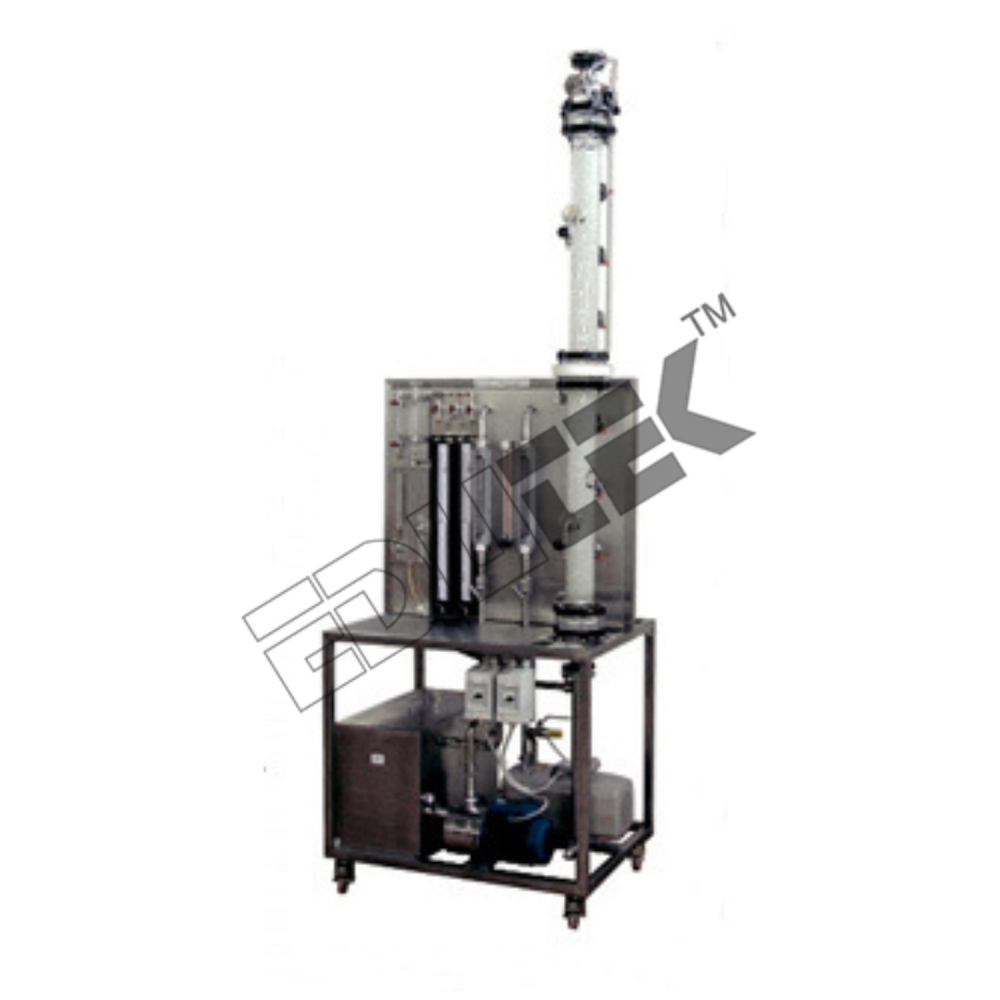
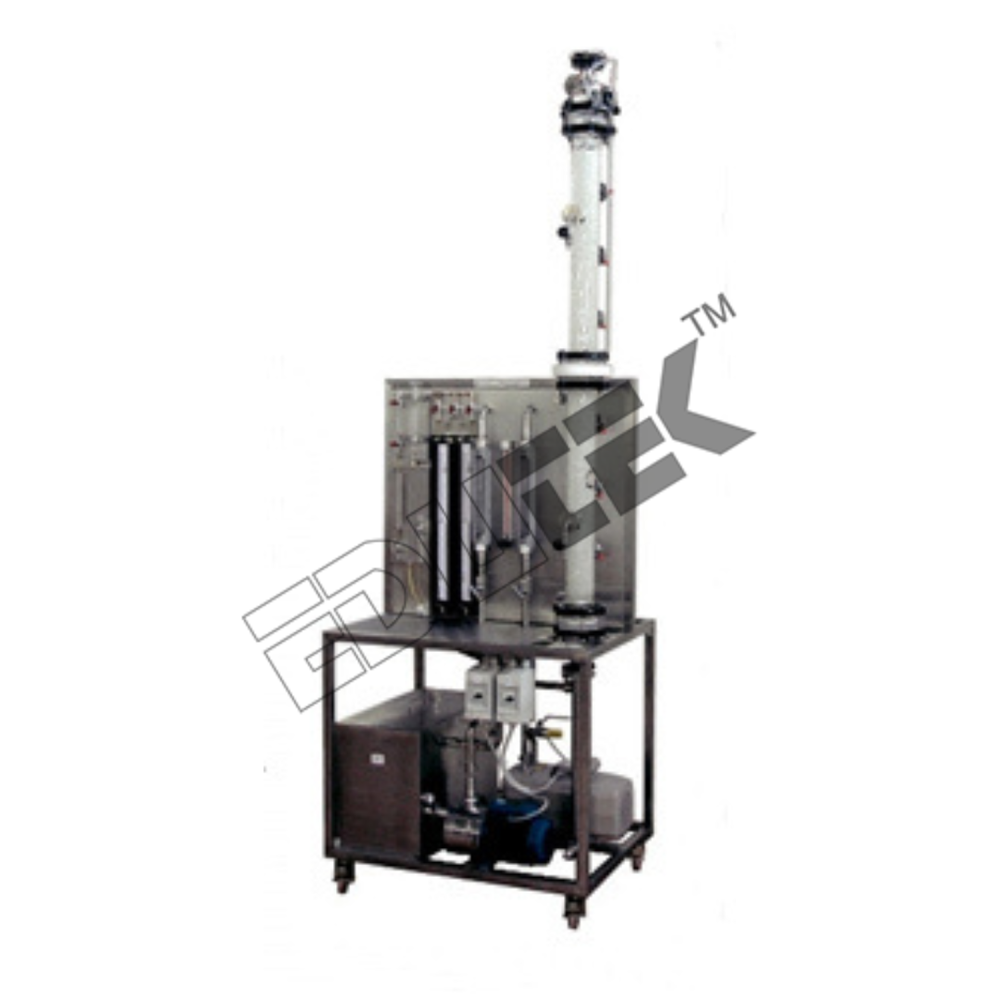
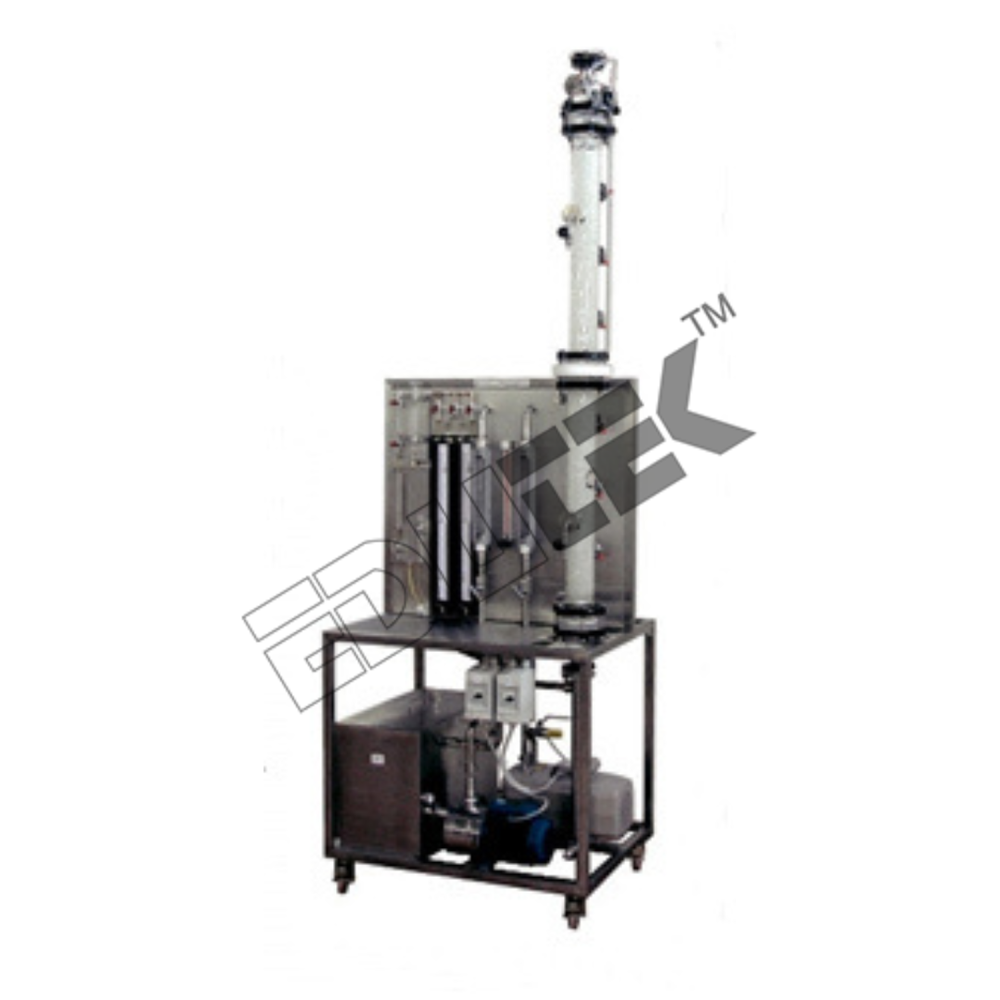
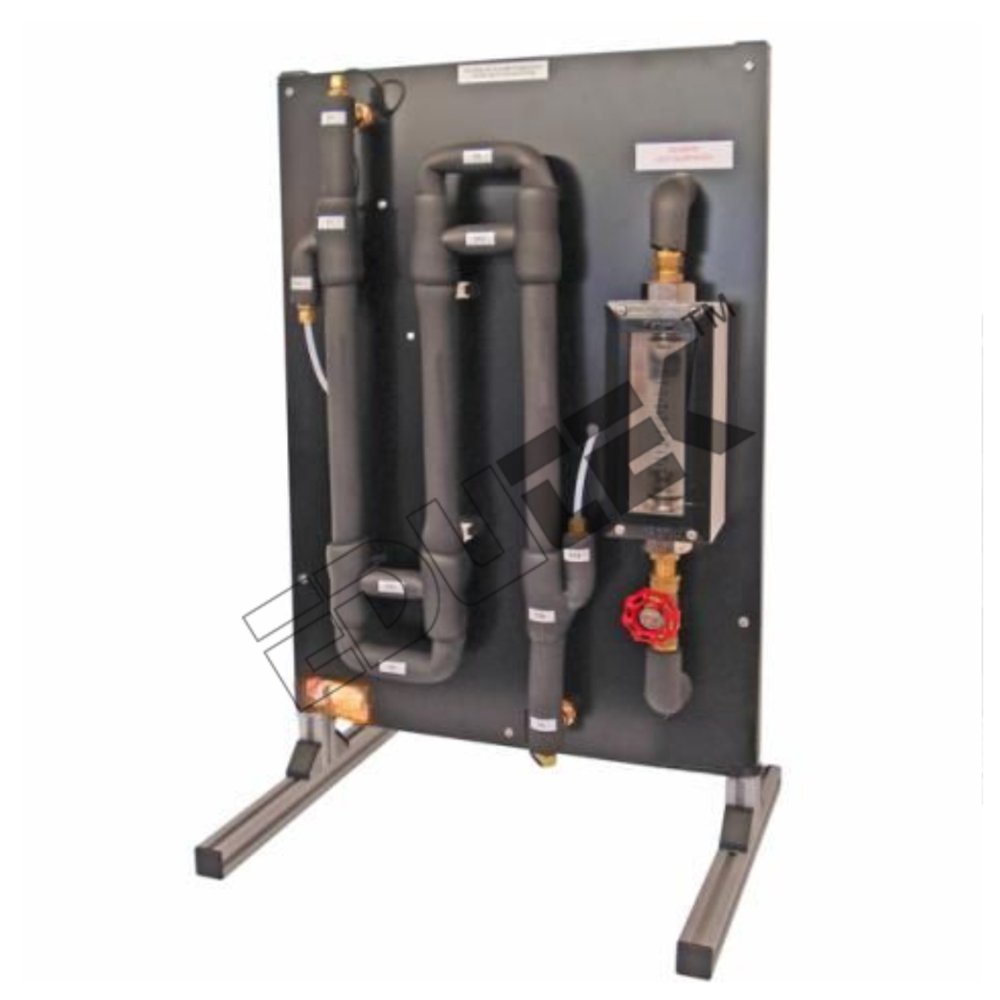
GAS ABSORPTION UNIT
Investigation of the absorption process when separating gas mixtures in a packed column.
Determination of pressure losses in the column.
Representation of the absorption process in an operating diagram.
Investigation of the variables influencing the effectiveness of absorption.
separation of CO2/air mixture by absorption in counter-flow with water production of gas mixture using CO2 from compressed gas cylinder and ambient air adjustment of mixing ratio using valves compressor for delivering the gas mixture into the absorption column
glass absorption column (packed bed) and desorption column
continuous solvent regeneration in circuit with desorption column under vacuum
pump for desorption column and another pump for returning solvent to absorption column
water temperature control with heater and refrigeration system
Unit complete with all required accessories.
230V, 60Hz, 1 phase
Robust Construction and Advanced MaterialsCrafted with borosilicate glass, stainless steel, and Teflon-coated components, the GAU-2001 Gas Absorption Unit delivers exceptional chemical and corrosion resistance. The material choices make the unit suitable for varied laboratory absorption processes, and the transparent absorber column offers straightforward visual studies and monitoring during experiments.
Precise Process Control and User SafetyOperators benefit from adjustable inlet/outlet valves, sample collection ports, and both analog and digital display options. The systems overload protection and pressure release valve ensure safe operation even during extended laboratory usage. Quick assembly, clear observation window, and variable flow rates support both efficiency and security.
Versatile Laboratory ApplicationsThis semi-automatic bench-top unit is ideal for demonstrating and studying gas absorption on a laboratory scale, making it a valuable tool for students, researchers, and professionals. Its adjustable capacity and measurement rangeup to 99.99% gas removal efficiencyoffer broad versatility for various experiments addressing industry and academic needs.
FAQs of Gas Absorption Unit:
Q: How does the GAU-2001 Gas Absorption Unit facilitate the study of gas absorption processes?
A: This unit features a transparent borosilicate glass absorber column, internal packing, and visual observation window, allowing users to observe and analyze absorption processes in real time. It is equipped with adjustable controls and ports for sampling, which support comprehensive study and demonstrations.
Q: What safety features are incorporated into this gas absorption unit?
A: The GAU-2001 is designed with overload protection, a pressure release valve, and a corrosion-resistant construction, ensuring secure operation. These features help prevent equipment damage and protect users during laboratory experiments.
Q: When should this unit be used for demonstration and research purposes?
A: The GAU-2001 is suitable for indoor laboratory environments, particularly when an accurate, hands-on demonstration or analysis of gas absorption is required. Its versatility makes it ideal for both academic instruction and research projects at a laboratory scale.
Q: Where can the GAU-2001 be installed and operated?
A: This unit is intended for installation in indoor laboratory settings. Its bench-top design, moderate weight (approx. 45 kg), and compact dimensions allow for convenient placement on standard laboratory workstations.
Q: What is the process for operating the gas absorption unit?
A: Operation involves setting the desired liquid flow rate between 0.1 to 1.0 LPH, adjusting gas input via the rotameter, and using inlet/outlet valves for process control. The transparent column and analog/digital displays facilitate monitoring throughout the experiment, and sample ports allow for collection and testing during or after absorption.
Q: How does the unit ensure accurate and efficient performance?
A: Equipped with precise measuring devices, adjustable flow rates, and 1% accuracy, the GAU-2001 ensures reliable results. Its corrosion-resistant materials and temperature capability (ambient up to 150C) also guarantee consistent, long-term performance for repeated use in absorbing diverse gases.
Q: What are the main benefits of using this gas absorption unit in the laboratory?
A: Key advantages include corrosion resistance, clear process visibility, flexible configuration for varied experiments, multiple safety features, and the ability to achieve up to 99.99% gas removal efficiency. The units modular design and custom color options enhance usability and laboratory integration.





 Send Inquiry
 Send Inquiry

