
EDUTEK INSTRUMENTATION
GST : 06AEWPJ6896D1ZU

Call us
07313726362
Call us
07313726362
Specification:
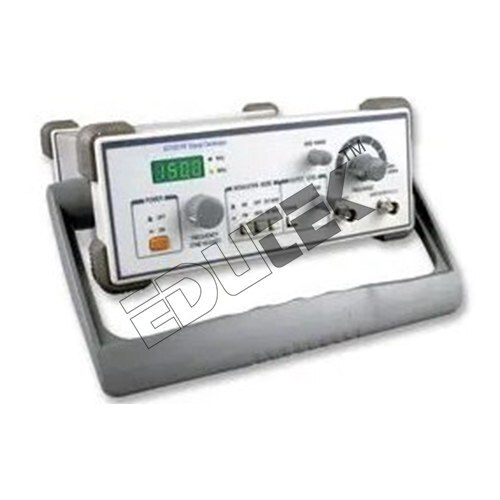
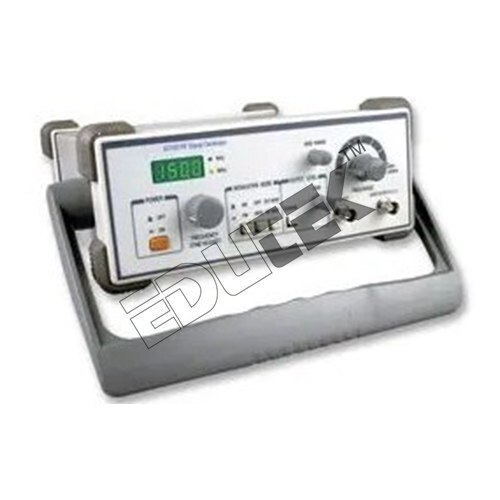
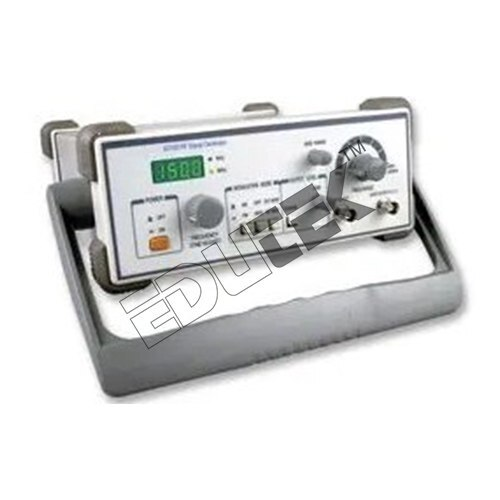
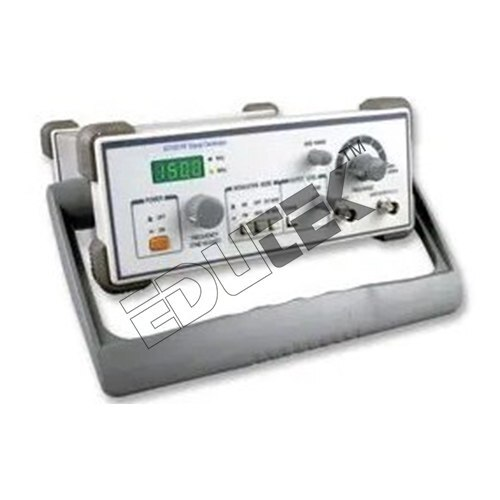
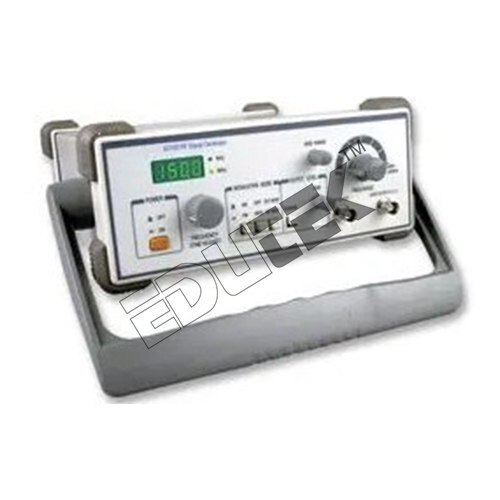
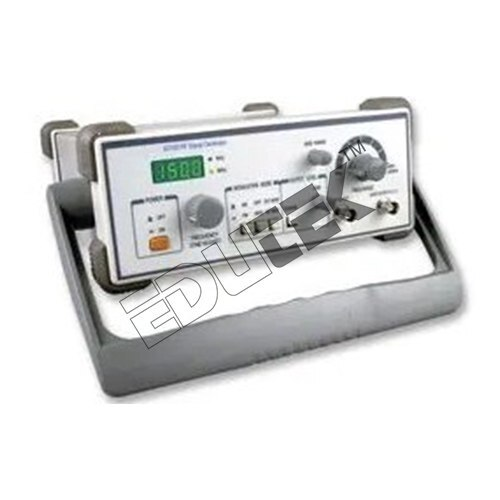
ANALOG RFSIGNAL GENERATOR 100KHZ-150MHZ WITH FREQUENCY COUNTER
Features:
Widefrequency range: 100 KHz 150MHz.
With 1 KHz oscillatorin inner part for the purpose of modulation.
Portabletype, high stability
SALIENT FEATURES:
Front panelbuilt with High Quality Multi Color Sticker.
Fuse forShort Circuit protection
Instruction manual.
Connectionsare brought out through 4mm Colored Terminals and BNC Socket.
The traineris housed in Metal cabinet.
Power requirement:AC 115 / 230V, 50 / 60Hz Approx. 3VA.

Price:
Minimum Order Quantity : 1 Piece
Application : ENGINEERING ELECTRONICS EQUIPMENTS
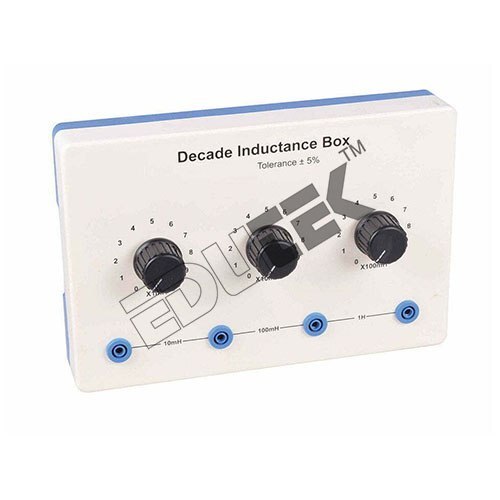
Product Type : DECADE INDUCTANCE BOX THREE DIALS OF 1MH, 10MH, 100MH
Usage : ENGINEERING ELECTRONICS EQUIPMENTS
Features : Three dial decade arrangement, easy inductance selection, sturdy benchtop design, educational and calibration use
Minimum Order Quantity : 1 Piece
Application : ENGINEERING ELECTRONICS INSTRUMENTS
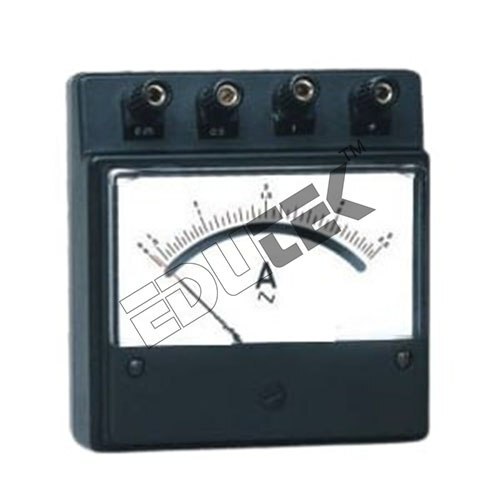
Product Type : DUAL RANGE MOVING COIL DC PORTABLE AMMETER
Usage : ENGINEERING ELECTRONICS INSTRUMENTS
Features : Portable, durable, dual range, clear analog display
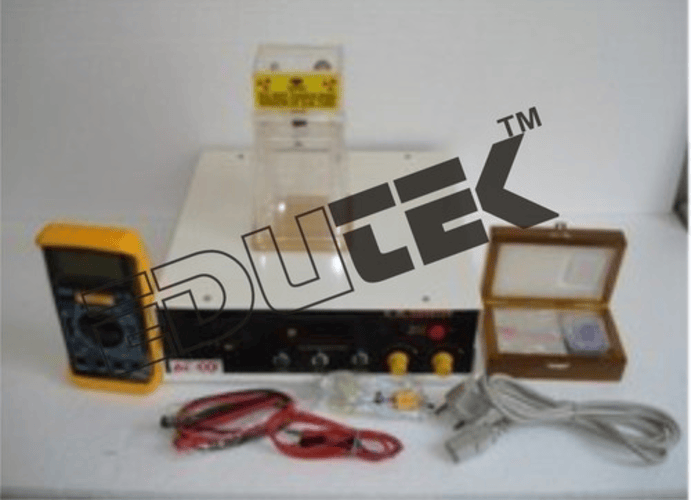
Minimum Order Quantity : 10 Units
Application : Scientific, Educational, Industrial, Environmental Monitoring
Product Type : GeigerMller (GM) Counter
Usage : Radiation Detection
Features : Portable, Lightweight, Audible Alarm, Wide Measurement Range
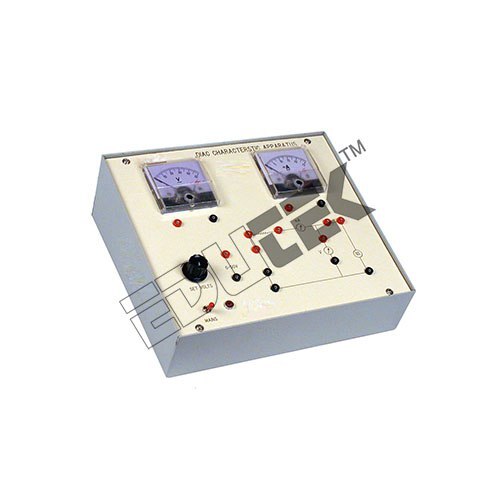
Price 2200.0 INR / Piece
Minimum Order Quantity : 1 Piece
Application : ENGINEERING ELECTRONICS INSTRUMENTS
Product Type : DIAC CHARACTERISTICS APPARATUS WITH ALUMINUM PANEL & SQUARE METERS
Usage : ENGINEERING ELECTRONICS INSTRUMENTS
Features : DIAC CHARACTERISTICS APPARATUS WITH ALUMINUM PANEL & SQUARE METERS

 Send Inquiry
 Send Inquiry

