About Universal Or Combination Permeameter
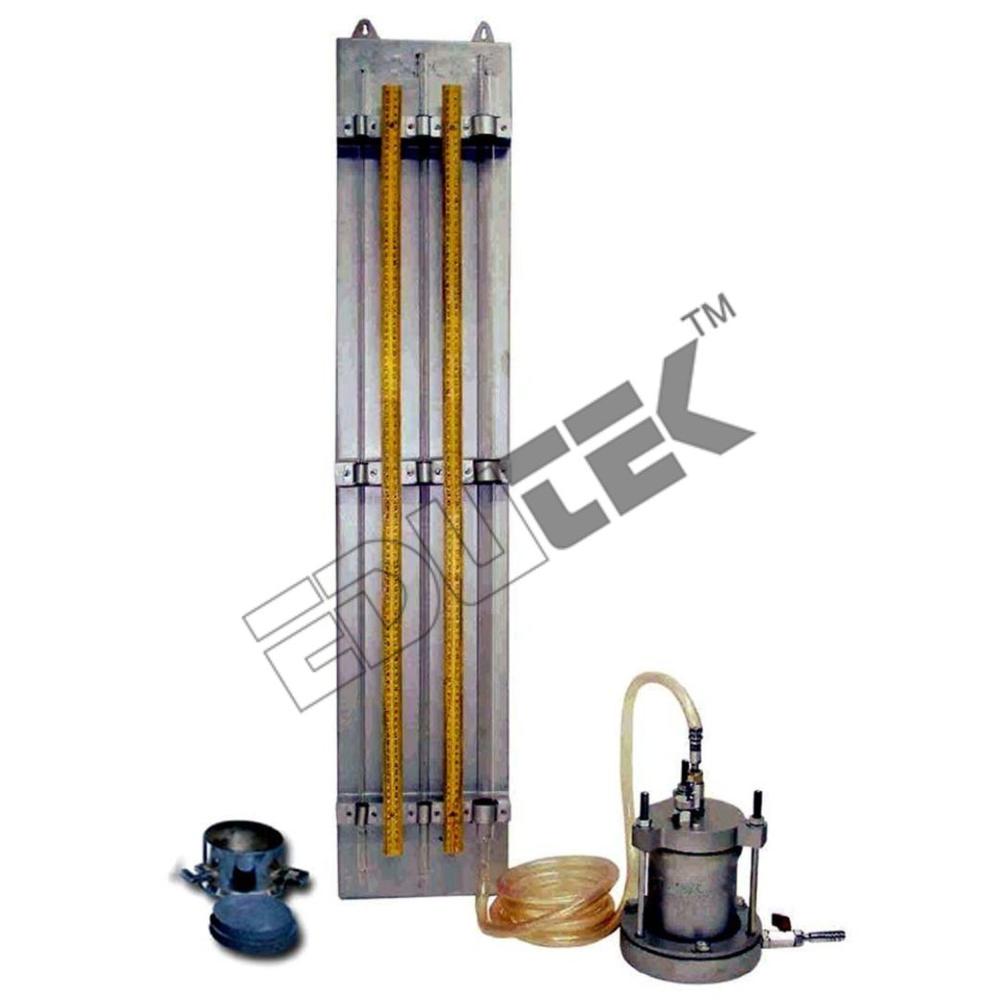
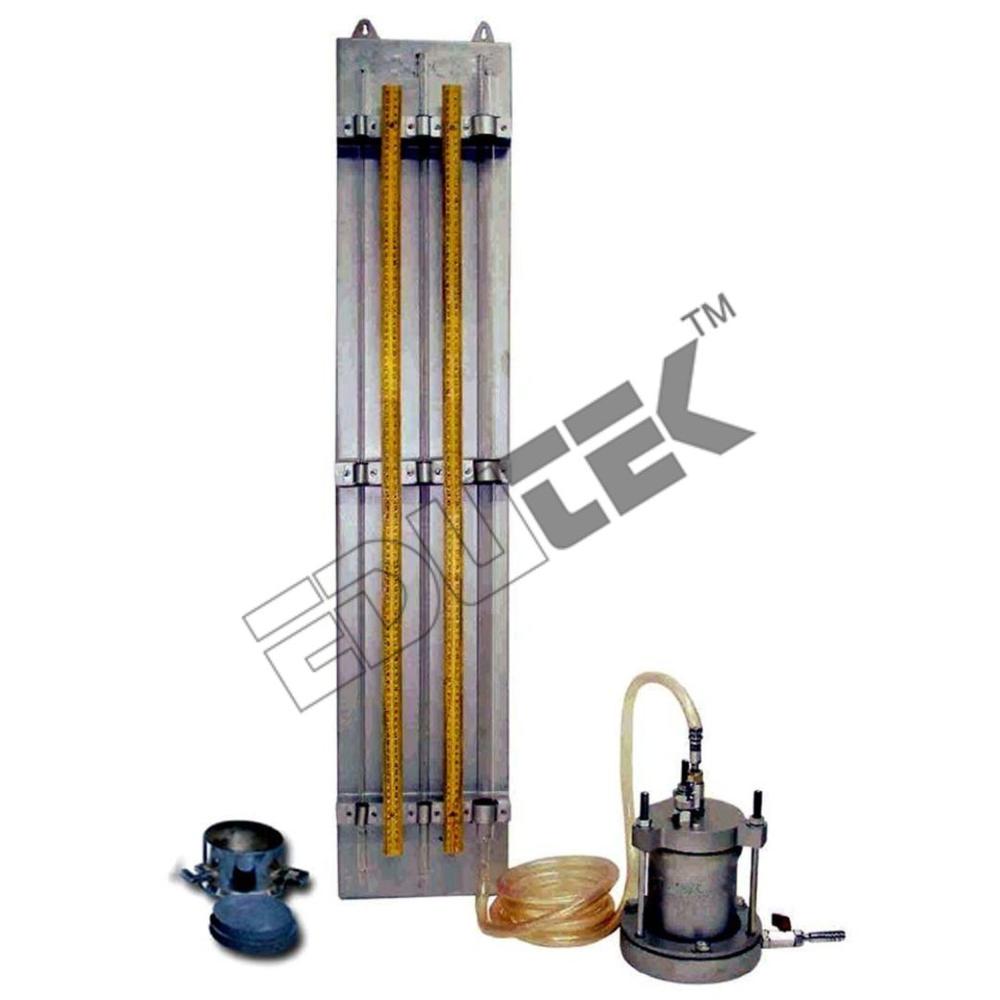
Universal Or Combination Permeameter
Specifications
Same as above but instead of a set of three glass stand pipes a stand with nine glass tubes of 6 mm, 10 mm, 20 mm, 25 mm, 40 mm, 50 mm, 60 mm, 70 mm, 75 mm bore. 75 mm bore tube is provided with overflow arrangement for constant head tests. The remaining tubes are used for following head test.
Salient Features Optional
Overhead tank made of steel, approximately 37.5 cm dia x 1 mtr. high. it is provided with an inlet port at the top and size outlet at bottom with cocks and air inlet and water filling ube on top. An arrangement is provided to indicate the water level. An extra meralic tube having approximately 5 mm / 6 mm I.D. and 1 mtr. long is also supplied 2.6 kg x 310 mm controlled fall and Rammer 4.89 kg x 450 mm controlled fall.
Spares - Pair of top and bottom Porous stones for permeameter mould.
Versatile Testing MethodsThis permeameter supports both constant head and falling head permeability tests, making it highly adaptable for diverse soil types and laboratory requirements. Its design allows seamless switching between testing methods while ensuring accuracy and compliance with standard procedures for soil permeability assessment.
Customizable and Durable ConstructionEngineered with a powder-coated mild steel frame and perspex components, the Universal Permeameter resists corrosion and stands up to rigorous lab environments. Dimensions, sample capacity, and operational modes can be customized, ensuring optimal fit for specific testing needs while maintaining ease of use and reliability.
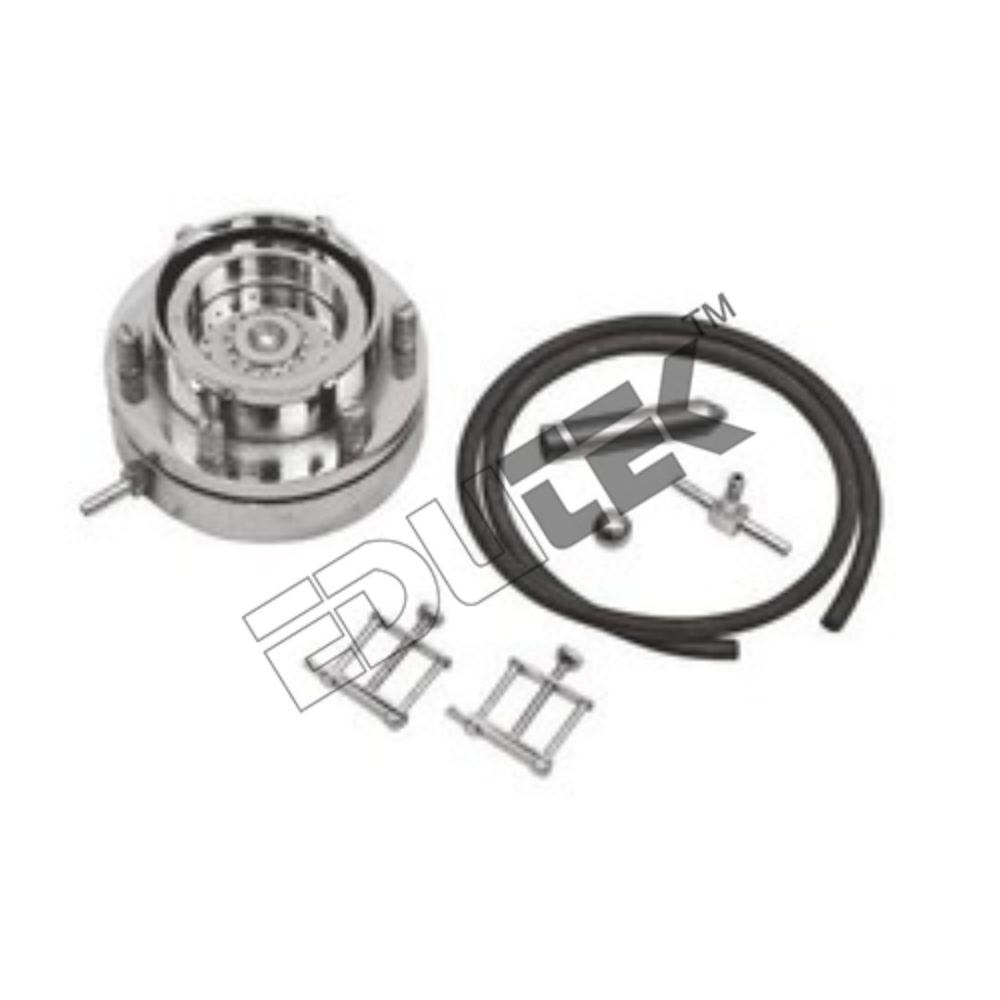
Comprehensive Accessories and User-friendly ExperienceIncluded with the permeameter are all essential accessories such as rubber tubing, measuring cylinders, glass tubes, and a stopwatch. The analog/manual display and ergonomic controls make operation straightforward, while the robust build and export-worthy packaging ensure durability and safe shipment.
FAQs of Universal Or Combination Permeameter:
Q: How does the Universal or Combination Permeameter measure soil permeability?
A: The device measures permeability using both constant head and falling head methods, allowing you to determine the soils ability to transmit water by monitoring the rate of water flow through the sample under controlled pressure and head conditions.
Q: What soil sample sizes are compatible with this permeameter?
A: The permeameter is designed for use with soil samples of diameters 38 mm and 75 mm, ensuring versatility for various laboratory testing standards and soil types.
Q: When should I use the constant head versus the falling head method?
A: Use the constant head method for coarse-grained soils with higher permeability, while the falling head method is suitable for fine-grained soils where flow rates are lower. The instrument supports easy switching between these methods based on your test requirements.
Q: Where is this permeameter suitable for use?
A: This equipment is ideal for laboratory settings in educational institutions, research centers, and quality control labs for civil engineering and geotechnical investigations, and is robust enough for export and international use.
Q: What is the process for conducting a permeability test using this device?
A: Begin by preparing your soil sample and inserting it into the permeameter chamber. Connect the required accessories, fill the water reservoir, and set up the manometer. Choose the appropriate test method (constant or falling head), and use the included measuring cylinders and stopwatch to record necessary data. Detailed instructions are provided for each test type.
Q: How does the powder-coated finish benefit laboratory use?
A: The powder-coated surface offers strong corrosion resistance, ensuring the permeameter withstands regular exposure to water, chemicals, and varying ambient temperatures, extending its operational lifespan in any laboratory environment.
Q: What are the main advantages of using this Universal Permeameter?
A: Key benefits include high accuracy (100%), customizable capacity, compatibility with multiple testing methods, robust construction, user-friendly manual or semi-automatic operation, and reliable performance validated by international exporters, manufacturers, and suppliers.





 Send Inquiry
 Send Inquiry

