
EDUTEK INSTRUMENTATION
GST : 06AEWPJ6896D1ZU

Call us
07313726362
Call us
07313726362
Specification:
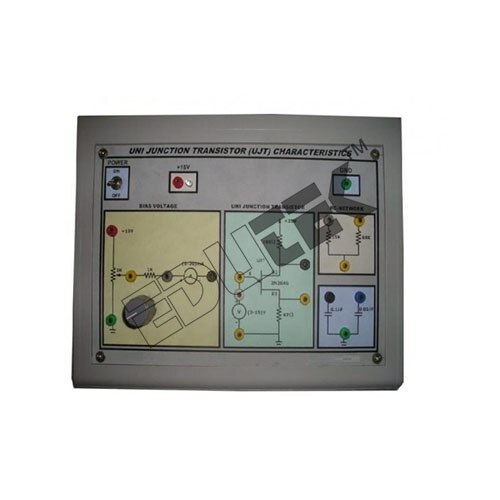
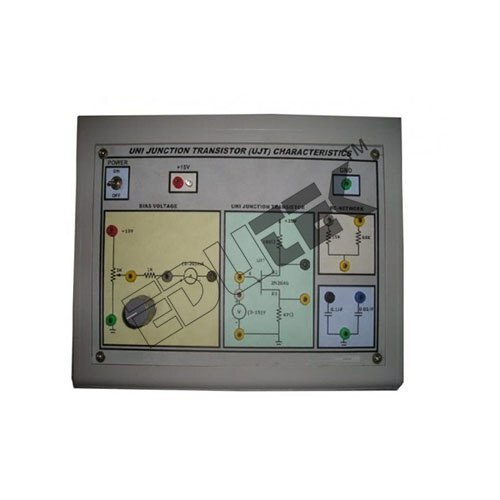
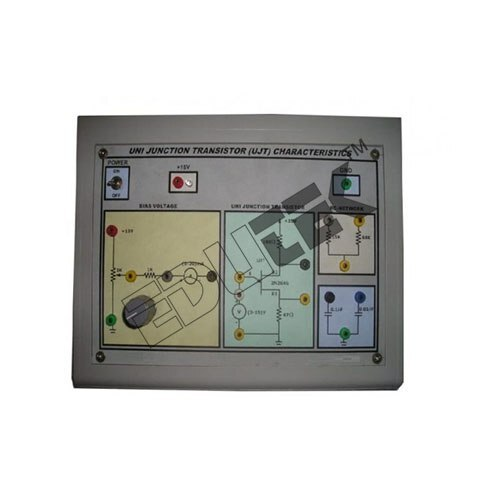
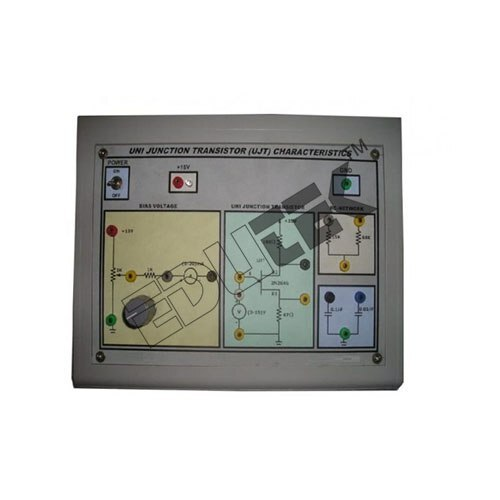
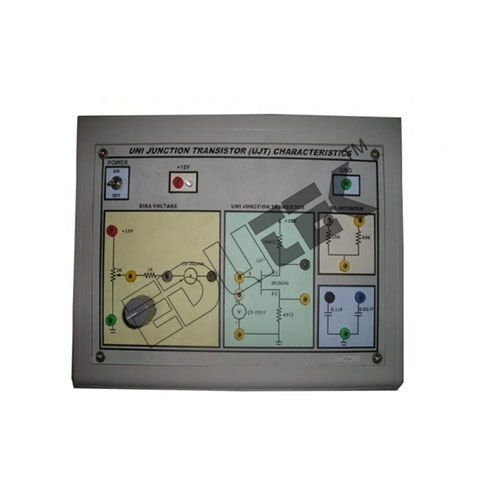
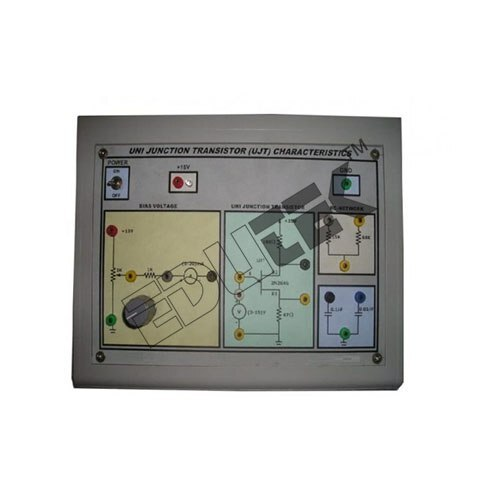
UJT CHARACTERISTICS
To determine the peak voltage in an UJT circuit.
To determine the valley voltage in an UJT circuit.
To calculate the intrinsic standoff ratio for an UJT.
To demonstrate the changes in peak voltage, valley voltage, and intrinsic standoff ratio when the applied voltage to an UJT circuit is changed.
To demonstrate the outputs of an UJT relaxation oscillator.
Features:
Built in regulated power supply: +15v /300 mA.
Instruction Manual: Step-By-Step detailed instruction manual.
Dimension: 27cmX 17cm X 10cm
Input Supply: 230V AC/50 Hz mains operated

Price:
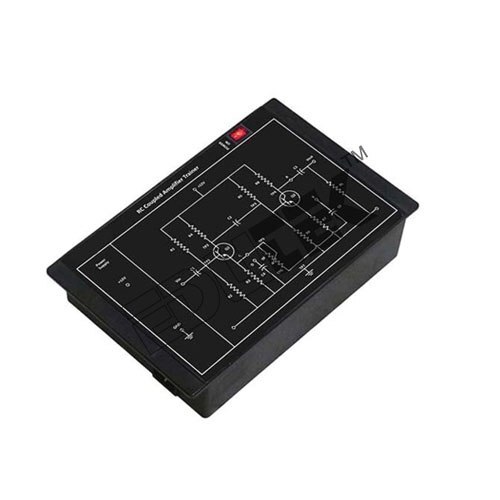
Price 1500.0 INR / Piece
Minimum Order Quantity : 1 Piece
Usage : ENGINEERING ELECTRONICS INSTRUMENTS
Application : ENGINEERING ELECTRONICS INSTRUMENTS
Product Type : RC COUPLED AMPLIFIER
Function : Signal Amplification
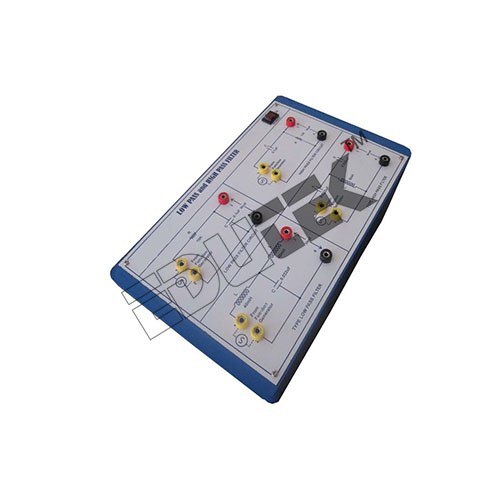
Price 1200.0 INR / Piece
Minimum Order Quantity : 1 Piece
Usage : ENGINEERING ELECTRONICS INSTRUMENTS
Application : ENGINEERING ELECTRONICS INSTRUMENTS
Product Type : ACTIVER FILTERS (LOW PASS AND HIGH PASS)
Function : Filters specific frequency ranges; Low Pass filters pass frequencies below cutoff, High Pass filters pass frequencies above cutoff
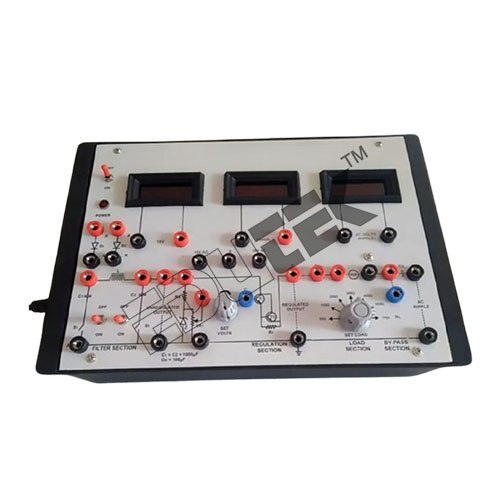
Price 1200.0 INR / Piece
Minimum Order Quantity : 1 Piece
Usage : ENGINEERING ELECTRONICS INSTRUMENTS
Application : ENGINEERING ELECTRONICS INSTRUMENTS
Product Type : VOLTAGE REGULATION USING IC 317 WITH ALUMINUM PANEL & DIGITAL PANEL
Function : To Study voltage regulation using three terminal voltage regulators.
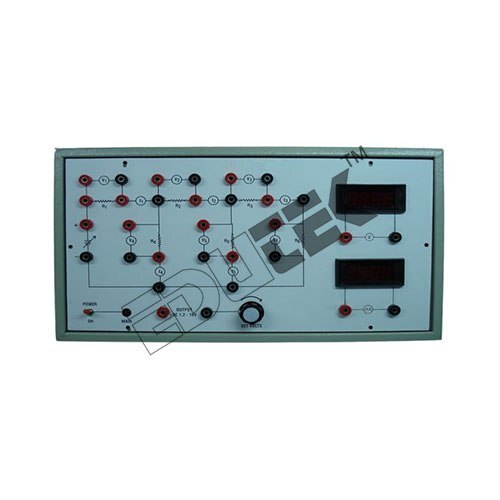
Price 1200.0 INR / Piece
Minimum Order Quantity : 1 Piece
Usage : ENGINEERING ELECTRONICS INSTRUMENTS
Application : ENGINEERING ELECTRONICS INSTRUMENTS
Product Type : VERIFICATION OF KCL & KVL WITH ALUMINUM PANEL & DIGITAL PANEL METERS

 Send Inquiry
 Send Inquiry

