About Two Stage RC Coupled Transistor Amplifier
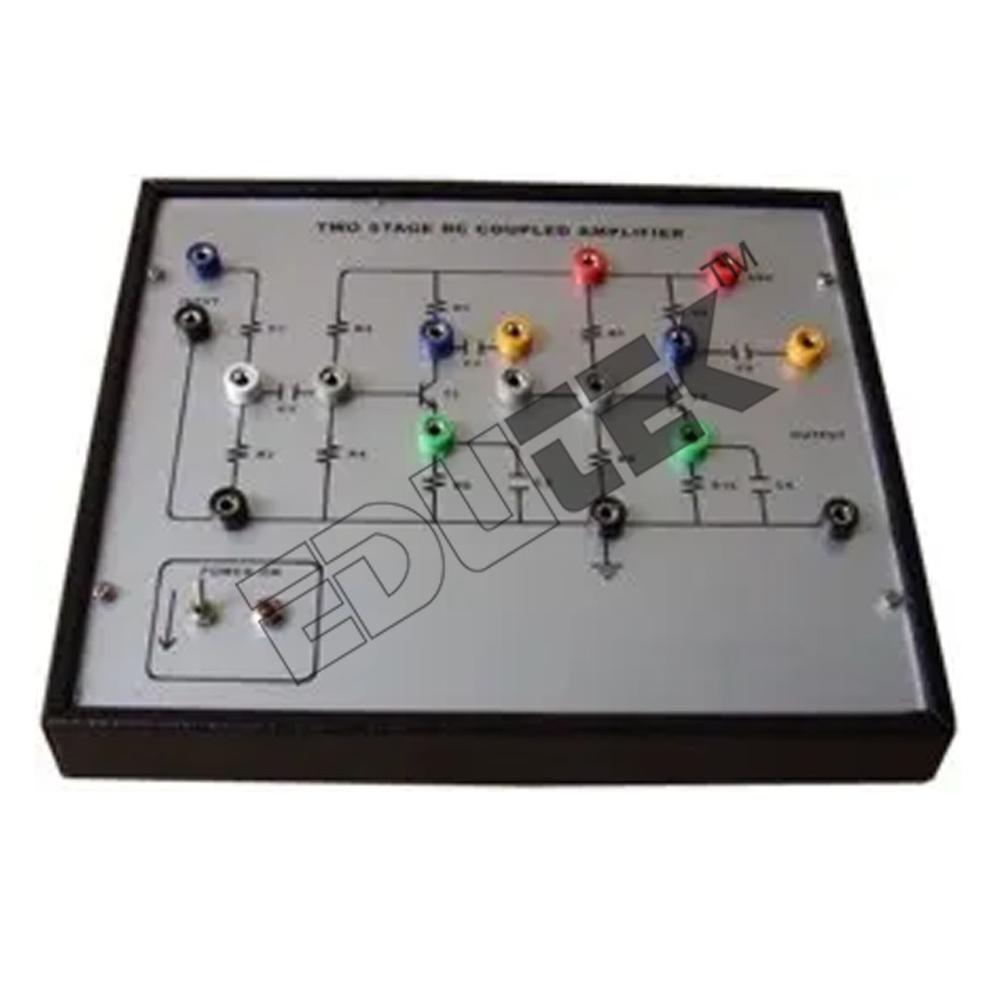
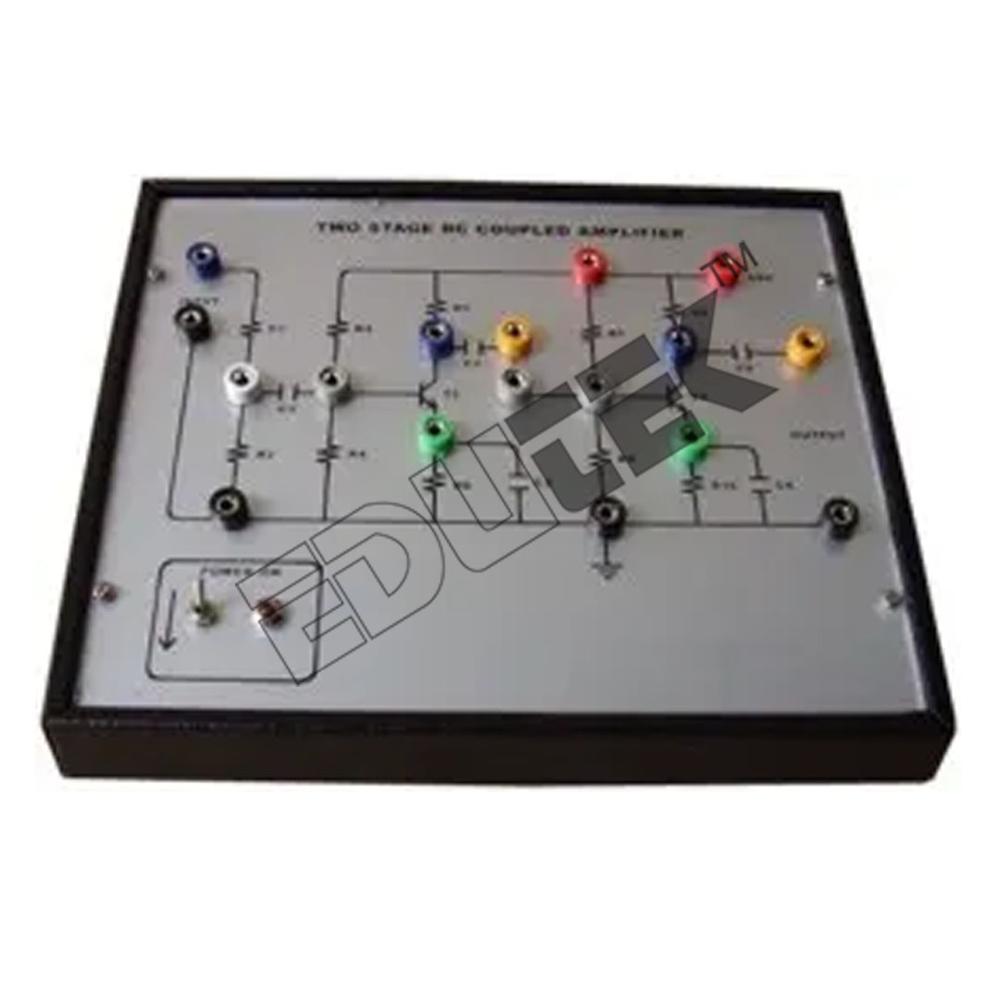
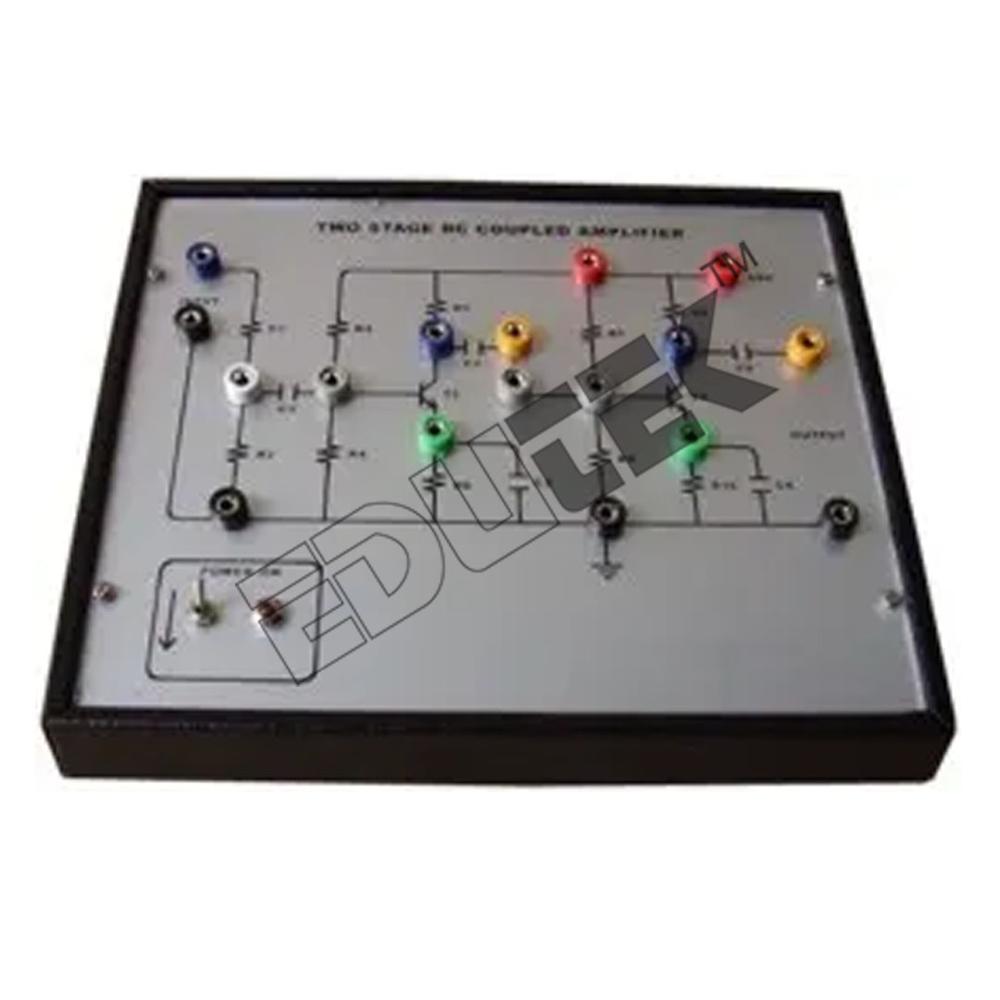
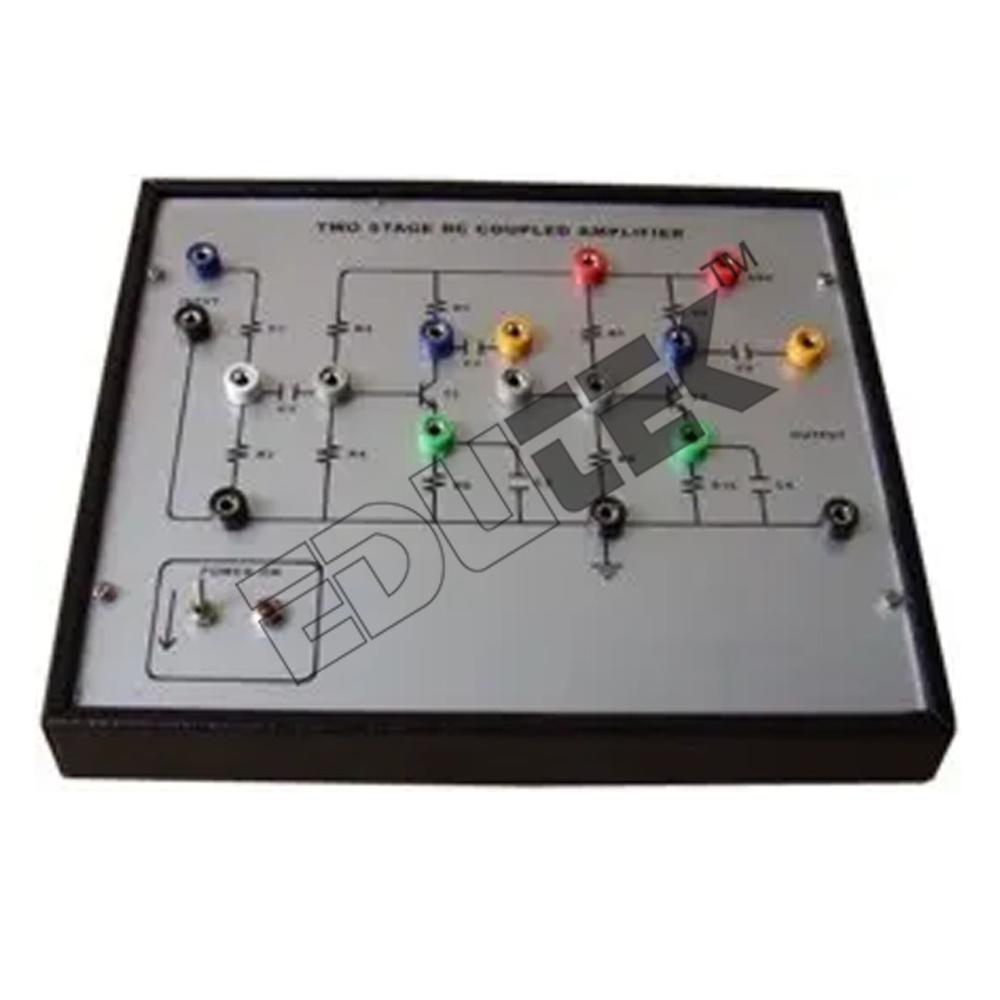
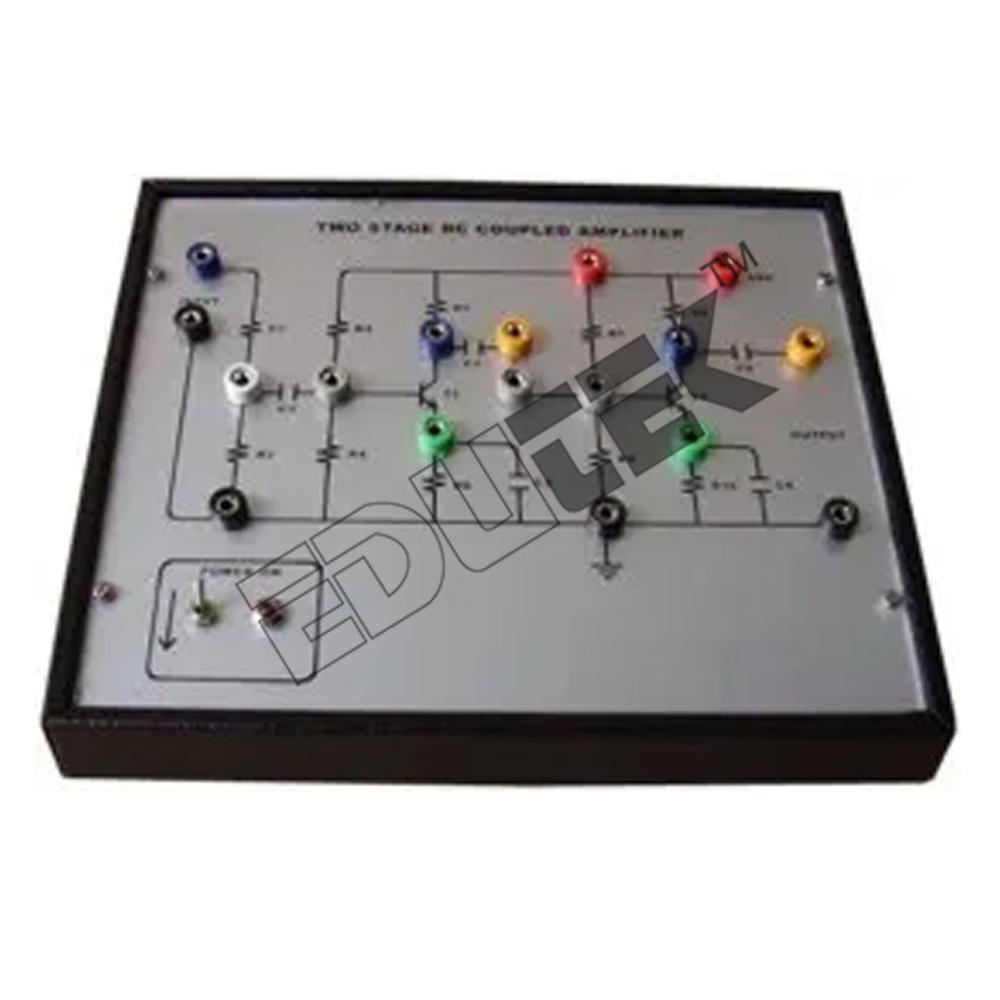
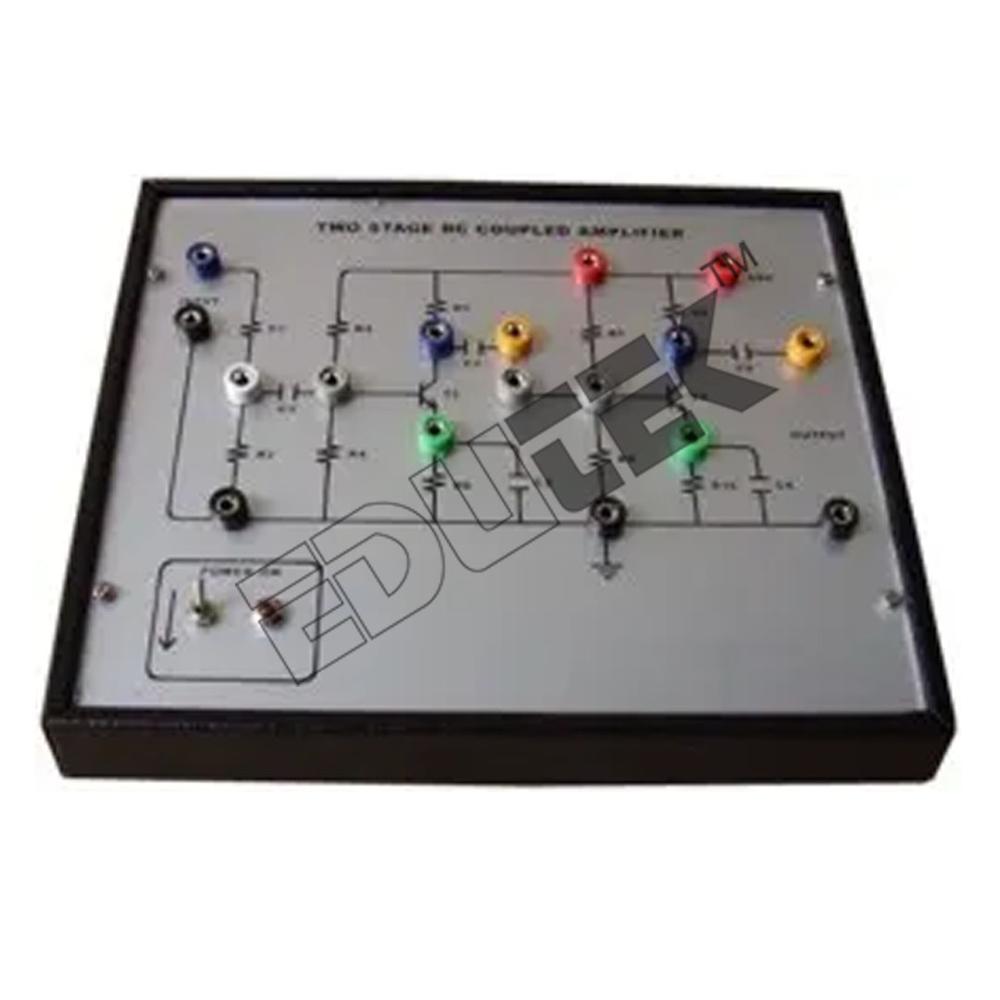
Two Stage RC Coupled Transistor Amplifier
Objective:
- Study Frequency Response of single stage & two stage RC Coupled Common Emitter Transistor Amplifier.
Features:
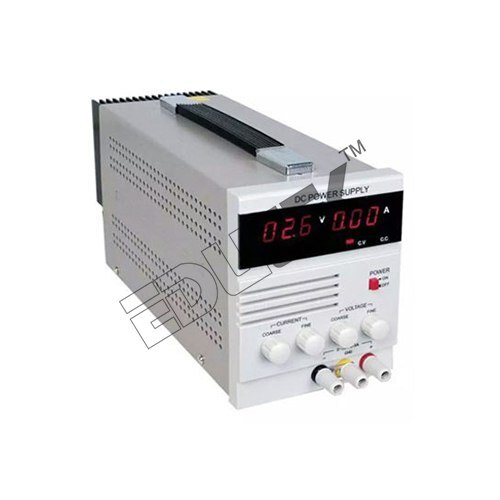
- Instrument comprises of DC Regulated Power Supply,
- Circuit diagram is printed, components mounted on the front panel.
Efficient Two-Stage Signal AmplificationThe amplifier employs two RC coupled NPN transistor stages to ensure reliable amplification of weak audio signals. Its dual-stage design enhances signal strength while maintaining low distortion, making it suitable for precise laboratory and audio applications. Each stage is tailored for optimal analog response, providing clear and consistent amplification results.
Robust PCB Construction and ConnectivityConstructed using FR4 epoxy, the PCB is both durable and compact. The board supports hole mounting for secure installation and uses terminal blocks for streamlined input and output connections. With accessible test points, users can conveniently measure performance at different stages, ensuring efficient monitoring during experiments or training.
FAQs of Two Stage RC Coupled Transistor Amplifier:
Q: How does the Two Stage RC Coupled Transistor Amplifier work?
A: This amplifier uses two general purpose NPN transistors in separate stages, interconnected via resistor-capacitor coupling, to boost weak signals. This design provides an overall gain of about 100 and efficiently increases input signals for further use or analysis.
Q: What type of signals can be amplified with this module?
A: The amplifier is ideally suited for audio or other analog signal currents, handling input signals up to 1Vpp. It is effective in circuits requiring the amplification of weak audio frequencies within the 20 Hz to 20 kHz range.
Q: When should test points on the amplifier be used during operation?
A: Test points are provided to facilitate stage-wise measurement and troubleshooting. During laboratory experiments or training, these points allow users to verify signal behavior at each stage and ensure proper operation or diagnose performance issues.
Q: Where is this amplifier typically installed or used?
A: This module is designed for board-level, hole mounting in compact electronic setups. It is commonly employed in laboratories, training kits, and small audio systems for signal amplification and experimentation.
Q: What is the process for connecting the amplifier to a circuit?
A: Connect the signal input through a capacitor to the input terminal block. Use the output terminal for the amplified signal, and power the module with an external 12V DC supply. Ensure proper mounting and soldering for optimal performance.
Q: How does the RC coupling benefit signal amplification?
A: RC coupling between the amplifier stages efficiently transmits signals while blocking DC, reducing distortion and providing stable frequency response. This improves overall sound clarity and signal fidelity.
Q: What are the benefits of using this amplifier in a training or experiment kit?
A: The modules compact size, instant response time, accessible test points, and reliable analog performance allow students and engineers to study and observe signal amplification, test configurations, and analyze circuit behavior with ease.





 Send Inquiry
 Send Inquiry

