About Triaxial Cell
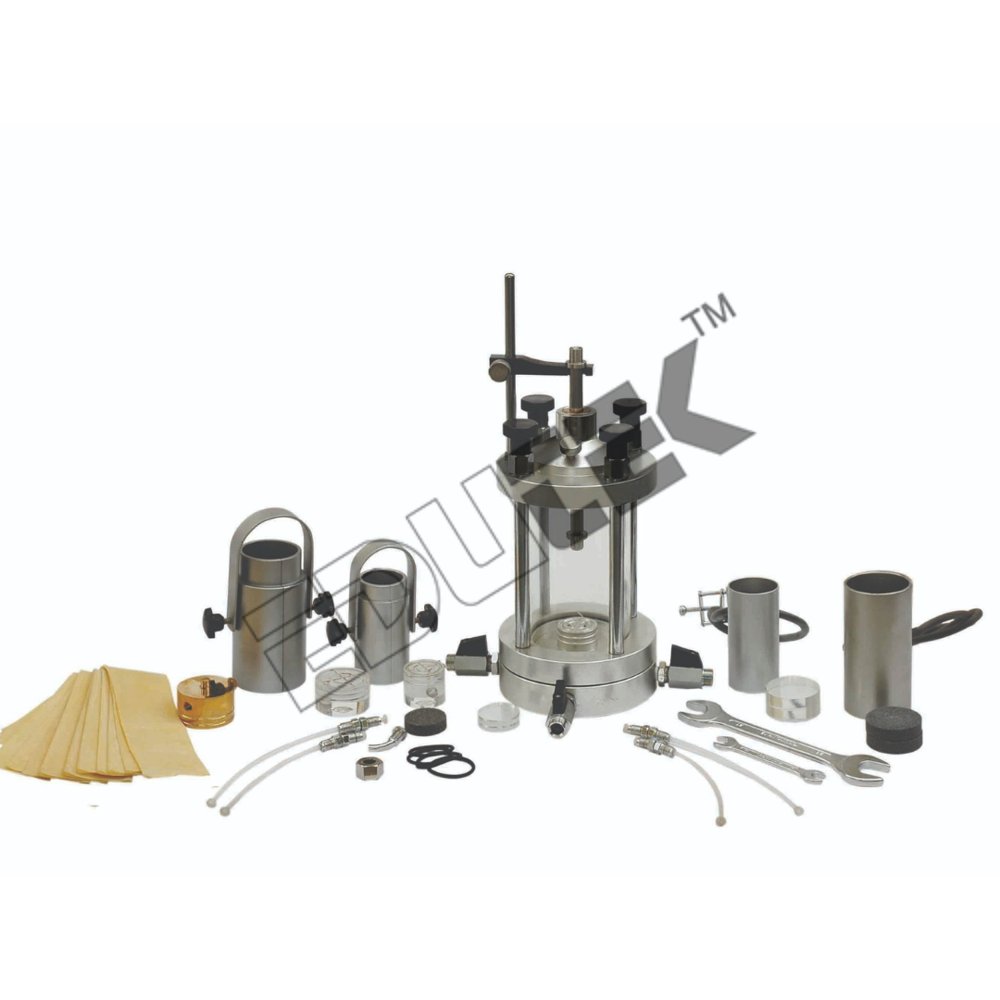
Triaxial Cell
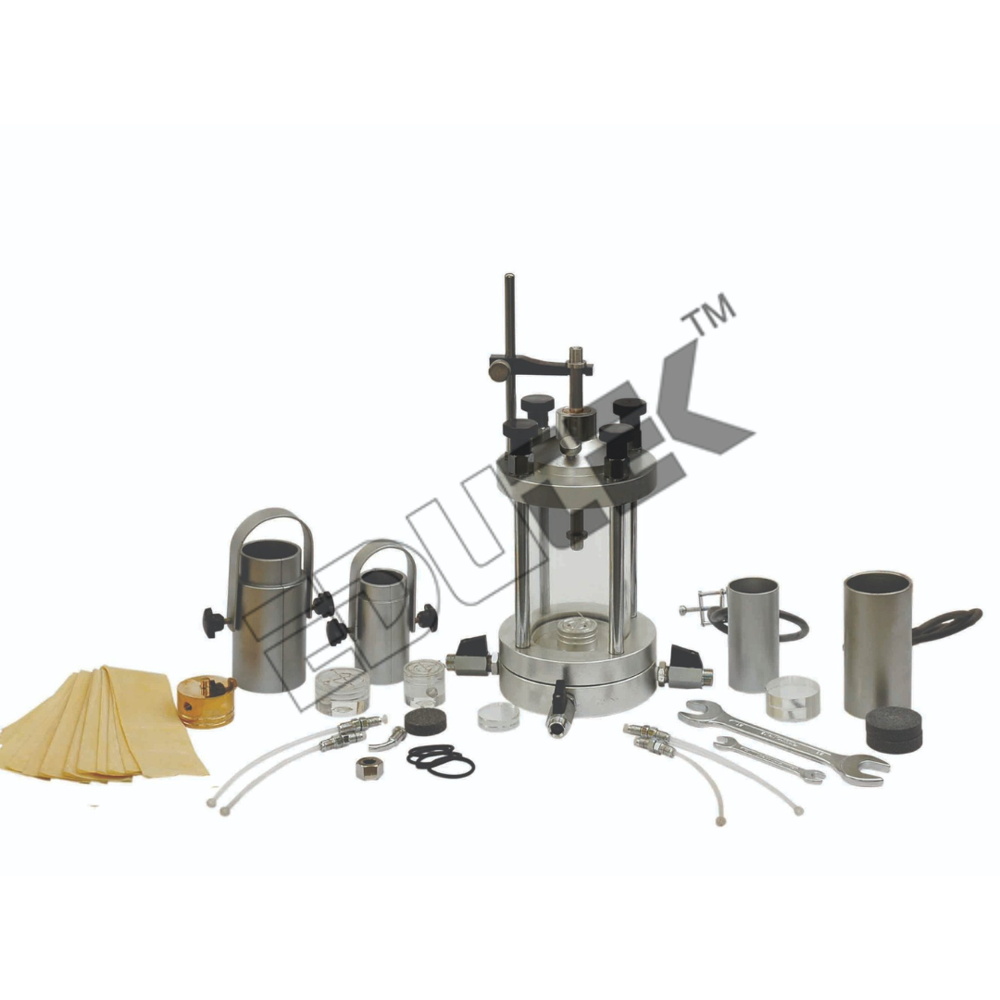
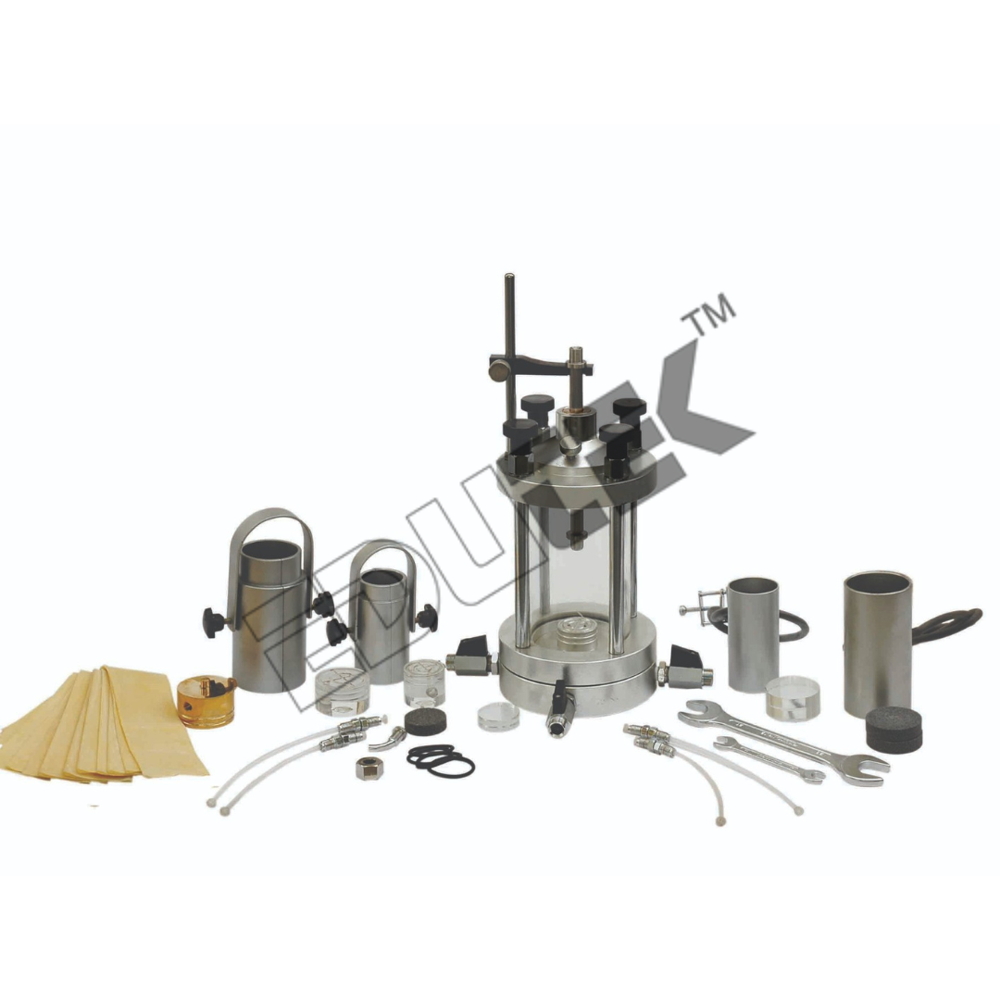
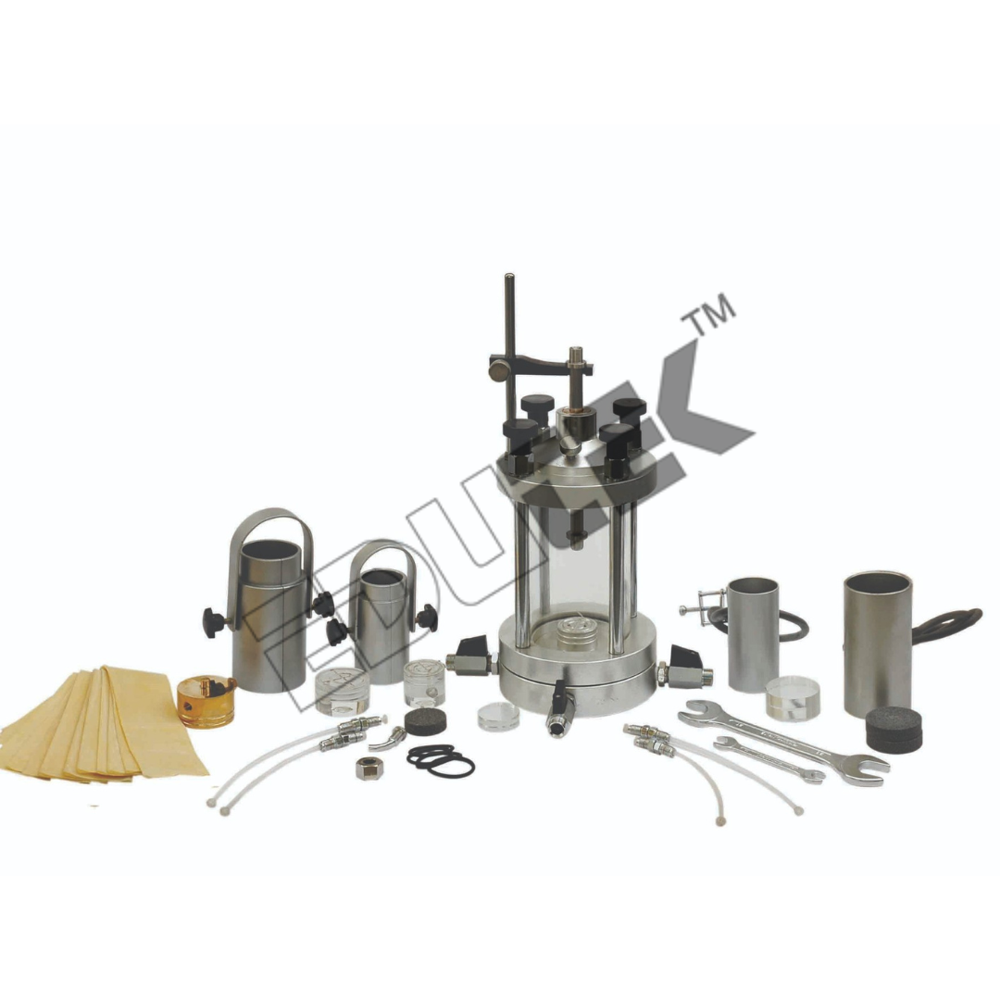
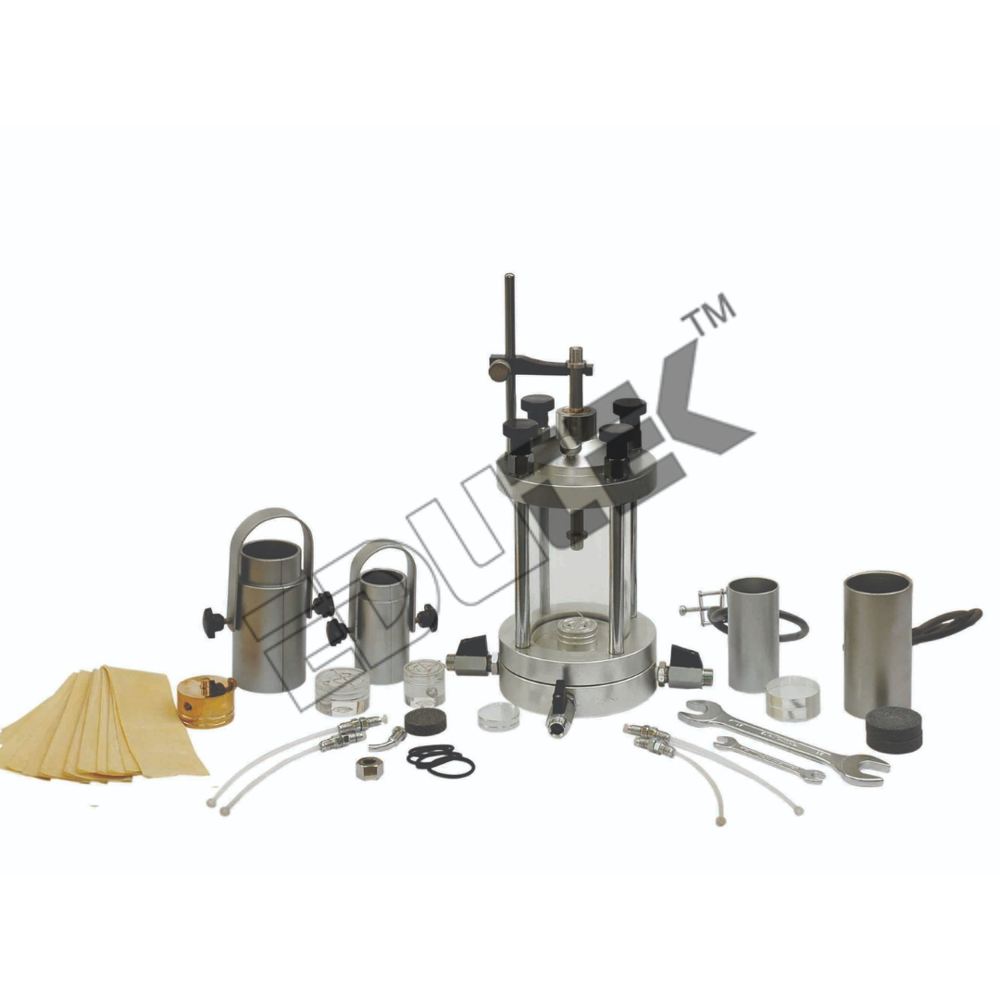
The cell is useful for testing 38mm dia x 76mm high soil specimen. Transparent Perspex chamber with anvil and loading plunger, the cell is easily opened by releasing four nuts of the tie rods. It is leak proof up to 10kg/cm.sq. Fluid pressure. An oil plug which can also be used as an air vent is provided for introducing a thin layer of oil over water. This provides effective sealing at the plunger for long duration tests. The cell is fitted with four sleeve packed valves of no volume change type on the base. These valves are used for cell pressure, pore water pressure, drainage or back pressure. The loading plunger of the cell has dial gauge rest. Loading pad made of Perspex for 38mm dia specimens. Pair of plain discs made of Perspex 38mm dia 6mm thick. Pair of porous stones 38mm dia specimen. Split sand former for 38mm dia specimen. Sheath stretcher for 38mm dia specimen. One dozen rubber sheaths for 38mm dia samples. For synthetic rubber 'o' rings for 38mm dia specimen. One plastic drainage tube.
Reliable Soil Testing for LaboratoriesThis triaxial cell delivers exceptionally accurate results, supporting a measurement range of 0-10 kN with 100% accuracy. Its leak-proof design and overpressure valves enhance operational safety, while the sturdy build ensures long-term durability for rigorous laboratory use in soil analysis.
Customizable and Versatile ApplicationsDesigned to accommodate various specimen sizes (38 mm, 50 mm, and 75 mm) and equipped with nickel plated brass drainage fittings, the apparatus suits a wide range of soil mechanics investigations. Users may select oil or water for lateral pressure application, providing flexibility and precision in research methodologies.
Advanced Features and Effortless OperationThis equipment integrates an optional pore pressure system, analog or digital measurement displays, and compressor fittings with needle valves, enabling easy and reproducible testing procedures. Manual or optional power pack operation makes it suitable for both intensive and routine laboratory testing environments.
FAQs of Triaxial Cell:
Q: How is lateral pressure applied in the Triaxial Cell?
A: The lateral pressure in the triaxial cell can be applied using either oil or water, depending on the required soil test procedure. The chamber is engineered to be leak-proof, promoting safe use with both media.
Q: What specimen sizes can this triaxial apparatus accommodate?
A: The cell is designed for specimen diameters of 38 mm, 50 mm, and 75 mm as standard. Other specimen sizes can be supplied upon request to suit various testing requirements.
Q: When is the pore pressure system beneficial during testing?
A: The optional pore pressure system is valuable when assessing soil permeability and consolidation characteristics in detail. It enables precise monitoring and control of pore pressures, enhancing the reliability of test data.
Q: Where is the Triaxial Cell best used?
A: This triaxial cell is optimized for laboratory environments, particularly within academic, research, and quality assurance settings focused on soil mechanics and geotechnical engineering.
Q: What safety features are integrated into the cell chamber?
A: The apparatus features a leak-proof chamber and an overpressure valve to ensure operator safety and prevent accidental release of pressure during testing.
Q: How does the measurement and display system work?
A: The cell comes with analog dial gauges for standard measurement and can be upgraded to digital displays if desired. This ensures accurate reading of loads and pressures applied during each test.
Q: What are the main benefits of using the triaxial cell?
A: With its advanced safety features, customizable capacity, flexible specimen sizing, and reliable accuracy, the offers highly efficient soil testing, making it a dependable solution for laboratories and industrial research.







 Send Inquiry
 Send Inquiry

