About TRI-Axial Test Set
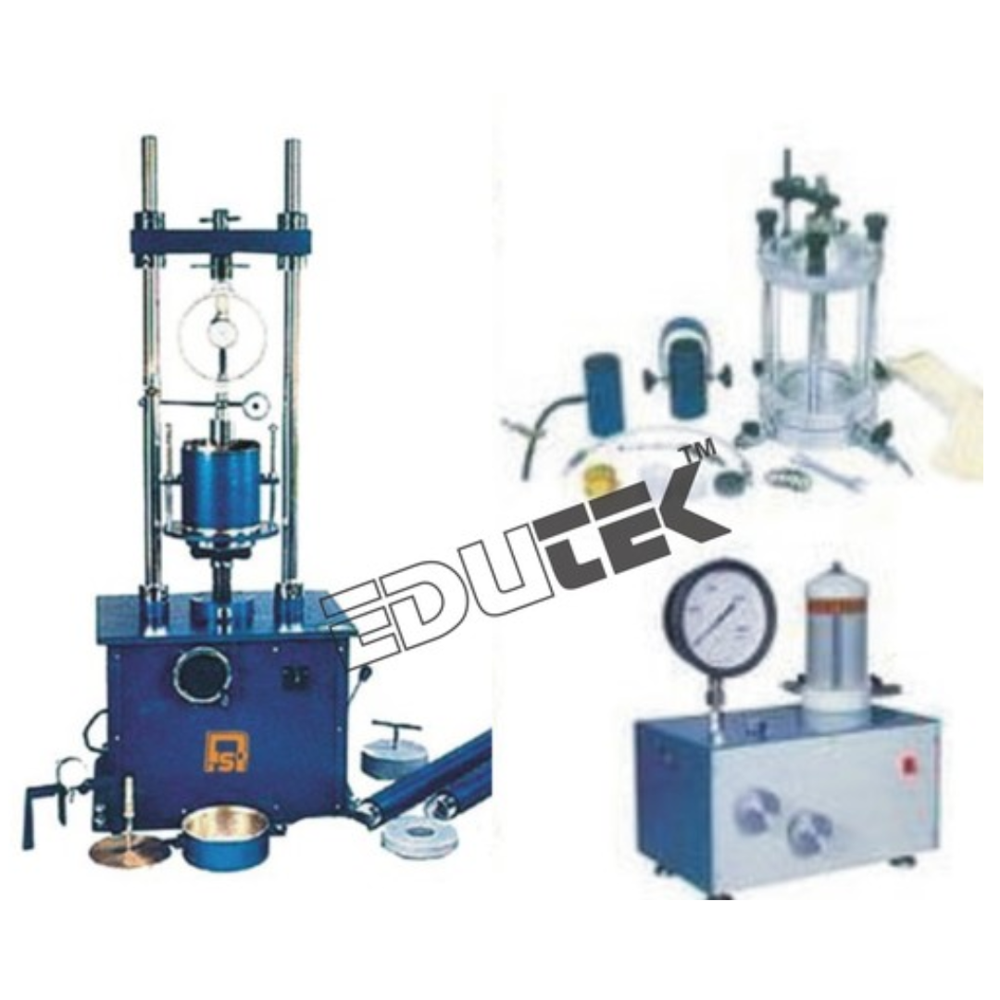
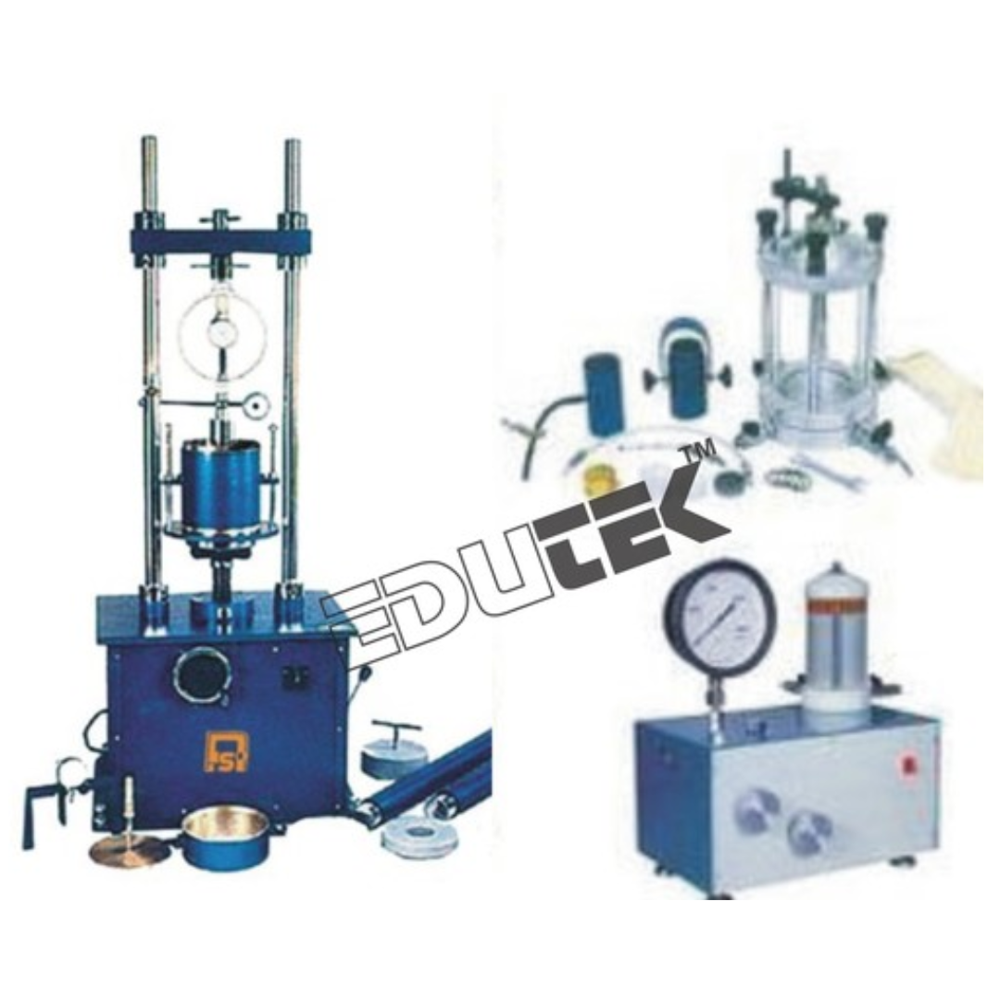
TRI-AXIAL TEST SET
Use: For the Tri-axial test; Unconsolidated Undrained (UU),
Consolidated Undrained (CU), Consolidated Drained (CD),
Unconfined Compression (UC)
TRIAXIAL CELL:
- Tri-axial cell for specimens up to 70 mm diameter.
- Pedestal for 70 mm specimens.
- Top cap with drainage for specimens of 70 mm.
- Base plate, in aluminum for specimens of 70 mm.
- Porous disc for 70 mm specimens (set of 2).
- Suction sleeve stretcher for 70 mm - 2.8" - 3" specimens.
- Membrane, rubber latex for 70 mm - 2.8" specimens (30 pieces).
- O-ring neoprene for 70 mm - 2.8" specimens (30 pieces).
- Filter drain for 70 mm specimens pack of 50.
- Two part split mould for 70 mm specimens
SAMPLE PREPARATION:
- Sampler for 70 mm samples piston and tube included.
- Rack and pinion sample extruder bench model.
- Allows the insertion of sampling tubes into a soil sample. with a rack and pinion mechanism with minimal disturbance; it is then used to extrude the resultant sample from the sampling tube.
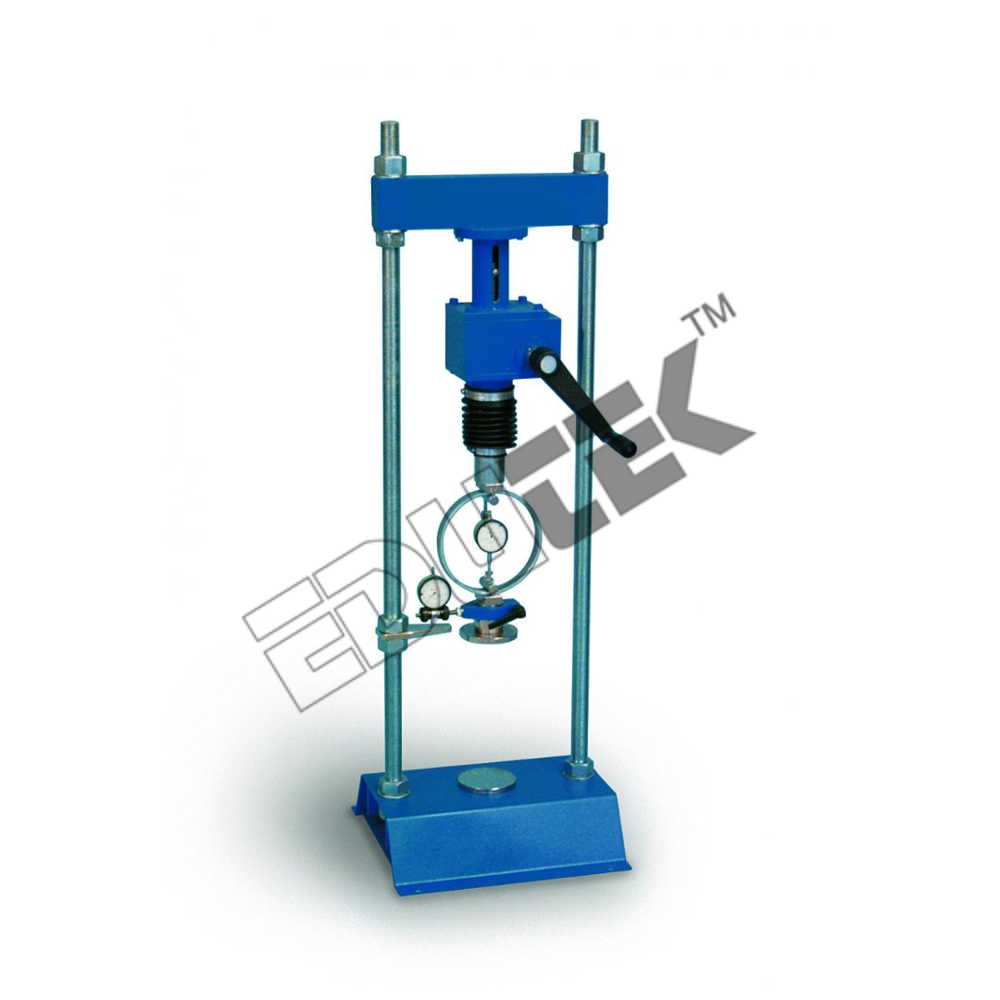
- Max. Clearance between platens: 435 mm.
- Min. Clearance between platens: 0 mm.
Advanced Testing and MeasurementThe TRI-AXIAL TEST SET delivers highly efficient and accurate soil testing, catering to both manual and automatic operations. With a microprocessor control panel, users benefit from precise control over testing parameters. It features a measurement resolution of 0.01 mm and supports various sample sizes, making it versatile for a broad spectrum of laboratory applications. The equipments digital or analog displays ensure clear and reliable data interpretation.
Safety and Compliance AssuredEquipped with overload protection and a power cut-off system, the TRI-AXIAL TEST SET provides reliable safety for both users and samples. Its build quality complies with international testing standards, including IS 2720 (Part 11) and ASTM D4767, ensuring trustworthy and standardized results. The corrosion-resistant mild steel frame and robust electrical panel contribute to long-lasting, low-maintenance performance.
Flexible Operation and Export-Ready PackagingThe TRI-AXIAL TEST SET supports semi-automatic and fully automatic modes, facilitating user-friendly and minimal-maintenance operation. With export-quality wooden crate packaging, the unit is protected during transportation, making it suitable for national or international delivery. Its transparent graduated fluid reservoirs and flexible pressure application (compressed air or dead-weight) optimize laboratory workflow.
FAQs of TRI-AXIAL TEST SET:
Q: How does the TRI-AXIAL TEST SET measure soil deformation and pore pressure?
A: The test set utilizes a dial gauge or displacement transducer for deformation measurements with a fine resolution of 0.01 mm. Pore pressure is captured through integrated sensors, delivering accurate readings throughout the triaxial test process.
Q: What types of triaxial tests can be performed with this equipment?
A: This set supports Unconsolidated Undrained (UU), Consolidated Undrained (CU), and Consolidated Drained (CD) triaxial tests, allowing for comprehensive soil analysis as per IS 2720 (Part 11) and ASTM D4767 standards.
Q: When should the TRI-AXIAL TEST SET be used in a laboratory setting?
A: The equipment is ideal for laboratory environments whenever precise geotechnical properties of soil samples need to be determined, such as during research projects, site investigation, and construction quality assessment.
Q: Where can the TRI-AXIAL TEST SET be installed and operated?
A: Its moderate footprint (approx. 800 x 400 x 1200 mm) and robust build allow it to be set up in most geotechnical or soil mechanics laboratories. Export-ready packaging makes it suitable for use by institutions globally.
Q: What is the process for operating the TRI-AXIAL TEST SET?
A: After sample installation, users can select automatic or manual test modes via the microprocessor-based panel. Fluid pressure is applied either by compressed air or dead-weight, with all critical parameters monitored digitally or analogically as required.
Q: What are the key benefits of using this triaxial test set?
A: Key benefits include highly accurate test results, compatibility with multiple sample sizes, enhanced safety features, user-friendly interface, and compliance with major international standards. Minimal maintenance and robust construction also increase its longevity and efficiency in laboratory use.






 Send Inquiry
 Send Inquiry

