About Standard Penetrometer
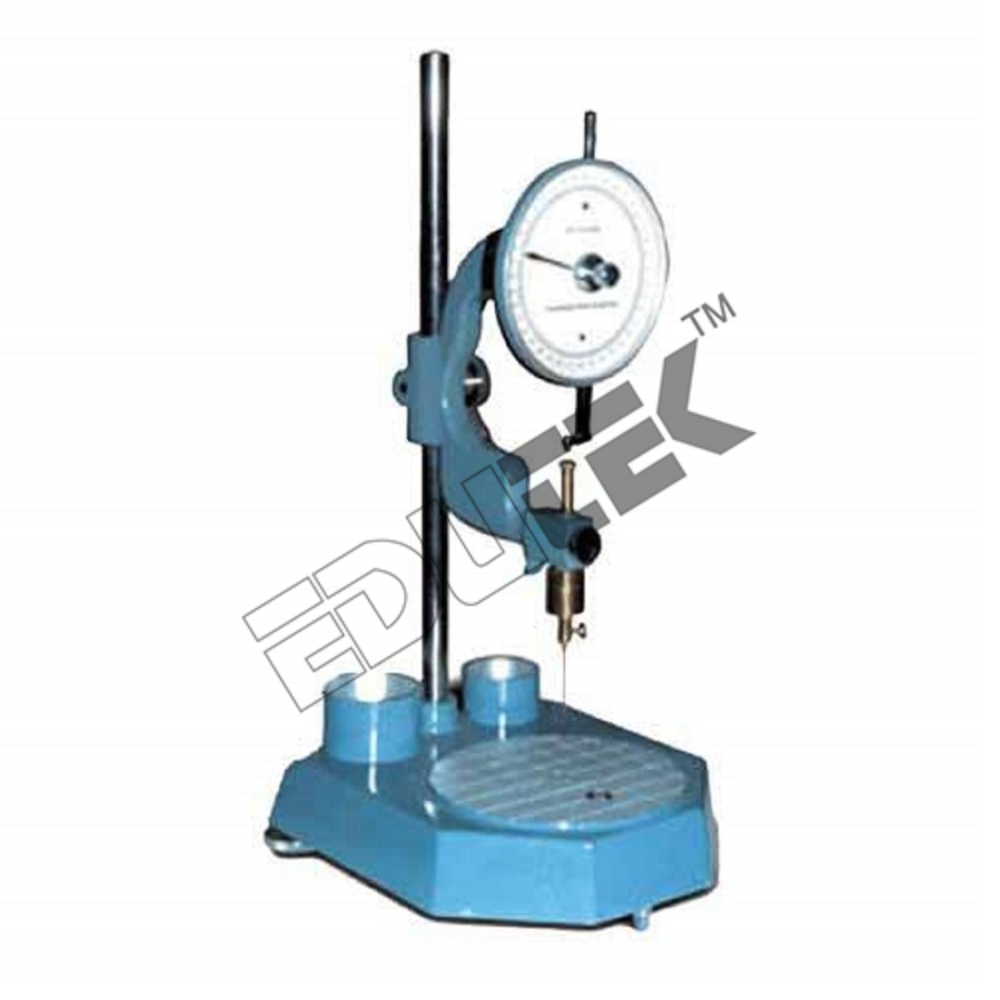
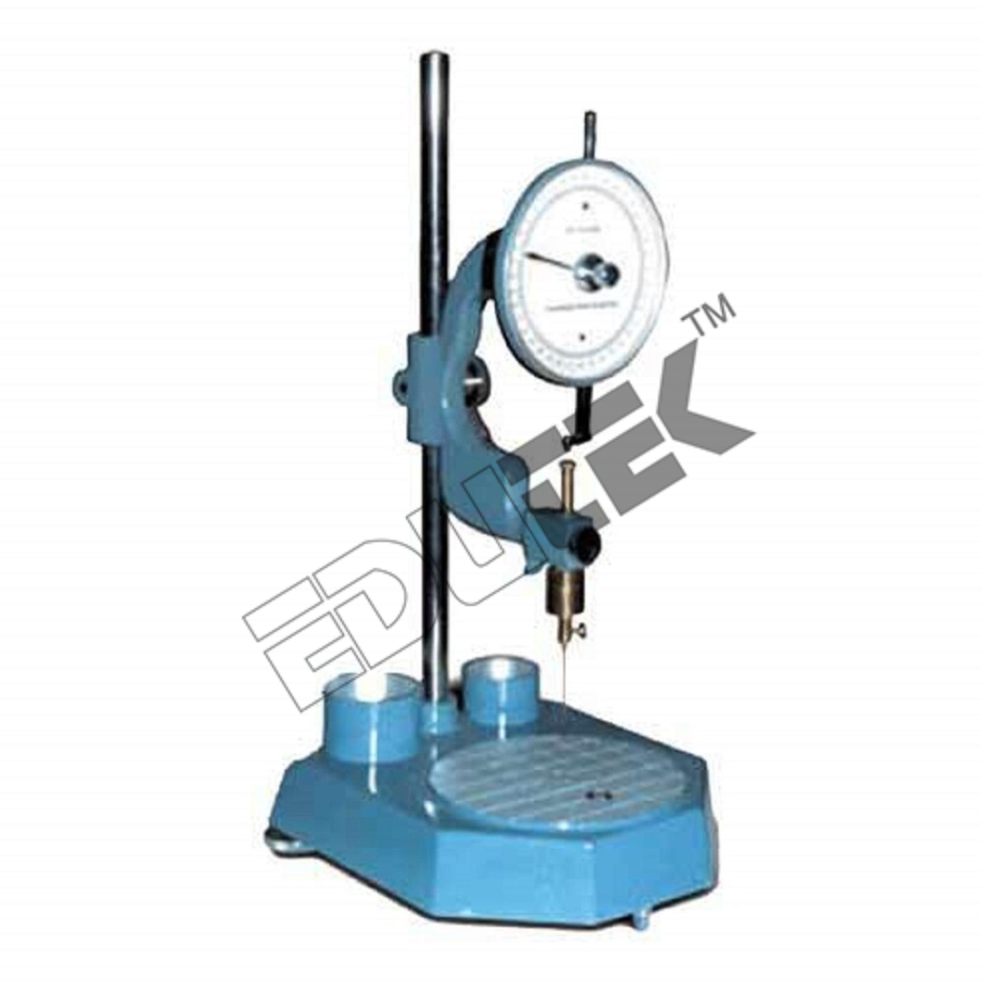
Standard Penetrometer
Used to determine grade of bitumen. The penetration tests determine consistency of bitumen for the purpose of grading Depth in units 1/10 of millimeter to which a standard needle having a standard weight will penetrate vertically in a duration of five seconds at a temperature of 25 C determines penetration for gradation.
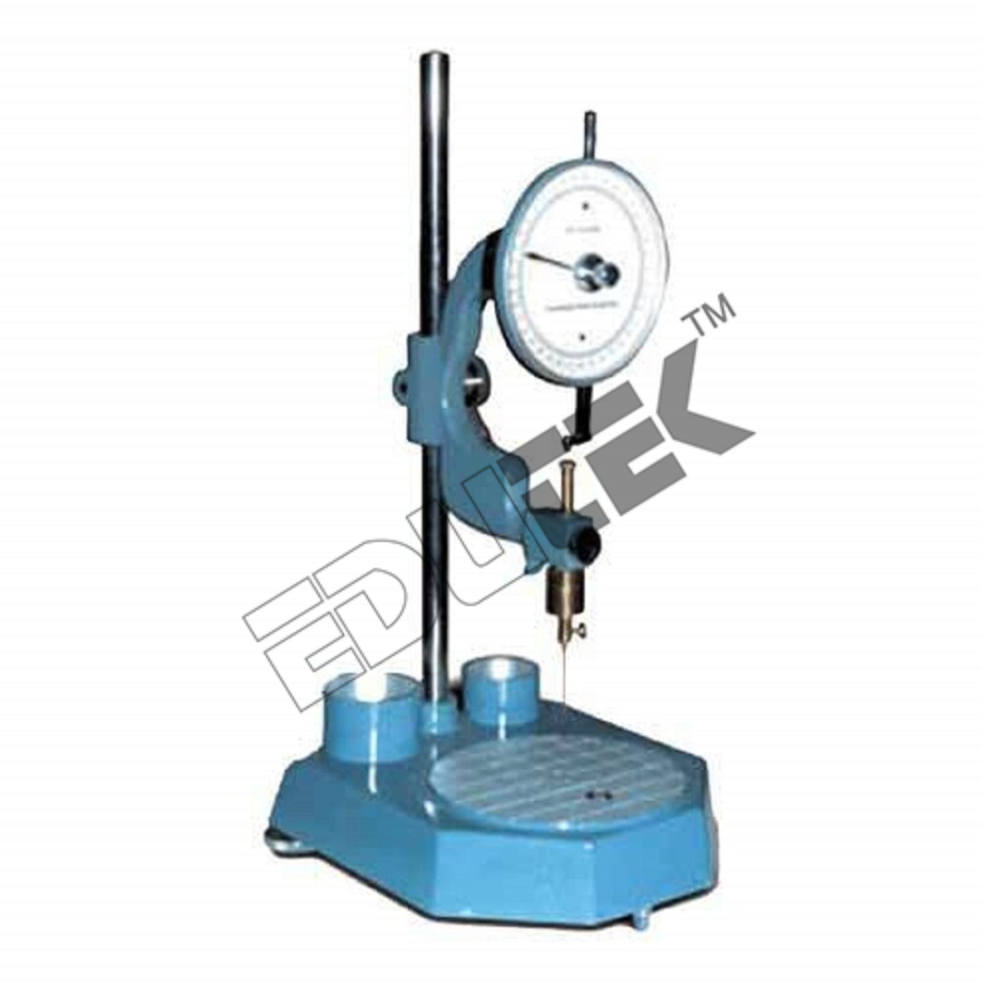
Consists of a vertical pillar mounted on a base provided with leveling screw The head together with dial gauge rod and cone (or needle) slides on a pillar and can be clamped at required height. A rack and pinion and pointer assembly provides adjustment of needle or cone tip to sample. It incorporates a slipping clutch mechanism which make reading of penetration and sub sequesnt restting a simple and accurate operation The dial is graduated in 400 1/10th mm sub-divisions, and the red needle pointer against black figures makes for easy reading. Supplied complete with one 50 gram weight, and one 100 gram weight and one needle.
Accessories :-
Penetrometer Cone : Made of Gunmetal and is fitted with a hardened and ground detachable steel, tip and a stem, Total moving weight is 150 + 0.1 gram.
Automatic Standard Penetrometer :
Supplied with transistorized timer and electro-magnet incorporated in the cluth mechanism to accurately control penetration time to exact five seconds.
Precision Engineering for Consistent ResultsOur Standard Penetrometer stands out for its accuracy and stability, thanks to its robust build and precise measurement system. The device features a spirit level for easy alignment and a spring-loaded, quick-stop release mechanism, ensuring repeatable test results. With a capacity tailored for bitumen and other soft materials, it is an essential tool for various industries requiring material consistency and quality control.
Simple Operation and VersatilityThe penetrometer is operated manually, making it independent of power sourcesideal for both laboratory and fieldwork. Users can select between analog or digital readouts, removable conical plungers (50 g or 100 g), and a manual or digital timer, adapting the device to diverse testing requirements. Its adjustable height ensures correct sample placement and accurate penetration readings in every application.
FAQs of Standard Penetrometer:
Q: How does the Standard Penetrometer measure material penetration?
A: The Standard Penetrometer uses a precision needle and either a 50 g or 100 g removable cone or plunger to penetrate the sample. The depth of penetration is measured via an analog dial or optional digital gauge, displaying results within a 050 mm range. The process is controlled manually for consistent speed, and the spring-loaded release ensures accurate measurements.
Q: What materials can be tested with the Standard Penetrometer?
A: This device is suitable for testing the penetration of bituminous materials, petroleum products, soft waxes, and certain food items. Its design and compliance with standards like IS:1203, ASTM D5, and EN 1426 make it ideal for both industrial quality control and research purposes.
Q: When should I use the analog dial versus the digital display?
A: The analog dial provides reliable, battery-free measurements and is standard with the device. However, users who require enhanced readability and data recording may opt for the optional digital display. Both systems offer high accuracy (0.1 mm), so the choice depends on personal preference and operational requirements.
Q: Where is the Standard Penetrometer typically used?
A: The Standard Penetrometer is widely used in laboratory settings, industrial quality testing centers, and field environments where power may not be available. Its manual operation and portable design allow flexibility in use anywhere accurate penetration measurement is required.
Q: What is the process for using the penetrometer safely and accurately?
A: Place the sample properly on the sturdy base, adjust the height for the test plunger, and check the devices spirit level for proper leveling. Select the appropriate cone, set the desired timer (manual or digital), and release the plunger using the spring-loaded quick-stop mechanism. Record the penetration depth from the dial or digital readout.
Q: What are the main benefits of using this penetrometer compared to powered alternatives?
A: Manual operation eliminates the need for a power supply, enabling use in remote or field locations. The heavy cast iron base provides stability, the precision needle ensures measurement accuracy, and features such as adjustable height and an automatic release mechanism make operation straightforward and safe.




 Send Inquiry
 Send Inquiry

