About Rolling Thin Film Oven
Rolling Thin Film Oven
We are manufacturer and exporter of Rolling Thin Film Oven .
Features of Rolling Thin Film Oven
- Certified temperature control
- Digital Display
- Internal Fan
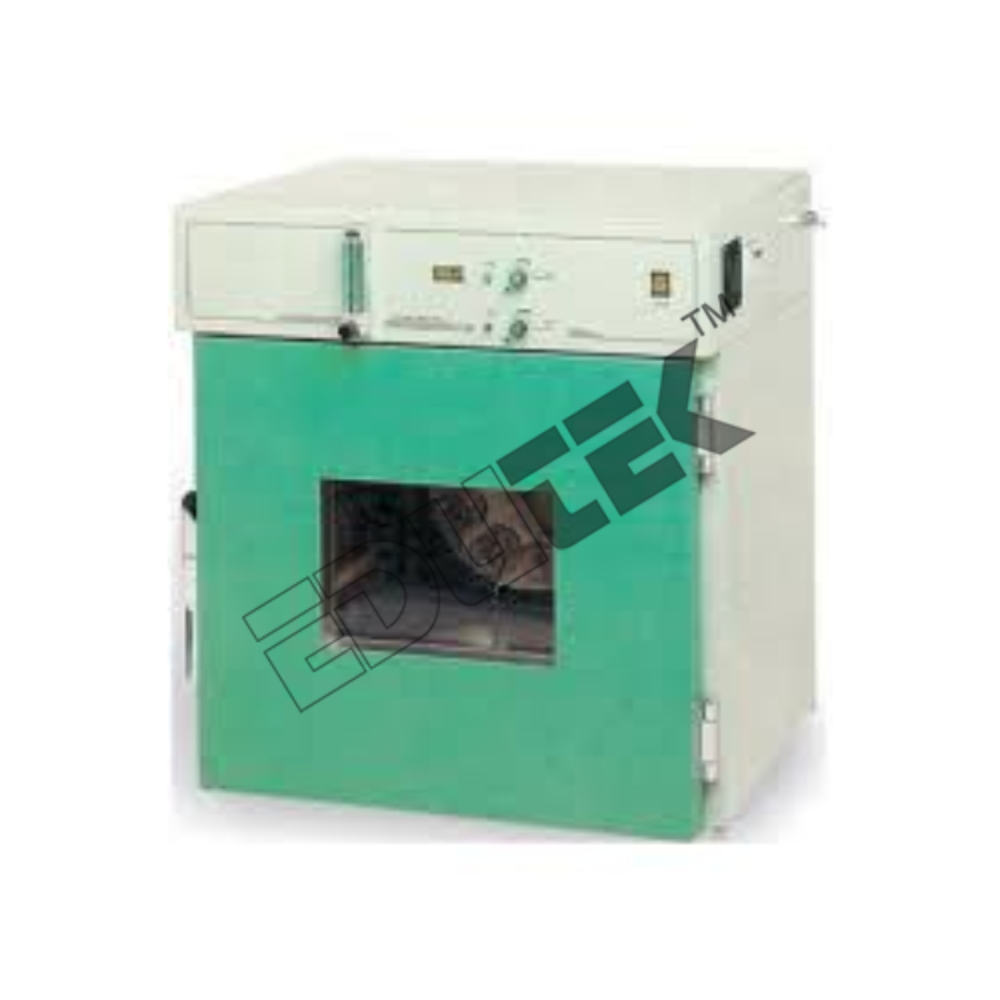
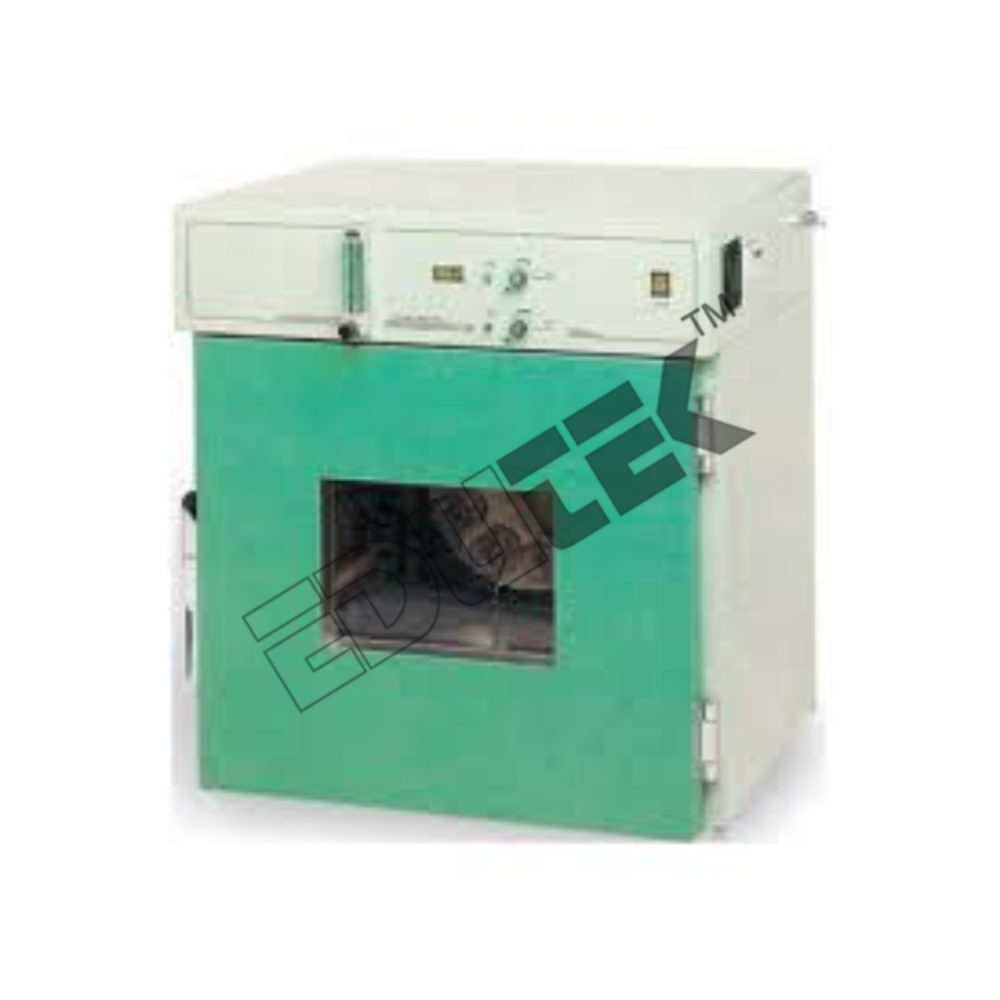
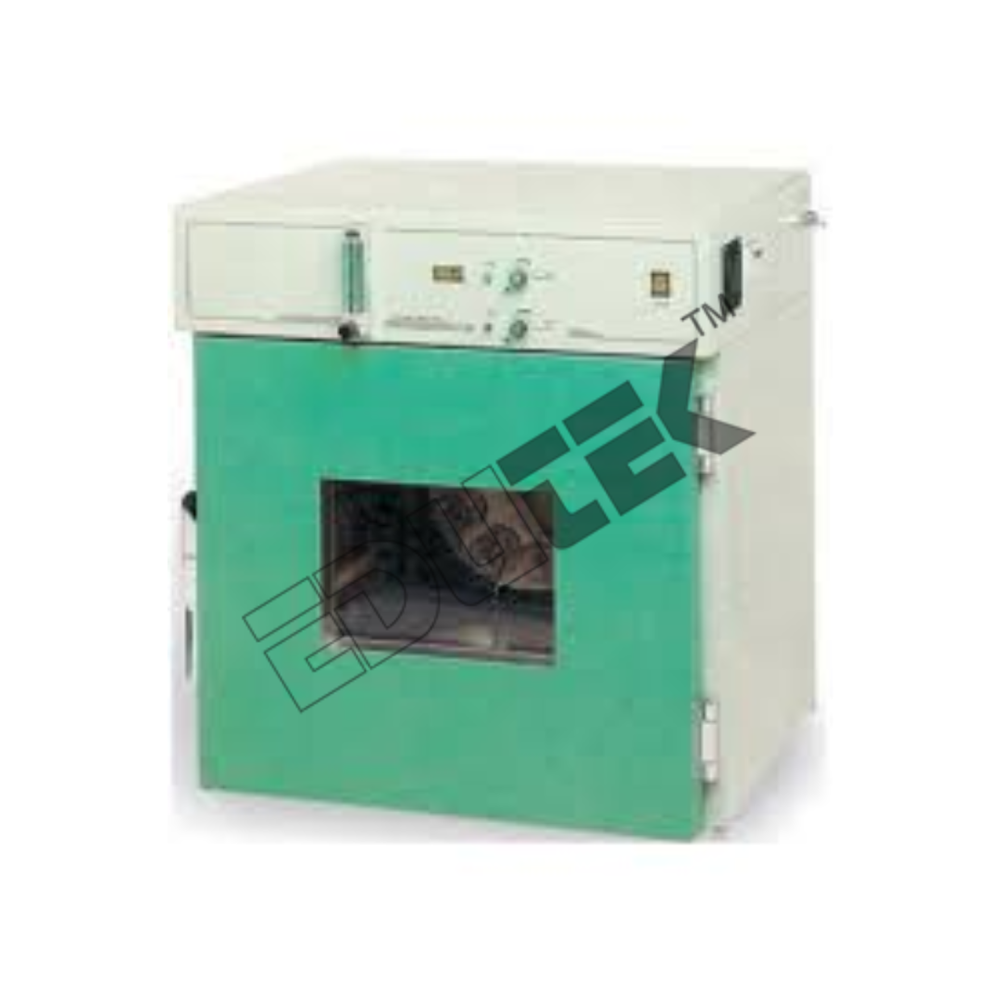
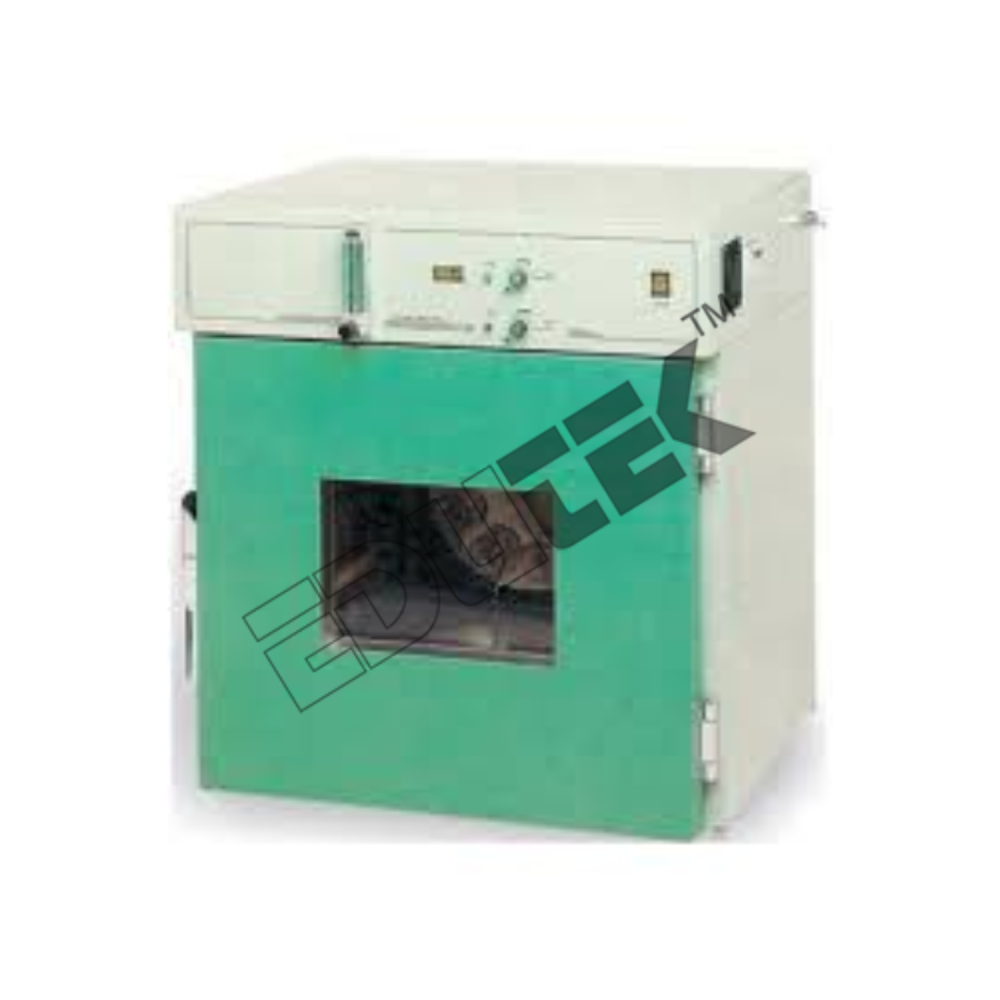
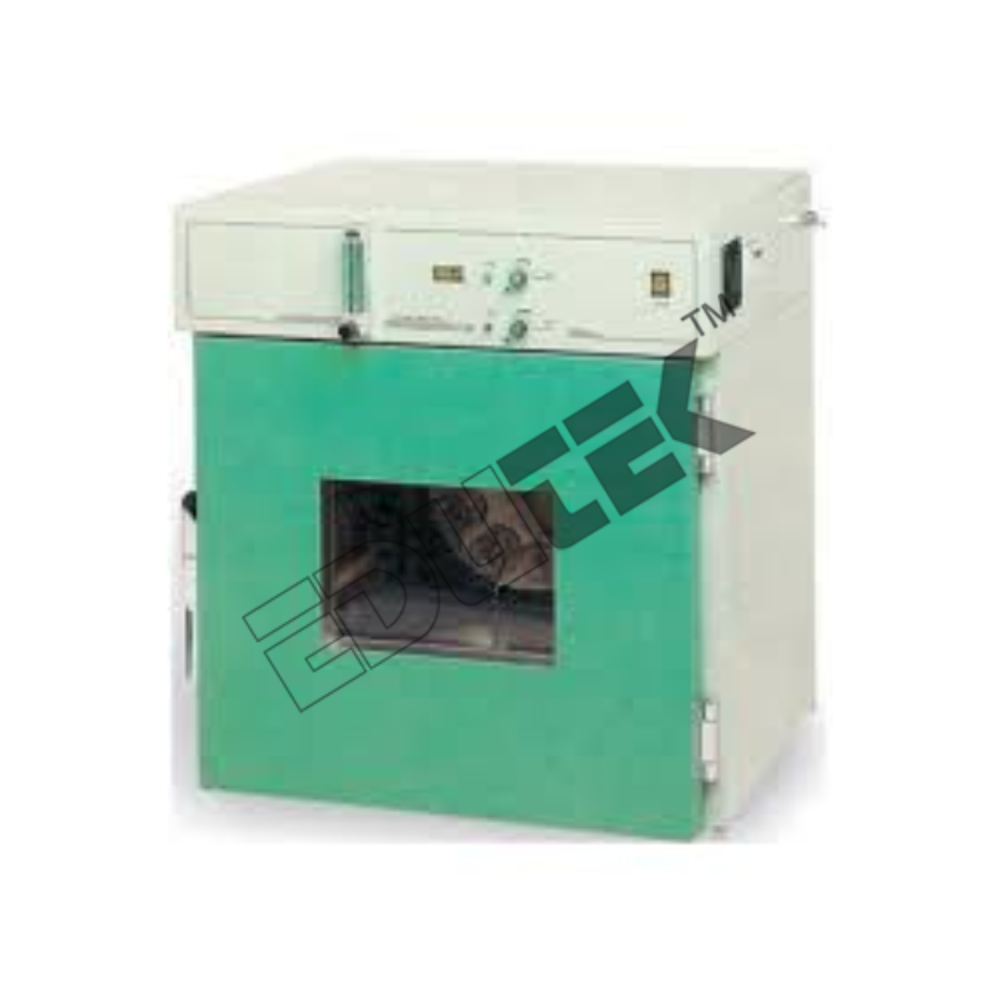
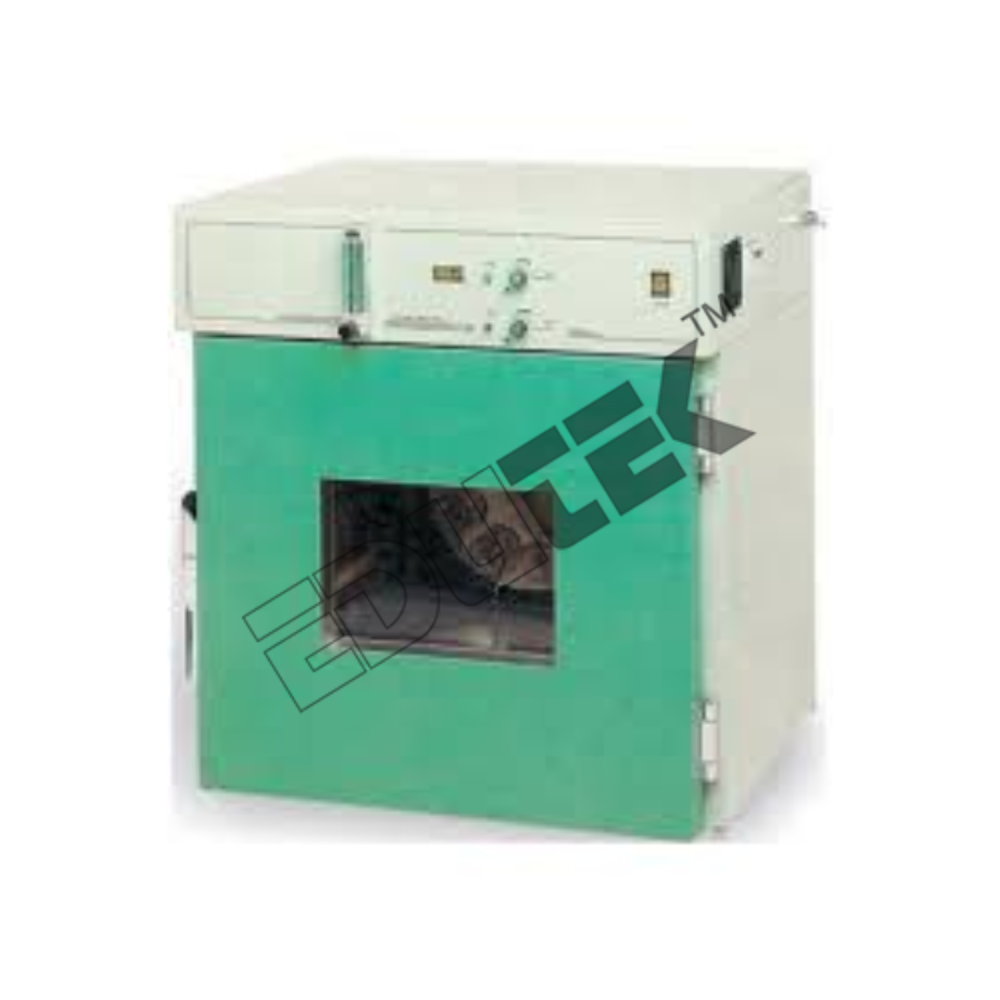
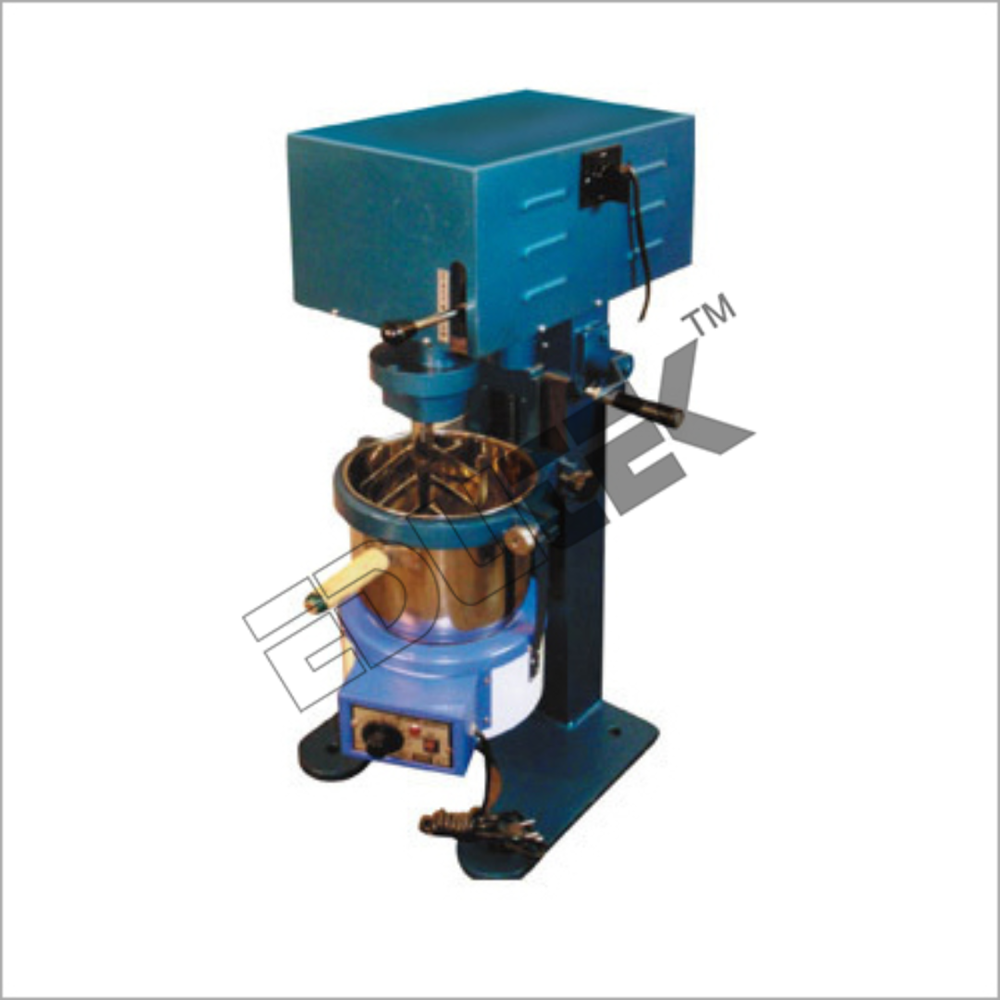
The Rolling Thin Film Oven Test is used to obtain homogeneously aged material by the application of heat and air in order to simulate these affects in conventional mixing. The oven is of double wall construction with side vents and of the heated convection type of air Circulation. An electronic controller maintains the temperature at 163+ 0.5 C. A vertical, carriage is supplied to support 8 glass sample containers, which are rotated at 15+ 0.2rpm. An outlet orifice 1mm in diameter is connected to a 7.6m length of copper tubing and flow meter which controls the airflow at 4000 ml/min. Air is blown into the sample containers at their lowest point of travel by an internal airjet. The oven is supplied with 8 glass sample containers and a thermometer (IP 47C/ASTM 13C). Internal dimensions 483 x 450 x 381mm. A separate source of compressed air is required to operate this oven.
Operating Voltage 230 V A.C., Single Phase
Accessories of Rolling Thin Film Oven
- Compressor Spares Glass sample container Thermometer.
Advanced Simulated Aging of Bituminous MaterialsThe Rolling Thin Film Oven provides an effective method for accelerated aging of asphalt binders and bituminous materials under controlled laboratory conditions. It ensures uniform exposure to heated air, simulating real-world aging and oxidation. The microprocessor-based temperature controller and uniform air flow guarantee precise results, while the observation window allows direct monitoring of test samples throughout the process.
User-Friendly Operation and Efficient DesignDesigned for convenience, the features a digital timer programmable up to 99 minutes, easy-to-clean stainless steel interiors, and clear, intuitive controls. It accommodates up to eight glass containers per cycle and allows real-time observation through a heat-resistant window, streamlining the testing workflow for laboratories with varied throughput requirements.
Reliability and Safety in Every Test CycleSafety is a priority this oven incorporates over-temperature protection, a thermal cutoff switch, and robust construction for operator confidence. With a PT-100 sensor for accurate thermal monitoring and compliance with international standards, users can trust both the integrity of their results and the safety of their testing environment.
FAQs of Rolling Thin Film Oven:
Q: How does the Rolling Thin Film Oven simulate the aging of bituminous materials?
A: The simulates aging by exposing bituminous samples to a steady flow of hot air at controlled temperatures while continuously rotating them. This process mimics the conditions that asphalt binds experience during mixing and laying, thus evaluating their hardening and oxidative characteristics.
Q: What standards does the Rolling Thin Film Oven comply with?
A: It fully complies with ASTM D2872, AASHTO T240, and EN 12607-1 standards, ensuring that results meet global regulatory requirements for bituminous material testing in road construction and research applications.
Q: When should the Rolling Thin Film Oven be used in the asphalt binder testing process?
A: The typically used after initial binder sample preparation, prior to subsequent performance testing. Its purpose is to simulate short-term aging, which occurs during mixing and placement, providing a baseline for evaluating long-term binder performance.
Q: Where should the Rolling Thin Film Oven be installed for optimal operation?
A: For best results, the oven should be installed in a laboratory with a stable power supply (230V, single-phase) and adequate ventilation. The area should have sufficient bench space for the ovens dimensions (600 x 510 x 590 mm) and allow access to the observation window.
Q: What is the process for operating the Rolling Thin Film Oven?
A: Users place cleaned sample glass containers with the bitumen into the holders, set the desired temperature (commonly 163C), air flow rate, and timer, then start the oven. The machine automatically rotates the samples and maintains uniform air exposure until the programmed cycle ends.
Q: How many samples can the Rolling Thin Film Oven test at one time?
A: The oven can accommodate and rotate up to eight glass containers in a single cycle, allowing high-throughput testing and efficient laboratory operation.
Q: What are the key benefits of using a corrosion-resistant stainless steel inner chamber?
A: A corrosion-resistant stainless steel inner chamber ensures long-term durability, easy cleaning, and resistance to chemical attack from bitumen residues, thereby reducing maintenance needs and ensuring consistent performance.




 Send Inquiry
 Send Inquiry

