About Polygraph Single Channel
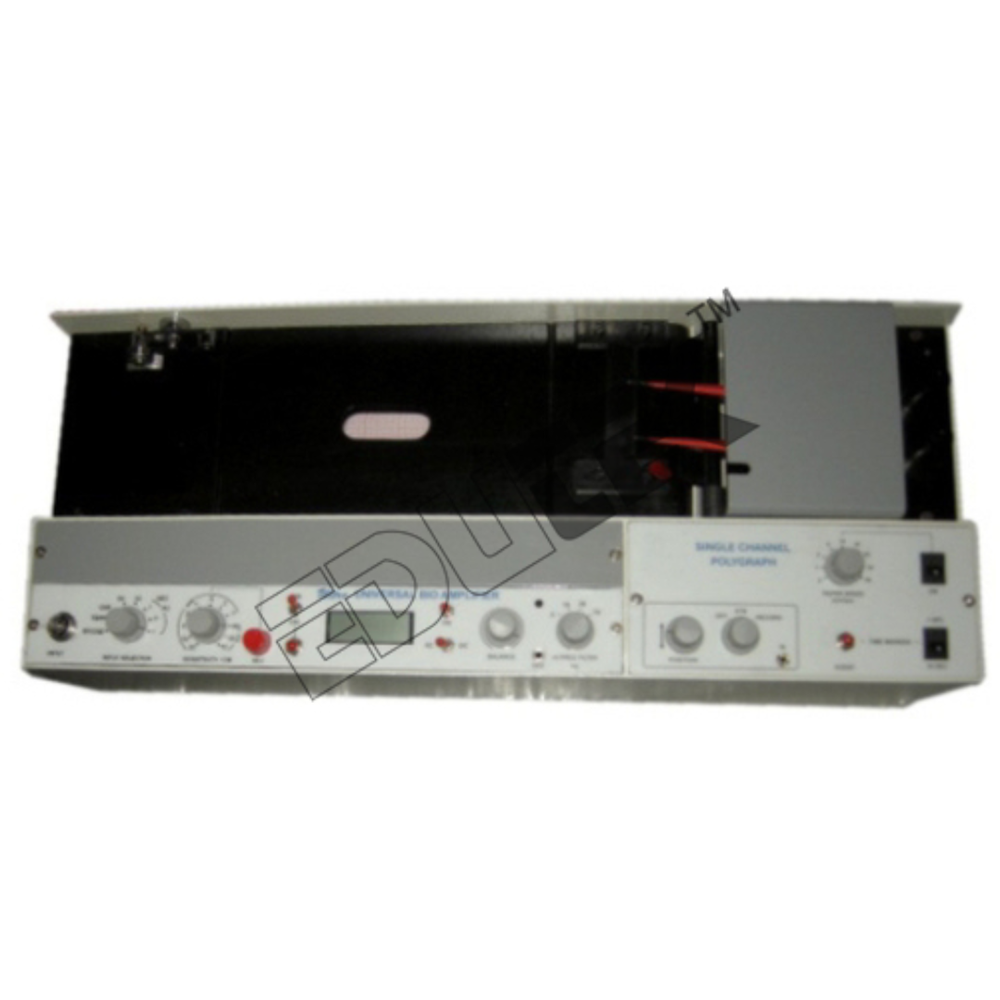
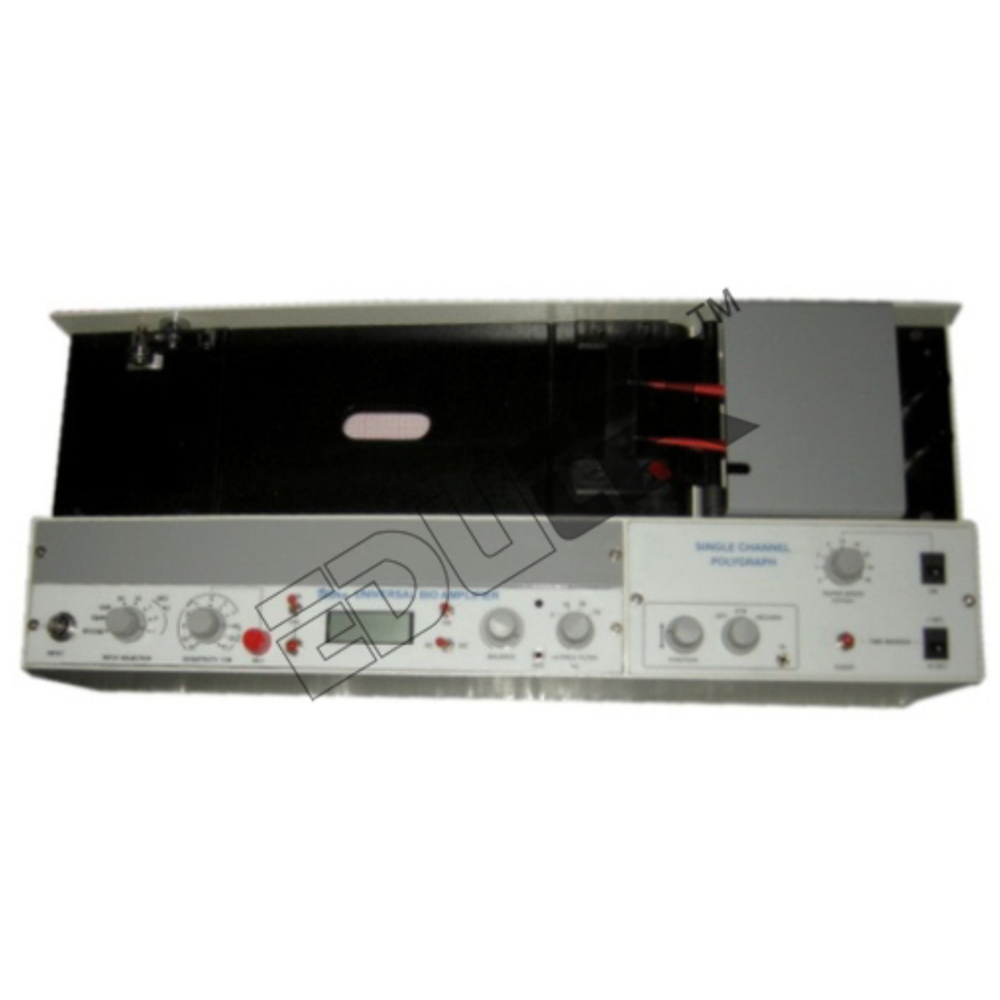
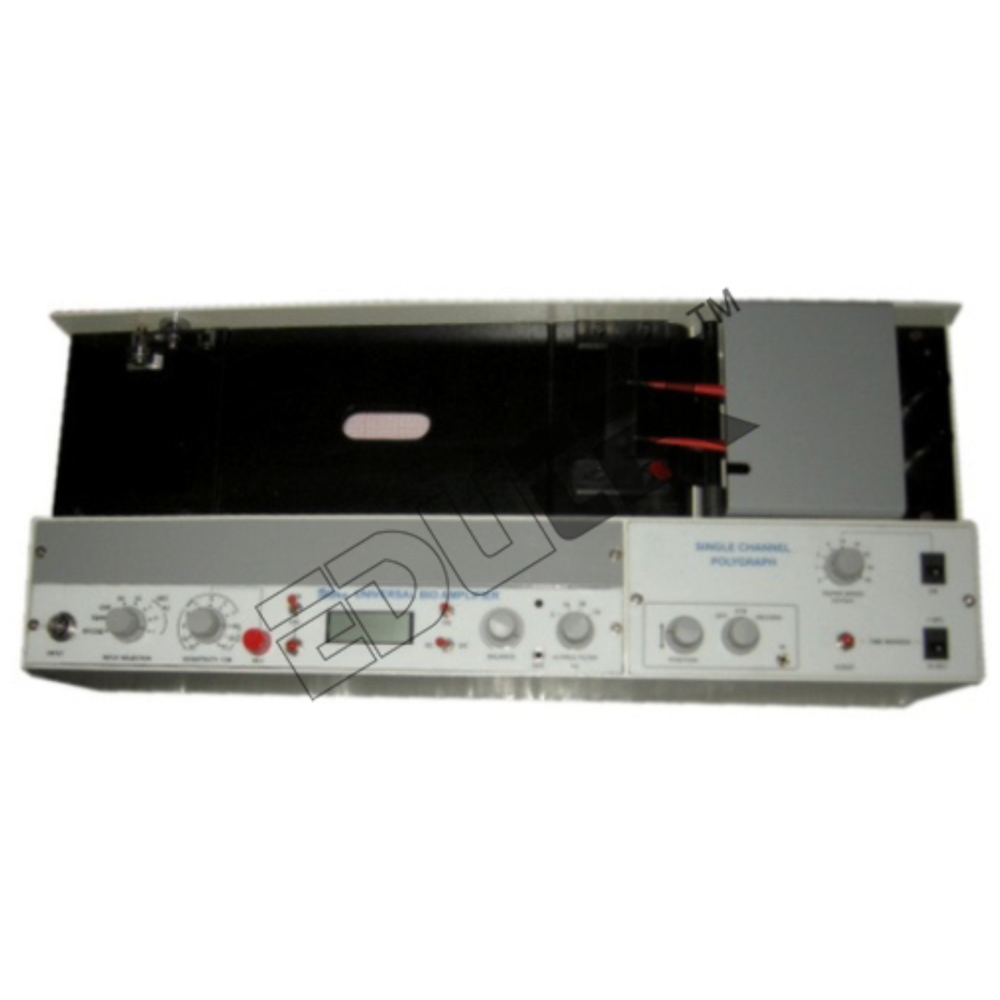
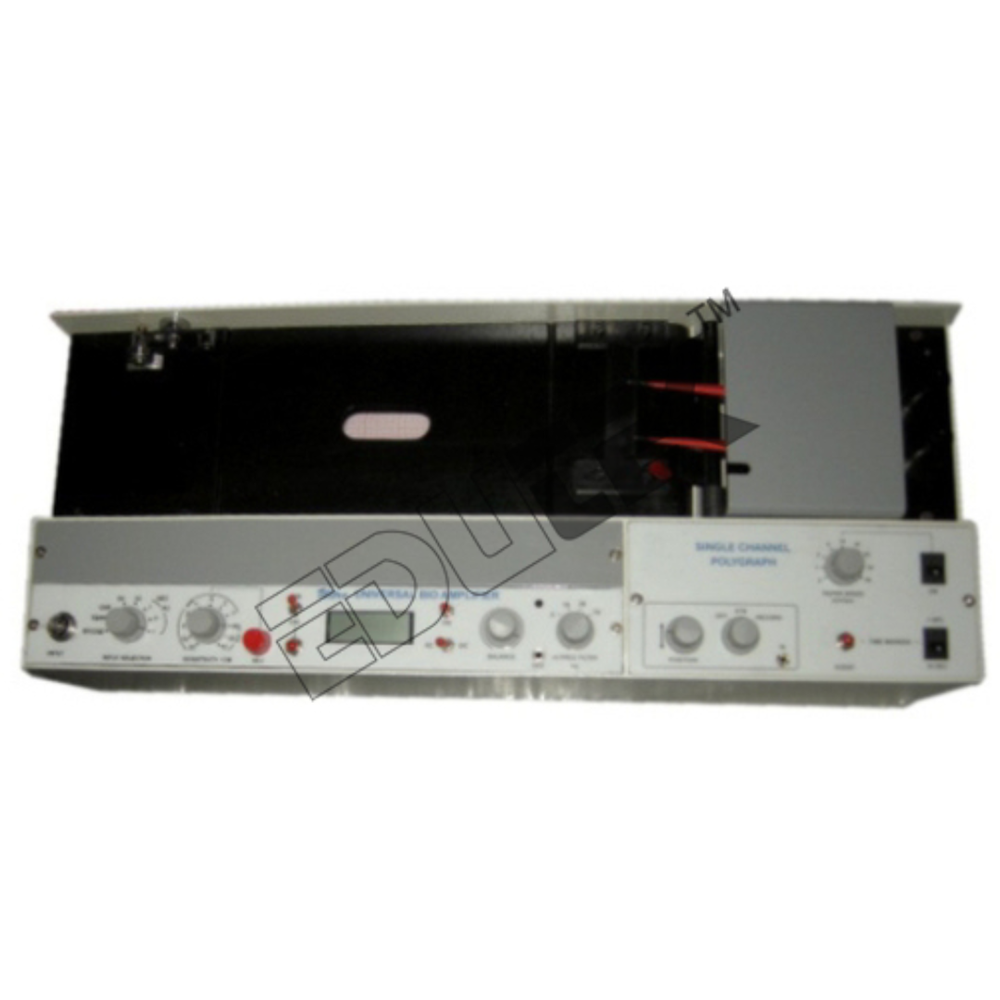
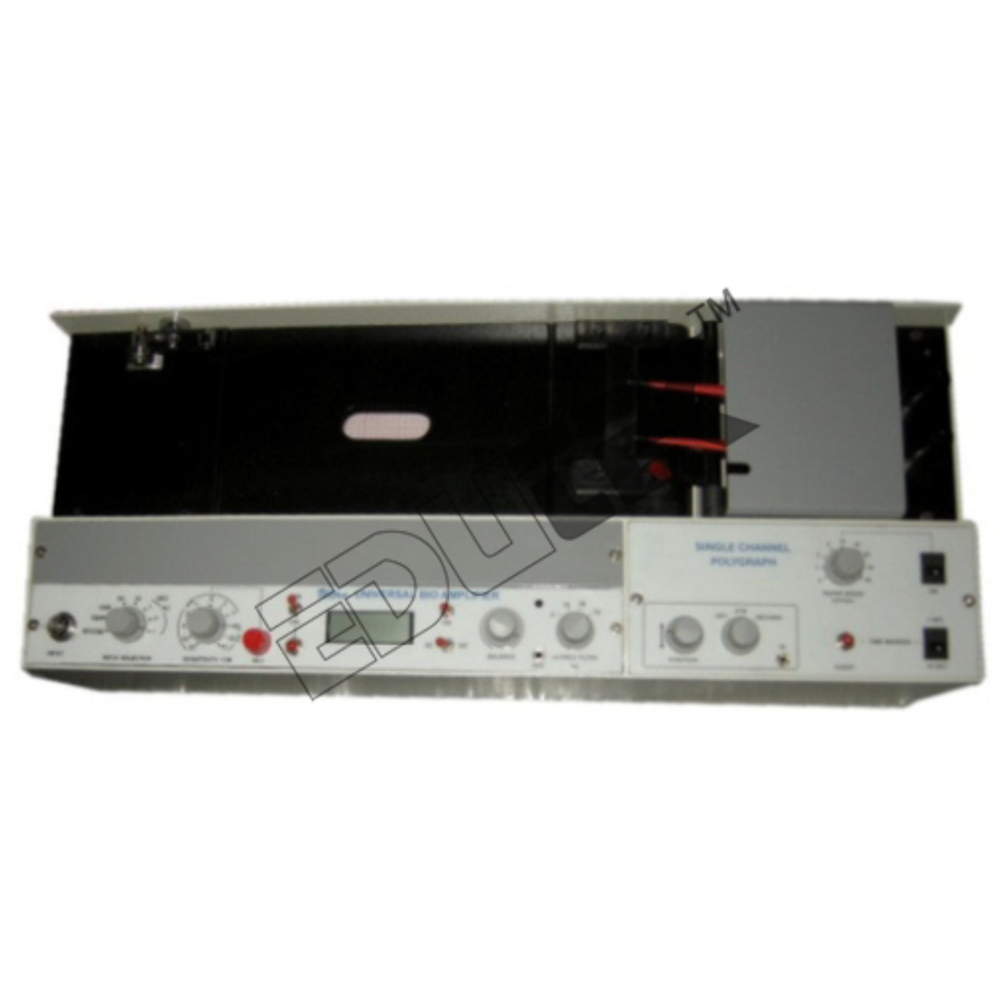
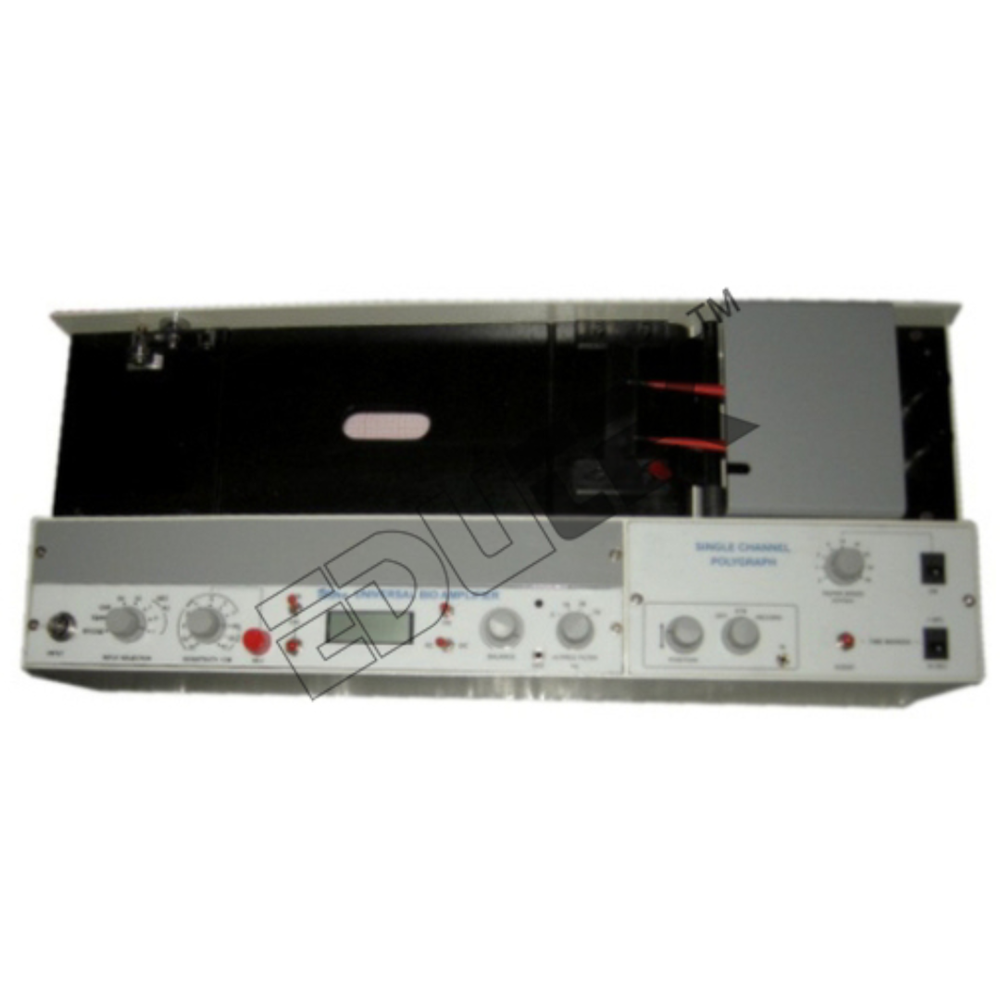
Polygraph Single Channel : ETPL-329
A MAIN CONSOLE :
Standard table top housing:-
B AMPLIFIERS :
C TRANSDUCERS :
D ACCESSORIES :
- Ink pen recording system
- Power Supply
- Housing for amplifiers
- Time & Even Channel
They are modular interchangeable and one can easily plug them in or out in few seconds. One will have to
select an appropriate amplifier for the recording of a particulars parameter. The amplifiers are incorporated
with 50Hz notch filter IN & OUT toggle switch to cut off unwanted 50 cycles interference.
- Ultra low noise, ultra low drift, ultra high sensitivity
- Universal Bio-amplifiers model a-201. 01 No.
- A transducer is a device which converts one form of Physical energy to electrical energy.
- Pressure Transducer strain Gauge 01 No.
- Volume Transducer (Plethysmograph) 01 No.
- Heart, Smooth Muscle, isotonic Muscle, isometric force Transducers. 01 No.
- Respiration Transducers (Thermister type) 01 No.
- Photo electric Pulse Transducer 01 No.
- Surface Temperature Probe 01 No.
- Internal Temperature Probe 01 No.
- Phono Cardiogram Transducer 01 No.
- Respiration Belts (Stethograph Type) 01 No.
- The following accessories are provided with each console :-
- EKG Limb electrodes with straps 2 Nos.
- EEG electrodes 8 Nos.
- Extra pen ink writing 1 No.
- Å Extra pen cradle 1 No.
- Ink half liter capacity 1 No.
- EEG Paste 1 No.
- ECG Jelly tube 1 No.
- Three pin junction box 1 No.
- Fuses 6 Nos.
- Earthin cord 1 No.
- Instruction Manual 1 No.
- Machine cover 1 No.
- Chart Paper z fold 2 No.
- 10 Speed noise free chart drive
Precision-Powered Lie DetectionThis Polygraph Single Channel is equipped with high-sensitivity electrodes and a variable-speed recording system for reliable physiologic monitoring. Its analog chart display and motor-driven paper feed ensure accurate, real-time tracing of bioelectric responses during lie detection or psychological tests. The devices grounded structure and fuse protection guarantee safe operation in forensic and investigative settings.
Versatile Applications in ForensicsIdeal for criminal investigations and psychological profiling, this polygraph enables experts to assess physiological reactions under controlled conditions. Used by law enforcement, forensic analysts, and psychological professionals, it offers valuable insights for lie detection and behavioral research. The included accessories streamline setup, while its lightweight build supports easy relocation between investigation sites.
FAQs of Polygraph Single Channel:
Q: How does the Polygraph Single Channel function during a lie detection test?
A: The Polygraph Single Channel works by recording bioelectric signals from a test subject using attached electrodes. The devices adjustable sensitivity and variable recording speed capture physiological responses on an analog chart, allowing investigators to monitor and interpret changes that may indicate deception.
Q: What are the main benefits of using a single-channel polygraph in forensic analysis?
A: A single-channel polygraph simplifies signal monitoring, making it easier to focus on essential bioelectric responses relevant to lie detection. Its adjustable settings enhance accuracy, and the straightforward chart-based output aids professionals in drawing clear, evidence-backed conclusions.
Q: When should I choose manual versus semi-automatic operation?
A: Manual operation is useful for custom-paced testing or unique scenarios requiring hands-on control, while semi-automatic mode streamlines routine assessments, ensuring consistent paper feed and recording without constant intervention. The choice depends on the tests complexity and the operators preference.
Q: Where can this polygraph be used most effectively?
A: This polygraph is designed for use in police departments, forensic laboratories, psychological research centers, and legal institutions throughout India. Its portability and safety features make it suitable for both fieldwork and in-house investigations.
Q: What is the setup process for conducting a test with this device?
A: Begin by connecting the included electrodes, chart paper, and cables as indicated in the manual. Secure the device on a stable surface, connect to a 220 V AC power outlet, and ensure it is grounded. Adjust sensitivity and recording speed as needed, then follow standard protocols to conduct the test and observe results on the analog chart.
Q: How does the adjustable sensitivity affect test outcomes?
A: Adjustable sensitivity allows operators to fine-tune the polygraph for different subjects and test conditions, improving the accuracy of recorded physiological responses and minimizing false readings caused by external interference or subject variability.





 Send Inquiry
 Send Inquiry

