About Plate and Frame Filter Press
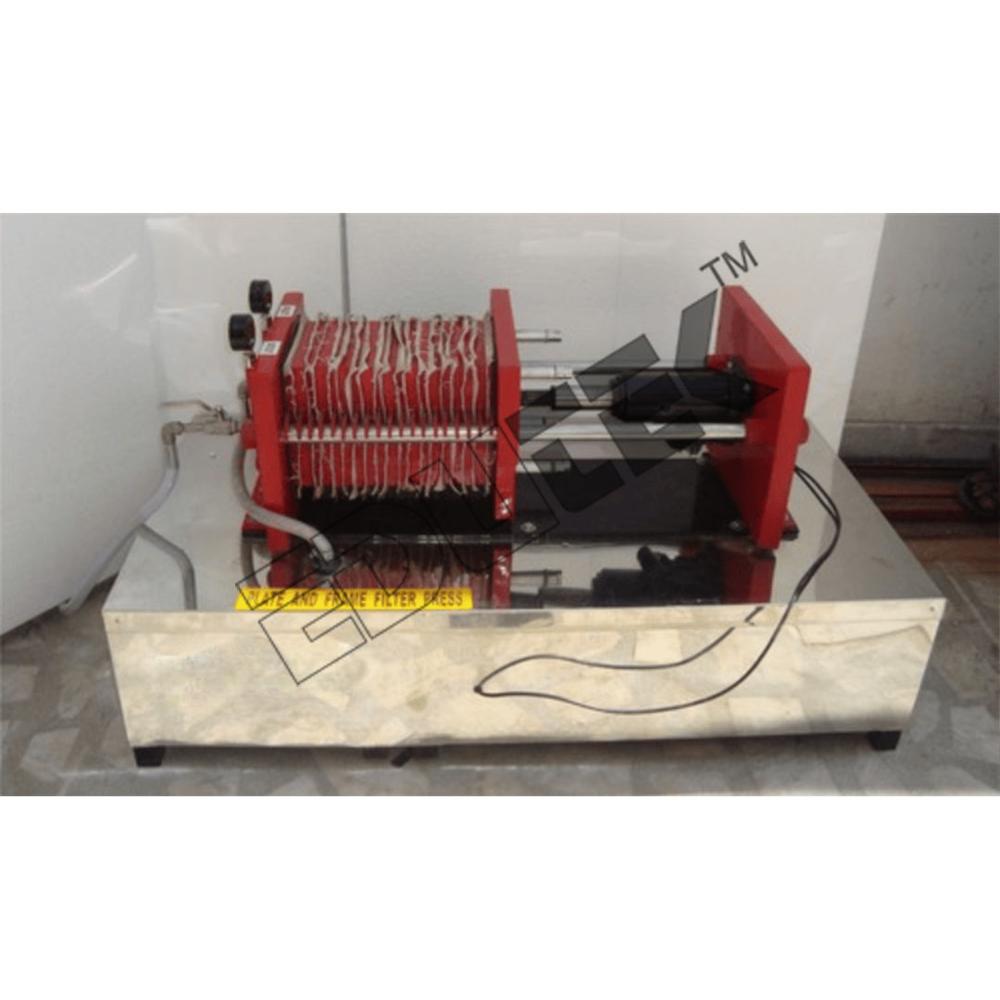
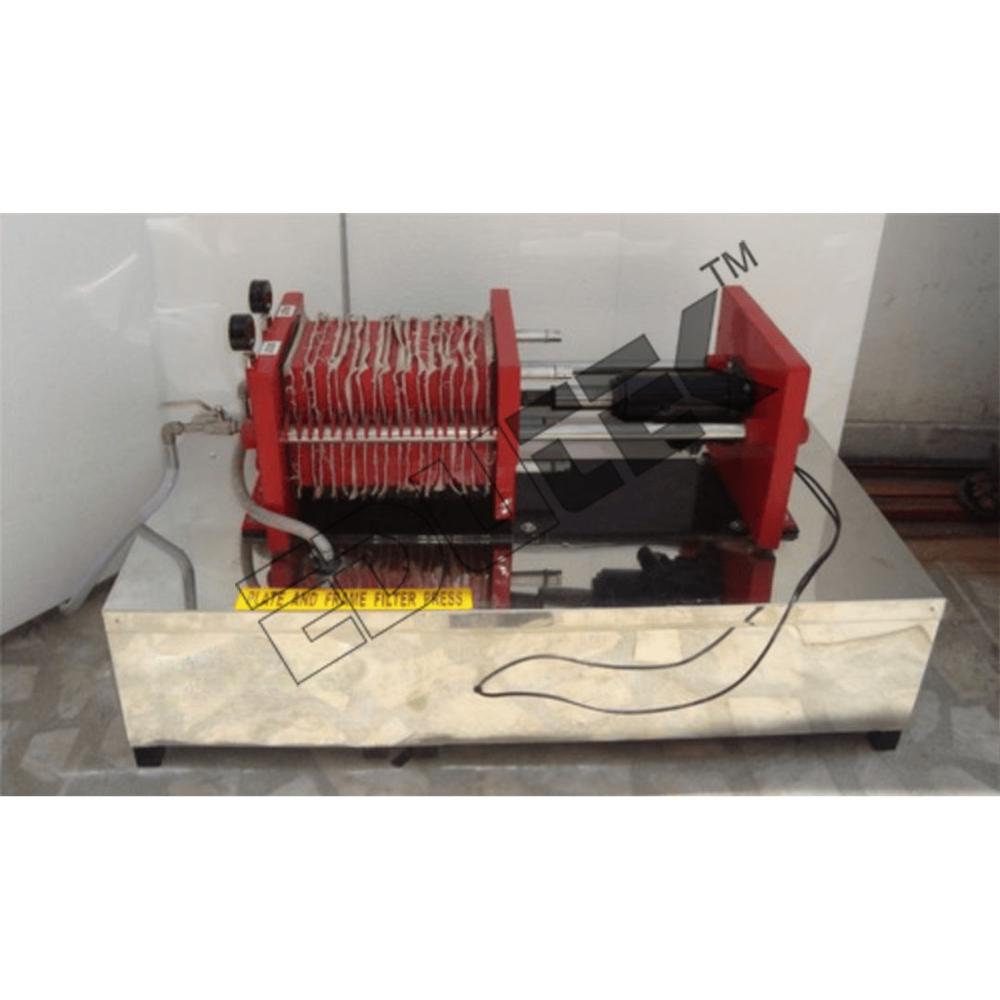
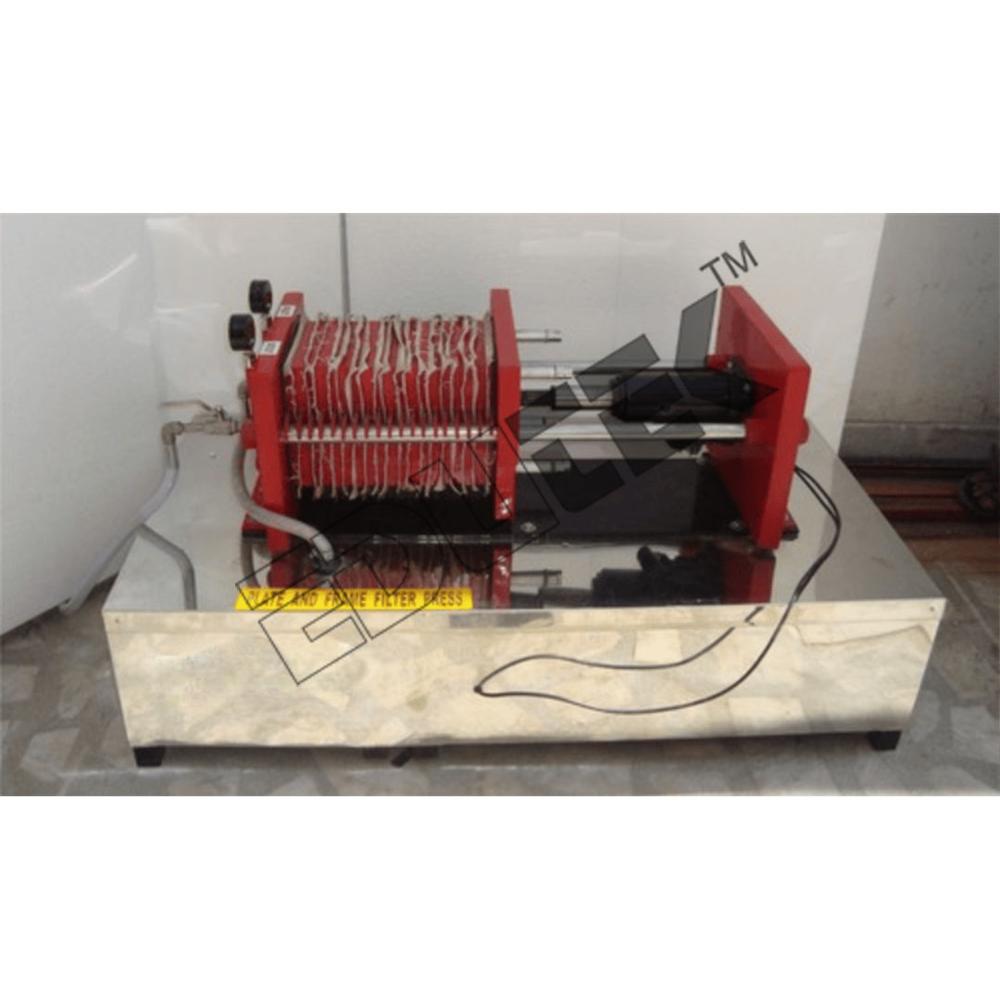
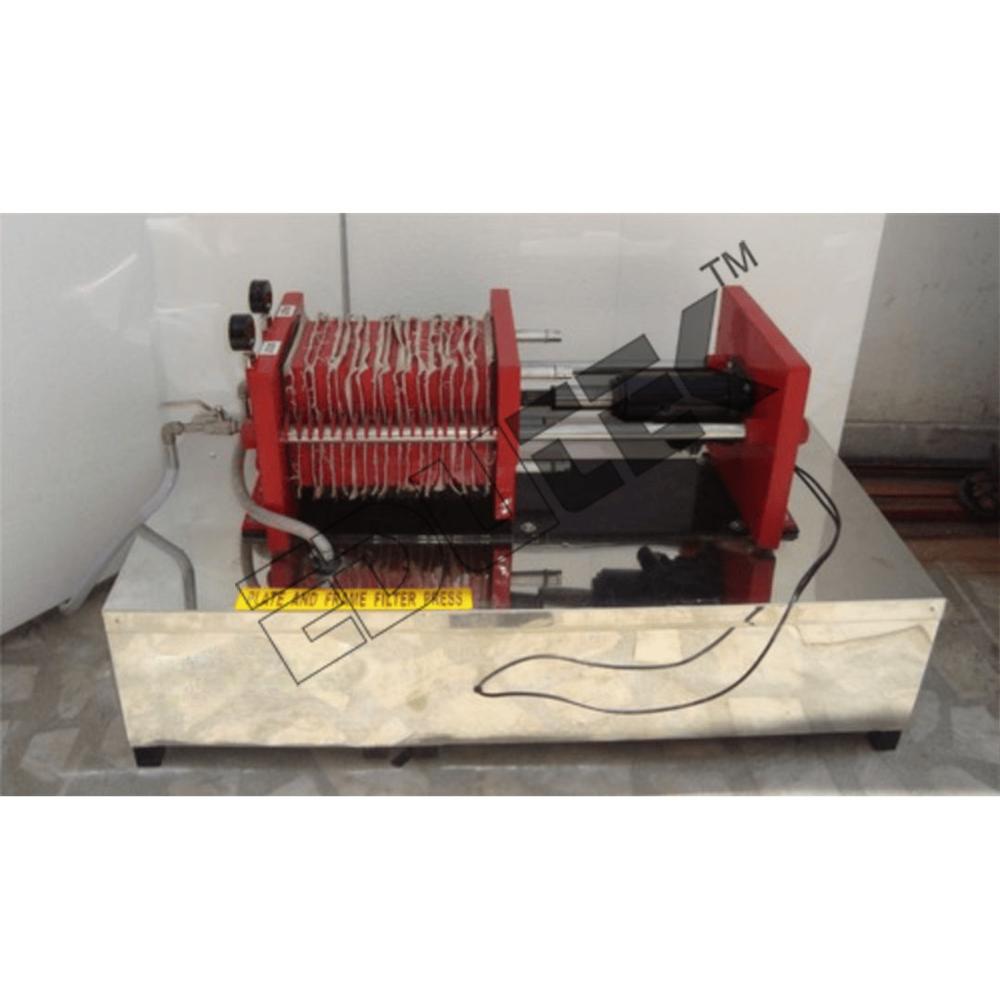
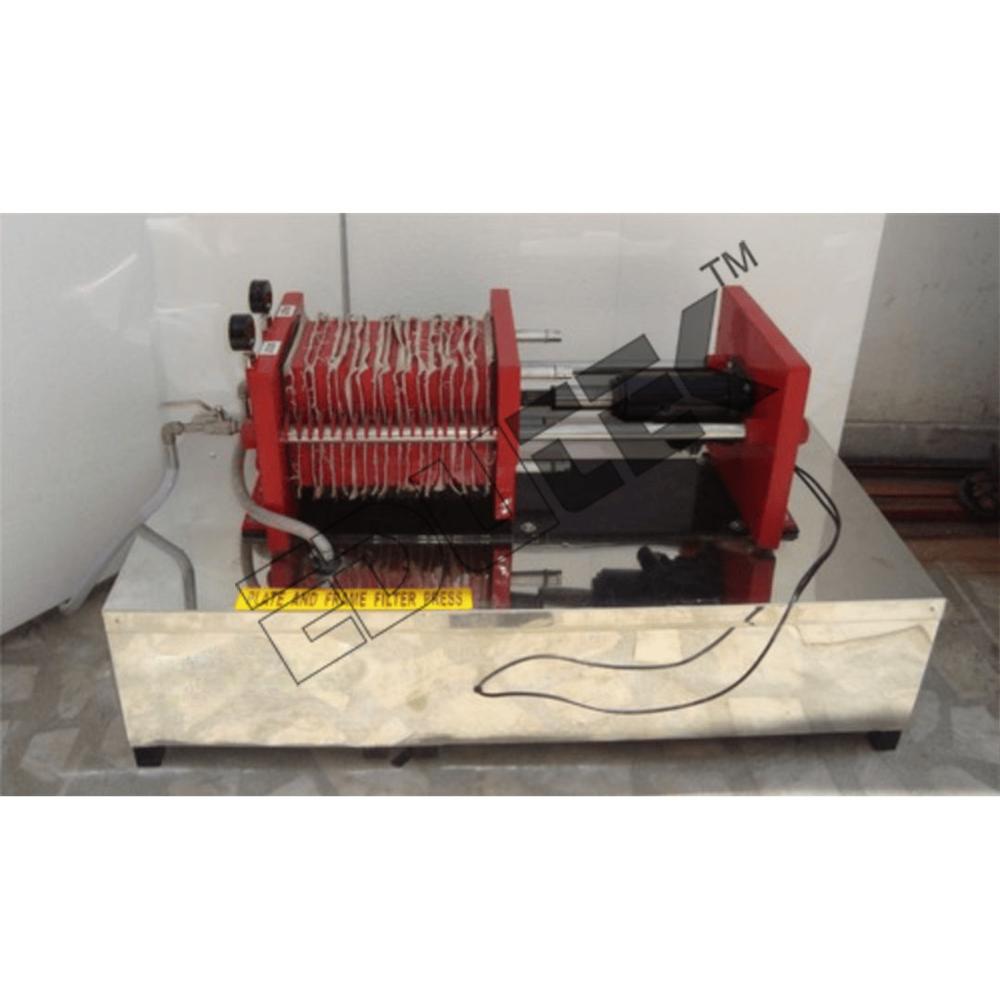
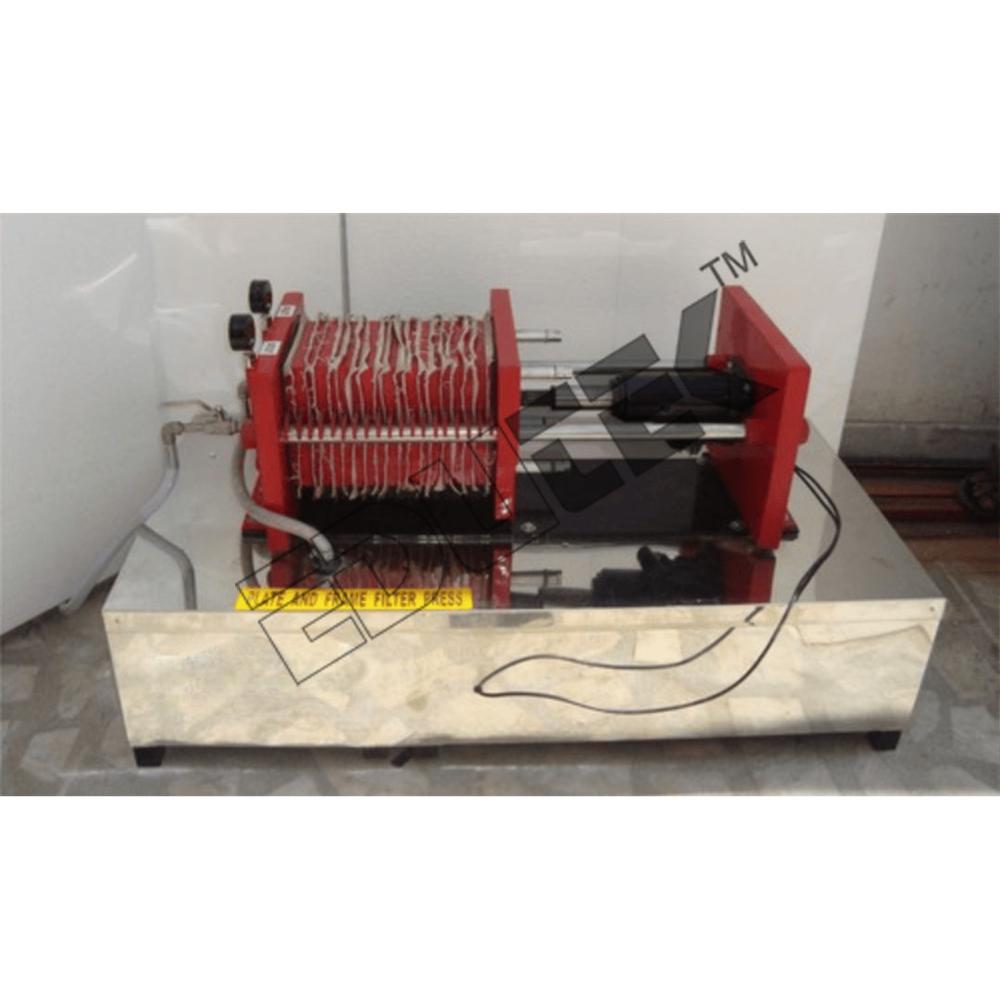
Plate And Frame Filter Press
Specification Of Plate And Frame Filter Press
Edutek Instrumentation Is Manufacturer, Exporter & Supplier Of Plate And Frame Filter Press.
Technical Description :
- Plate And Frame Filter Presses Are Used In The Beverage Industry, For Example, To Clarify Intermediate Products.
- A Suspension Of Diatomite And Water (Recommended) Is Prepared In A Stirred Tank. The Stirrer Ensures That The Solid Remains Suspended And Does Not Settle. A Pump Delivers The Suspension Into The Individual Separating Chambers Of The Plate And Frame Filter Press. A Separating Chamber Is Formed By One Filter Frame And Two Filter Plates. The Filter Plates Are Grooved And Covered Over With Filter Cloths. The Filtrate Passes Through The Filter Cloth And Flows Via The Grooves In The Plates Into A Collecting Pipe. The Filtrate Exits The Plate And Frame Filter Press Through The Collecting Pipe And Is Collected In The Filtrate Tank. The Solid Material Is Separated Off At The Filter Cloth, Where It Forms A Growing Filter Cake. As The Filter Cake Becomes Thicker, Its Flow Resistance Also Increases. When The Separating Chamber Is Full, Or A Maximum Pressure Difference Has Been Reached, The Filtration Process Is Ended. The Plates And Frames Of The Plate And Frame Filter Press Are Pulled Apart. The Filter Cake Can Be Removed. For The Next Filtration The Plates And Frames Must Be Pushed Back Together. A Spindle Is Used To Press Them Together. The Press Forces Ensure That The Suspension Does Not Leak From The Contact Points Between The Plates And The Frames, But Is Forced Through The Filter Cloth.
- The Flow Rate Through The Plate And Frame Filter Press Is Adjusted By A Valve. The Pressure Occurring During Filtration Is Indicated On A Manometer. The Filtrate Tank Is Scaled. This Means A Stopwatch Can Be Used To Measure The Flow Rate. An Included Opacimeter Allows The Solid Concentration Of The Filtrate To Be Determined. A Drying Chamber Is Recommended For Evaluation Of The Experiments.
Robust Construction for Diverse ApplicationsEngineered for durability, the plate and frame filter press features a stable mild steel or stainless steel frame with corrosion-resistant paint, making it suitable for aggressive industrial environments. The selection of polypropylene or cast iron plates ensures longevity, while the robust closure (manual or hydraulic) delivers reliable sealing during filtration.
Efficient Solid-Liquid Separation ProcessThis filter press is designed for solid-liquid separation in a wide range of industries. Slurry is pumped into the press, where filter cloths and plates efficiently retain solids, producing clear filtrate and a compact filter cake. The thoughtful design ensures easy disassembly, cleaning, and leak-proof operation for maximum productivity.
Flexible Configurations and User-Friendly FeaturesAvailable in various models with 1050 plates and filter areas from 540 m, the filter press addresses different processing volumes and applications. Intuitive manual or automatic controls, straightforward maintenance, and a user-focused interface provide convenience and precision in daily operations, whether in food, chemical, or wastewater processing.
FAQs of Plate and Frame Filter Press:
Q: How does the plate and frame filter press operate for solid-liquid separation?
A: The filter press operates by pumping slurry into the frame, where filter cloths between the plates capture solid particles while allowing liquid to pass through. The result is a filtered liquid (filtrate) and a retained filter cake, ideal for industrial applications requiring efficient separation.
Q: What are the recommended usage scenarios for this filter press?
A: This filter press is suitable for diverse industries such as chemicals, pharmaceuticals, food processing, and wastewater treatment. It is designed to handle various feed types (slurry or unfiltered liquid) and consistently delivers reliable filtrate and filter cake outputs.
Q: When should I consider using hydraulic closure versus manual screw closure?
A: Hydraulic closure is recommended for higher capacity models or operations requiring frequent, quick plate tightening and release, reducing manual effort. Manual screw closures are suitable for smaller-scale applications where operational frequency is lower and automation is not required.
Q: Where is this filter press commonly installed and what are its space requirements?
A: The filter press is commonly installed in industrial processing plants, including chemical, pharmaceutical, food, and wastewater facilities. Installation space depends on the selected model, with typical dimensions around 2000 x 700 x 1000 mm. Ensure there is also allowance for operator access and maintenance activities.
Q: What is the process for cleaning and maintaining the filter press?
A: Disassembly is straightforward for cleaning, thanks to a user-friendly design. Filter cloths should be regularly washed or replaced as necessary, and plates checked for residue buildup. Periodic inspection of the closure mechanism and frame ensures optimal, long-term performance.
Q: What are the main benefits of using this plate and frame filter press?
A: Key benefits include robust construction, corrosion resistance, easy operation and cleaning, excellent leak-proof design, and adaptability to many industrial applications. It offers reliable filtration performance across a broad range of process requirements, reducing downtime and maintenance needs.




 Send Inquiry
 Send Inquiry

