About PLANCKS CONSTANT APPARATUS USING PHOTOCELL
Specification:
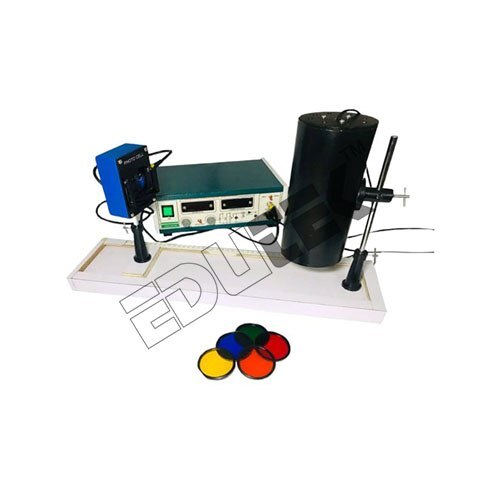
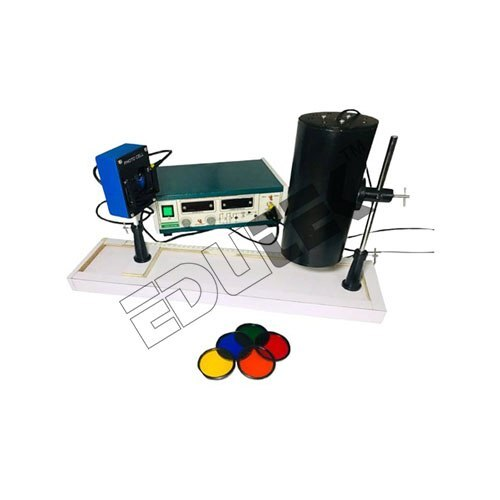
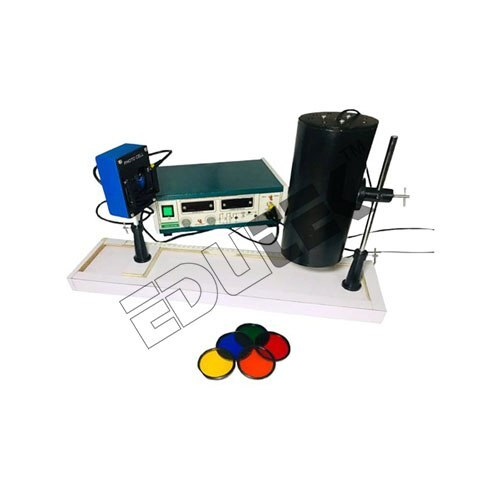
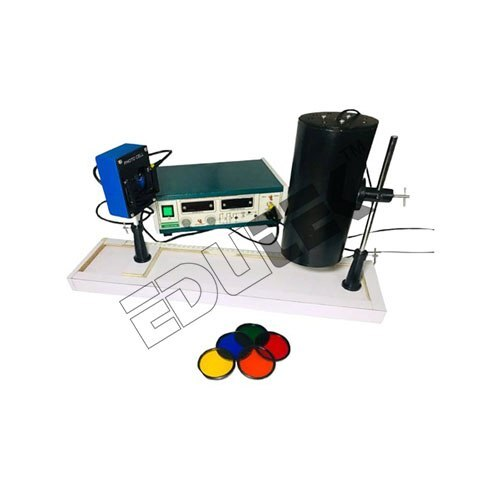
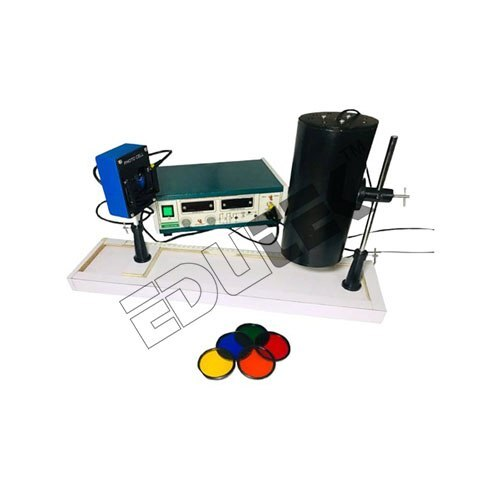
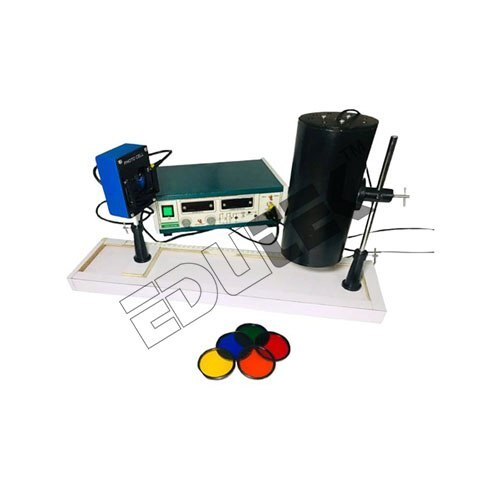
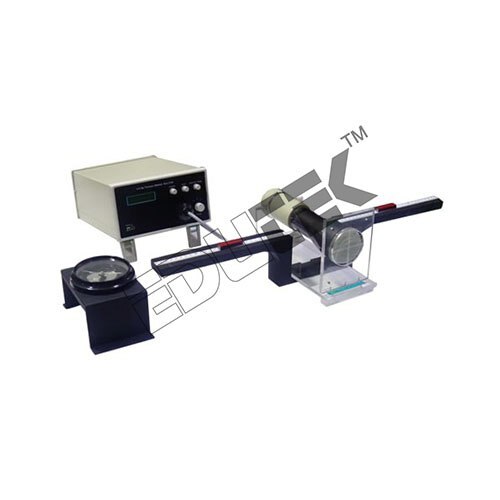
PLANCKS CONSTANT APPARATUS USING PHOTO CELL
Display: Digital
Size W X D X H: 10 x 8 x 4 inches
Cord Length: 2m
Cord Diameter: 4 mm
Weight: 5.5Kg. (Approx.)
Voltage: 220V
Power: 40 W
Directly Measure Plancks ConstantThis apparatus provides a hands-on experience for determining Plancks constant by utilizing the photoelectric effect. By illuminating the photocell with varying wavelengths through the filter set and recording the stopping potential, students and researchers can accurately calculate Plancks constant. The devices integrated calibration mechanism ensures reliability and repeatability, supporting robust educational and experimental outcomes.
Engineered for Lab Safety and DurabilityFeaturing a shockproof enclosure, fused power input, and sturdy metal construction, the apparatus is designed for safe operation in diverse laboratory environments. Manual controls offer straightforward calibration and operation, while compliance with standard safety requirements makes it suitable for institutions, exporters, manufacturers, and suppliers in engineering electronics.
Flexible and User-Friendly Experimental SetupThe included set of optical filters and compatible light sources allow users to easily select the required wavelength for experiments. The apparatus supports direct measurement of photocurrent and stopping potential, offers banana plug terminals for quick connections, and comes with a detailed instruction manual. Its portable benchtop design and efficient response time make practical usage convenient for individual or group experiments.
FAQs of PLANCKS CONSTANT APPARATUS USING PHOTOCELL:
Q: How does the Plancks Constant Apparatus using Photocell determine Plancks constant?
A: The apparatus employs the photoelectric effect principle: light of various wavelengths is directed onto a lab-grade photocell, and the resulting stopping potential is measured. By analyzing these measurements, users can calculate Plancks constant through established equations connecting energy, frequency, and voltage.
Q: What types of light sources and filters can be used with this instrument?
A: It is compatible with tunable wavelength filter sets or standard white light sources, such as bulbs or LED arrangements. The included optical filters enable selection of specific wavelengths to precisely study their effects on the photocell response.
Q: When is manual calibration required during operation?
A: Manual calibration should be performed before starting each experiment to ensure the apparatus provides accurate zero and gain settings. This step is essential for reliable measurements of photocurrent and stopping potential.
Q: Where is the Plancks Constant Apparatus typically used?
A: This instrument is designed for use in educational and research laboratories, specifically within engineering electronics departments. It is exported, manufactured, and supplied in India, meeting the needs of institutions and laboratory professionals.
Q: What is the process for conducting an experiment using this apparatus?
A: Begin by connecting the photocell and light source as specified. Select a wavelength using the filter set, calibrate the device, then illuminate the photocell. Measure the resulting stopping potential or photocurrent using the built-in analog/digital display. Repeat for different wavelengths to gather data for calculating Plancks constant.
Q: How is safety ensured during operation?
A: Safety is prioritized through a shockproof casing and fused power input. The device meets standard laboratory safety requirements, and its robust build protects users from electrical hazards during experiments.
Q: What are the main benefits of using this apparatus in an educational setting?
A: It provides a hands-on, reliable method for exploring the photoelectric effect and calculating Plancks constant. Its user-friendly design, fast response time, and compliance with safety standards make it ideal for student experiments and teaching advanced concepts in physics and engineering electronics.




 Send Inquiry
 Send Inquiry

