About Hydrostatics Trainer
HYDROSTATICS TRAINER
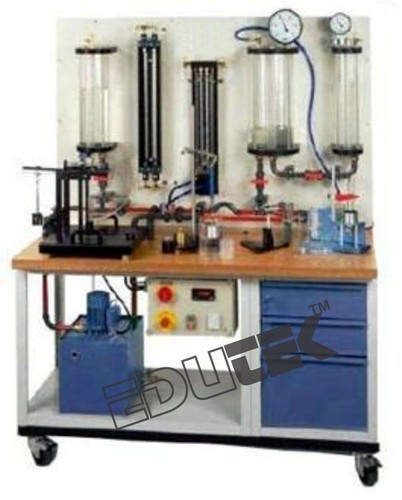
Hydrostatics is the study of fluids at rest. Phenomena occurring as a result of hydrostatic pressure are analysed and the force effect determined. Hydrostatic aspects play a crucial role in various areas of engineering, such as in plumbing and domestic engineering, in pump manufacturing, in aerospace and in shipping (buoyancy, load on the sides of a ship).
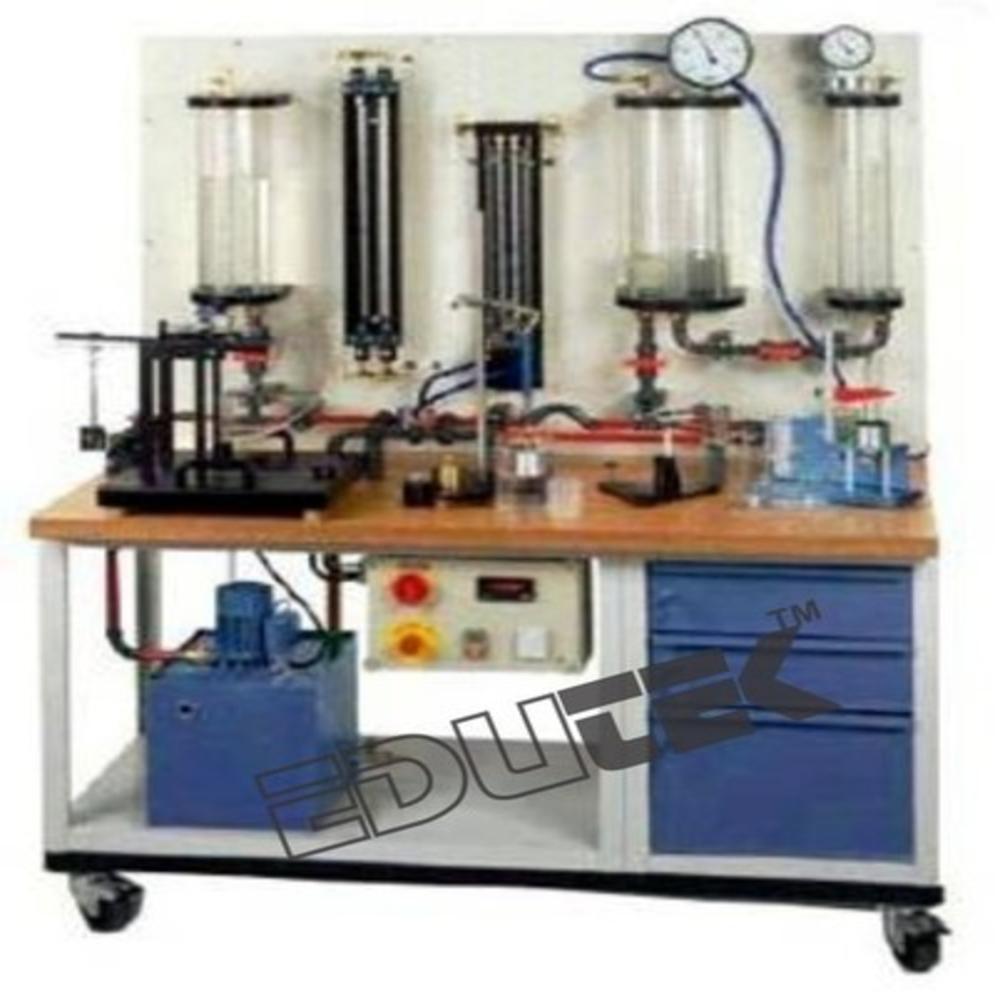
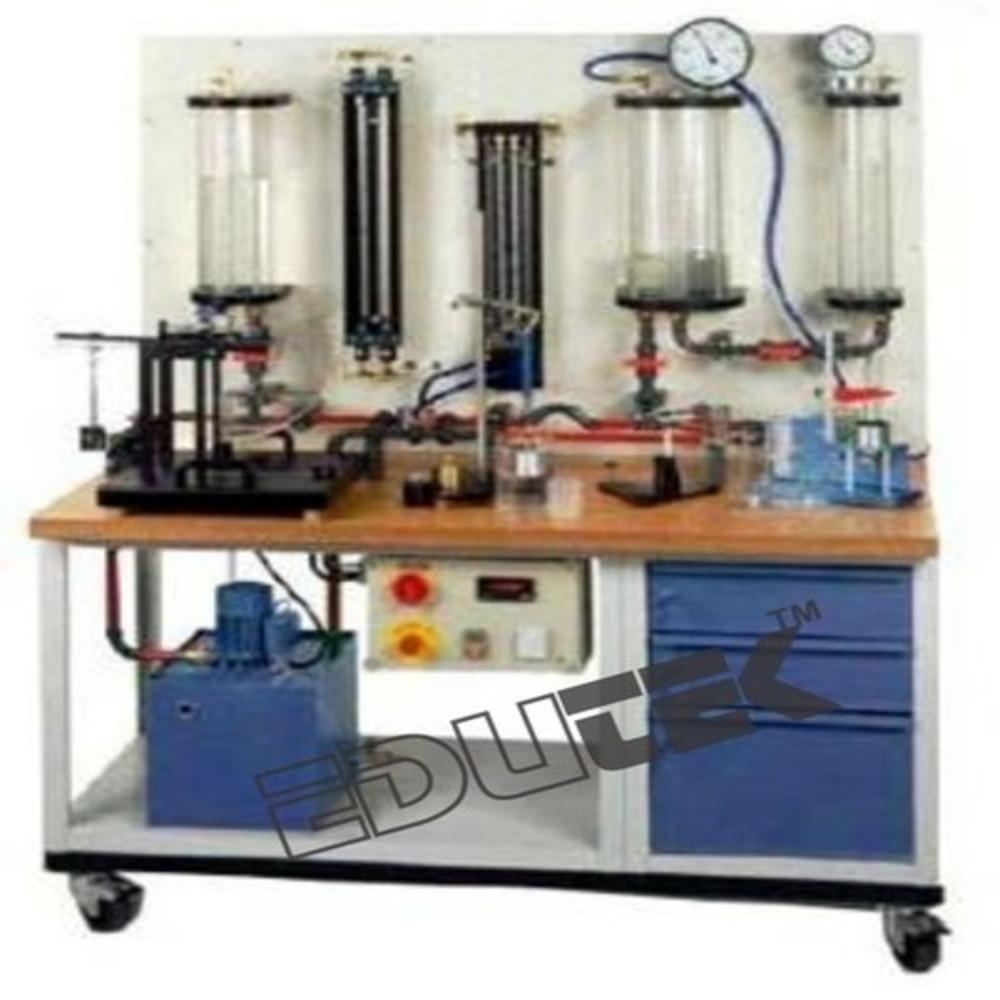
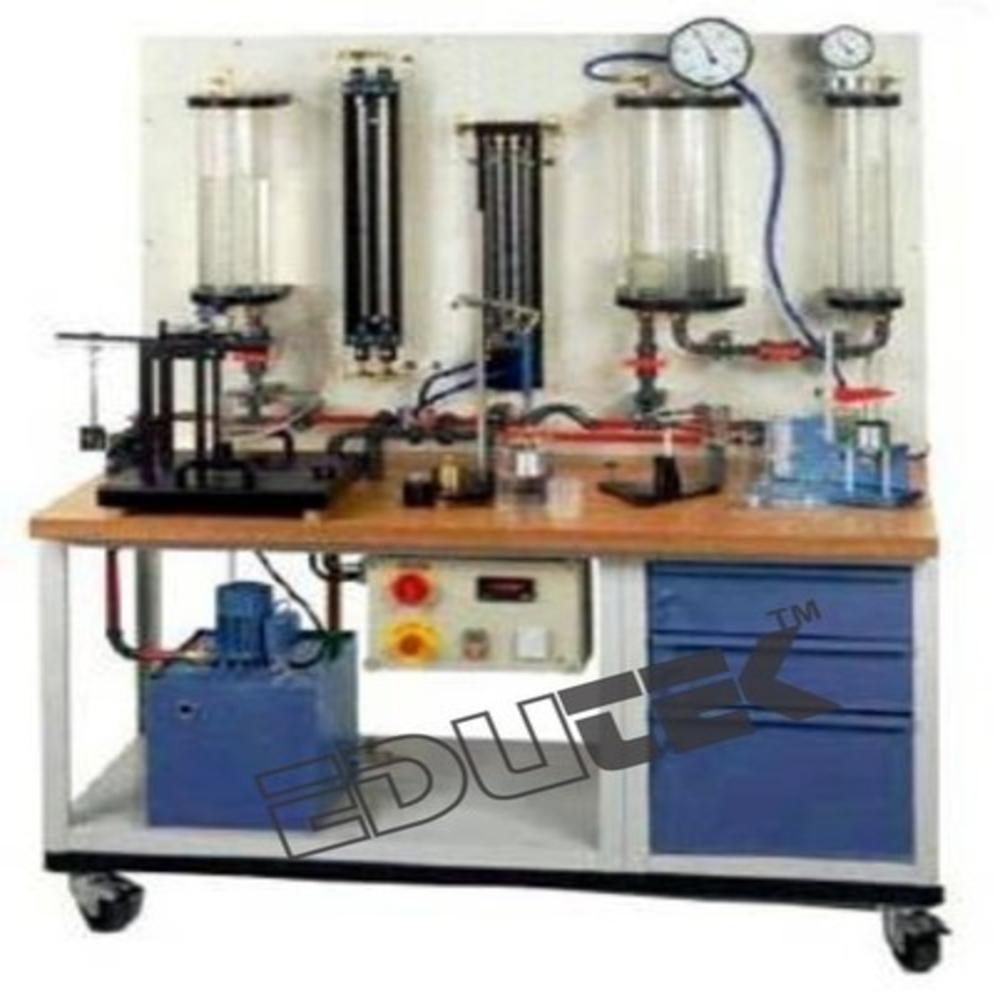
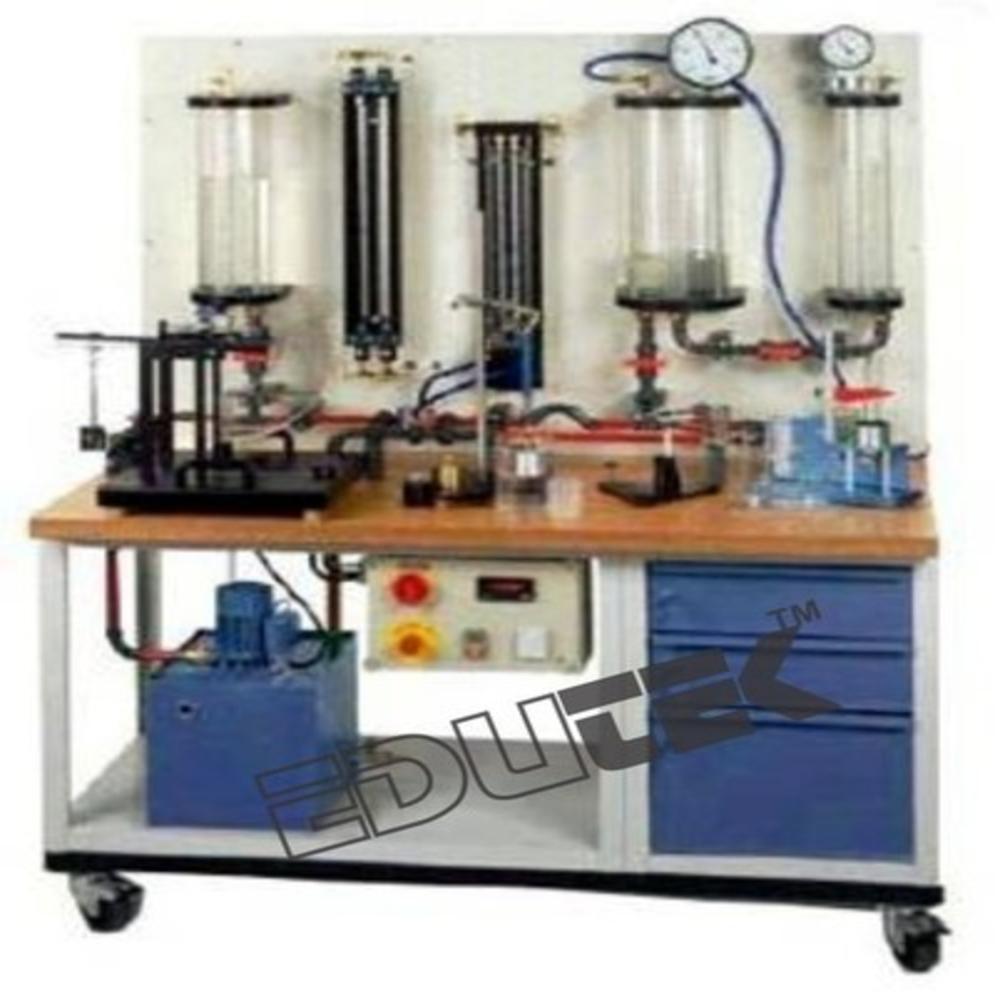
The trainer can be used to conduct experiments in the field of hydrostatics, such as ground pressure measurement or demonstrating Boyles law. Determining the centre of pressure completes the range of experiments. Furthermore, experimental units for studying capillarity and buoyancy are included. The hydrostatic pressure and surface tension are measured. Additionally, one experiment uses a Pitot tube and a tube for static pressure to study the pressure components in a flowing fluid.
To make the functions and processes visible, the tanks and the experimental units use a transparent design. Tanks and pipes are made entirely of plastic.
Various pressure gauges are available for measuring pressure and differential pressure of the liquid fluid, such as a Pitot tube, tube for static pressure a pressure sensor with digital display, twin tube manometers or a differential pressure manometer. A diaphragm manometer and a Bourdon tube manometer indicate the pressure of the gaseous fluid.
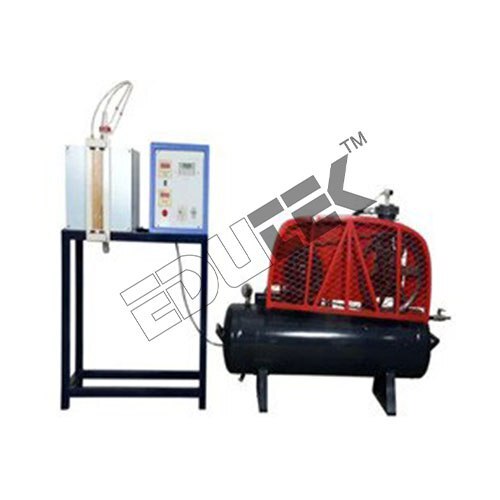
The trainer has its own air and water supply. The closed water circuit includes a supply tank with submersible pump. A compressor is included to generate positive and negative pressures for the experiments with air.
The well-structured instructional material sets out the fundamentals and provides a step-by-step guide through the experiments.
Learning Objectives / Experiments
- Study of buoyancy on a variety of bodies
- Study of the density of liquids
- Hydrostatic pressure, Pascal's law
- Communicating vessels
- Determination of the centre of pressure
- Study of surface tensions
- Demonstration of capillarity
- Boyle's law
- Study of static and dynamic pressure component in flowing fluid
- Familiarisation with various methods of pressure measurement
Specification:
- Comprehensive experimental introduction to hydrostatics
- Transparent tank for observing the processes
- Wide range of accessories included: compressor for generating positive and negative pressures, bottom pressure apparatus, two areometers
- 1 experimental unit each: measuring the buoyancy force, investigation of the hydrostatic pressure in liquids, measuring the surface tension, communicating vessels, capillarity
- Pitot tube for determining the total pressure and tube for static pressure
- Instruments: pressure sensor with digital display, differential pressure manometer, twin tube manometers, diaphragm manometer, Bourdon tube manometer
Technical Data:
- Pump
- power consumption: 250W
- max. flow rate: 9m/h
- max. head: 7,6m
Compressor:
- Power: 65W
- Pressure at inlet: 240mbar
- Pressure at outlet: 2bar
- 3 tanks
- Height 500mm
- G=100mm, d=133mm, d=200mm
- Supply tank for water: 55L
- 2 areometers with different measuring ranges
Measuring ranges:
- Pressure: 2x -1...1,5bar
- Differential pressure: 0...500mmWC
- Differential pressure: 0...0,4bar
- Density: 1x 0,8...1g/cm, 1x 1...1,2g/cm
Dimensions and Weight:
- LxWxH: 1650x880x2150mm
- Weight: approx. 235kg
Engineered for laboratories, the Hydrostatics Trainer delivers unmatched 100% measurement accuracy, allowing users to conduct experiments with total confidence. Its dependable readings facilitate deeper insights into hydrostatic principles, supporting both teaching and advanced research. The robust construction ensures long-term precision and minimal need for recalibration.
Robust and Efficient DesignWeighing 235 kilograms and built with premium materials, this trainer integrates a powerful 250-watt electric drive for optimal performance. Its substantial size (1650x880x2150 mm) ensures stability while catering to a wide range of experimental setups. Highly efficient operations not only lower energy consumption but also extend equipment longevity.
Comprehensive Laboratory ApplicationThe Hydrostatics Trainer is specifically tailored for laboratory environments, supporting a variety of educational and research activities related to fluid mechanics. Its versatile design allows instructors, students, and professionals to explore key hydrostatics concepts, making it an essential tool for academic institutions, research centers, and technical training facilities in India and beyond.
FAQs of Hydrostatics Trainer:
Q: How does the Hydrostatics Trainer achieve 100% accuracy in measurements?
A: The Hydrostatics Trainer is designed with precision engineering and advanced sensors that ensure 100% measurement accuracy during experiments. This allows users to trust the data for teaching and research purposes.
Q: What is the process for setting up and using the Hydrostatics Trainer in a laboratory?
A: To set up the trainer, place it on a stable laboratory surface, connect it to an electric power supply (250 watts), and follow the user manual for assembly. Calibration may be required before use. Once set up, you can conduct various hydrostatic and fluid mechanics experiments as outlined in laboratory protocols.
Q: When should the Hydrostatics Trainer be calibrated for optimal performance?
A: Calibration should be performed prior to initial use and periodically according to laboratory standards or manufacturer recommendations to maintain its 100% accuracy. Regular calibration ensures consistent and reliable experiment results.
Q: Where is the Hydrostatics Trainer manufactured and supplied from?
A: The trainer is manufactured and supplied by a leading exporter, manufacturer, and supplier based in India. It is distributed to laboratories and educational institutions across the country and internationally.
Q: What benefits does the Hydrostatics Trainer offer for laboratory research and education?
A: The trainer provides highly efficient operations, precise measurements, and a robust build, enabling users to comprehensively study hydrostatic concepts while minimizing operational downtime and ensuring long-term reliability.
Q: How does the design of the Hydrostatics Trainer enhance user experience in laboratory settings?
A: The substantial weight (235 kg) and dimensions (1650x880x2150 mm) enhance stability during use, while ergonomic features allow convenient setup and operation, making it suitable for a wide range of laboratory experiments.




 Send Inquiry
 Send Inquiry

