About Flow Meter Demonstration
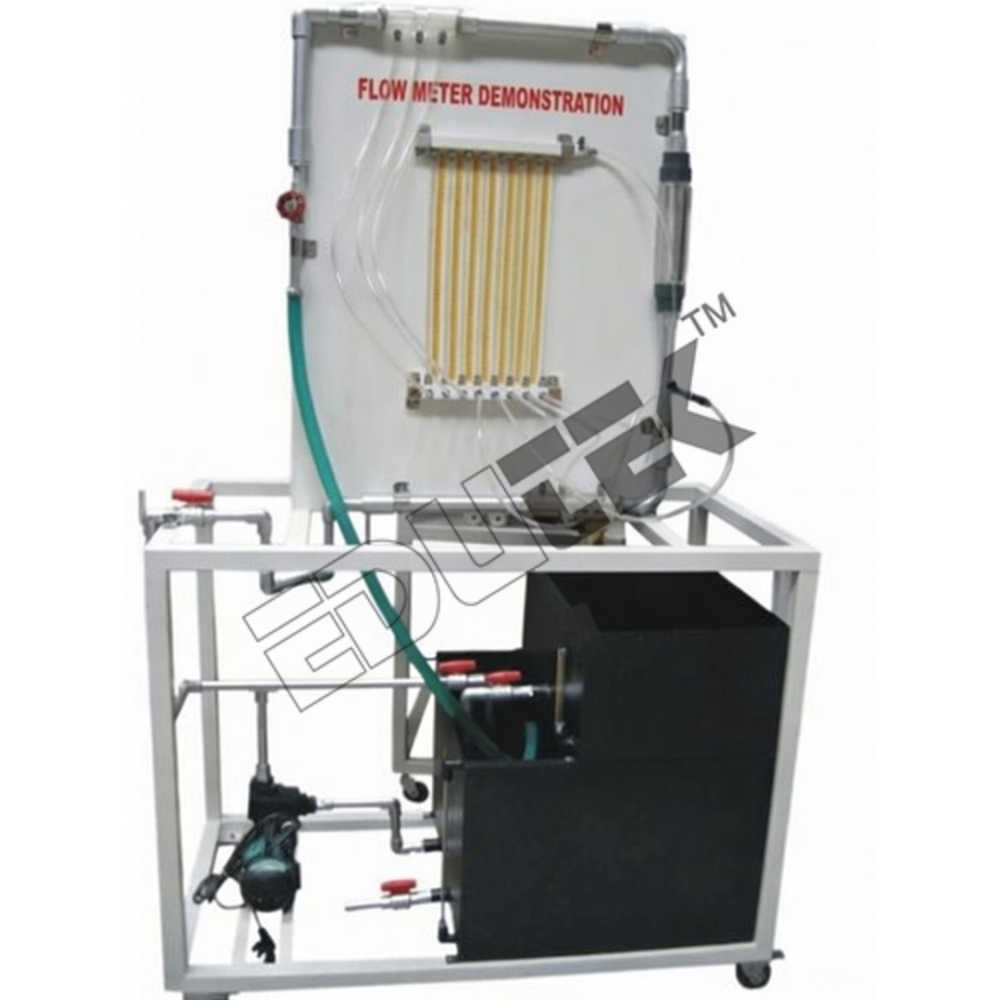
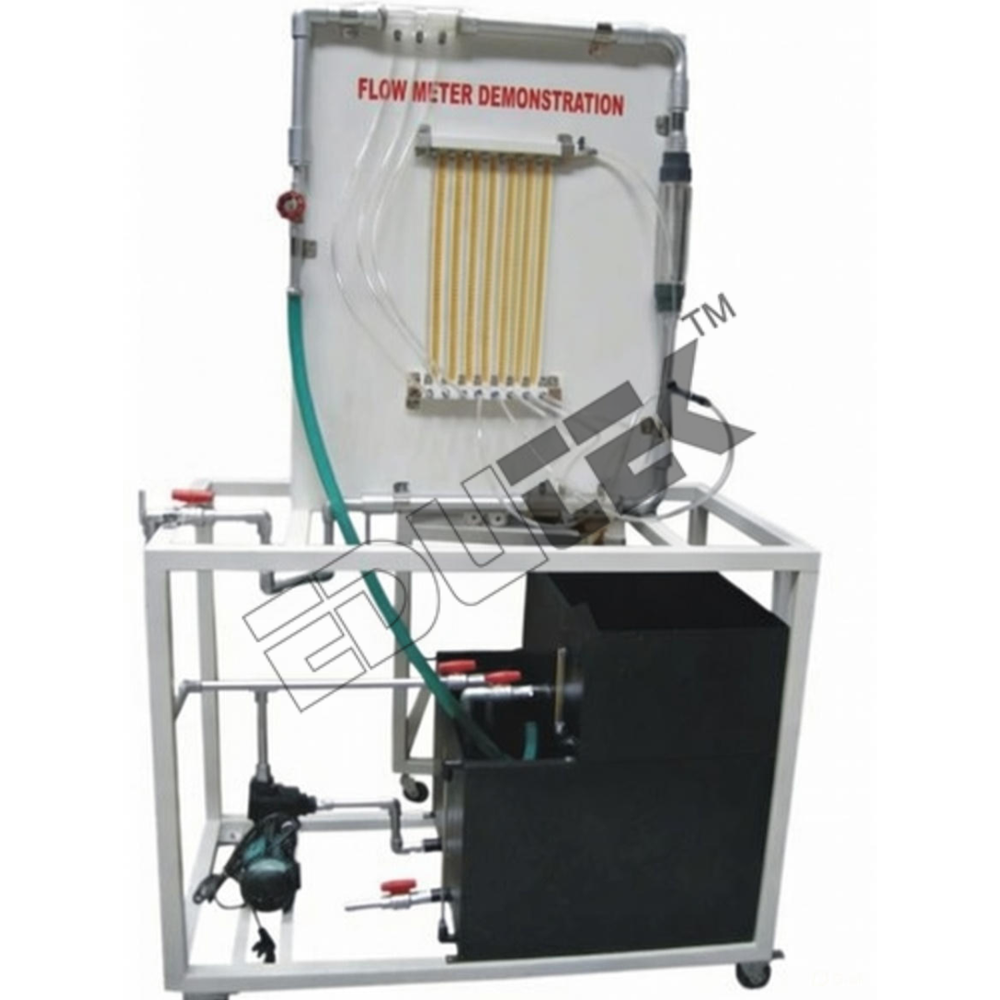
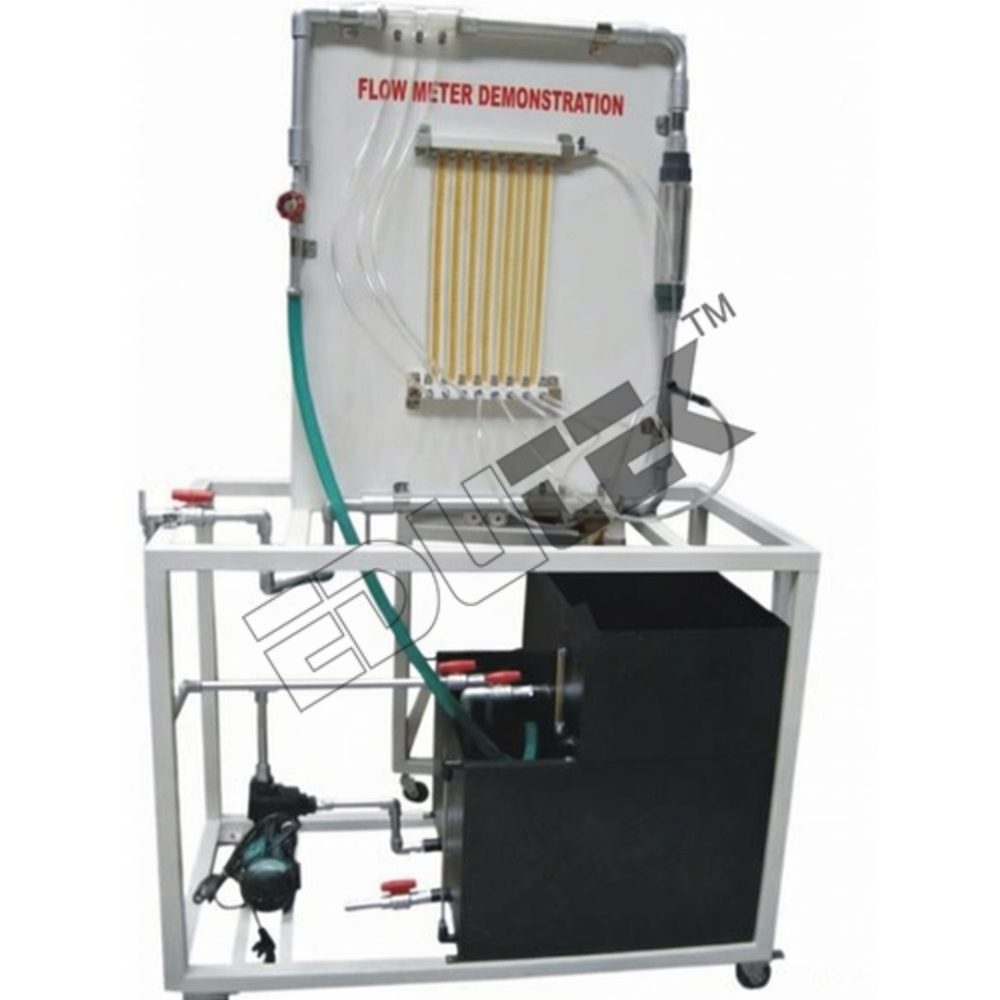
FLOW METER DEMONSTRATION
Edutek are manufacturer and exporter of Flow Meter Demonstration Unit for engineering college lab.
- The system is consist of a clear acrylic flow channel having large width-to -depth ratio.
- Overshot and undershot weirs should be provided at the inlet and exit of the channel section.
- Water should be supplied from the supply tank consisting of glass beads to reduce flow disturbances.
- Flow patterns should be visualized using dye injection through needle valves.
- Dye injection rate can be controlled and adjusted to improve the quality of flow patterns.
Specifications of Flow meter Demonstration
- Supply tank with glass beads, 20 liters capacity.
- Dye injection system, 0.5 liters reservoir capacity, 5 dye injection needles with needle valves at exit.
- Depth gauge. 0150mm range.
- Models: over shot weir, under shot weir, broad crested weir, sharp crested weir, hump, small cylinder,
- large cylinder, symmetrical airfoil, symmetrical airfoil with flap, un-symmetrical airfoil, wing, disc and cuboid.
- Computer based learning software.
- Electrical Supply, 240 V, single-phase, 50 Hz.
Engineered for Fluid Mechanics LabsThis demonstration unit is specifically designed for engineering and technical educational settings. Its compact, tabletop construction and portable design allow seamless integration into laboratory environments, making experiments on fluid flow and measurement both accessible and effective.
Transparent Flow Path with Accurate MeasurementsAcrylic body and stainless steel fittings allow students to visibly monitor water flow, enhancing the learning experience. The analog flow meter offers precise readings within a range of 0.5 to 5 LPM, ensuring clarity during demonstration and consistent learning outcomes.
Simple Controls and Durable ConstructionThe manual regulating valve provides intuitive flow control, while premium materials like powder-coated metal, PVC, and stainless steel ensure longevity. The apparatus operates reliably on standard electrical supply (220 V AC, 50 Hz) and is easy to maintain, supporting repeated classroom use.
FAQs of Flow Meter Demonstration:
Q: How is the flow meter demonstration unit set up and operated?
A: Position the unit on a stable tabletop, connect to a 220 V AC power outlet, and fill the 10-litre tank with water. Activate the centrifugal pump, then use the manual regulating valve to adjust the flow rate as desired. The transparent acrylic flow path aids visual observation, while the analog display provides real-time measurements.
Q: What educational benefits does this apparatus provide in a fluid mechanics laboratory?
A: The unit offers hands-on experience with fundamental fluid mechanics concepts, including flow measurement, pressure management, and flow regulation. Instructors and students can observe real-time responses to valve adjustments, promoting deeper understanding and practical skills.
Q: When is this demonstration unit suitable for use?
A: It is ideal for laboratory classes, practical examinations, and training sessions related to fluid dynamics and hydraulic engineering. The unit can be employed whenever practical, visual demonstration of water flow and flow meter operation is required.
Q: Where can this apparatus be effectively utilized?
A: This flow meter demonstration setup is most effective in educational laboratories, especially in engineering colleges and technical institutions focused on fluid mechanics training.
Q: What is the typical process for measuring flow with this device?
A: Begin by filling the tank and starting the pump. Regulate the flow with the manual valve and observe water movement through the transparent section. Read the flow rate directly from the analog meter, ensuring accurate results within the 0.55 LPM range.
Q: How does this model ensure durability and safety during operation?
A: The apparatus is built with a powder-coated metal chassis for durability, PVC pipes for corrosion resistance, and stainless steel fittings for robust connections. The closed-loop system and transparent, shatter-resistant acrylic also uphold safety standards for frequent educational use.





 Send Inquiry
 Send Inquiry

