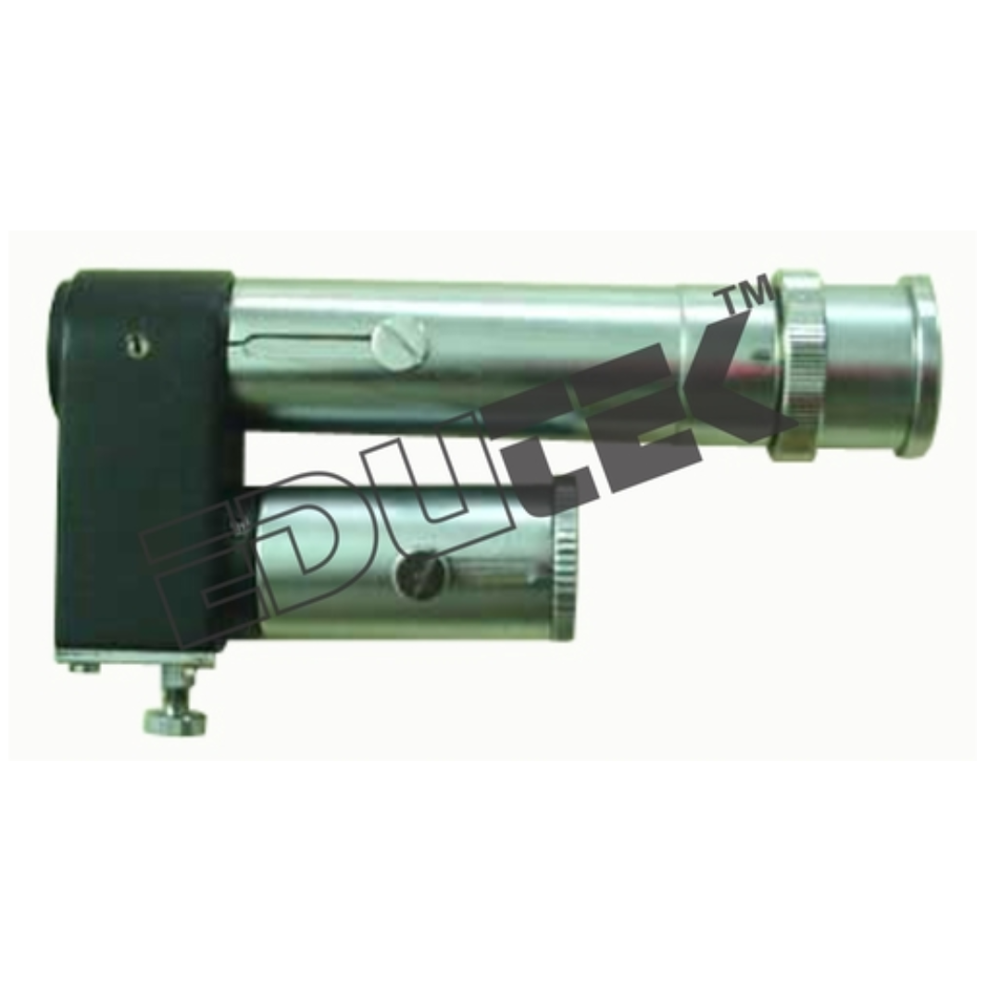
About Direct Vision Spectroscope
Direct Vision Spectroscope
Description of Direct Vision Spectroscope :
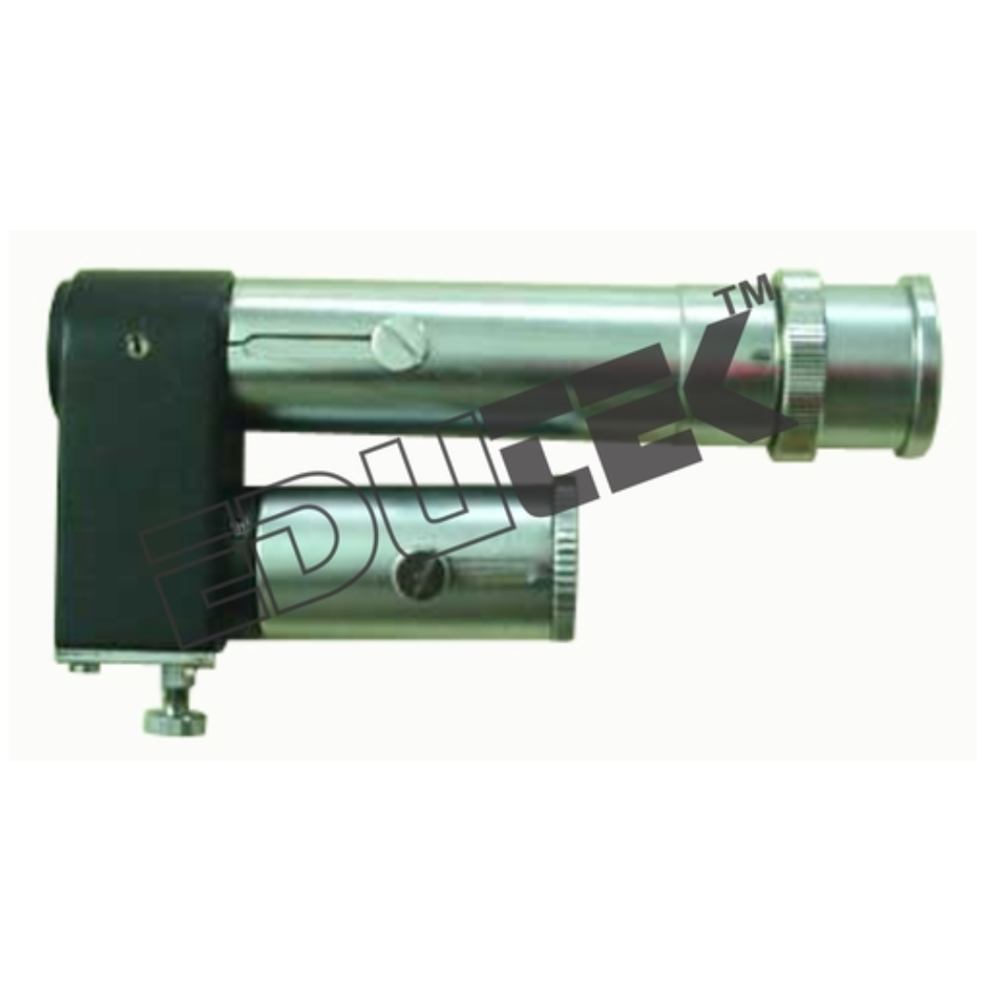
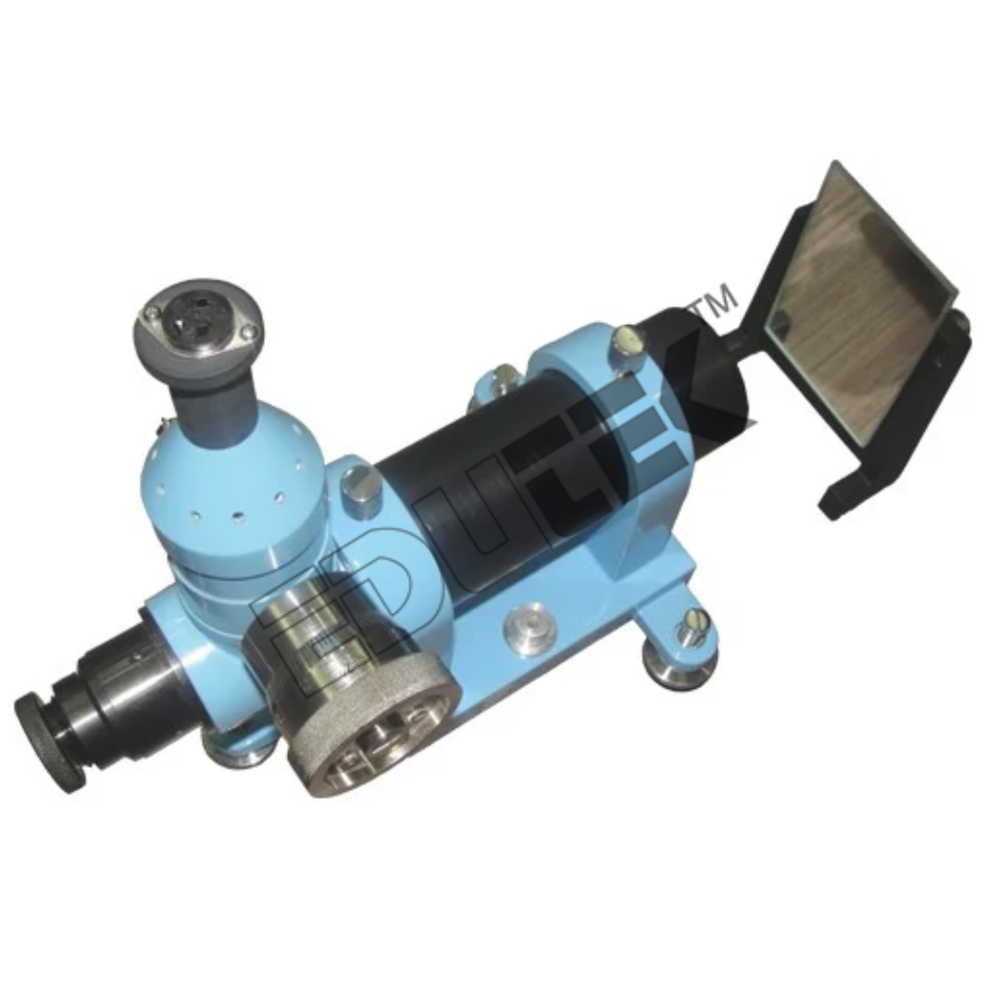
The Direct Vision Spectroscope is mostly used in hospitals, medical Labs and medical colleges. The testing device allows the users to directly read the spectral length and engage the prism for dispersion. The direct vision spectroscope is also used in the flame test to test basic radicals like strontium, sodium, copper, potassium, etc .
Specification of Direct Vision Spectrometer :
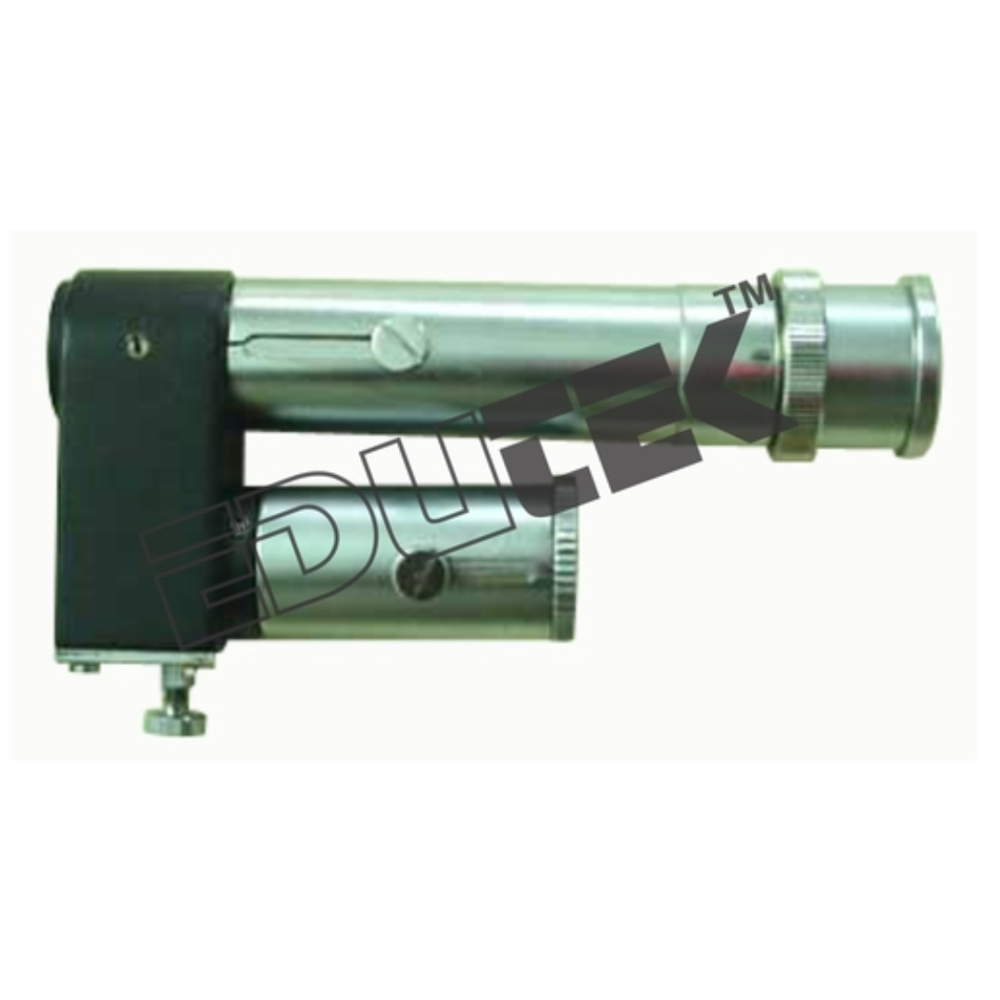
- Direct Vision Spectroscope comprises of a single eye piece and independent focusing tube for the graticule that carries the index at 590mm.
- The D mark which is provided below the scale corresponding to the wavelength of the sodium light is calibrated to the known light source by adjusting the knurled screw.
- The light which is emitted to the spectroscope can be regulated efficiently with the help of the variable slit that can also be adjusted by a knurled during which is provided outside the rating tube.
Reliable Spectral Analysis in Your PocketDesigned for on-site and classroom use, this direct vision spectroscope brings reliable qualitative spectral analysis directly to your fingertips. Its robust, lightweight construction is corrosion-resistant, and the absence of power requirements means you can use it anywhere. Whether in the lab or out in the field, you get instant, manual operation without technical fuss.
User-Friendly Operation with Fixed FocusWith preset focus and a fixed, single ocular eyepiece, using this spectroscope is straightforward. Simply peer through the observation tube; no adjustments or complex setups are required. The device is tailored for easy, visual spectrum reading, aided by an internal, color-coded calibration scale for rough wavelength estimation.
FAQs of Direct Vision Spectroscope:
Q: How does the Direct Vision Spectroscope function for spectrum analysis?
A: It utilizes an assembly of 6 or 7 glass Amici-type prisms to disperse light entering through the observation tube, allowing you to visually observe the spectral lines of a sample directly through the eyepiece.
Q: What types of applications is this spectroscope suitable for?
A: This model is well-suited for qualitative observation of absorption and emission spectra, flame analysis in chemistry labs, gemstone identification, and educational demonstrations.
Q: When should I use a direct vision spectroscope instead of a digital spectrometer?
A: Choose a direct vision spectroscope for rapid, qualitative observations or when portability, simplicity, and immediate visual feedback are essential, such as fieldwork, classroom settings, or spot-checks.
Q: Where can this spectroscope be most effectively utilized?
A: It is most effective in laboratory environments, educational settings, geology or gemstone sites, and any location where portable, manual spectrum analysis is required.
Q: What is the process for observing a samples spectrum?
A: Position the sample in front of the entrance, look through the eyepiece, and interpret the visible spectral lines and corresponding wavelengths using the internal color-coded scale. No focusing or calibration is needed.
Q: What are the benefits of using a pocket-sized direct vision spectroscope?
A: Its lightweight, robust build and manual operation make it easy to carry and use anywhere. It requires no external power, delivers immediate results, and provides qualitative insight into sample composition through visual inspection.