About CLASS A AMPLIFIER
Specification:
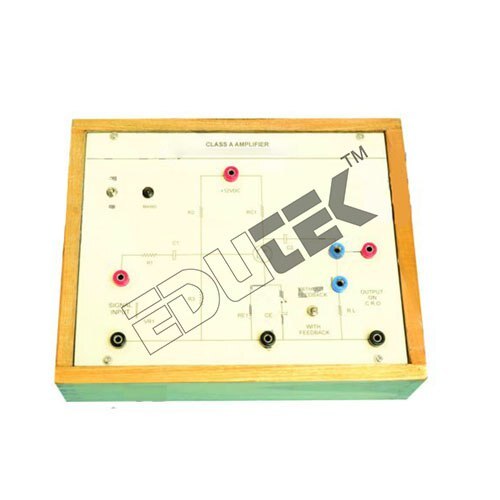
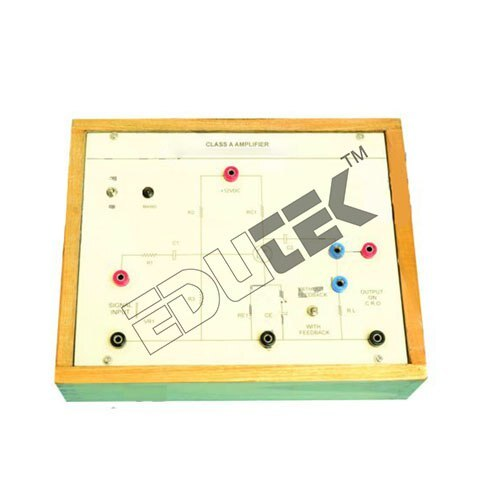
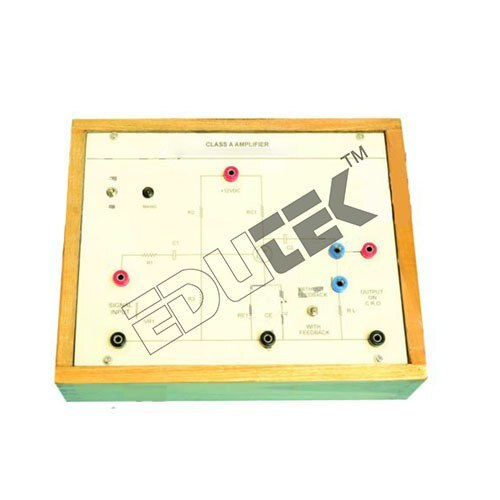
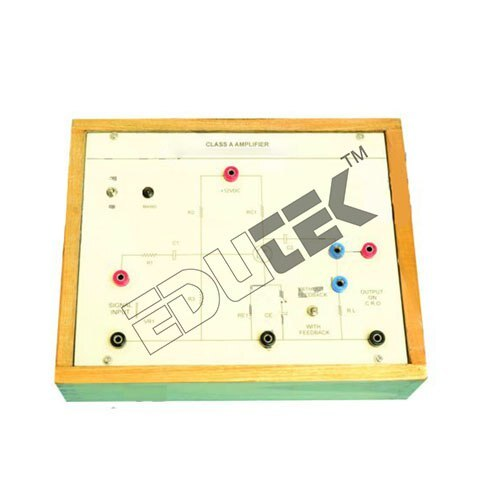
CLASS A AMPLIFIER
To study of Class A using transistors and other electronic components.
Technical Specifications:
Power Supply: -12 V, +5V / 300mA
Amplifier: Transistor Based
Mains: 230V AC +10%, 50Hz
Fuse: 500mA
Dimension: W x D x H: 250 x 200 x 75mm
Precision Audio PerformanceDesigned for engineering electronics instruments, this Class A amplifier delivers exceptional clarity and transparency. Its ultra-low distortion and high damping factor ensure audio signals remain true to source, while the advanced MOSFET design provides dynamic range and reliability. Each channel offers 50W of clean power, suitable for demanding laboratory or precision audio applications.
Rugged Design and Cooling EfficiencyBuilt with a heavy-duty aluminium alloy chassis and a 4 mm brushed metal front panel, the amplifier combines durability with aesthetic appeal. Natural convection with substantial aluminium heat sinks allows reliable operation without forced air, enhancing lifespan and maintaining consistent performance. Its thermal management supports continuous use within a 0C to 40C temperature range.
Safe and Efficient OperationThe amplifier integrates overheat and overload protection circuitry, safeguarding both the equipment and connected devices. With a standby power consumption of less than 1W and a high current rating (6A), it is energy-efficient and stable on AC mains supply. Its LED indicators make monitoring operational status straightforward for users in demanding engineering environments.
FAQ's of CLASS A AMPLIFIER:
Q: How does natural convection cooling benefit the Class A Amplifier's performance?
A: Natural convection cooling with dedicated heat sinks disperses heat effectively, allowing continuous operation without the noise or maintenance of fans. This method preserves the amplifier's reliability and ensures long-term, silent operation, ideal for precision engineering applications.
Q: What advantages do the high damping factor and low total harmonic distortion provide?
A: A high damping factor (>120) ensures tight control over speaker movement, enhancing audio detail and accuracy. Very low total harmonic distortion (<0.08%) means the amplifier reproduces audio with exceptional clarity and minimal coloration, critical in engineering and laboratory environments.
Q: When should I use the overload and overheat protection features?
A: These features activate automatically during abnormal conditions, such as excessive load or rising internal temperatures. They prevent damage to both the amplifier and connected devices, ensuring uninterrupted function during intensive usage.
Q: Where can the Class A Amplifier be installed for optimal cooling and performance?
A: Install the amplifier in an open, well-ventilated area, away from direct heat sources and obstructions. Allow sufficient space around the chassis for optimal airflow-this maximizes the effectiveness of natural convection and maintains performance stability.
Q: What connectivity options are available on this amplifier?
A: The amplifier offers analog-only connections, supporting line-in (RCA) inputs and speaker terminal outputs. It also features binding posts for secure, low-loss connections to external speakers or instrumentation.
Q: How is the amplifier powered and what is its standby consumption?
A: Operating on 220-240V AC mains, the amplifier is highly efficient with less than 1W power consumption in standby mode. This ensures low energy use when not actively amplifying audio signals.
Q: What are the key benefits of using this amplifier in engineering electronics instruments?
A: Its discrete Class A topology, audiophile-grade parts, and robust protection features provide uncompromised signal integrity, reliability, and extended lifespan-making it a trusted choice for demanding engineering and measurement applications.




 Send Inquiry
 Send Inquiry

