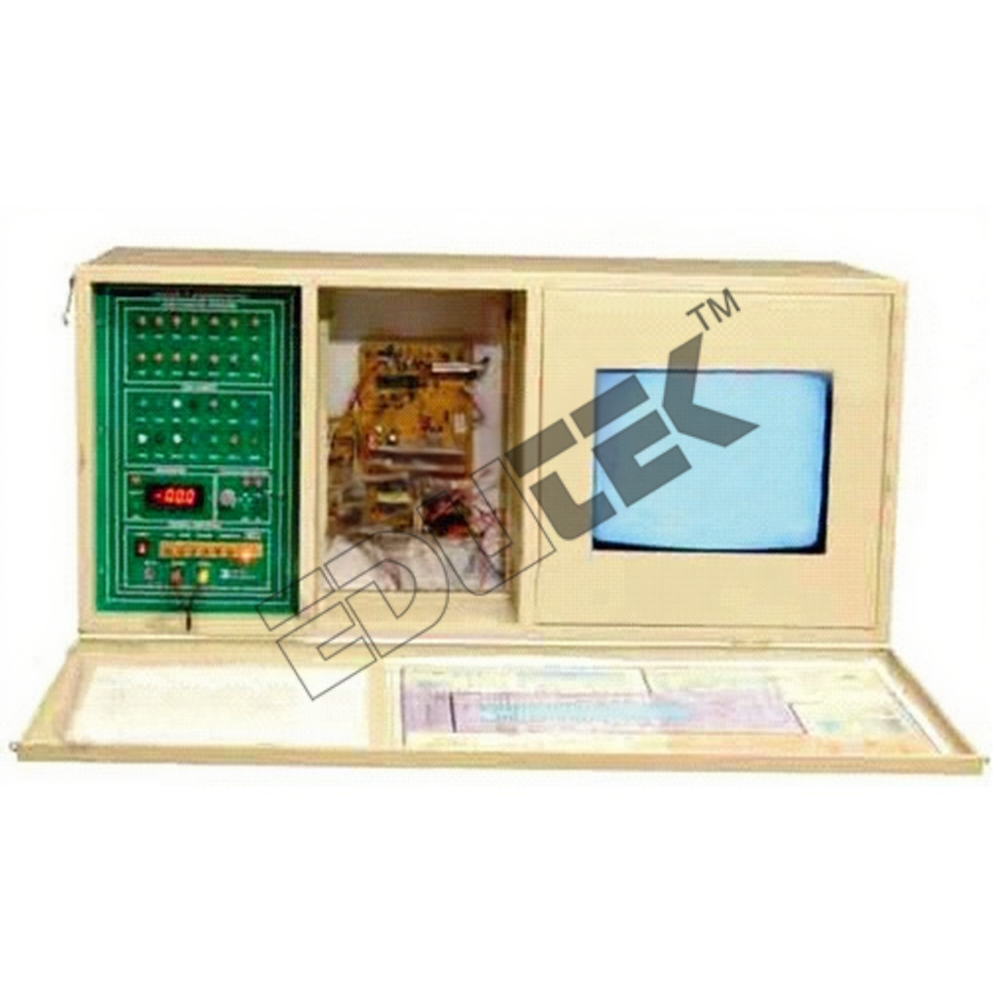
About Analog And Digital Communication Trainer
Analog Communication Trainer for Engineering training Equipment
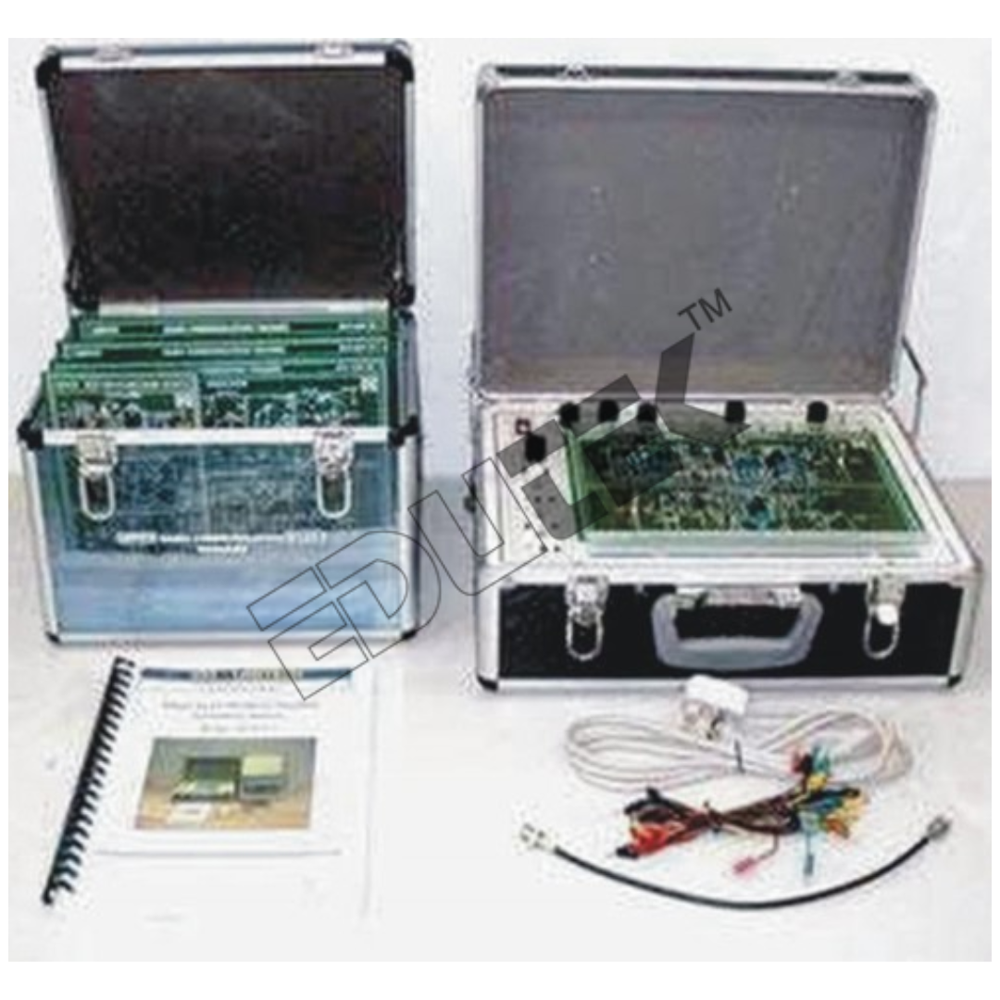
Analog Communication Trainer should be designed in a modular format using
base station and PCB module approach in order to make the program both
comprehensive and flexible for both student and the teacher. The base station
should provide a working platform for the Analog Communication Modules. All
necessary equipment such as power supplies, switches and others services
required for operation of the modules should be included on base station.
Courseware:
A comprehensive experiment manual should be provided to guide the students
in studying the various application modules. This manual should include step-by step
instruction to prepare the modules for the experiment as well as some
theory to strengthen the student's knowledge in areas that is important as a
background which is needed before doing the experiment. Complete Analog
Training System should be provided with all of the topics. The trainer should be
able to cover the following topics:
Oscillators and filters
AM Modulator & Demodulator
DSB/SSB Modulator & Demodulator
FM Modulator & Demodulator
PPL frequency synthesizer
Modules:
The modules should feature electrical and electronic components that are mounted onto printed circuit boards with the circuit
diagram silk-screened onto the surface. Interconnections between key components or circuit blocks should be provided through
2mm test leads.
b. Digital Communication Trainer
Features:
Digital Communication Trainer should be designed in a modular format using base station and PCB module approach in order
to make the program both comprehensive and flexible for both student and the teacher. The base station should provide a
working platform for the Digital Communication Modules. All necessary equipment such as power supplies, switches and
others services required for operation of the modules should be included on the base station.
Courseware:
A comprehensive experiment manual should be provided to guide the students in studying the various application modules.
This manual should include step-by-step instruction to prepare the modules for the experiment as well as some theory to
strengthen the student's knowledge in areas that is important as a background which is needed before doing the experiment.
Complete Digital Training System should be provided with all of the topics. The trainer should be able to cover the following
topics:
Analog to digital & digital to analog converter
Parallel to serial & serial to parallel converter
ASK modulator & demodulator
FSK modulator & demodulator
PSK modulator & demodulator
QPSK modulator & demodulator
RZ, NRZ & clock delay
Word clock
Modules:
The modules should feature electrical and electronic components that are mounted onto printed circuit boards with the circuit
diagram sil
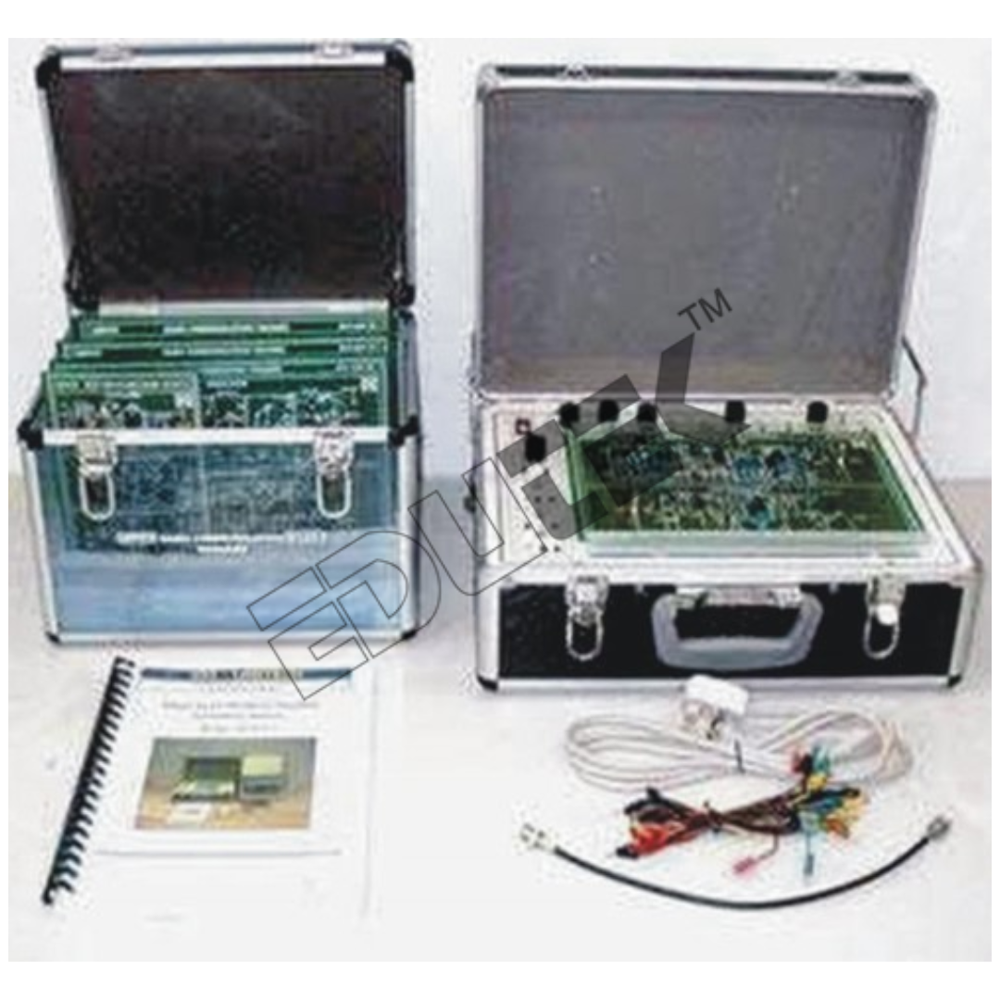
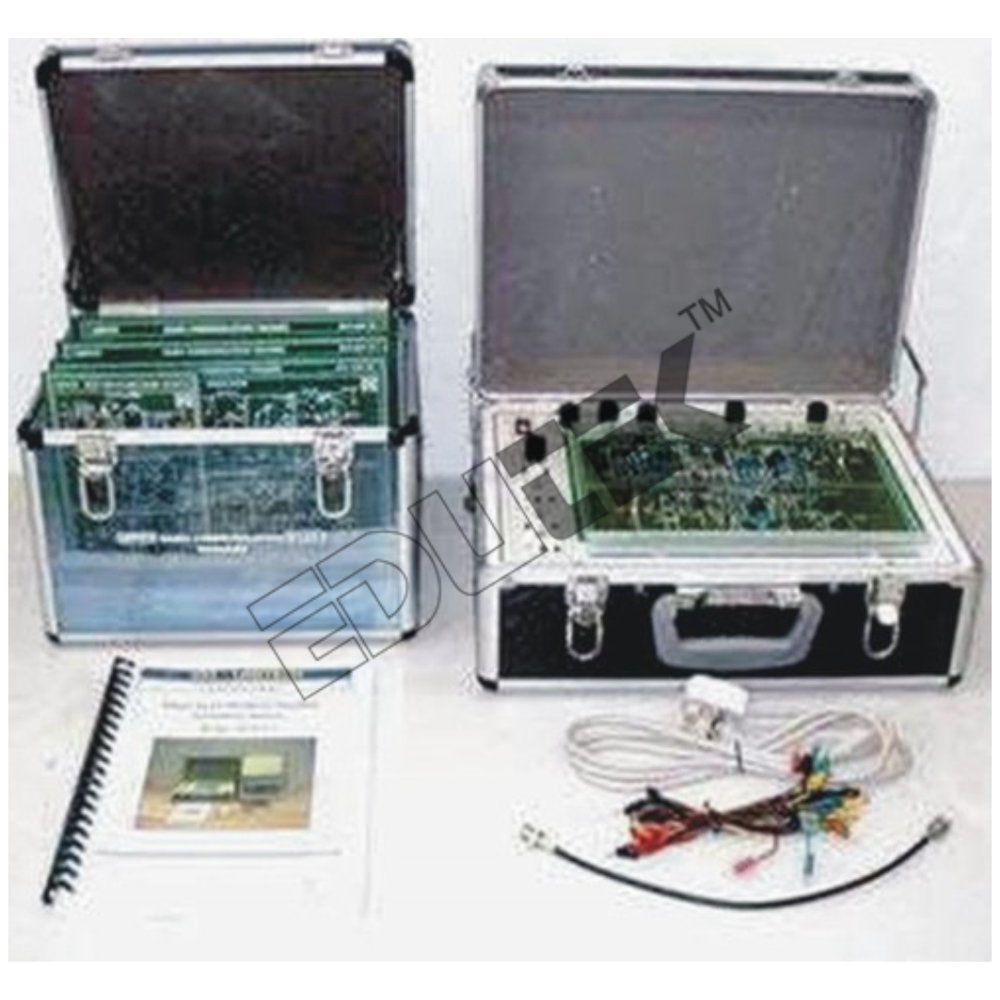
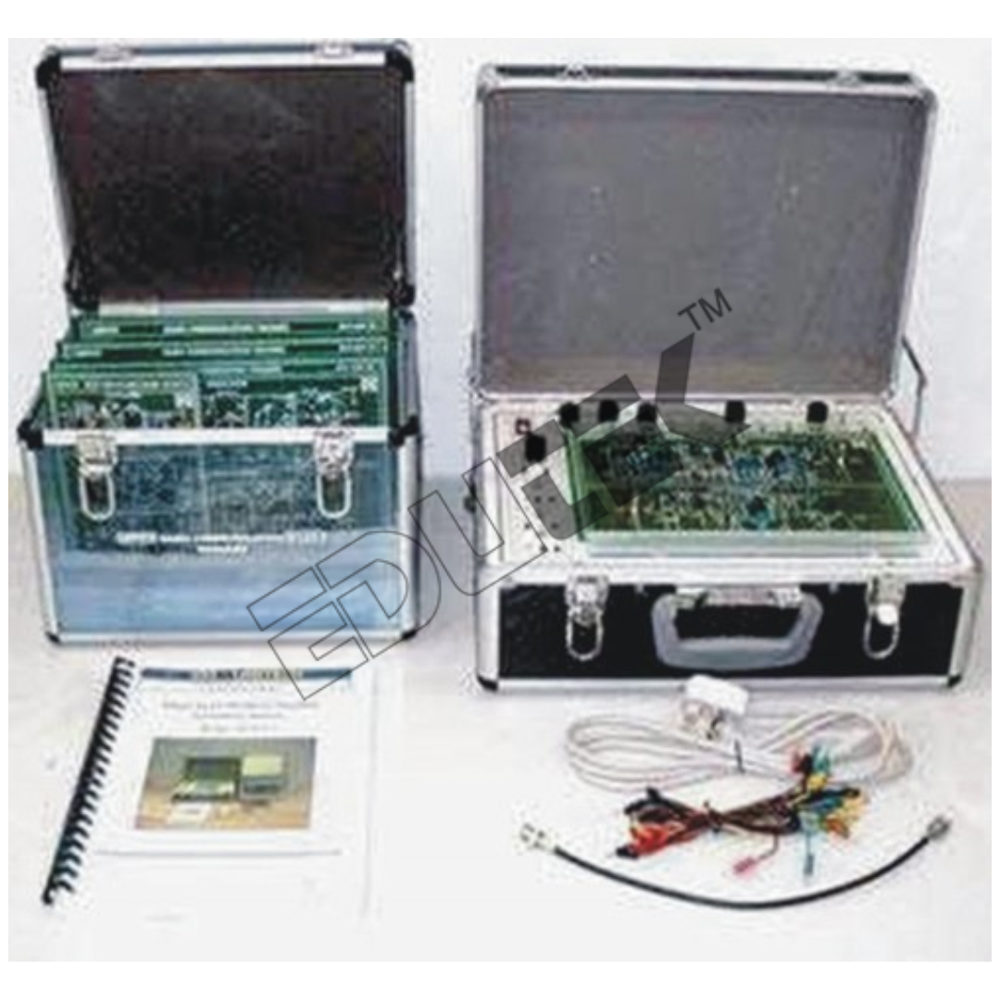
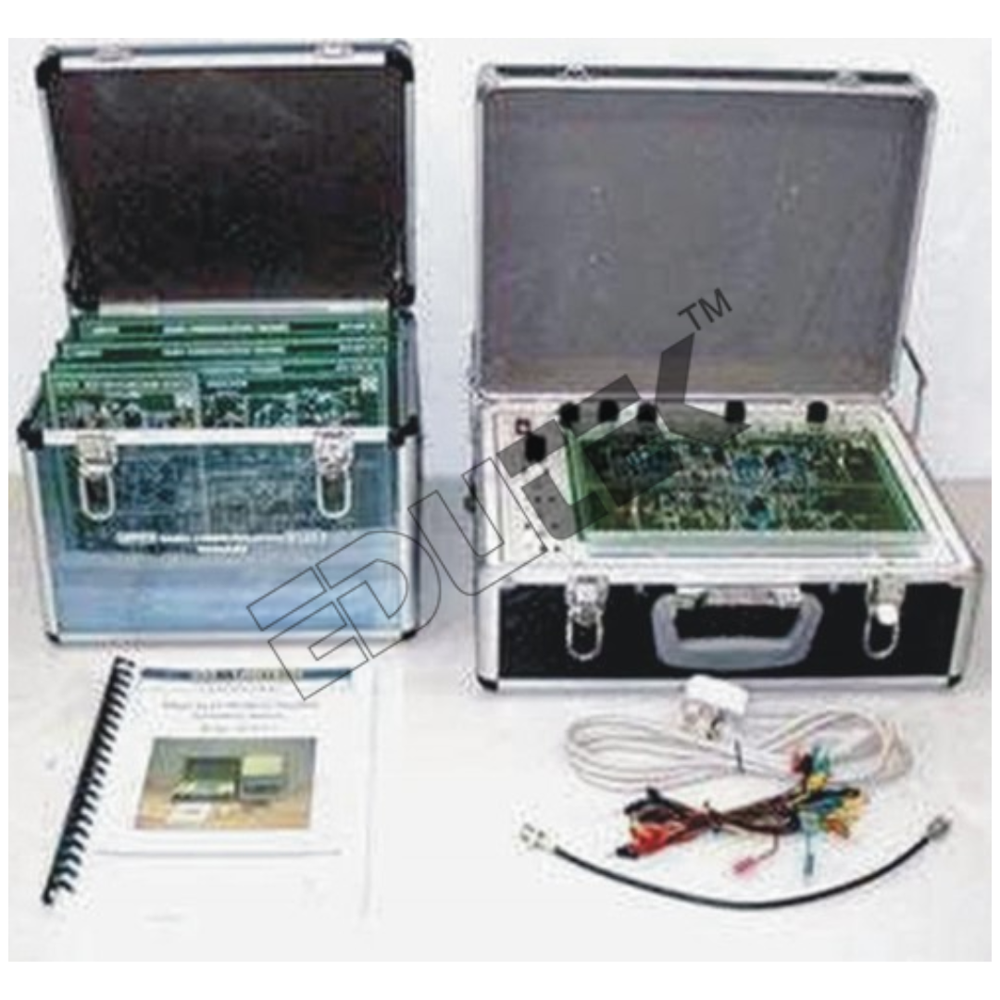
Comprehensive Communication TrainerThis trainer is crafted for practical learning in analog and digital communication techniques. It supports multiple modulation and demodulation experiments, facilitating an interactive laboratory experience for students and educators. All test points are accessible, offering complete transparency when studying circuit operations.
User-Friendly and Safe DesignEquipped with screen-printed circuit symbols, detailed labeling, and external sockets, the trainer promotes easy operation and minimizes setup time. Built-in overload and short-circuit safeguards ensure user and equipment safety during experiments.
Reliable Power and Robust BuildOperating on standard 230 V AC or battery, the device is highly efficient and accurate. Its metallic body with ABS panel ensures durability while maintaining portability with a manageable 4 kg weight and ergonomic dimensions.
FAQs of Analog And Digital Communication Trainer:
Q: How does the Analog and Digital Communication Trainer support experiments in various modulation techniques?
A: The trainer offers dedicated modules for AM, FM, PM, ASK, FSK, and PSK modulation and demodulation, allowing students to conduct practical experiments and observe outputs through analog and digital indicators.
Q: What are the signal outputs available for this trainer kit and where can they be accessed?
A: This kit provides sine, square, and triangular waveform outputs, as well as both audio and RF signals. All test points are externally accessible via sockets on the front panel, enabling convenient measurement and analysis.
Q: When is this trainer most beneficial for students and educators?
A: It is highly beneficial during laboratory sessions in engineering, polytechnic, and technical institutes. The kit helps deepen conceptual understanding by allowing hands-on learning and interactive experimentation.
Q: Where can the Analog and Digital Communication Trainer be effectively used?
A: This trainer is ideal for laboratory environments in educational institutes and technical training centers, catering to undergraduate and diploma-level communication courses.
Q: What protection features are integrated into the device to ensure safe operation?
A: The trainer includes overload and short-circuit protection mechanisms, safeguarding both the user and the equipment during active experiments.
Q: How do users set up and operate the trainer for communication experiments?
A: Setup is straightforward with included accessories such as patch cords and a power cord. An instruction manual guides users through experiment procedures and proper use of the trainers features.
Q: What are the advantages of using this trainer kit in a laboratory setting?
A: Users benefit from precise experimental results, robust construction, clear labeling, protected circuitry, and easy connectivity for all componentsall contributing to an efficient and safe communication learning experience.





 Send Inquiry
 Send Inquiry

