
EDUTEK INSTRUMENTATION
GST : 06AEWPJ6896D1ZU

Call us
07313726362
Call us
07313726362
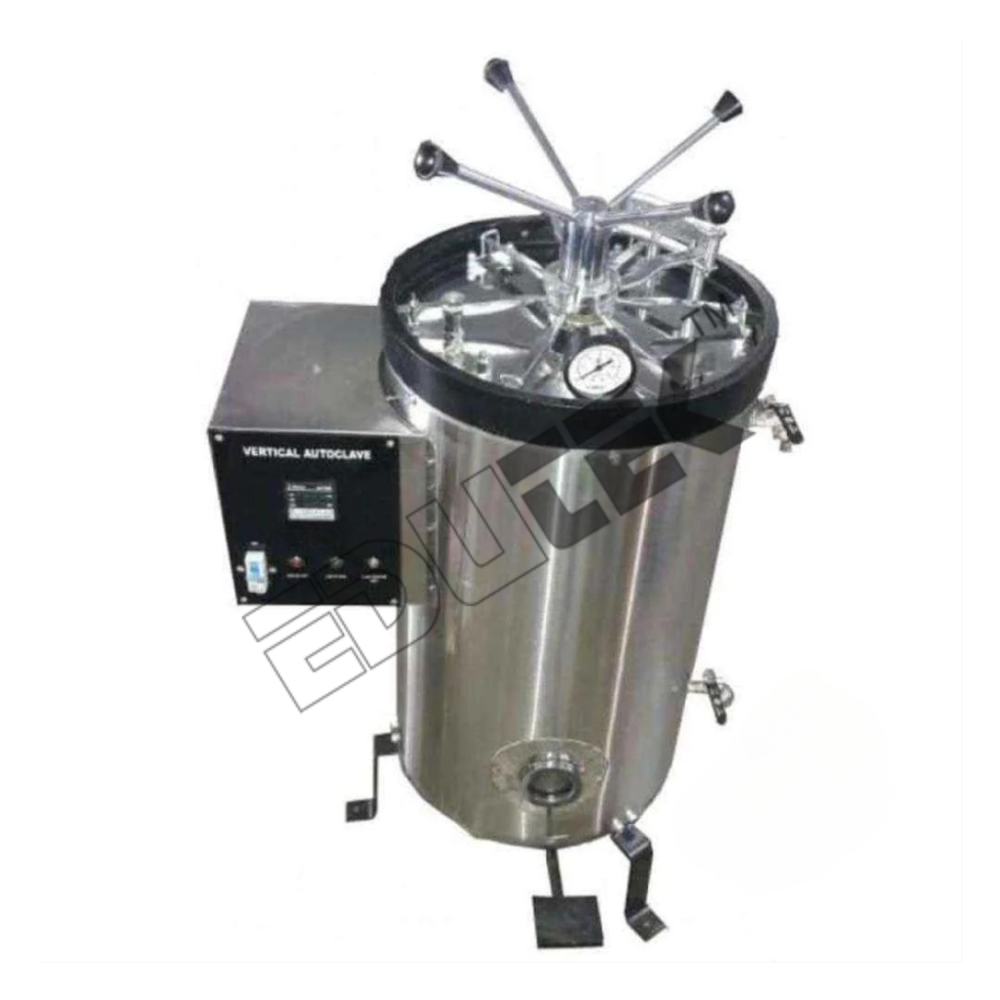
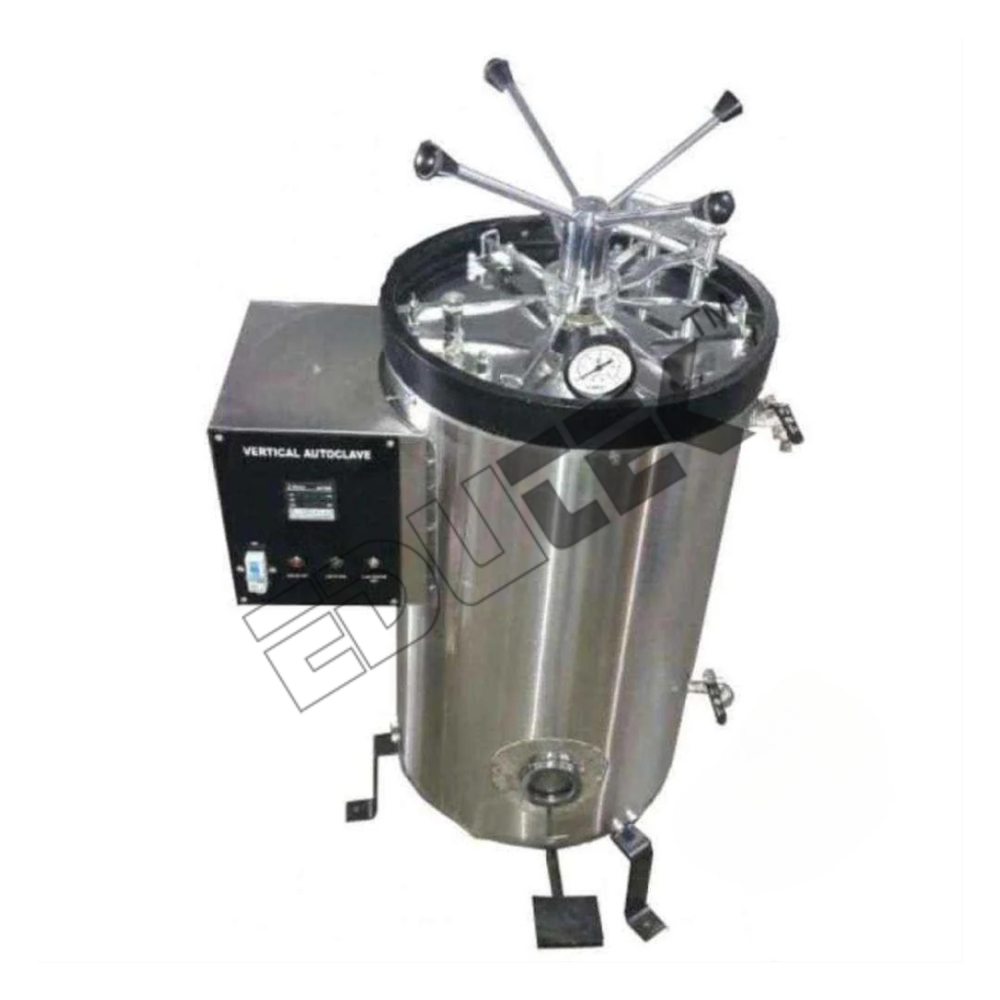
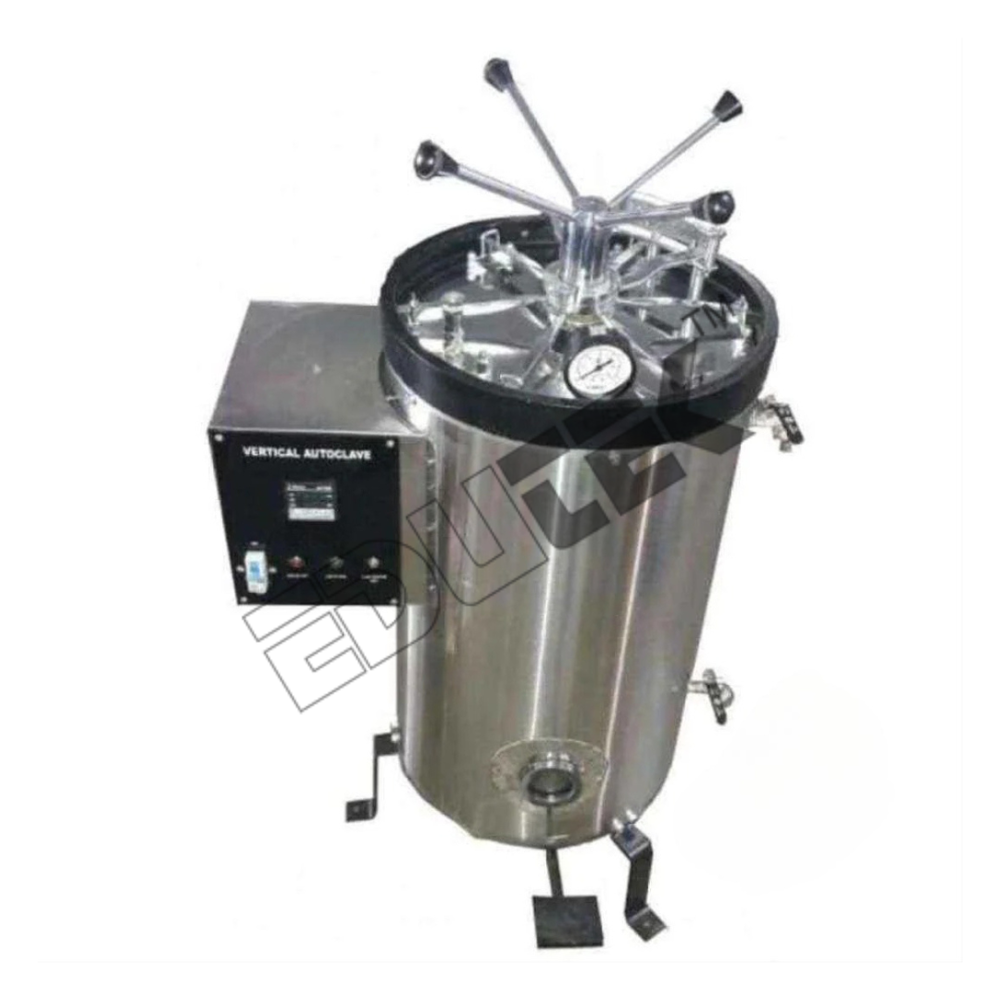
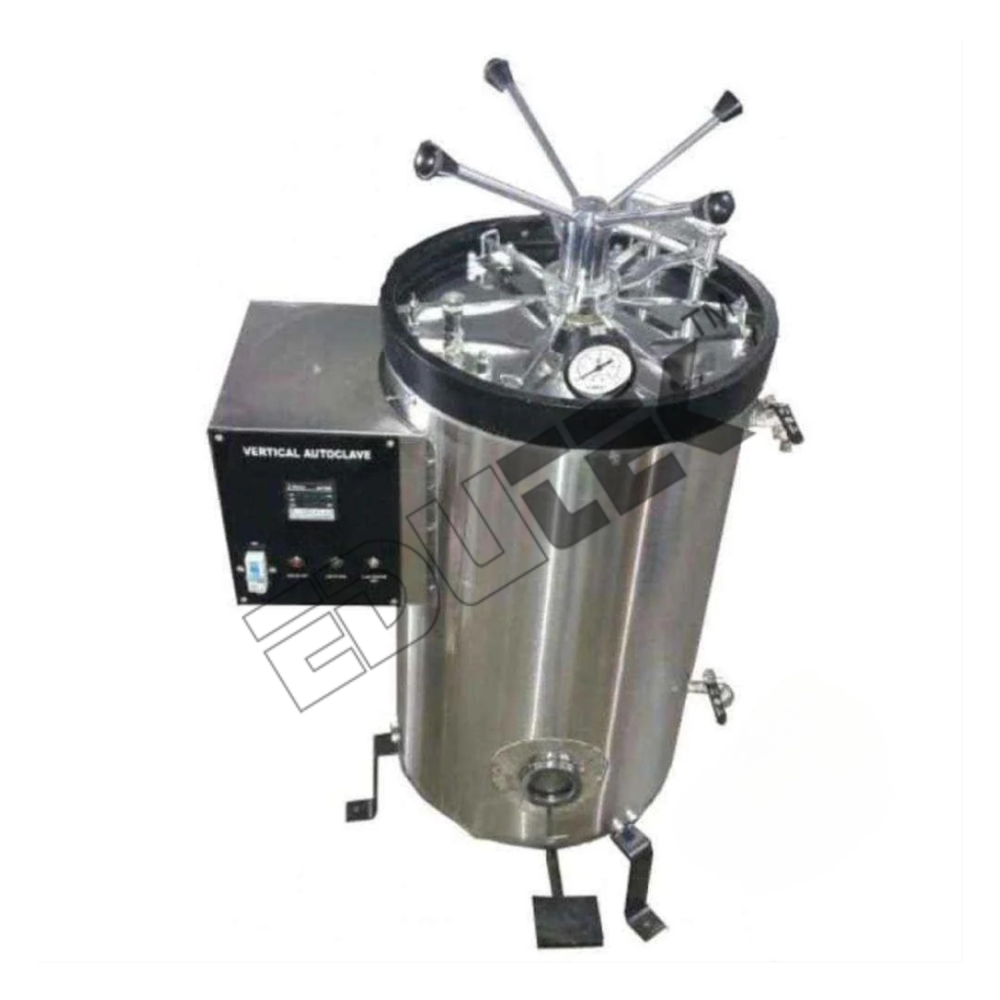
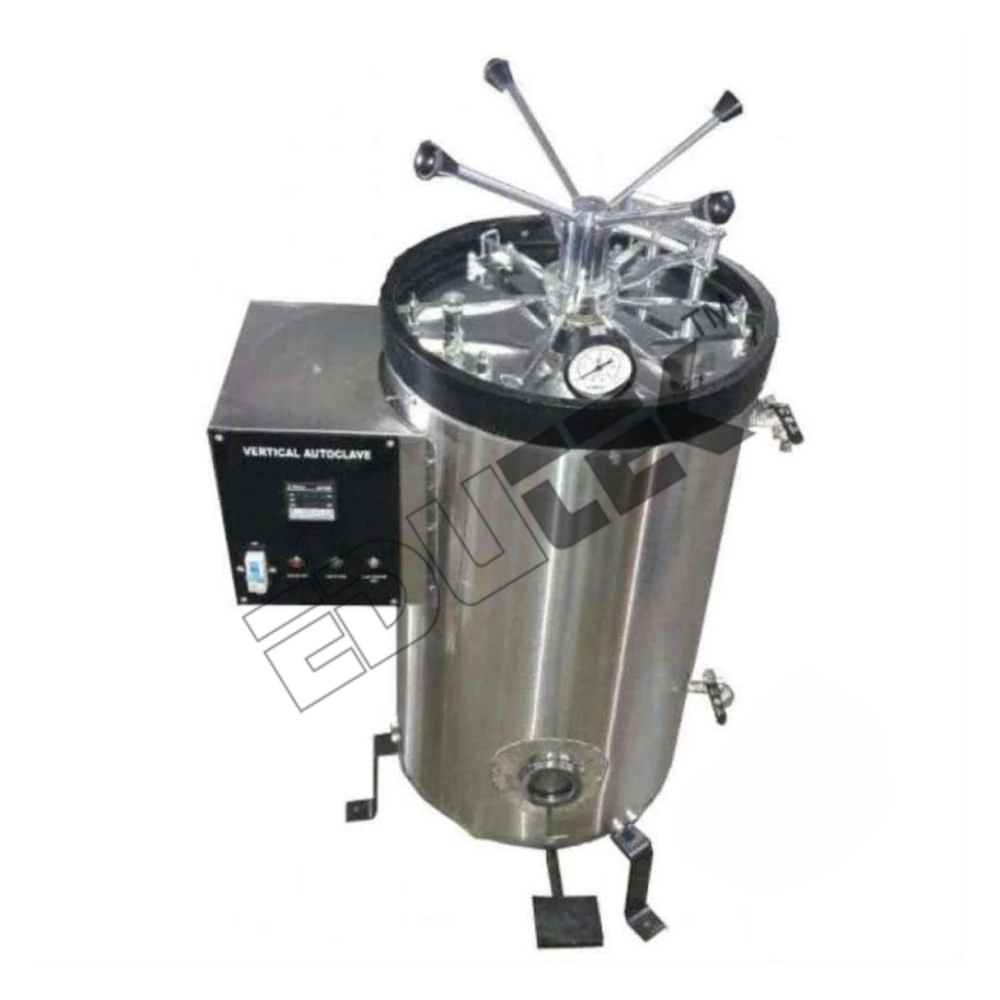
Vertical Autoclaves ETS-50
A versatile electrically heated sterilizer under saturated steam of adjustable pressure of 10 to 20 psi. Double walled construction with boiler made of stainless steel, outer shell made of mild steel or stainless steel sheet. The lid is made of stainless steel or gun-metal plate, tightening allround with wing nuts.
Gasket made of molded joint-less Neoprene rubber. Equipped with water level arrangement, pressure gauge, air/steam release cock, spring loaded safety valve adjustable to any selected point from 10psi to 20 psi, accuracy 3 psi and drain, cord-plug etc.; to work on220V AC 50Hz single phase.
|
| Dia x Depth Size | Ltr(Approx.) | Wattage | |
| a) | 250x450mm (10"x18") | 22 Ltrs | 2KW | |
| b) | 300x500mm (12"x20".) | 35 Ltrs | 3KW | |
| c) | 350x550mm (14"x22") | 50 Ltrs | 4KW | |
| d) | 450x600mm (18"x24".) | 95 Ltrs | 5KW | |
| e) | 550x750mm (22"x30") | 178 Ltrs | 6KW | |


Price:
Minimum Order Quantity : 1 Piece
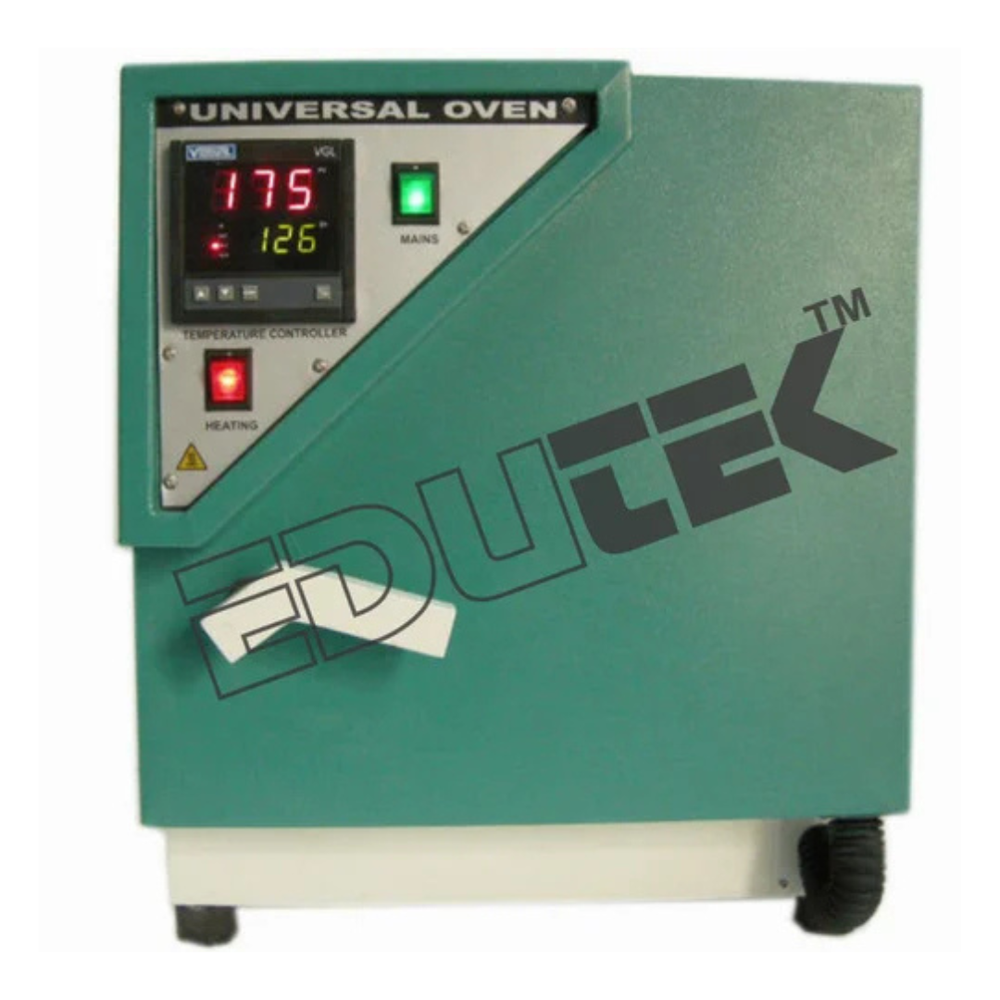
Usage : General Purpose Laboratory Oven
Power : 12002000 W (Model Dependent) Watt (w)
Application : Drying, Sterilizing, Baking, Heating, and Aging Tests
Product Type : Universal Oven
Color : Grey/White (Body), Black (Control Panel)

Minimum Order Quantity : 1 Unit
Usage : Biochemical Oxygen Demand Testing
Power : 350W Watt (w)
Application : Microbiological, Biochemical and Other Laboratory Uses
Product Type : B.O.D Incubator
Color : White and Blue
Minimum Order Quantity : 1 Unit
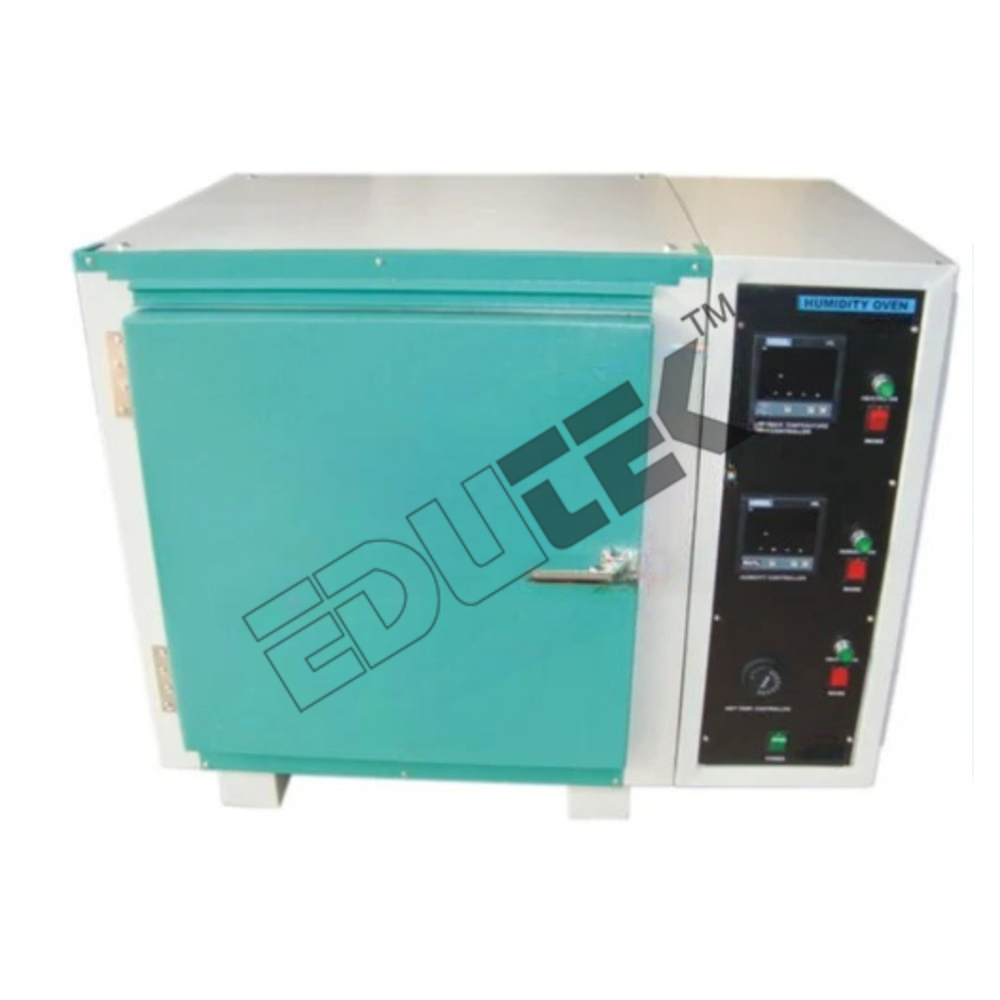
Usage : Used for testing product stability, storage, and testing components under varied humidity conditions.
Power : 1500 W
Application : Optional : Digital temp. indicatorcumcontroller. Digital temp. indicatorcumcontroller with computer data logger.
Product Type : Humidity Oven
Color : White / Blue
Minimum Order Quantity : 1 Piece
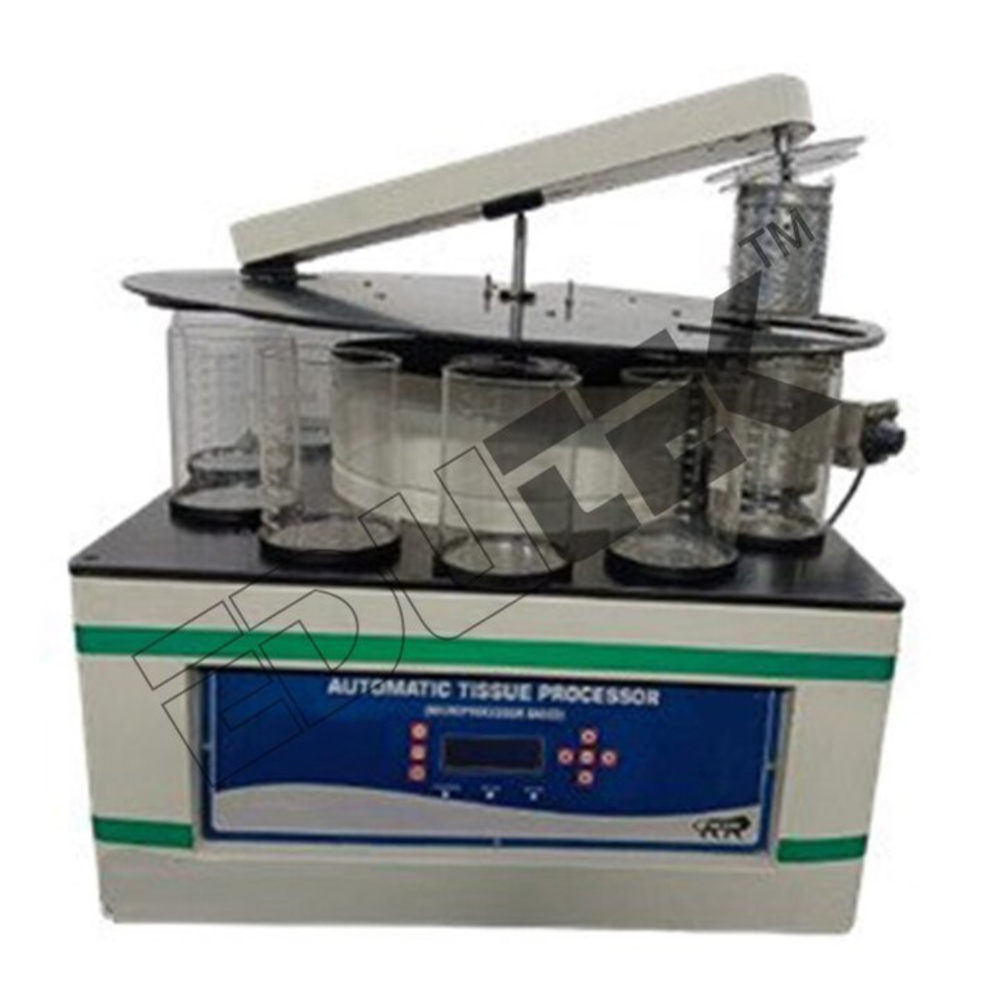
Usage : Laboratory Heating and Cooling Instrument
Power : 60 W Watt (w)
Application : Laboratory Heating and Cooling Instrument
Product Type : Automatic Tissue Processor 1 Liter
Color : White with Blue Accents

 Send Inquiry
 Send Inquiry

