About Turbidity Meter
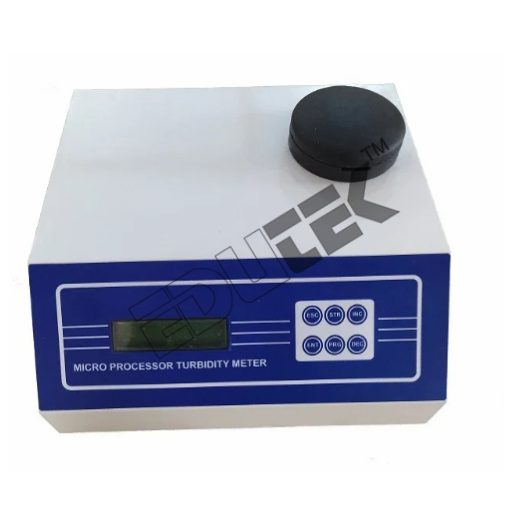
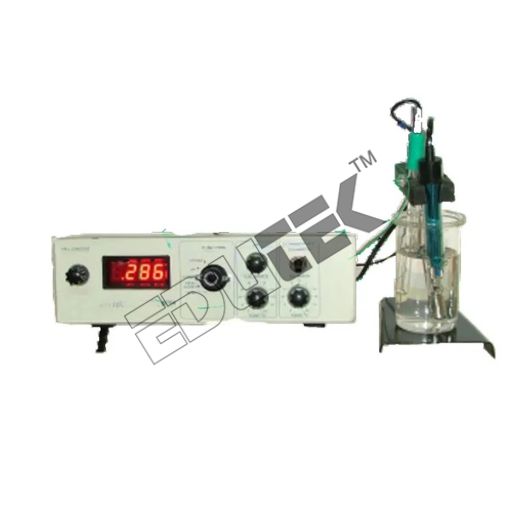
TURBIDITY METER
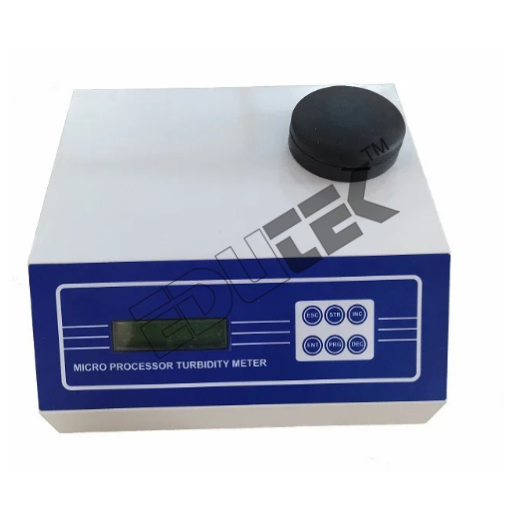
The instrument uses the latest Microprocessor technology and advanced engineering techniques so as to give enhanced accuracy and reproducibility. The instrument has user friendly prompts which guide you throughout the measurement process. It has Auto Ranging facility in Turbidity Parameter.
- The instrument has 6 soft touch membrane type keys with audible sound for ease of operation. It has the data storage facility, which are retained in the memory even when the instrument is switched OFF. Provision has also been provided for attachment of centronix dot matrix printer so that any of the stored results can be printed.
- High accuracy at low ranges (below 0.05 NTU)
- Two, three or four point calibration
- USB and RS232 PC connectivity
- Log up to 200 records
- GLP Features
High-Precision MeasurementOffering a resolution of 0.01 NTU across a broad detection range of 0 to 1000 NTU, this turbidity meter delivers highly accurate results. Its compliance with IS 3025 (Part 10) and ISO 7027 ensures it meets both Indian and international standards for water analysis in various settings.
User-Friendly OperationDesigned for intuitive use, the turbidity meter features a digital LED display, easy-to-operate push buttons and knob controls, and a portable rectangular shape. The auto-zero and inbuilt calibration functions streamline processes, making it suitable for both experienced technicians and new users.
Robust and Versatile ConstructionManufactured with high-grade ABS and stainless steel components, this equipment is resistant to wear and suitable for laboratory as well as field applications. Its glass sample vials endure regular handling while maintaining precision, and it operates reliably in humidity up to 85% and temperatures from 0C to 50C.
FAQs of Turbidity Meter:
Q: How does the Digital Turbidity Meter measure water turbidity?
A: The device measures water turbidity by passing light from an Infrared LED or Tungsten Lamp through a water sample placed in a glass vial. The meter then detects the scattered light, quantifying turbidity in NTU (Nephelometric Turbidity Units) with a resolution of 0.01 NTU.
Q: What is the sample volume required for each test and what type of sample holder is used?
A: Each measurement typically requires a sample volume between 10 ml and 20 ml, placed in provided glass vials, ensuring accuracy and consistency during testing.
Q: When is calibration needed and how is it performed?
A: Calibration is recommended before initial use, after long periods of inactivity, or when accuracy is in question. The meter includes inbuilt calibration and comes with Formazin or equivalent standards for straightforward and reliable calibration.
Q: Where can this turbidity meter be used?
A: Its durable design and compliance to recognized standards make it suitable for both laboratory and field settings, particularly in water quality testing facilities, research labs, and onsite environmental monitoring.
Q: What are the main benefits of using this turbidity meter?
A: Benefits include rapid results within 5 seconds, portable design for easy handling, high measurement precision, robust construction, and USB/RS232 data output options to facilitate data transfer and record keeping.
Q: How is data output managed with this meter?
A: The meter provides optional RS232 or USB ports for data output, enabling users to easily transfer measurement results to computers or other digital devices for further analysis or record maintenance.





 Send Inquiry
 Send Inquiry

