About Solid in Air Diffusion Apparatus
Solid in Air Diffusion Apparatus
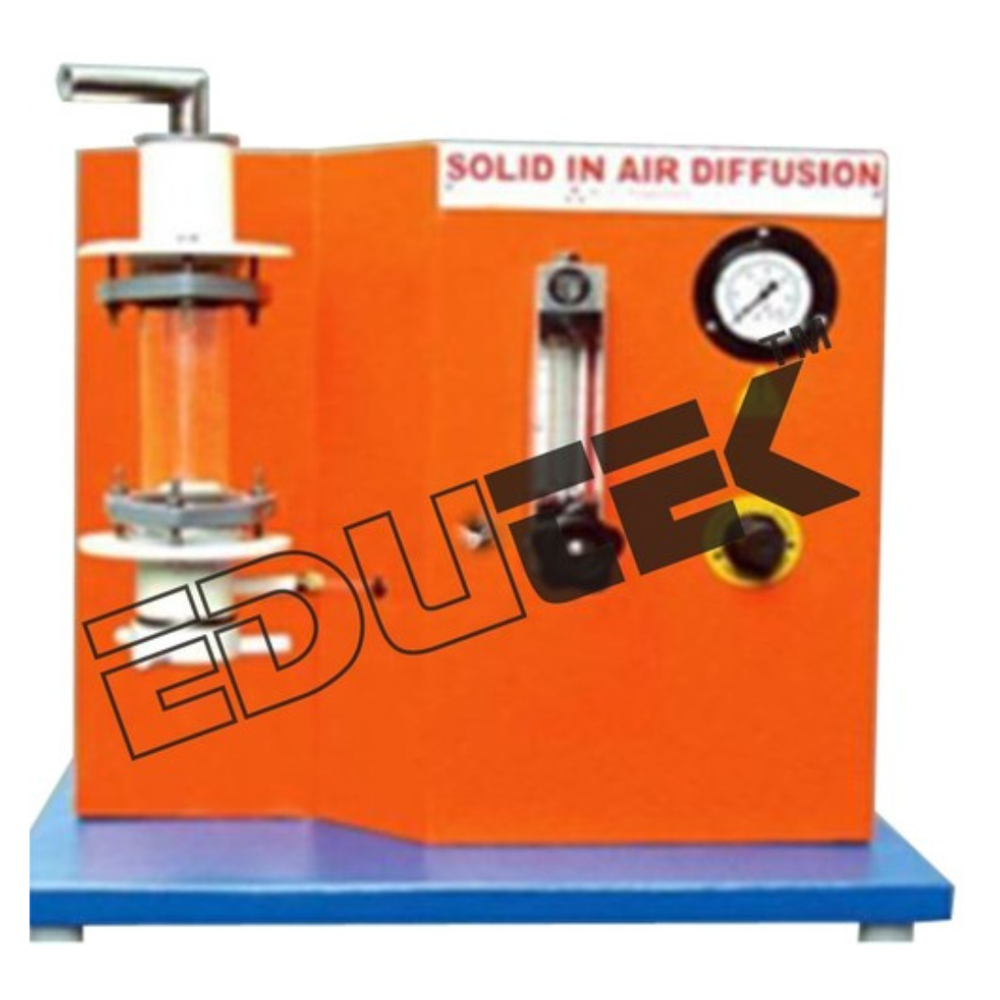
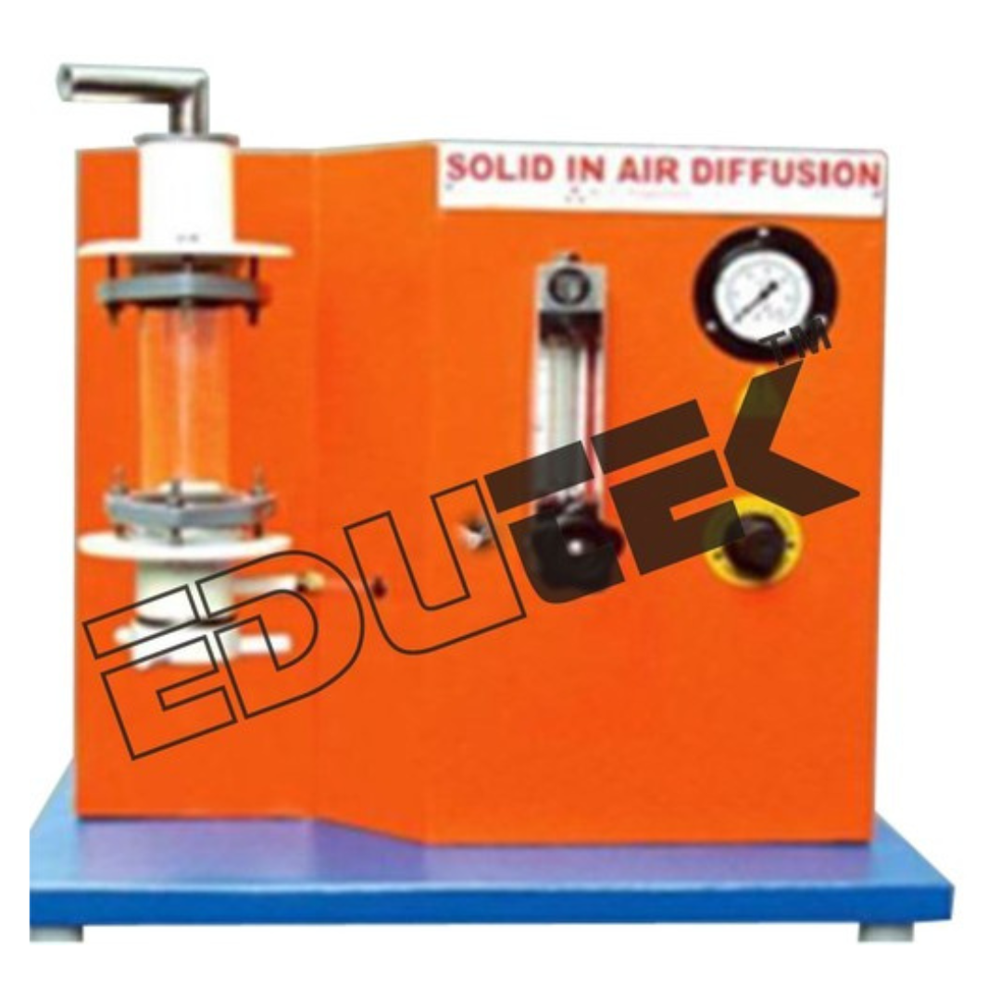
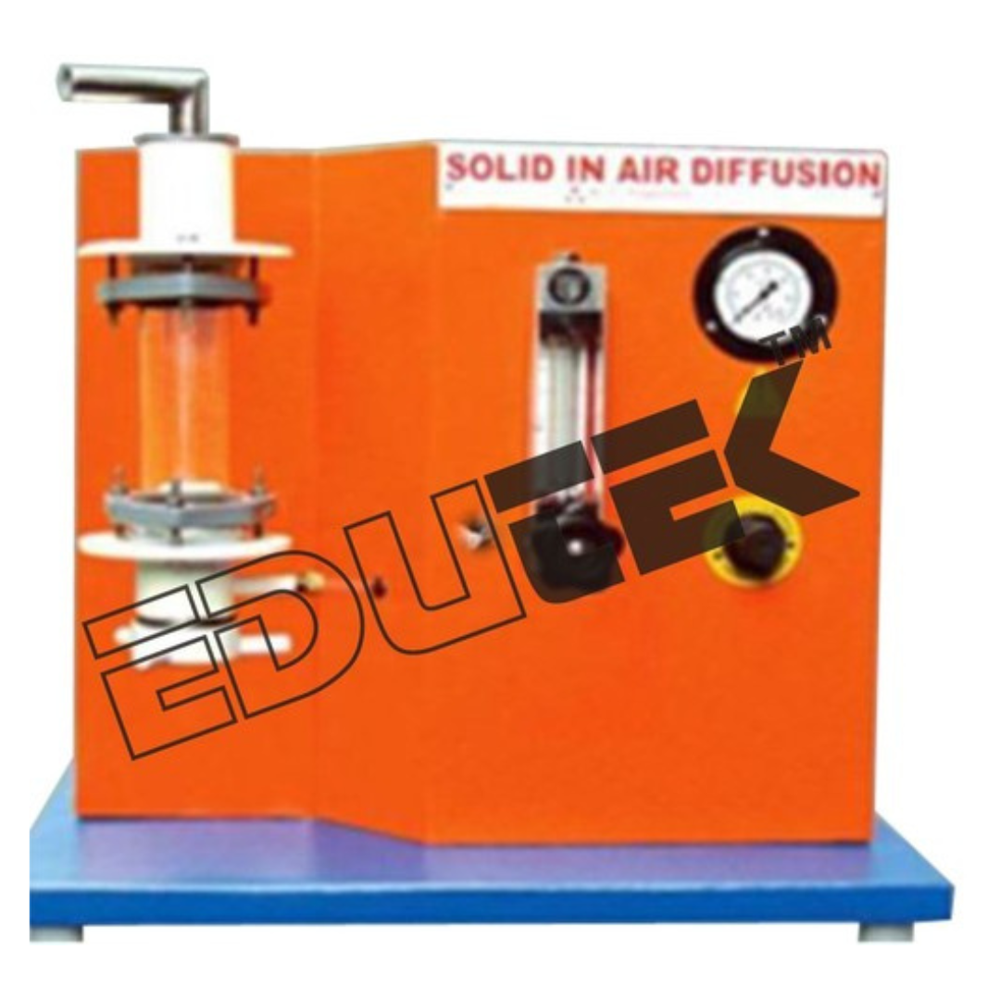
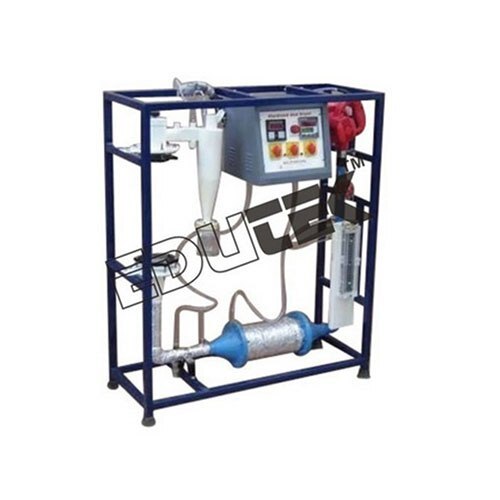
The set up consists of glass column, packing material, air rotameter and piping. Metered quantity of airflow is passed through the packed bed vertically upwards. The flow rate can be independently varied to simulate different conditions using rotameter. Naphthalene balls of known weight and diameter are used to form the packed bed for the calculation of mass transfer co-efficient of vaporization in air.
Experiments
- To calculate the mass transfer co-efficient of vaporization of naphthalene in air using a packed bed of spherical particles of naphthalene.
Features
- Superb Painted structure
- Simple to operate & maintain
- Compact & stand alone set up
Principle and ApplicationThis apparatus operates on Ficks law of diffusion, allowing users to investigate how sublimating solids, such as naphthalene and camphor, diffuse through air under laboratory conditions. Its design facilitates both fundamental learning and advanced experimental research, bridging theoretical concepts and hands-on measurement for students and professionals alike.
Reliable Measurement and ConstructionBuilt for laboratory reliability, the solid-air diffusion system incorporates a borosilicate glass tube (approx. 25 mm diameter), durable stainless steel rod, and aluminum end plates. The analog scale with a pointer assures direct, accurate readings of diffusion length, while the rubber stoppers and support frame guarantee stable and airtight performance throughout experiments.
FAQs of Solid in Air Diffusion Apparatus:
Q: How does the Solid in Air Diffusion Apparatus measure the diffusion rate of solids in air?
A: The apparatus utilizes Ficks law, tracking the movement of sublimating solid samples like naphthalene along a borosilicate glass tube. The analog scale displays diffusion length, allowing direct measurement with 0.5 mm accuracy based on the progression of the sublimating front over time.
Q: What types of samples are compatible with this diffusion apparatus?
A: Naphthalene, camphor, and similar solids that readily sublime are ideal for use with this apparatus. The sample holder accommodates rods up to 150 mm in length, enabling versatile experiments with various sublimating materials.
Q: When should laboratory users operate the heater incorporated in the apparatus?
A: The heater should be used when higher ambient temperatures are required, up to 55C, to observe temperature-dependent diffusion phenomena. Standard experiments can be performed at room temperature, but controlled heating enables expanded study parameters.
Q: Where is the ideal setting to use this apparatus?
A: This diffusion apparatus is specifically designed for laboratory environments, ensuring controlled conditions for accurate and reproducible diffusion measurements of solids in air.
Q: What is the process for assembling and starting an experiment with this device?
A: To begin, mount the tube on the support frame, secure the rubber stoppers for airtight conditions, place the solid rod sample in the holder, and set up the thermometer. After powering the heater if required, start the experiment and record the displayed diffusion length on the analog scale.
Q: How does the apparatus benefit research and teaching?
A: It provides precise, easily observable measurements of solid-air diffusion, bridging theoretical study with experimental practice. Its manual controls and direct readout support fundamental and applied science education and research in chemistry and physics labs.




 Send Inquiry
 Send Inquiry

