About Microprocessor Turbidity Meter
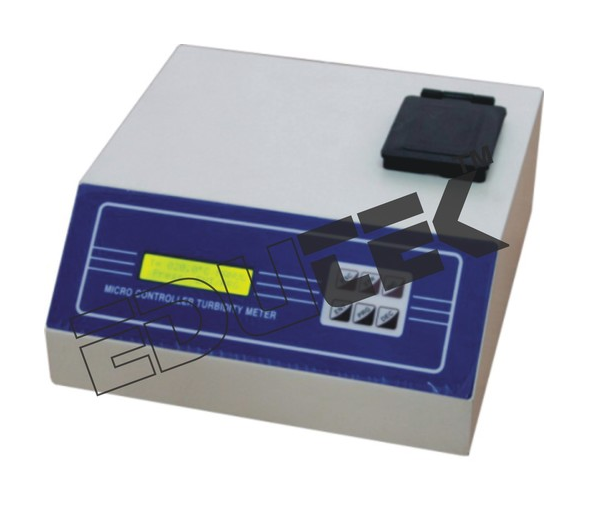
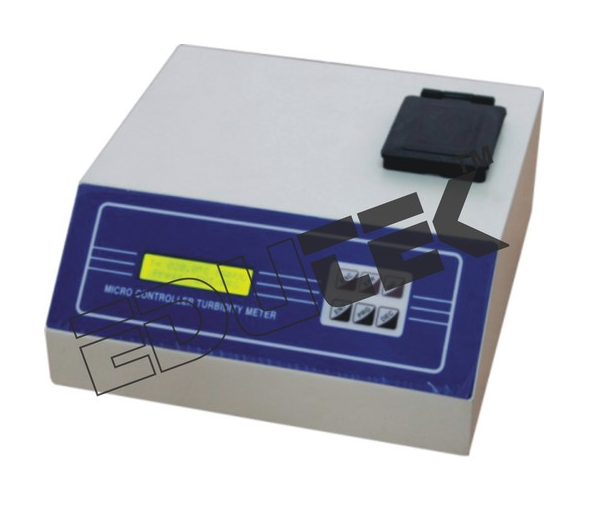
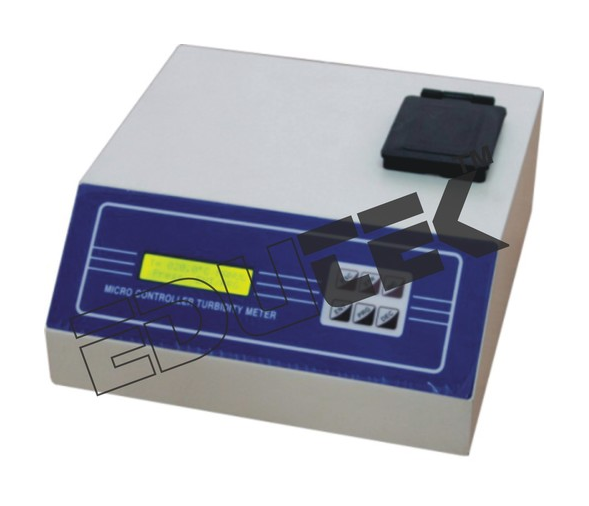
Microprocessor Turbidity Meter
Edutek are manufacturer and Exporter of Analytical Instrument for testing lab.
Specification of Microprocessor Turbidity Meter
- Display 16X2 Lines Alfa Numeric.
- Rang 2 ranges 0 to 200 & 200 to 1000 Jtu/ntu.
- Accuracy 3% of Full Scale Deflection in 0-1000 Jtu/ntu.
- Sample System 30 mm Clear Glass Cuvettes.
- Light Source 6.8 Volt, 0.3 Amps Tungsten Lamp.
- In built memory to retain both range standard solution and last set value
- even after power loss.
Designed for laboratories and water treatment facilities, this turbidity meter offers accurate and repeatable measurements from 0 to 1000 NTU. The large LED display makes readings easy to see, while the robust calibration process ensures consistent performance, whether youre testing drinking water or analyzing wastewater samples.
User-Friendly Operation and Data ManagementThe instrument features manual operation and is controlled via a microprocessor, allowing straightforward sample analysis with test tubes. For efficient data handling, the meter includes an RS232 output, facilitating seamless connection with computers and laboratory information systems for record keeping or reporting needs.
FAQs of Microprocessor Turbidity Meter:
Q: How does the Microprocessor Turbidity Meter measure turbidity in water samples?
A: This instrument uses a 6V, 0.5A tungsten lamp as its light source, projecting light through water samples contained in 24 mm diameter test tubes. It measures the amount of light scattered by particles in the sample, and displays the turbidity in NTU using a precise microprocessor-controlled system.
Q: What is the process for calibrating this turbidity meter?
A: Calibration is performed through a three-point calibration process, ensuring accuracy across the full measurement range. Standard solutions at known turbidity levels are used to set reference points, optimizing the meters accuracy and reliability for laboratory or field analysis.
Q: When should I use this turbidity meter in water or wastewater analysis?
A: This meter is ideal for periodic water quality checks, during routine laboratory analyses, or whenever precise turbidity measurement is critical. It is especially useful at the start or end of water treatment phases, in research studies, and regulatory compliance monitoring.
Q: Where can this instrument be utilized effectively?
A: Applications include laboratory environments, water treatment plants, and research institutions. Its robust construction and stable performance make it suitable for both field-based and stationary laboratory setups across industrial and municipal sites.
Q: What are the main benefits of using a microprocessor-controlled turbidity meter?
A: The microprocessor control delivers precise measurement, dependable accuracy, and efficient manual operation. Large LED display and RS232 data output streamline recording and reporting, enhancing workflow in analytical settings.
Q: How do I maintain and store the turbidity meter optimally?
A: To preserve instrument accuracy, operate it between 5C and 45C, and store it at temperatures from -10C to 60C with relative humidity below 80%. Regularly clean the test tubes and lamp, and follow manufacturer guidelines for periodic calibration and servicing.





 Send Inquiry
 Send Inquiry

