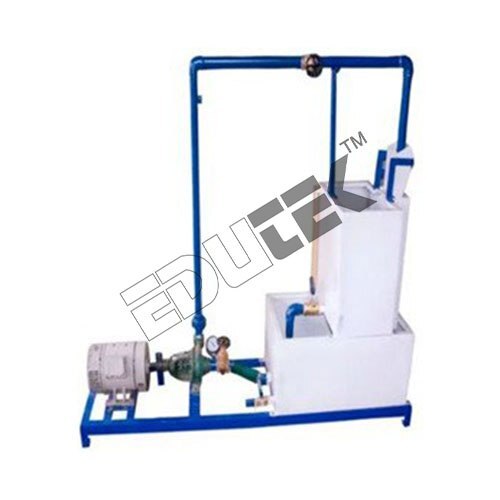
About Hydrogen Bubble Flow Visualisation System
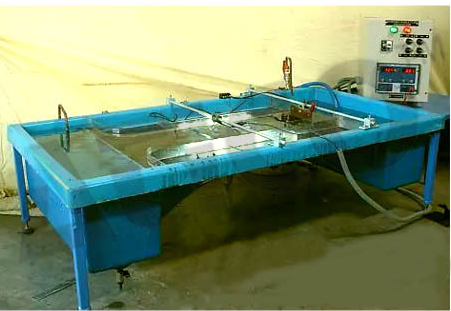
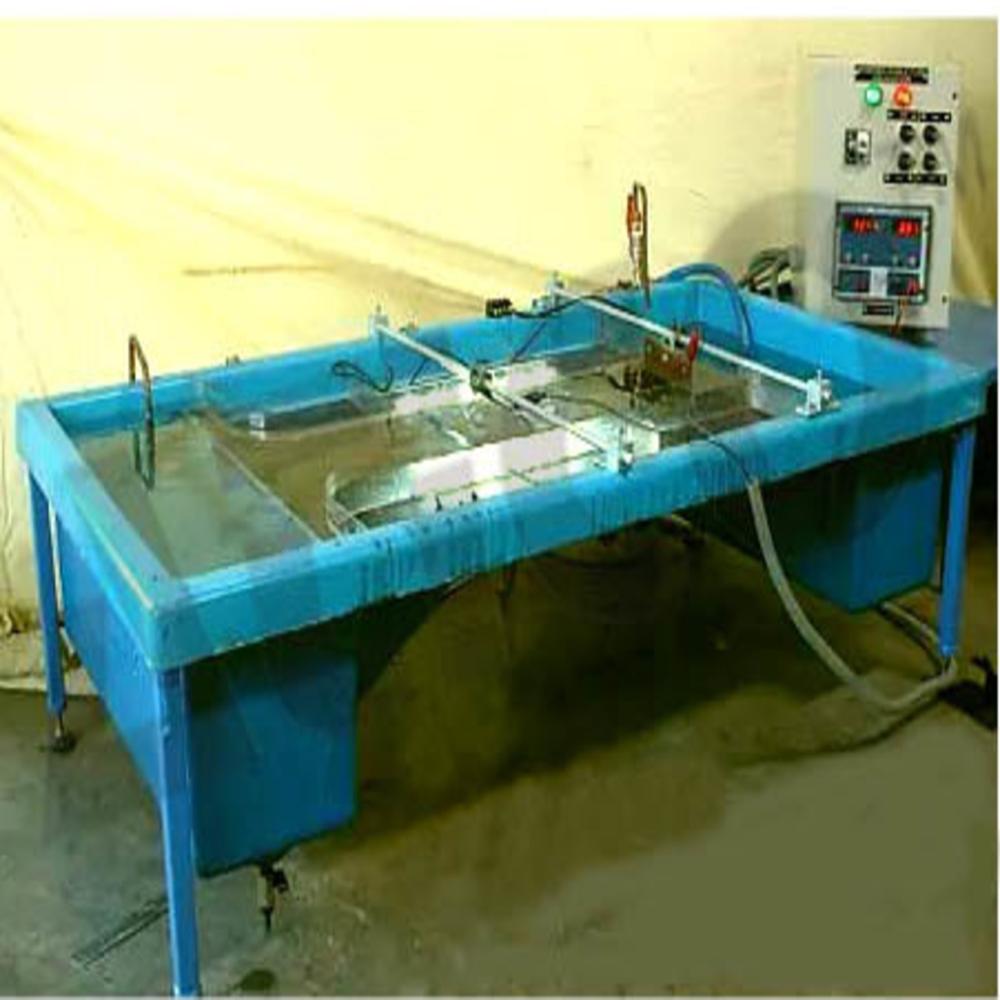
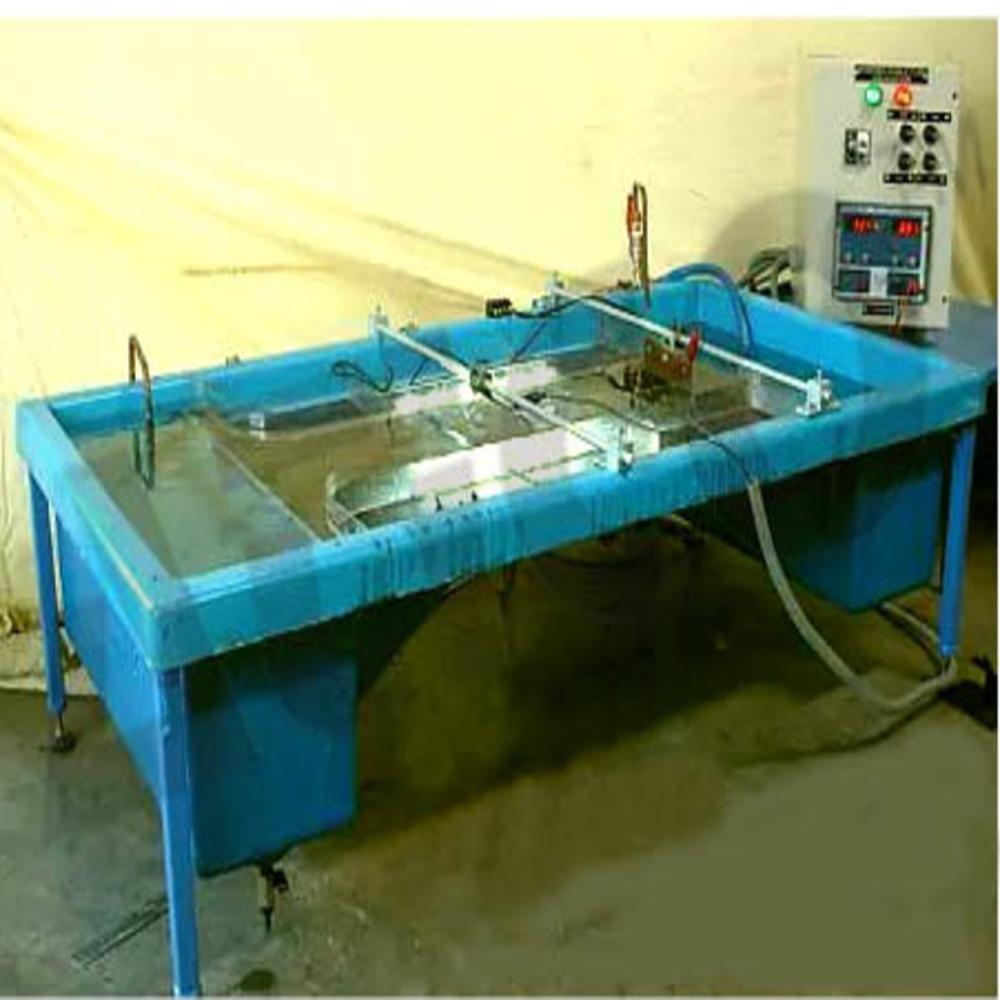
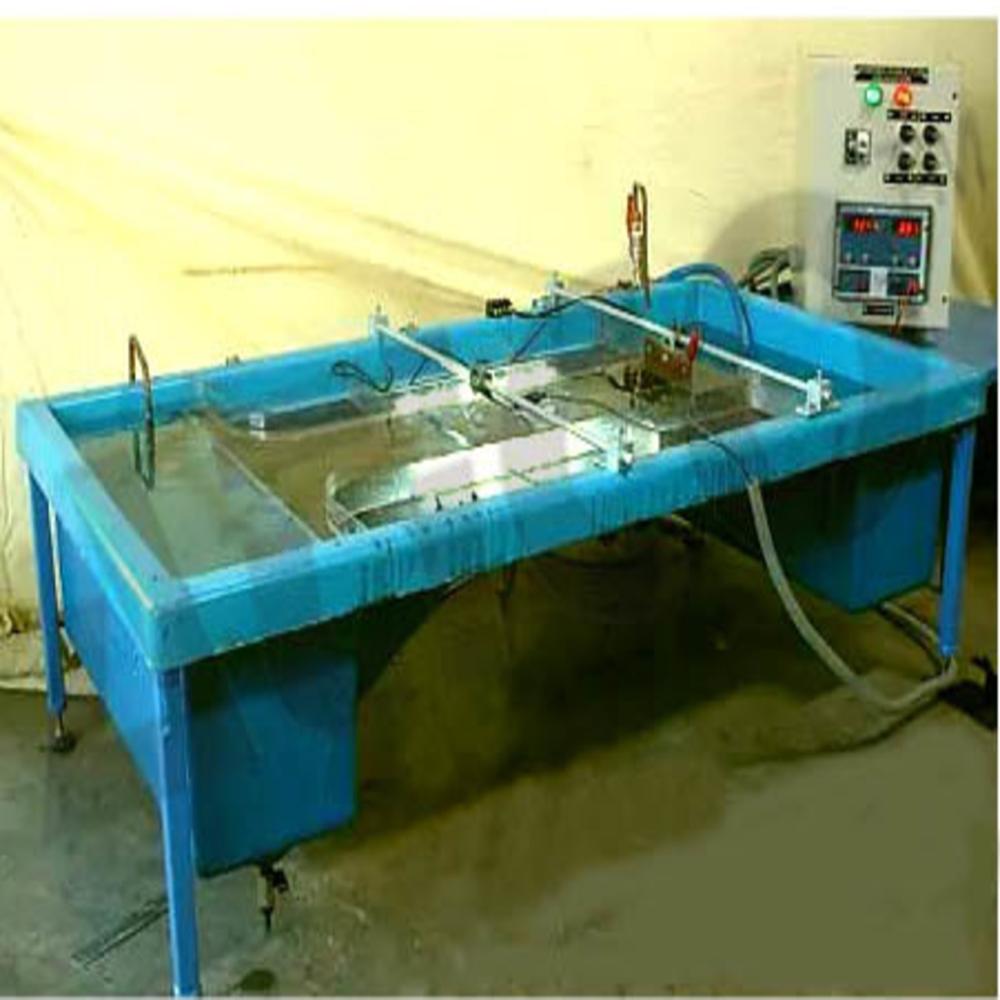
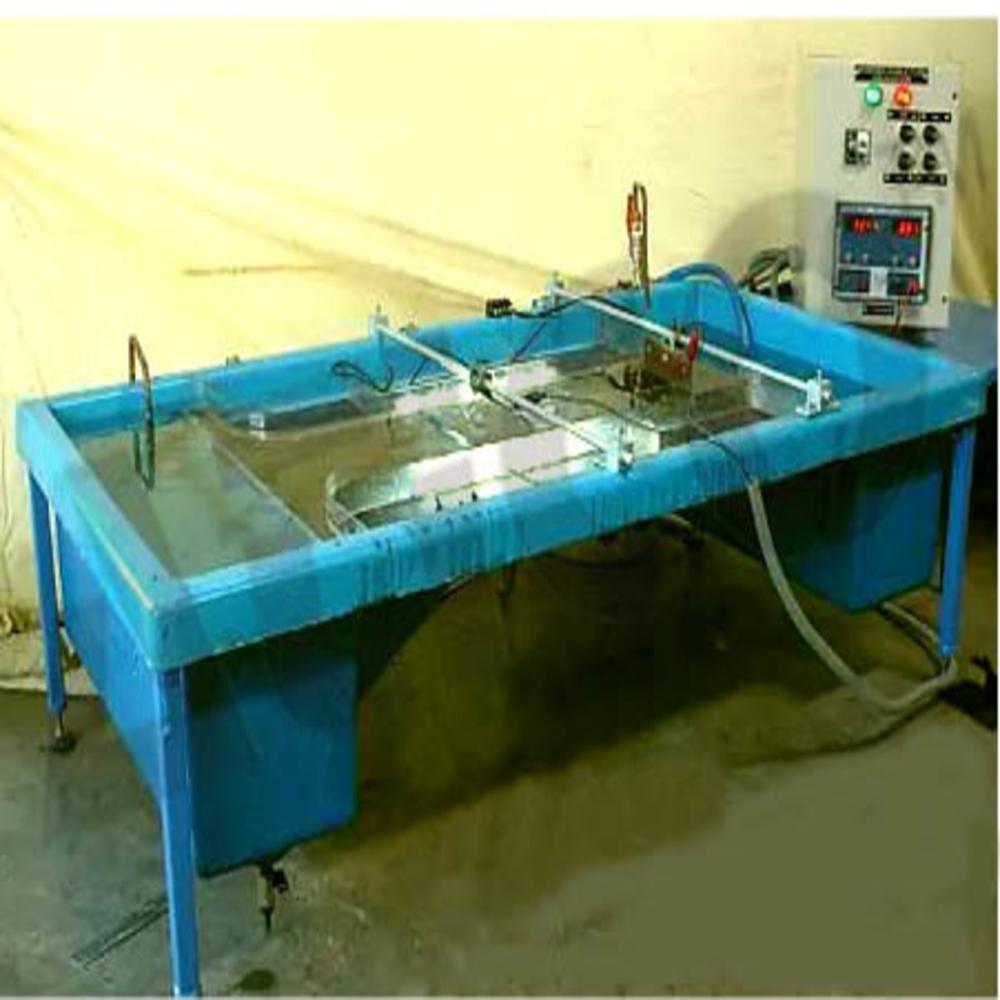
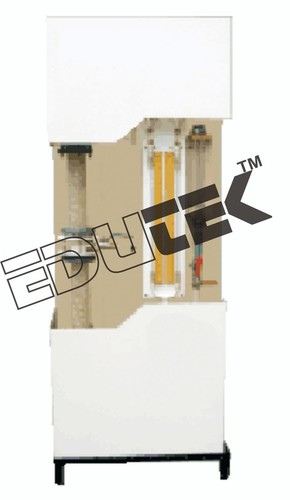
HYDROGEN BUBBLE FLOW VISUALISATION SYSTEM
- The bench top apparatus should allow to observe the flow patterns associated with water streams in presence of obstacles
- The system should consist of the following components: AISI 304 stainless steel tank, 75l capacity approx.,
- Including flow tank, still volume and working section
- Low voltage variable speed pump, 3 l/min max flow rate,
- 10 m max water column Low voltage high intensity led
- Low voltage pulse generator Hydrogen bubble generator with three platinum cathodes, 75 mm max length
Plastic models including:
- N. 2 straight guides made of transparent Plexiglas n. 2 spacing blocks made of PVC n. 2 blocks made of PVC with radiused end
- Set of PVC cylinders with 7-13 -19 - 25 mm dia
- Transparent Plexiglas aerodynamic spindle flat plate with radiused end
- Transparent plexiglas flat plate transparent plexiglas curved plate
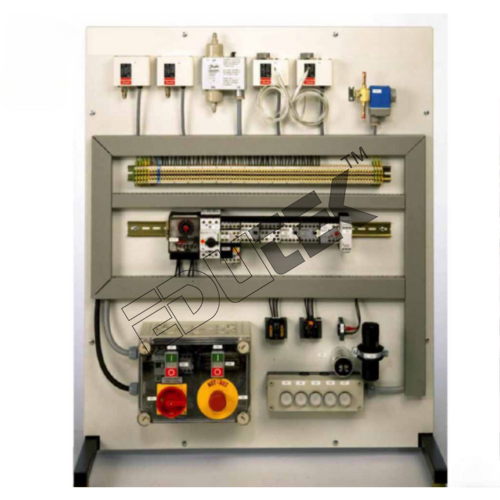
- N. 3 rectangular blocks Electric control console Safety devices
- Electrical power supply: 110/220V, single-phase, 50/60 Hz; 0.5kW
- Weight: 40 kg
- Dimensions: 900x400x300 h mm
Advanced Flow Visualization for Research and TeachingThe HBFVS-900 leverages platinum-coated electrodes and a variable speed pump to produce and control hydrogen bubbles, making it an effective tool for educational and research use in fluid mechanics. Its high-transparency acrylic window allows users to observe intricate flow patterns clearly, while the digital display and graphical data output enhance analysis and presentation capabilities.
Safe and Reliable Laboratory OperationDesigned for indoor use in a non-corrosive environment, the system provides dependable performance with overcurrent and thermal protections. Its laboratory-scale tank is constructed from durable 304 stainless steel, ensuring long-term reliability. The bench-top mounting and semi-automatic operation offer convenience for routine and advanced studies in flow visualization.
FAQs of Hydrogen Bubble Flow Visualisation System:
Q: How does the Hydrogen Bubble Flow Visualisation System generate visualizations of fluid flow?
A: The system uses platinum-coated electrodes to produce hydrogen bubbles in the water. As these bubbles are carried by the fluid, their movement reveals the flow patterns within the tank, which users can observe through the high-transparency acrylic window.
Q: What applications does the HBFVS-900 support in fluid mechanics research and education?
A: This system is suited for laboratory-scale analysis, educational demonstrations, and research in hydrodynamics. It provides real-time visualization of flow, aiding in the study of laminar and turbulent regimes, velocity profiles, and other flow phenomena.
Q: When should the device be operated, and what environment is suitable for its use?
A: The system is designed for indoor operation in a non-corrosive atmosphere, which is essential to preserve the integrity of the electrodes, tank, and observation window. It performs reliably within a temperature range of 10C to 50C.
Q: Where can users access observation data and monitor flow conditions?
A: Flow visualizations and digital data outputs are accessible via the integrated digital display and graphical interface. These outputs provide real-time feedback and can be used for documentation and further analysis in laboratory settings.
Q: What is the process for controlling water flow inside the visualization tank?
A: Water flow is managed by a variable speed pump, allowing users to precisely adjust flow rates from 0.01 m/s to 2 m/s. This ensures versatility for different experimental setups and flow scenarios, providing accurate and replicable results.
Q: How does the system ensure user and equipment safety during operation?
A: The system features overcurrent and thermal protection mechanisms that prevent overheating and electrical faults, safeguarding both the equipment and the operator during experiments.
Q: What are the key benefits of using the HBFVS-900 for hydrodynamics studies?
A: Benefits include accurate and reproducible flow visualization, real-time graphical and digital measurement capabilities, robust safety protections, and a user-friendly bench-top design suitable for laboratory and educational environments.




 Send Inquiry
 Send Inquiry