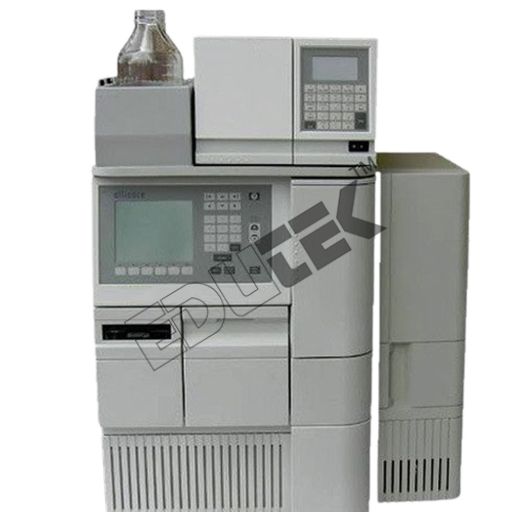
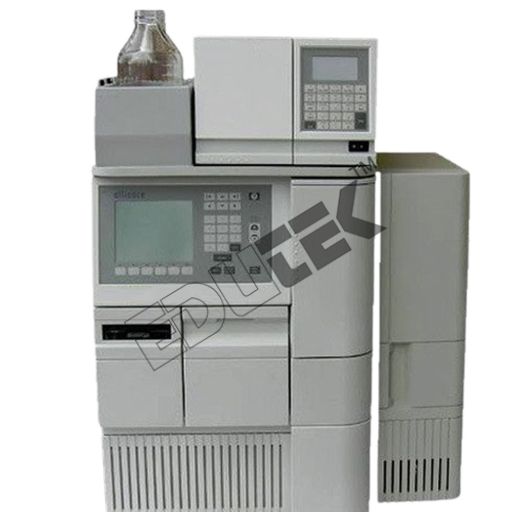
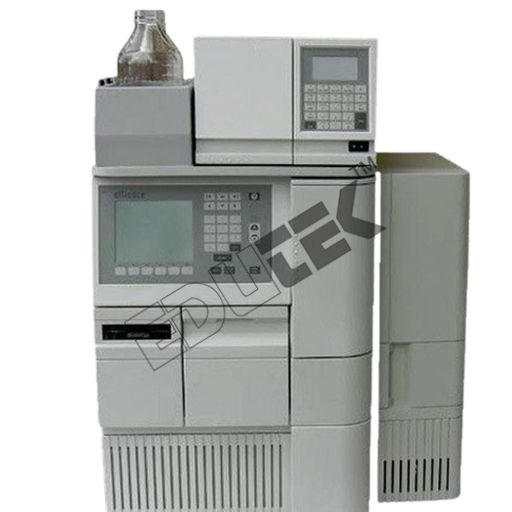
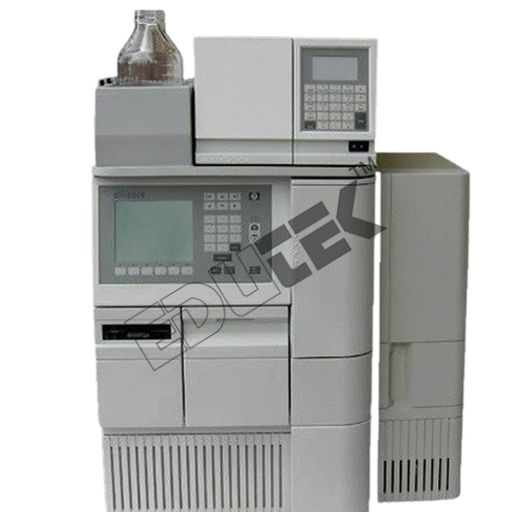
About Hplc Binary Gradient
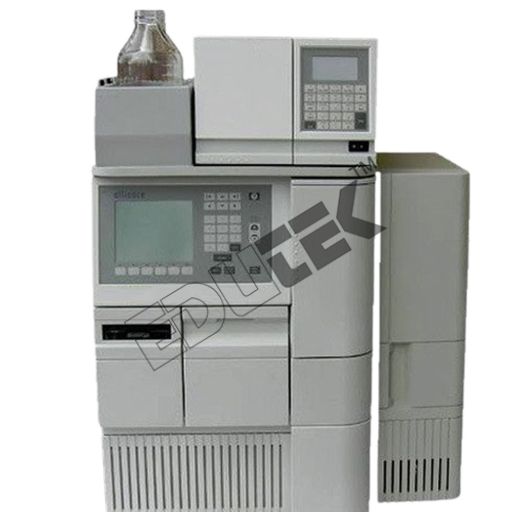
HPLC BINARY GRADIENT - Delivery Units ( Binary Gradient Pump) Pump Type:
- Double reciprocating plunger pump Pumping Methods:
- Constant flow delivery and constant pressure delivery
- Solvent-delivery method Serial dual plunger
- Plunger capacity Primary side: 47 L
- Secondary side: 23 L
- Maximum discharge pressure 27.4 Mpa
- Flow-rate setting range 0.001 to 9.999 mL/min
- Flow-rate Accuracy Within+2% or +2 L/min., whichever is larger (0.1 to 5.0 L/min.)
- Flow-rate precision 0.3% max. (RSD: 0.1% max.)
- Constant-pressure delivery Possible
- Plunger rinse mechanism
- Syringe or rinsing pump used
- Ambient temperature range 4C to 35C
- Power requirements AC 220-230V, 100VA, 50 Hz
Accessories: - Operating Manual, Peak & SS capillary tubing,
- Spare inlet & out let Check valve with filter cartridges.
- Spare fuses.
- Hamilton syringes 10 Ul & 5 ul.
- Auto sampler
- Injection method Loop injection,
- Variable injection volume
- Injection-volume setting range 1 L to 50 L (standard) 1 L to 250 L (option)
- Number of samples processed 95-100 with 1.5 mL Vials (60 with optional cooler)
- 80 with 4 mL vials (50 with optional cooler) 25 with 13 mL vials (not applicable to SIL-10Ai)
- 192 with two 96-well microtiter plates
- Injection-volume precision RSD: 0.5% max. (10 L injection, standard mode
- Number of repeated injections 30 max. per sample
- Needle rinsing Set freely before and after sample injection
- Sample cooler Optional Sample Cooler S (228- 45063-xx) or L
- Block-heating /cooling method4C to 70C
- Operating pH range pH1 to pH10
- Operating temperature range 4C to 35C
- Rated Voltage 220-230 VAC 50 Hz.
- HPLC system should also be fitted with Rheodyne
High-Precision Dual Piston Pump TechnologyUtilizing a dual piston reciprocating pump, this HPLC system ensures stable and accurate flow rates ranging from 0.1 to 10 mL/min, minimizing pulsation for high-resolution separations even at pressures up to 6000 psi. Chemically resistant material construction enhances operational lifespan.
Versatile Gradient Modes and DetectorWith both high- and low-pressure binary gradient capabilities, the system adapts to evolving research needs, delivering optimal separations. Featuring a UV/Visible detector spanning 190700 nm, it offers excellent analytical flexibility for a broad array of compounds.
Enhanced Safety and User ExperienceSafety remains paramount; the instrument includes a flow leak sensor, pressure relief, and automated cutoff. User-friendly navigation through digital LED displays, programmable controls, and robust software all streamline laboratory workflows, supporting GMP/GLP compliance.
FAQs of Hplc Binary Gradient:
Q: How does the dual piston reciprocating pump improve chromatographic separations in this HPLC system?
A: The dual piston reciprocating pump delivers highly consistent and accurate flow rates, which minimizes pulsation and ensures reliable and high-resolution chromatographic separations. This mechanism is especially important for analytical and preparative methods requiring precision under variable pressure conditions up to 6000 psi.
Q: What sample injection options are available with the system, and when should I use the autosampler?
A: The system allows for both manual sample injection and the use of an autosampler. Manual injection is useful for occasional analyses or small sample numbers, while the autosampler is ideal for routine, high-throughput applications, improving consistency and efficiency for large analytical batches.
Q: Where can I utilize this HPLC binary gradient system most effectively?
A: Designed for laboratory environments, this system is suited for pharmaceutical, chemical, food, and environmental analysis industries. Its corrosion-resistant materials and robust design make it appropriate for both research institutions and industrial settings requiring frequent, reliable liquid chromatography.
Q: What is the process for gradient control and how is it programmed?
A: Gradient control can be managed via digital or manual interfaces, allowing precise adjustment of solvent composition during runs. The systems programmable gradient function supports creating complex elution profiles directly or through GLP/GMP compliant software for greater automation and reproducibility.
Q: How does the built-in online degasser benefit HPLC operation and results?
A: The built-in online degasser continuously removes dissolved gases from solvents in real time, preventing bubble formation that could disrupt pump performance, detector sensitivity, or baseline stability. This ensures smooth, reliable operation and more accurate, reproducible data.
Q: What safety features protect the instrument and laboratory environment during use?
A: Safety measures include a flow leak sensor, automated cutoff mechanisms, and a pressure relief system. These features automatically detect and respond to leaks or overpressure, protecting both the operator and the instrument from potential damage.




 Send Inquiry
 Send Inquiry

