About Grain Size Chart
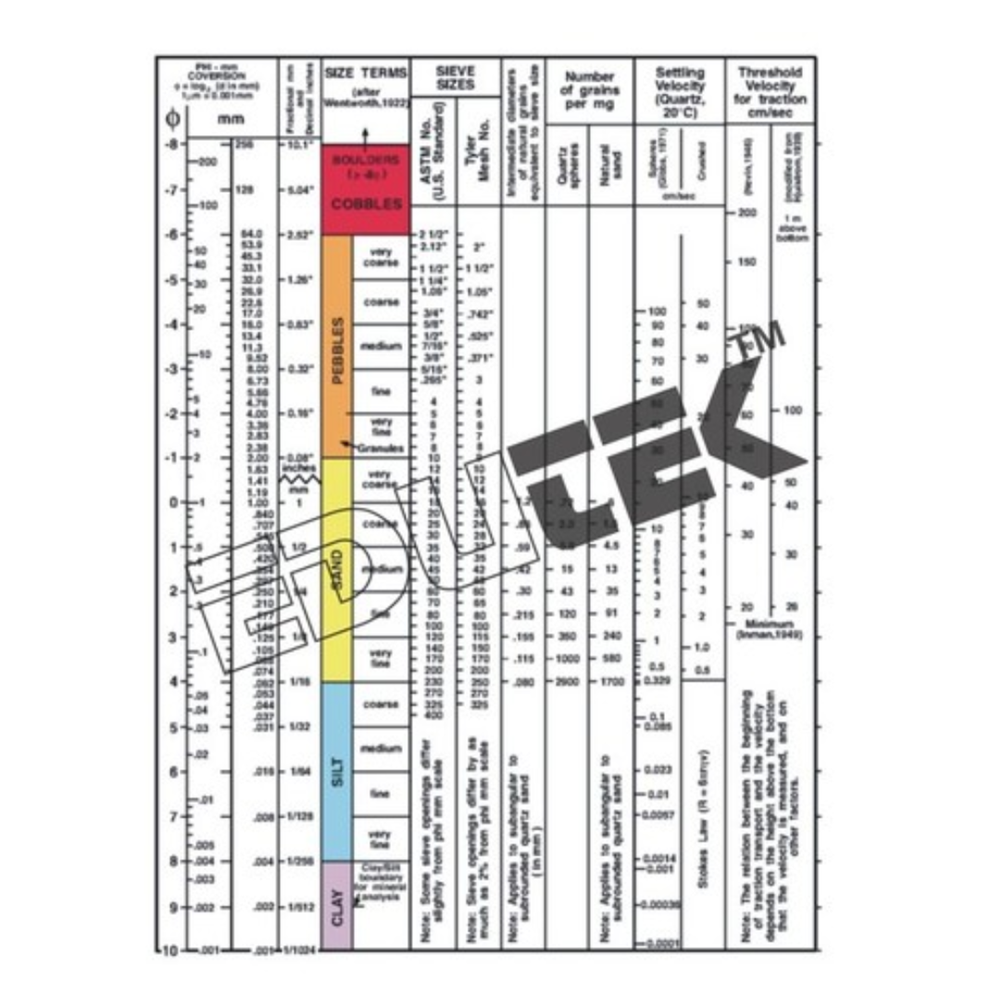
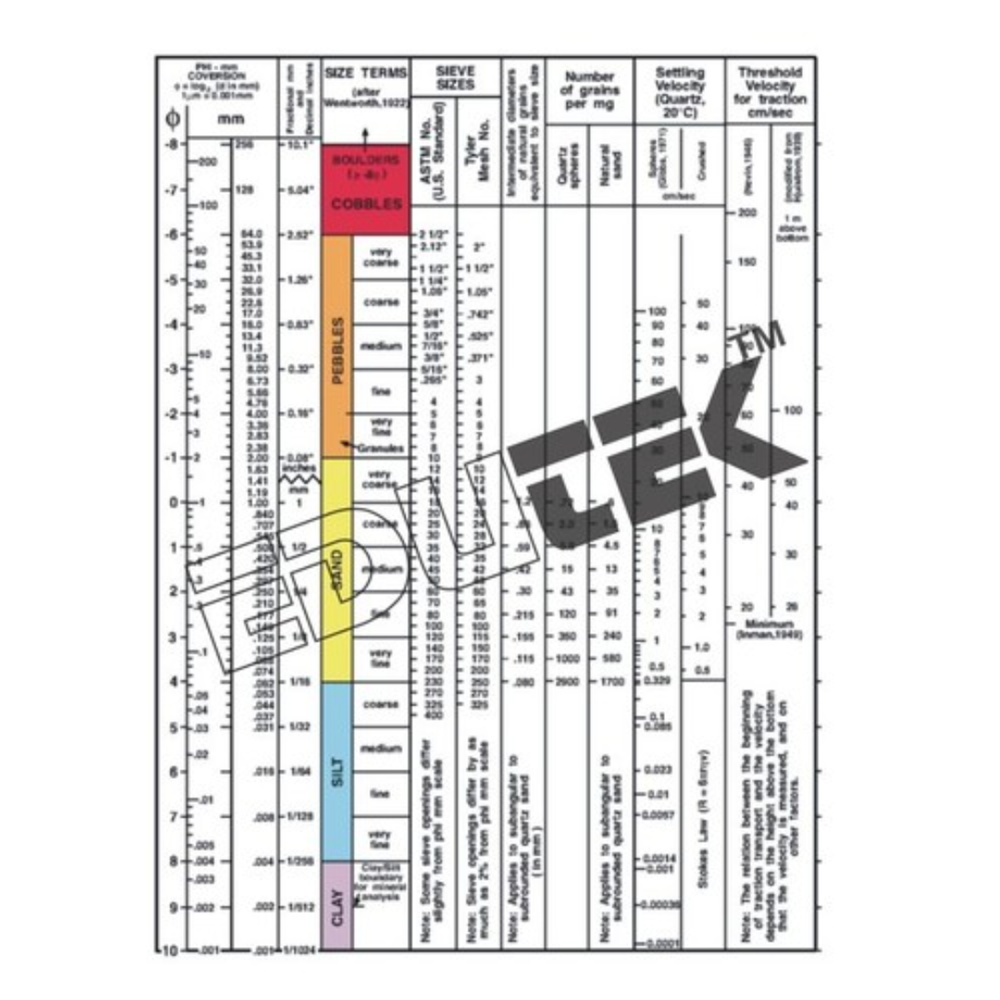
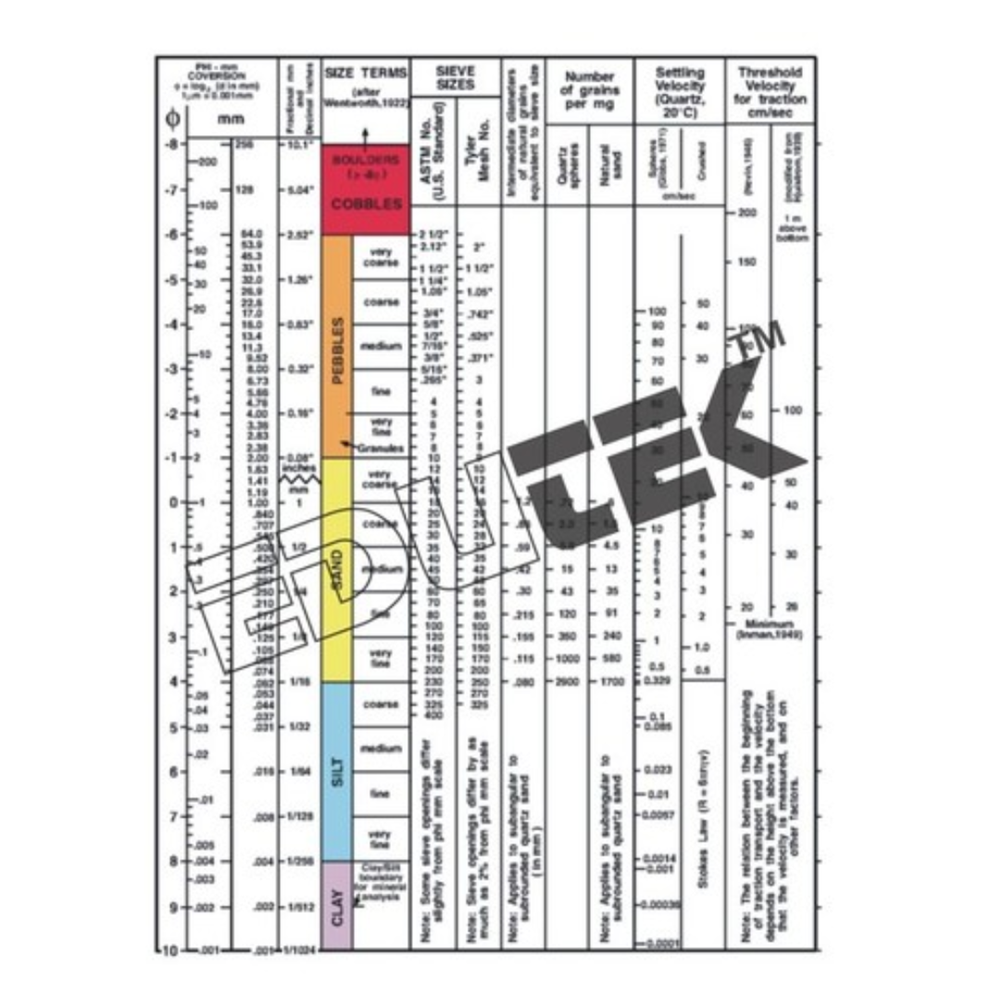
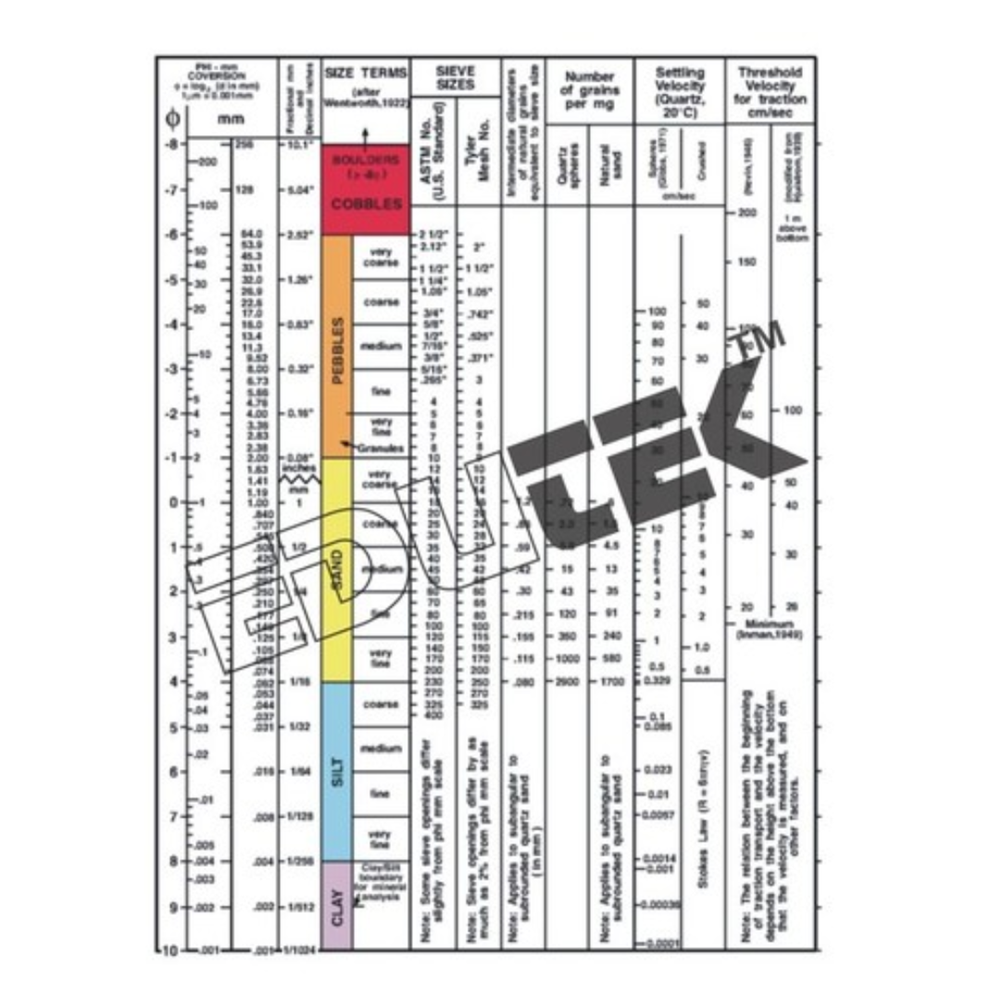
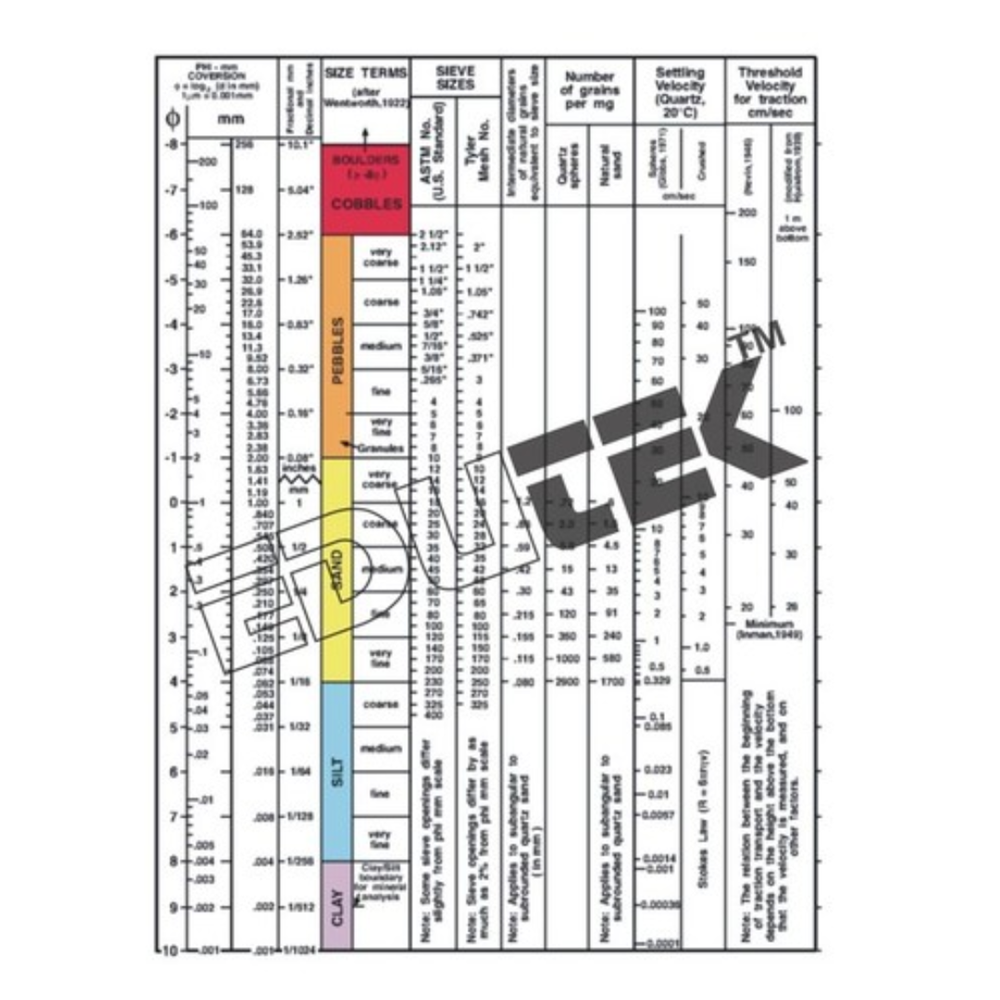
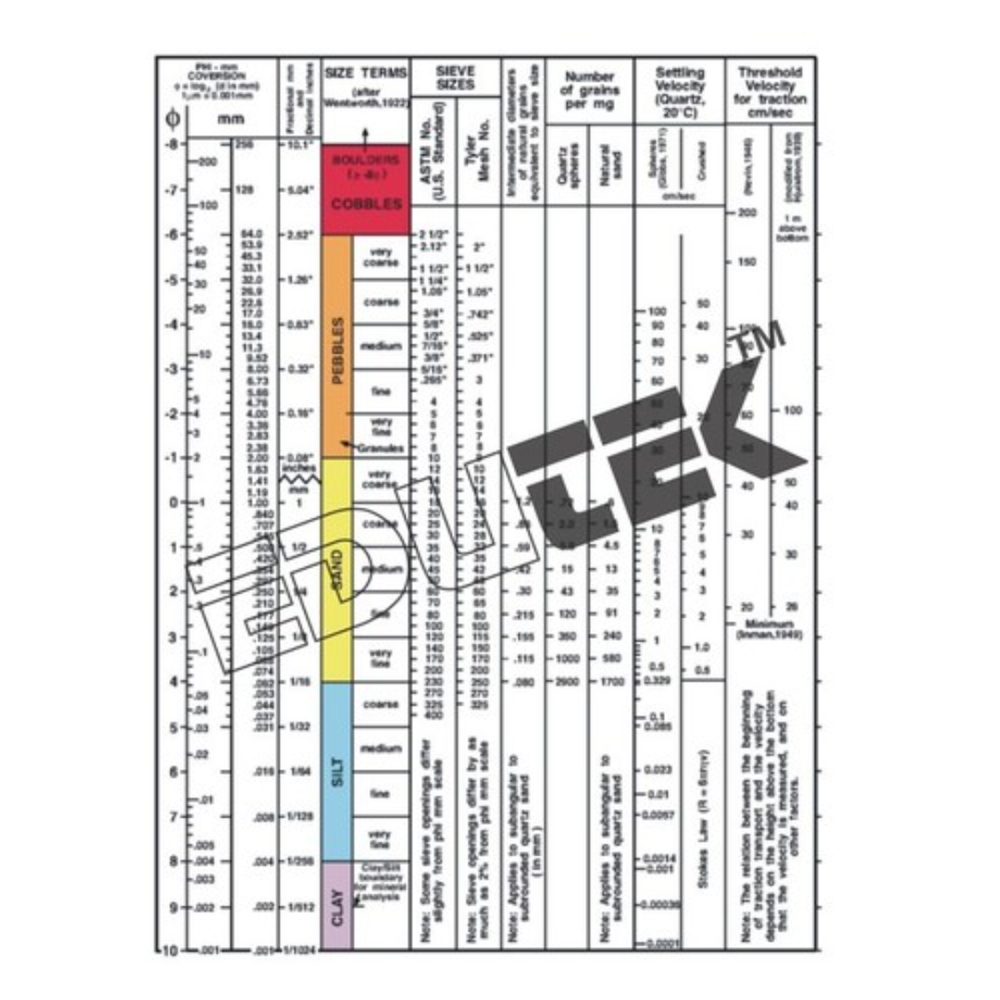
GRAIN SIZE CHART
Use: Soil grain chart
Standards
- To classify soils to BS 1377:2, ENV 1997-2, ASTM D4318, AASHTO T89
Specifications:
- Grain Size Chart is widely used by field geologists for describing samples.
- Pocket-sized with recessed die-cut sample cavities filled with precision sieved sedimentary particles permanently mounted to the chart.
- Classed according to the Wentworth grading system.
Accurately Assess Grain Size in MetallurgyThis chart delivers reliable ASTM E112-compliant grain size comparisons, making it indispensable for metallurgical professionals, students, and industry QA teams. The high clarity print and sharp grid references ensure measurements are straightforward, and the charts analog format streamlines manual evaluations without electronic equipment.
Durable Design for LongevityConstructed from premium paper or laminate, the GRAIN SIZE CHART resists moisture (when laminated) and physical wear, ensuring long-term usability. Lightweight and compact, it is convenient to use on the go or store in laboratories, classrooms, or QA departments.
FAQs of GRAIN SIZE CHART:
Q: How do I use the GRAIN SIZE CHART for grain size measurement?
A: To use the GRAIN SIZE CHART, place your sample under a microscope and compare its grain structure to the printed reference grids (ASTM grain sizes 1 to 12) on the chart to determine the closest match. The chart facilitates quick and accurate evaluation according to ASTM E112 standards.
Q: What makes this chart suitable for industrial, educational, and laboratory applications?
A: Its standardized measurements, high clarity precision printing, and robust construction make the chart ideal for professional metallurgists, educators teaching material science, and industrial quality assurance teams ensuring compliance with ASTM E112 guidelines.
Q: What is the benefit of choosing a laminated GRAIN SIZE CHART?
A: A laminated version offers enhanced moisture resistance, increasing the charts durability and making it suitable for challenging environments or frequent handling, thus ensuring a longer operational life.
Q: When should I consider replacing the chart?
A: With proper handling and storage, the chart has an unlimited lifespan. Replacement is typically only necessary if the chart is physically damaged, excessively soiled, or if standards are updated.
Q: Where can the GRAIN SIZE CHART be stored safely?
A: Store the chart in the provided protected cardboard envelope or in a dry, flat location away from direct sunlight and moisture to maintain its quality and extend its usability.
Q: What is the process for ensuring measurement accuracy with this chart?
A: For consistent accuracy, always compare against the high-clarity reference grids under adequate lighting and follow the ASTM E112 procedures outlined by your laboratory or institution.
Q: What are the main advantages of using an analog chart format?
A: The analog format allows for immediate, electricity-free visual reference, making it ideal for quick checks, fieldwork, or laboratories without digital grain size measurement equipment.




 Send Inquiry
 Send Inquiry

