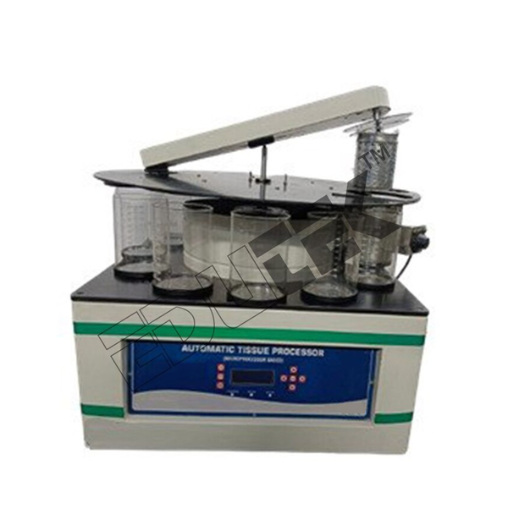
About Fully Automatic Digital Tissue Processor
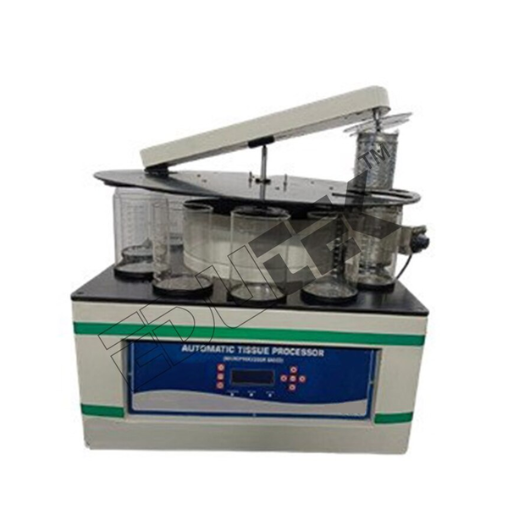
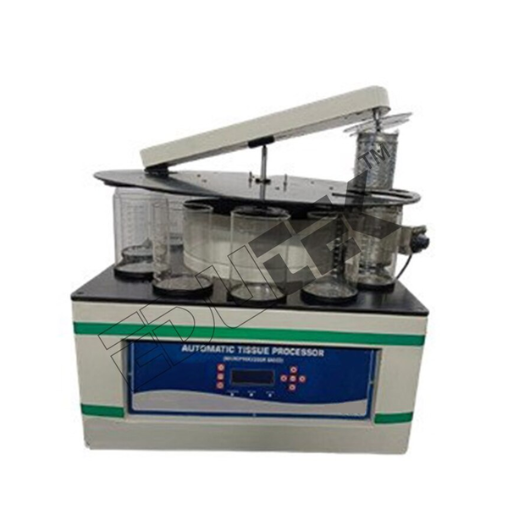
Is a compact and versatile equipment for staining process atomization from stageone of fixation of tissue and dehydration process to paraffin wax saturation.Glass door with locking arrangement provides easy viewing and safety fromtempering. Continuous agitation is provided by rotating S.S. Tissue basket tomake process more effective. A superior thermostat maintains desiredtemperature of wax bath.
Accessories:
1- S.S. Basket rotor
Tissuebasket
24- S.S. Tissue capsules
10- 1 litre glass beakers
11- beaker covers
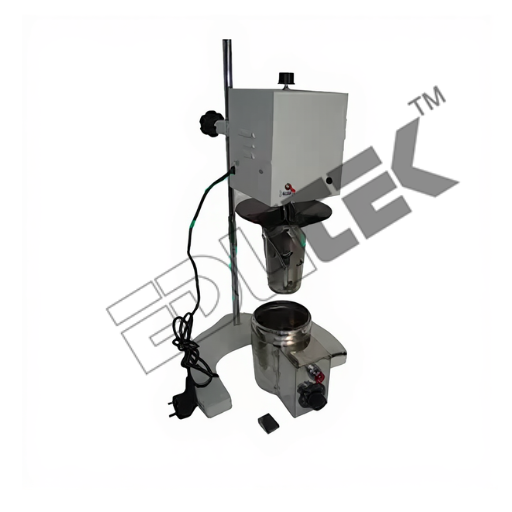
2- S.S. Wax baths each fitted with thermostat, 5-24 hrs.
Calibratedtiming discs
One-notchplier for programming time discs
Itworks suitably on 220V ac 50Hz single phase
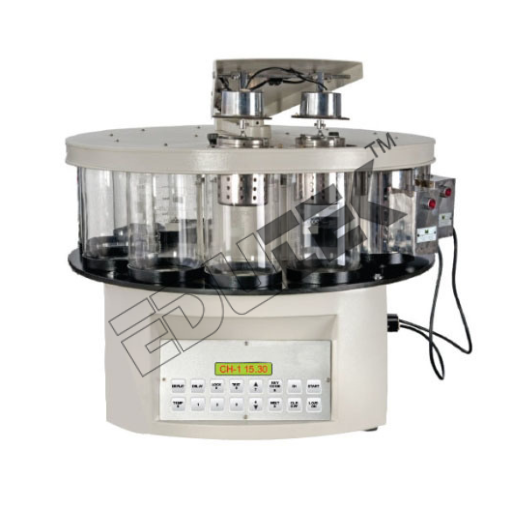
Advanced Digital ControlUtilize fully automatic digital controls with a large LED display and programmable settings to optimize processing protocols for various tissue samples. Customizable options allow for flexible workflow management and cater to diverse laboratory requirements.
Robust Safety FeaturesBenefit from enhanced safety mechanisms including automatic overload and over-temperature protection, as well as acoustic alarms. These features reduce risks and safeguard specimens, ensuring consistent and stress-free operation in busy laboratory environments.
Efficient Specimen ProcessingThe devices automatic rotation and programmable stations streamline tissue processing. With the ability to process multiple samples simultaneously and custom protocols, laboratories experience increased throughput without compromising accuracy.
FAQs of Fully Automatic Digital Tissue Processor:
Q: How does the Fully Automatic Digital Tissue Processor enhance laboratory workflow efficiency?
A: With programmable stations (up to 20), automatic specimen basket rotation, and a large LED display, the processor streamlines tissue processing and allows laboratories to handle multiple samples and protocols efficiently, reducing manual intervention.
Q: What safety features are integrated into the tissue processor to protect specimens and users?
A: The processor includes automatic overload and over-temperature protection, acoustic alarms, and battery backup for power failure. These features help maintain specimen integrity, alert users to any irregularities, and minimize operational risks.
Q: When should the battery backup feature be used, and how does it benefit the process?
A: The battery backup activates during power failures, ensuring uninterrupted processing cycles. This prevents sample loss or incomplete processing and is particularly beneficial in areas prone to power outages or during extended procedures.
Q: Where can this digital tissue processor be installed for optimal performance?
A: Thanks to its compact design and integrated lockable castor wheels, it can be easily positioned in various laboratory environments. It requires a standard 230 V AC, 50 Hz power source and flat surface to ensure stable operation.
Q: What is the recommended usage scenario for this tissue processor?
A: This equipment is ideal for laboratories conducting tissue sample preparation for microtome usage, particularly in pathology, histology, and clinical research settings, where high capacity and precision are essential.
Q: Which process steps can be programmed on the device, and how many stations are available?
A: Up to 20 stations can be programmed, allowing for individualized duration, temperature, and reagent selection for each tissue jar. This flexibility accommodates different sample types and protocols required in advanced tissue processing.
Q: What are the benefits of inbuilt chamber illumination and lockable castor wheels?
A: Chamber illumination enables better visibility during operation, ensuring accurate sample placement and monitoring. Lockable castor wheels facilitate convenient mobility and stability, making installation and routine maintenance effortless.




 Send Inquiry
 Send Inquiry

