About Fluidisation & Fluid Bed Heat Transfer
FLUIDISATION & FLUID BED HEAT TRANSFER UNIT
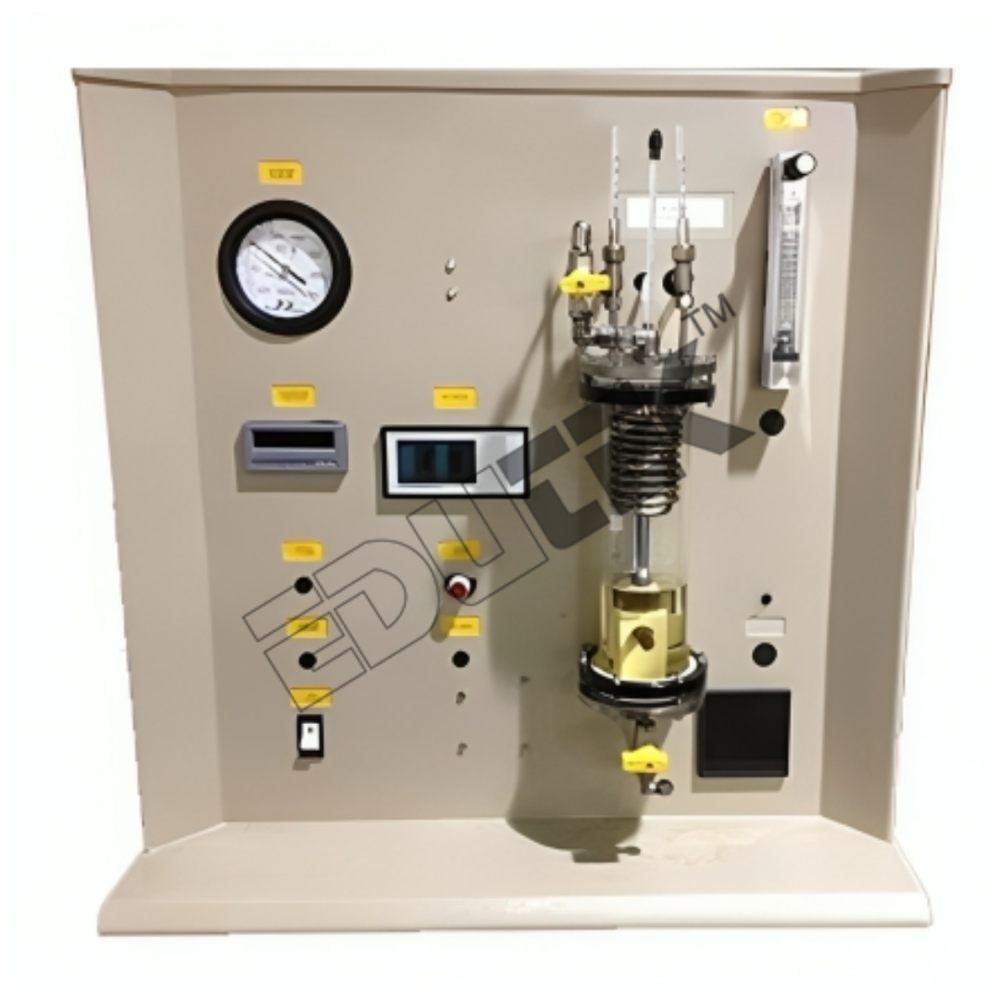
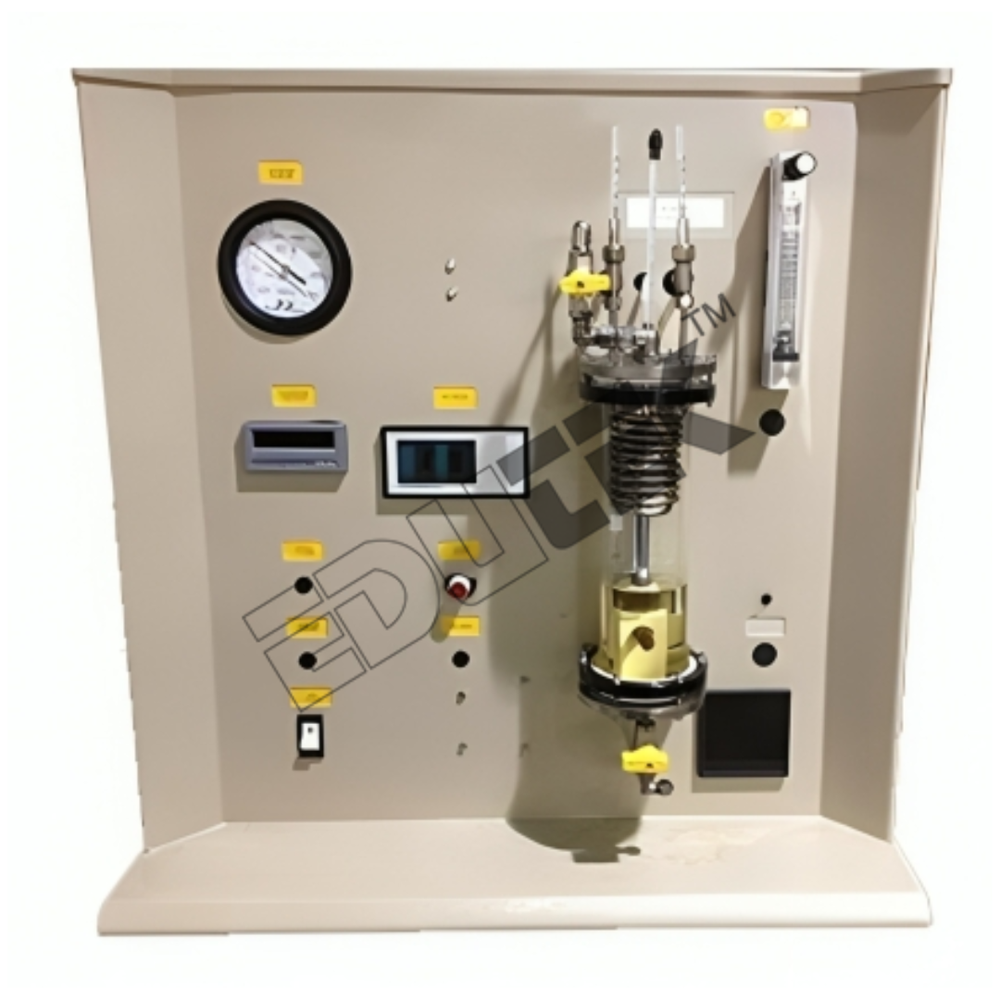
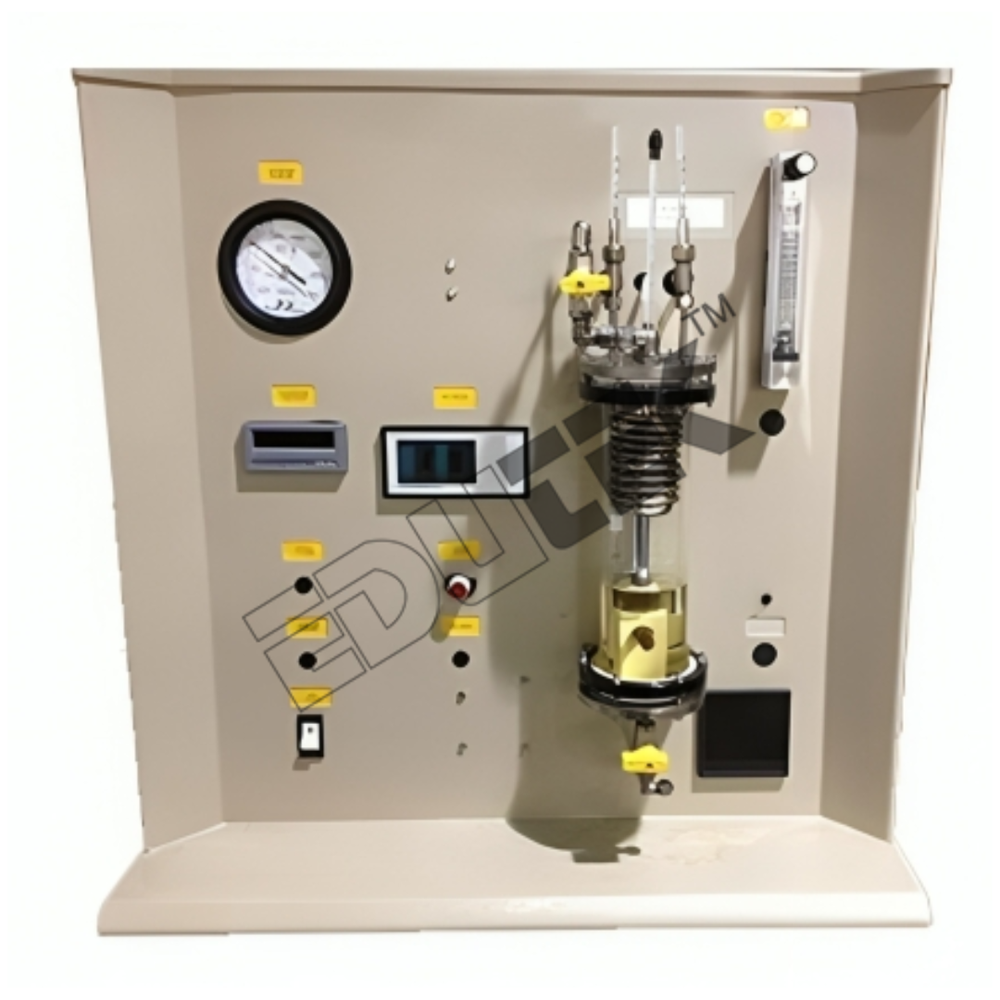
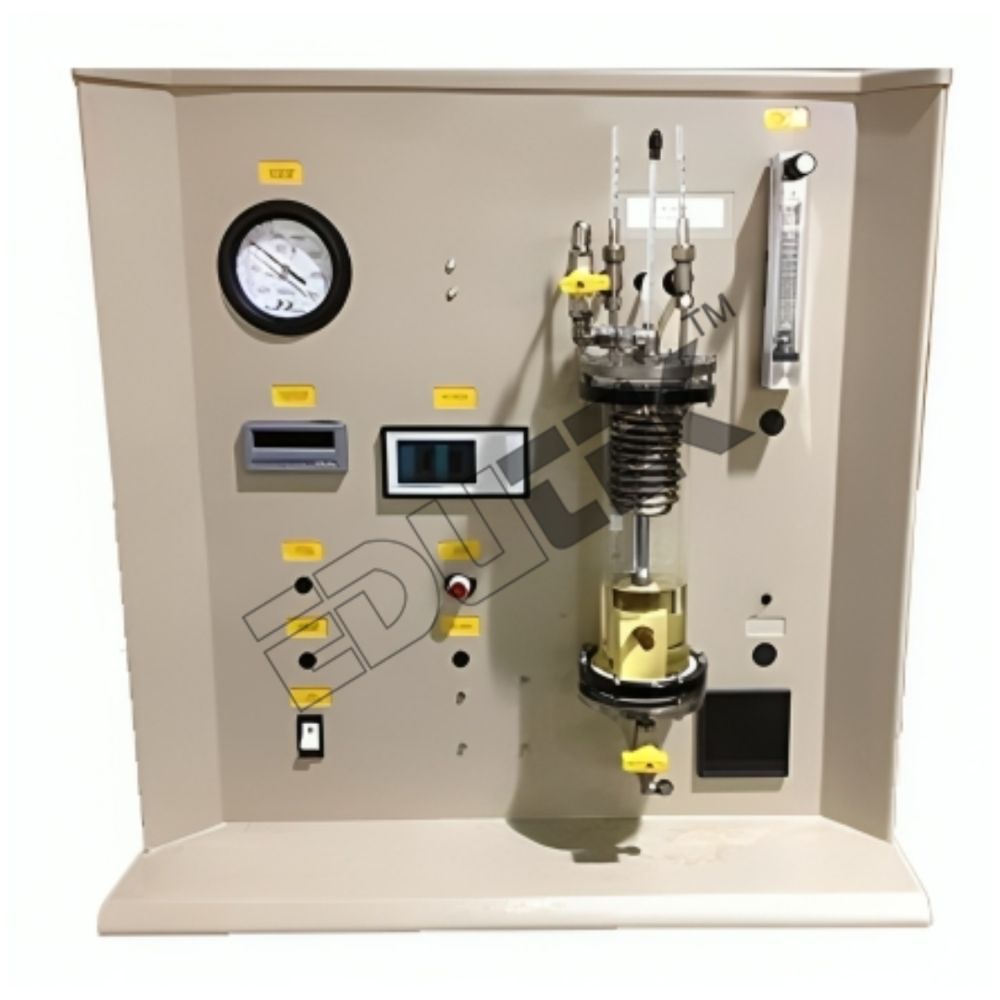
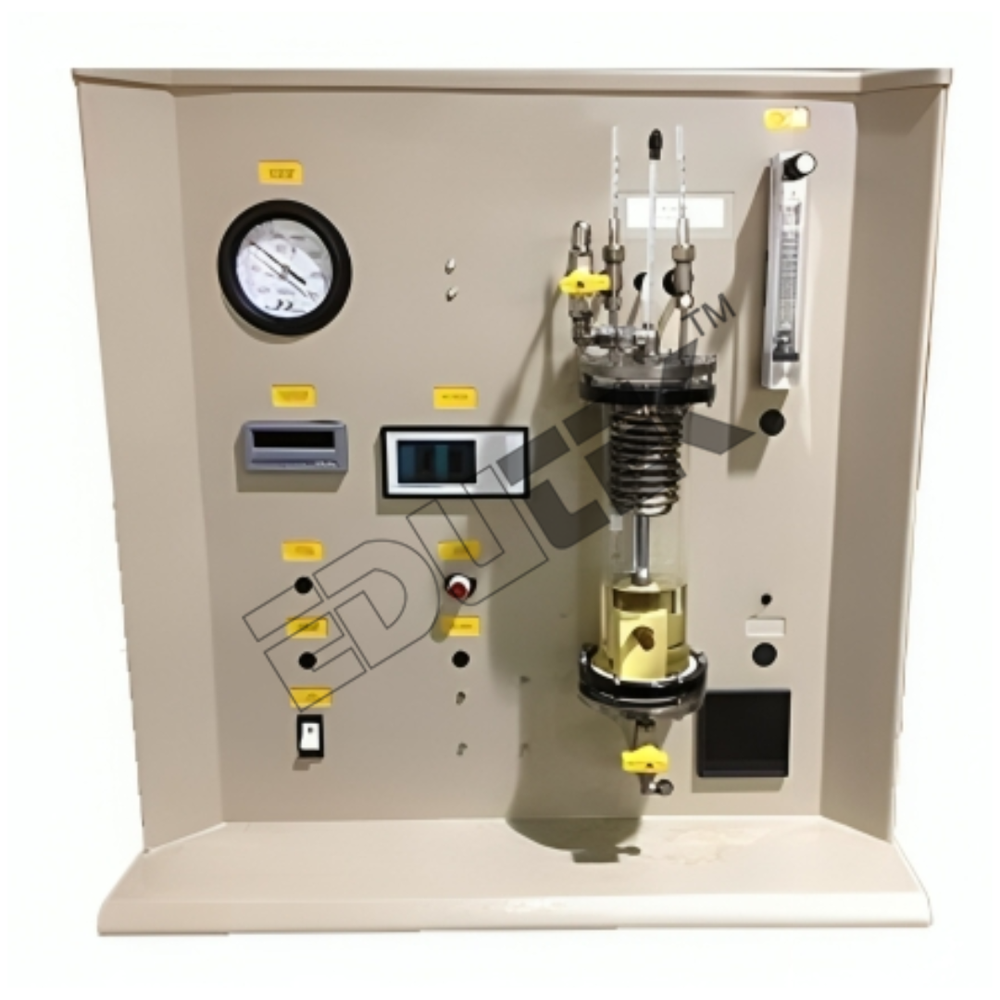
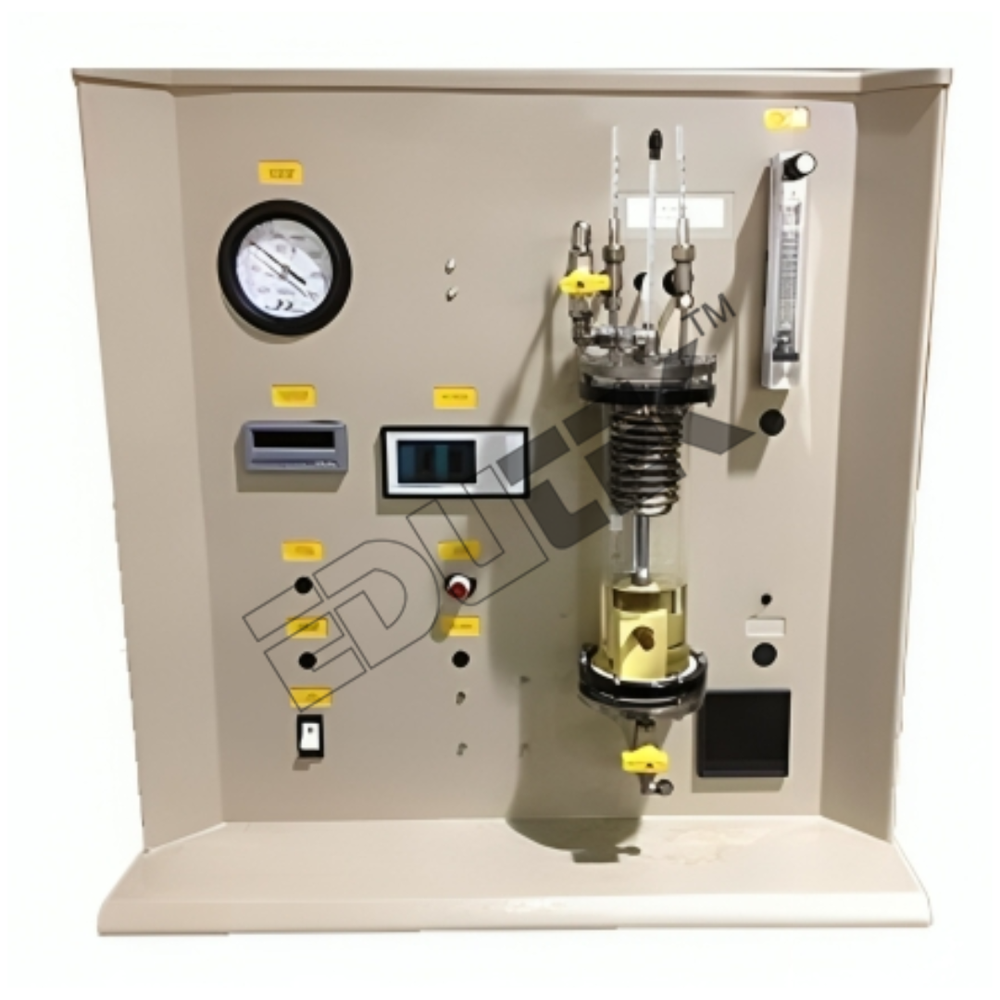
Fluid Bed Heat Transfer Unit designed to provide visual and quantitative results related to the flow of air through both a packed and fluidized bed of granular material.
Measurement of air flow and pressure drop through a variety of granular materials, as packed and as fluidized beds.
Investigation of the effect of distributor design on bed behavior.
Investigation of the effect of Superficial velocity, Depth of immersion , Particle size on the surface heat transfer coefficient for a hot surface in a fluidized bed.
Demonstration of separation by particle size and density.
A suitable compressor.
Electronic Control to adjust the heater power input.
Digital Wattmeter to indicate the heater power input.
Range 0 to 1000W (Heater power nominally 400W) Flow Meters to measure air flow through bed.
Digital Thermometer to indicate the temperatures of heater surface, air inlet and probe. Manometer to measure pressure drop through bed.
220-240 Volts, Single Phase, 60Hz
Unit complete with all required accessories.
Efficient Heat Transfer for Versatile ApplicationsDesigned for solid particle fluidisation and effective heat transfer, these systems are ideal for processes in pharmaceutical, food, chemical, and mineral industries. The flexible configuration accommodates custom particle sizes, heat transfer types, and installation requirements, supporting diverse operational needs.
Smart Controls and Safety-First EngineeringSystems can be equipped with advanced PLC-based automatic or semi-automatic control for precision operations. Built-in safety mechanisms guard against excessive temperature and pressure, while user-friendly access points make cleaning and maintenance simple, ensuring smooth and safe ongoing use.
FAQs of Fluidisation & Fluid Bed Heat Transfer:
Q: How does the fluid bed heat transfer process work in these systems?
A: The fluid bed heat transfer system achieves efficient thermal exchange by suspending solid particles in a rising stream of air or gas, creating a fluid-like state. This enhances contact between the heating medium and particles, resulting in thorough and uniform heat distribution throughout the bed.
Q: What industries can benefit from using this fluidisation and heat transfer equipment?
A: This equipment is engineered for a wide spectrum of applications, particularly pharmaceutical, food, chemical, and mineral processing industries. It is ideally suited for any process involving solid particle heat treatment, drying, or reactions requiring precise temperature control.
Q: When should a direct or indirect heat transfer configuration be selected?
A: Direct heat transfer is fitting when the product being processed is compatible with the fluidising air or gas, ensuring high efficiency. Indirect heat transfer is preferred for sensitive materials or when contact with the heating medium should be avoided. The configuration can be tailored to match process requirements.
Q: Where can this equipment be installed, and do site conditions affect its operation?
A: The system is designed for floor-mounted installation and can be adapted to various facility layouts. Electrical or steam power choices, as well as voltage requirements (380-440 V, 3 Phase), are specified according to the clients site conditions, ensuring reliable integration into existing operations.
Q: What maintenance features are included for ongoing usage?
A: Easy access is provided for cleaning and regular servicing, minimizing downtime and facilitating swift maintenance tasks. High-grade stainless or mild steel construction further enhances longevity and simplifies upkeep for sustained performance.
Q: How does the PLC-based control system enhance process management?
A: The optional PLC-based control system enables precise and automated adjustment of critical process parameters, such as temperature, airflow, and bed height. This enhances reliability, repeatability, and safety, allowing operators to monitor and control the system with minimal manual intervention.
Q: What are the main benefits of using this fluid bed heat transfer system?
A: Key benefits include energy-efficient, uniform heat transfer; adaptability to a broad particle size range; customizable design and capacity; low noise; built-in safety features; and easy maintenance. These features collectively deliver operational efficiency, product quality, and safety assurance.




 Send Inquiry
 Send Inquiry

