About Fibre Optic Cable
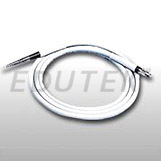
Fibre Optic Cable
- Highly Flexible almost Unbreakable Fiber Bundles.
- Quartz glass Fibers for best light transmission and natural tissue colour.
- Smooth outer Silicon tube and inner Stainless Steel Sheathing, Prevents Damage.
- Available F.O. Light carrier for different type of scope and retractors.
- Fitting can be made according to your Specifications i.e...
- STORZ, ACMI, WOLF, OLYMPUS.
Our fibre optic cables are available in both single mode and multi mode core types, supporting fiber counts from 4 up to 288 or custom configurations. This flexibility ensures compatibility with a broad range of applications, from small-scale building connections to expansive network backbones, tailored precisely to your system needs.
Reliable Performance Across EnvironmentsEngineered for robust performance, these cables feature durable jacketssuch as LSZH, PVC, PE, or armoredfor installation in diverse conditions. They are waterproof, weatherproof, UV protected, and can withstand temperatures from -40C up to +70C. This versatility makes them suitable for indoor, outdoor, underground, and aerial installations.
Superior Data Transmission QualityBenefit from high-speed data transfer, minimal attenuation (0.35 dB/km @ 1310 nm for single mode), and outstanding EMI immunity. These cables deliver up to 80 km reach on single mode and ensure signal integrity with a data transmission accuracy of up to 99.99%, supporting telecommunications, networking, and industrial automation applications.
FAQs of Fibre Optic Cable :
Q: How do I choose between single mode and multi mode fibre optic cables?
A: Select single mode fibres for long-distance data transmission up to 80 km and high-capacity backbone networks, as they operate at 1310 nm or 1550 nm. Multi mode fibres, which function around 850 nm, are ideal for shorter distances, such as within buildings or campus environments, offering high bandwidth over moderate ranges.
Q: What jacket types are available, and when should each be used?
A: Jacket types include LSZH (Low Smoke Zero Halogen), PVC, PE, and armored options. LSZH is recommended for indoor installations where fire safety is essential. PVC and PE offer weather and UV resistance for outdoor uses, while armored cables provide added mechanical protection for harsh environments or underground applications.
Q: Where can these fibre optic cables be installed?
A: These cables are designed for various settings, including indoor, outdoor, underground, and aerial installations. Their robust design, weatherproof properties, and customized configurations make them versatile choices for telecommunications, data transfer, networking, and industrial automation across a range of environments.
Q: What is the installation process and minimum bend radius?
A: During installation, adhere to a minimum bend radius of 10 times the cables outer diameter to avoid fiber damage and signal loss. In operational scenarios, a bend radius of 20 times the outer diameter is recommended. Proper handling and compliance with guidelines ensure longevity and consistent performance.
Q: What connector types are compatible, and how do I select the right one?
A: The cables support SC, LC, ST, and FC connector types, selectable based on your network equipment and application requirements. SC and LC are common in modern networks for their compact form and secure connections, while ST and FC may be preferred for legacy or specialized installations.
Q: What are the benefits of using these fibre optic cables for data transmission?
A: Fibre optic cables deliver exceptional data speeds, low attenuation, high resistance to electromagnetic interference, and impressive accuracy levels (up to 99.99%). They ensure secure, reliable signal transmission and are non-conductive, providing a significant advantage in high-voltage or noisy industrial settings.



 Send Inquiry
 Send Inquiry

