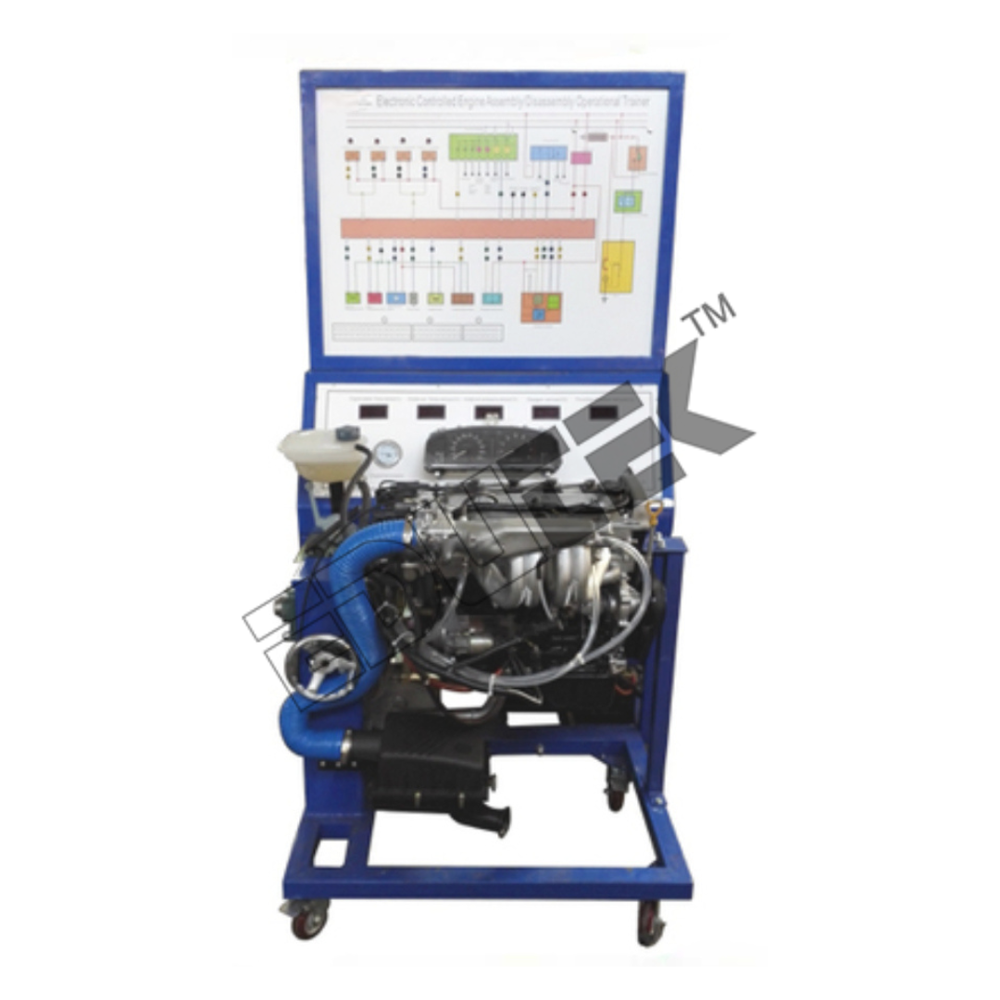
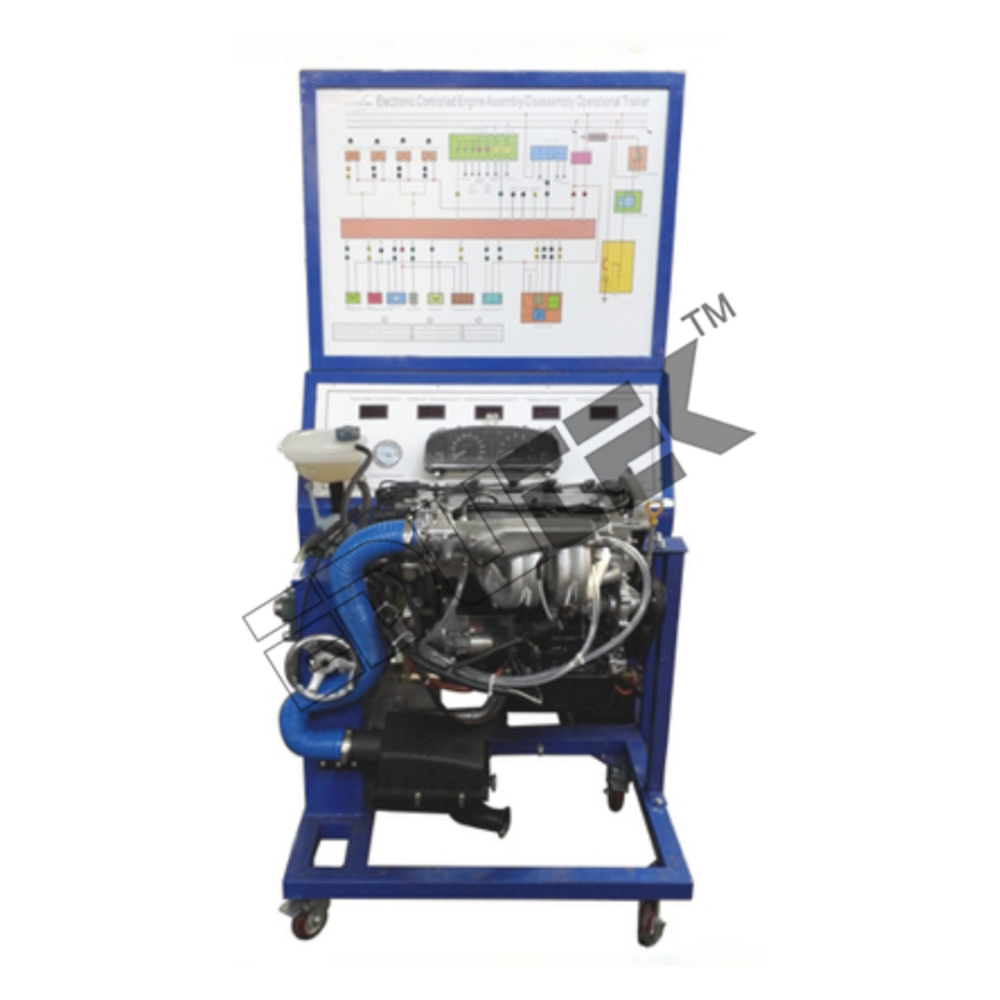
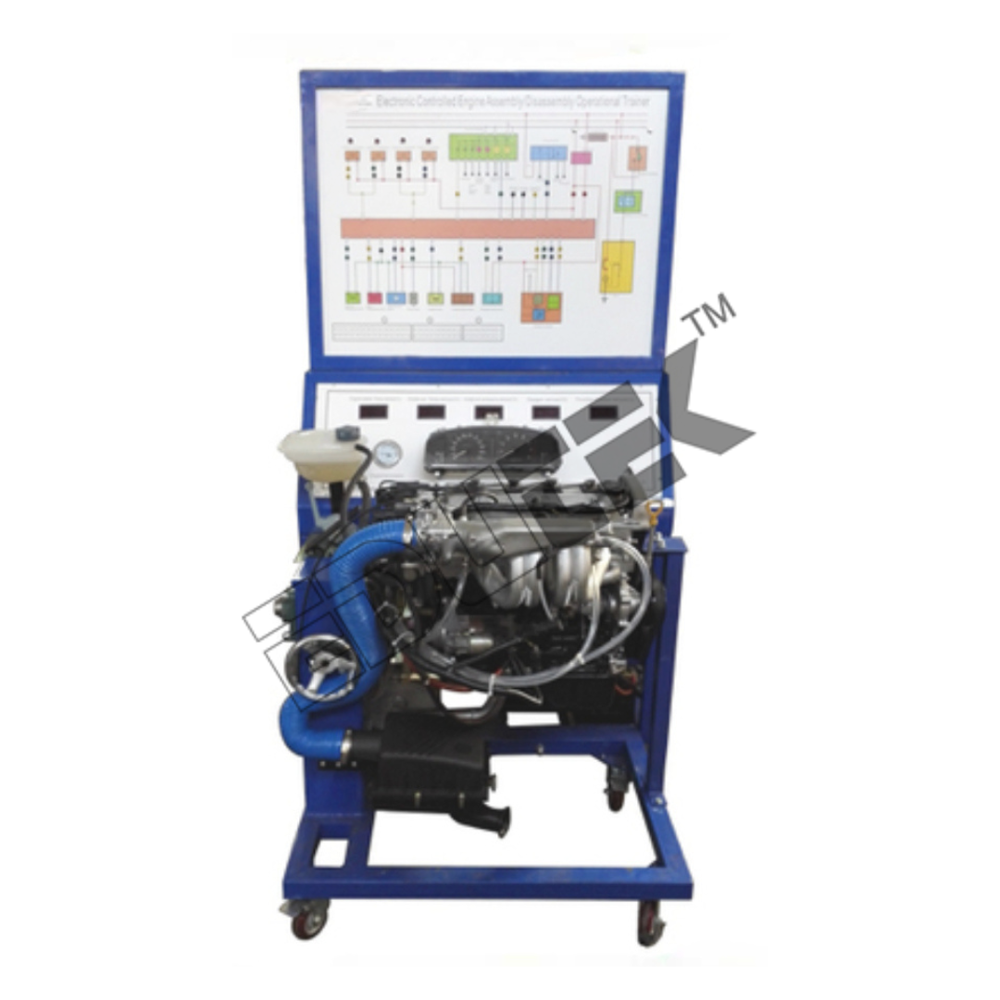
About ELECTRONIC CONTROLLED ENGINE TRAINING SET
ELECTRONIC CONTROLLED ENGINE TRAINING SET - Transmission : Automatic
- Input Voltage : AC 220V
- Power Supply : DC 12V
- Battery Capacity : 60HA
- Operating Temperature : -40C + 50C
- Max. Power (KW) : 68
- Max. Power Seed (RPM) : 6000
Advanced Diagnostics and MonitoringThis training set empowers users with comprehensive diagnostics functions, including live data monitoring, error code simulation, and detailed waveform analysis. Both students and instructors benefit from real-time insights into sensor and actuator behavior, improving understanding of engine management systems.
Engineered for Safety and MobilityEquipped with features like a main power cut-off, emergency stop, and insulated wiring, the setup maximizes user safety. Its solid powder-coated frame and aluminum engine panels sit atop four caster wheels with brakes, providing stability and effortless mobility across technical labs or classrooms.
Flexible and User-Friendly InterfaceThe training unit integrates standard OBD-II and panel-mounted connectors, making it compatible with most diagnostic tools. Instructors can easily program faults and analyze responses, while students benefit from clear digital and analog displays and included accessory kits for comprehensive hands-on training.
FAQs of ELECTRONIC CONTROLLED ENGINE TRAINING SET:
Q: How does the Electronic Controlled Engine Training Set support automotive diagnostics training?
A: The set provides a live, interactive platform for diagnosing engine faults. Students can monitor real-time data from sensors, simulate typical engine problems via the programmable ECU, and use OBD-II tools to retrieve, analyze, and resolve error codes, making it ideal for practical education.
Q: What are the main benefits of using this engine training equipment in technical education?
A: It offers hands-on experience with real engine systems, builds diagnostic skills, and enhances understanding of electronic controls. The programmable fault feature, live waveform analysis, and clear displays help instructors demonstrate complex concepts while ensuring student engagement and safety.
Q: When should instructors use programmable faults during the training process?
A: Programmable faults should be introduced after students have mastered basic engine and sensor operation. Using them during advanced lessons challenges students to apply diagnostic techniques, encouraging problem-solving and critical thinking in a controlled, safe environment.
Q: Where can the training set be deployed effectively?
A: This unit is perfectly suited for technical colleges, vocational training centers, automotive engineering labs, and specialized workshops. Its mobility, robust construction, and safety features support use in a variety of educational and industrial settings.
Q: What is the process for monitoring and analyzing engine signals on this setup?
A: Instructors or trainees connect the OBD diagnostics cable to the interface, start the engine, and use the LCD/analog meters to observe sensor values and engine status. The system allows for waveform visualization and live monitoring, facilitating in-depth troubleshooting and learning.
Q: How does the equipment ensure safety during operation?
A: Safety is prioritized through a main power cut-off switch, an emergency stop button, and fully insulated wiring. The stable, powder-coated frame, mobility wheels with brakes, and clearly labeled controls minimize operational risks during demonstrations and practice sessions.
Q: What accessories are included with this engine training set?
A: Each unit comes with an OBD diagnostics cable for data access, an instructor manual for guidance, and a comprehensive tool kit, providing all essential resources for effective setup, use, and maintenance in an automotive training environment.





 Send Inquiry
 Send Inquiry

