About Drag Forces
- The goal of scientific study and practical application is to design the perfect body shape in order to keep drag low. The drag coefficient for arbitrarily shaped bodies can only be determined reliably by experimentation.
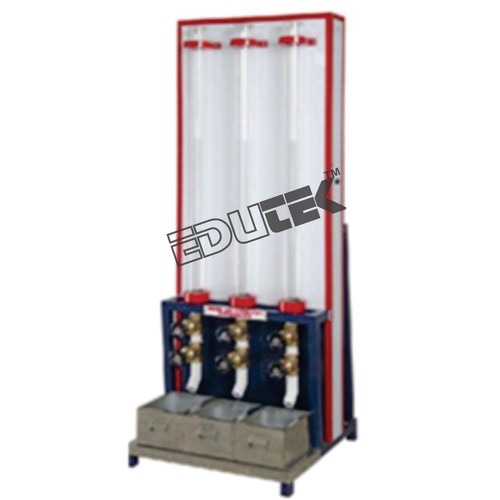
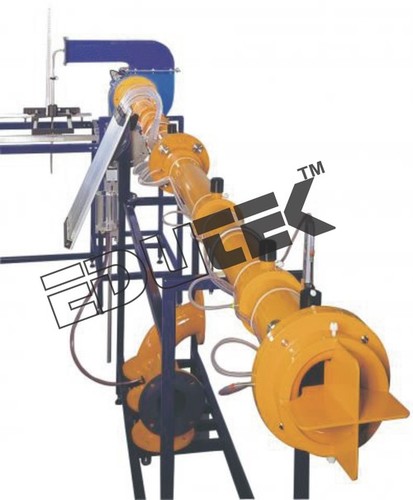
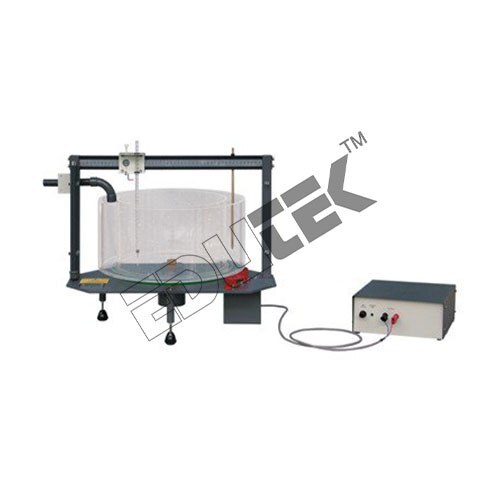
- The experimental unit used in the aerodynamics trainer allows drag to be measured in various models so as to determine the respective drag coefficients. In the measuring section, a model is used as a drag body. The forces occurring in the air flow are measured with a beam scale with movable weight. When conducting the experiment with a cylinder, a Pitot tube can be used to record a pressure distribution of the surrounding flow.
- The drag can be measured indirectly via the pulse rate. The Pitot tube, movable obliquely to the direction of flow, allows pressures to be recorded so as to determine the velocity profile downstream of the cylinder and thus to gauge the socalled wake depression.
Specification :- Determining drag forces on models immersed in a flow
- Recording the pressure distribution on models immersed in a flow
- Recording the velocity profit for measuring the wake depression behind the cylinder immersed in a flow
- Accessories for the aerodynamics trainer
- Models: plate, cylinder and aerofoil model as drag body
- Cylinder with additional pressure measuring point
- Pitot tube with horizontal adjustment for measuring the total pressures Technical Data
- Pitot tube
- Diameter: 1,1mm
- Horizontal adjustment: 50...0...50 mm
- Measuring section: cross-section 50 x 100 mm
- Angle scale: -40...40
- Weights: 1 x 10 g, 1 x 40 g
- Drag body
- Plate: L x W: 45 x 15 mm,
- Thickness: 1mm
- Cylinder: D x H: 15 x 45 mm
- Aerofoil model: L x W x H: 100 x 15 x 45 mm.
Dimensions and Weight:
- LxWxH: 330 x 270 x 220 mm.
- Weight: approx. 16 kg.
The Drag Forces apparatus delivers highly accurate measurements with an impressive 100% accuracy rate. This level of precision makes it an indispensable tool for students, researchers, and professionals seeking reliable data in fluid dynamics investigations.
Built for Laboratory ExcellenceAt 16 kilograms and with compact dimensions, this equipment is both sturdy and space-saving, ensuring easy integration into laboratory environments. Its robust build promises both durability and consistent performance over years of usage.
Trusted Indian EngineeringManufactured, exported, and supplied from India, this drag force apparatus stands as a testament to superior Indian engineering. Each unit is crafted to meet international standards, providing assurance of quality and longevity with a 1-year warranty.
FAQs of Drag Forces:
Q: How is the Drag Forces apparatus typically used in laboratory settings?
A: This apparatus is employed in laboratories to measure the forces that act on an object as it moves through a fluid. It is ideal for demonstrating and investigating drag concepts in physics and engineering curricula.
Q: What features contribute to the high efficiency of this device?
A: Its precise measurement capability, compact dimensions, and solid build ensure maximum efficiency. The 100% accuracy rating allows researchers to trust the data collected during each experiment.
Q: When should I choose this Drag Forces apparatus for my research or educational needs?
A: Select this apparatus when you require exact, repeatable measurements in studies of drag forces. Its reliability and efficiency make it the preferred choice for rigorous academic and research applications.
Q: Where is this Drag Forces device manufactured and supplied?
A: The equipment is manufactured and supplied by a trusted exporter and manufacturer in India, ensuring global quality standards and efficient after-sales service.
Q: What is the process for setting up the apparatus in a laboratory?
A: Setting up involves placing the unit on a stable surface, connecting necessary measuring instruments, and calibrating as per the manual. Its compact design (330 x 270 x 220 mm) allows for easy and quick installation.
Q: What are the main benefits of using this 100% accurate drag force apparatus?
A: This apparatus minimizes experimental errors, provides reliable and consistent results, and saves time due to its high efficiency and robust construction, leading to improved research outcomes.




 Send Inquiry
 Send Inquiry

