About CROSSHOLE SEISMIC EQUIPMENT
CROSSHOLE SEISMIC EQUIPMENT
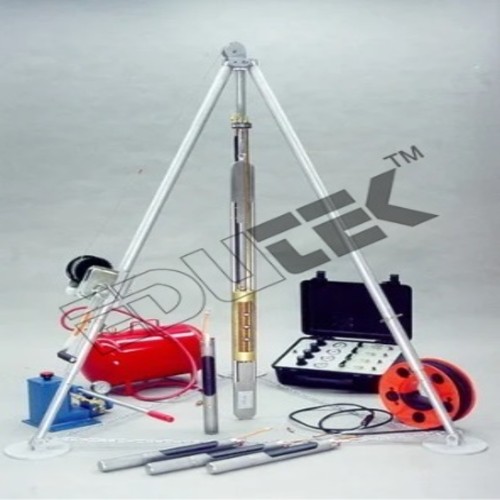
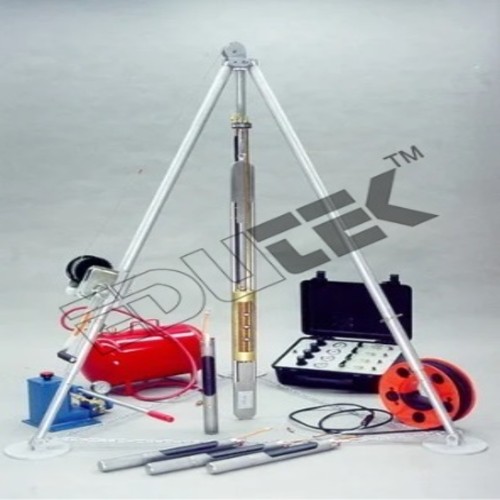
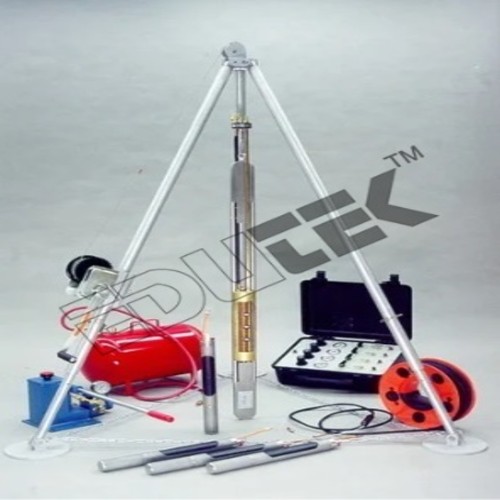
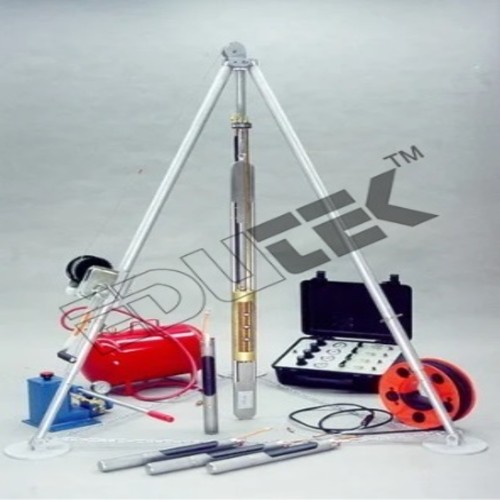
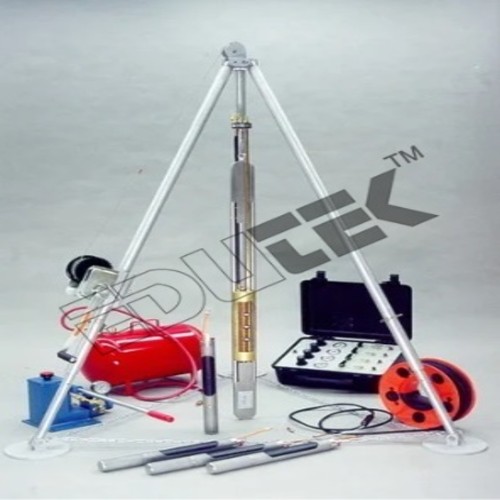
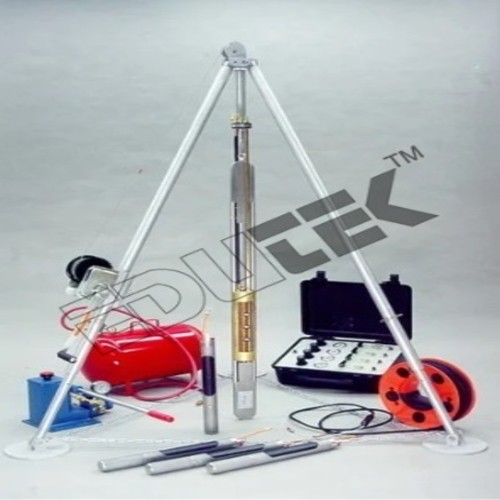
This equipment, designed to work in 100 mm (4 in.) I.D. casings, has a proven record through many years of use. The hammer has gripper plates that expand out to make firm contact with the inside of the casing. The sensor is placed and positioned with hanger bars allowing accurate orientation in the receiver casing. The sensor housing has an expandable bladder that fixes the sensor at the proper elevation. The trigger is located in the hammer and each sensor has 3-axis measurement capability. The manifold unit is designed to accommodate up to four sensors. The equipment has many other design features which facilitate accurate shear wave velocity measurements in accord with procedures described in ASTM D 4428/D 4428M.
Versatile and Robust EquipmentCROSSHOLE SEISMIC EQUIPMENT is crafted to withstand challenging conditions with IP67 waterproof probes and a durable shock-proof transport case. Suitable for indoor and field use, it operates efficiently between 0C to 50C and up to 85% humidity, making geotechnical testing accessible in most environments.
Advanced Testing and Data ManagementFeaturing both shear and compressional wave geophones, the equipment enables comprehensive crosshole testing. The included microprocessor-based control and digital software streamline data acquisition, analysis, and export, ensuring compatibility with Excel and major geotechnical applications for seamless reporting.
Precision and ComplianceThis equipment ensures high accuracy (100%), rapid response (within 1 ms), and flexible test parameters. It adheres to ASTM D4428 and relevant IS standards, includes a calibration certificate, and supports adjustable stroke and test depths up to 60 m, with variable, precise control for optimal testing confidence.
FAQs of CROSSHOLE SEISMIC EQUIPMENT:
Q: How does the CROSSHOLE SEISMIC EQUIPMENT perform seismic tests?
A: The system uses an electromagnetic hammer to generate seismic waves, which are detected by shear and compressional wave geophones placed in 100 mm casings. The equipment digitally records wave transit times, accurately measuring subsurface properties for geotechnical analysis.
Q: What are the benefits of using this crosshole seismic equipment for soil and concrete assessment?
A: It provides precise, real-time seismic data, ensuring high-resolution subsurface analysis. Automated controls, digital outputs, and comprehensive software enhance accuracy, efficiency, and reliability, supporting rigorous compliance with ASTM D4428 and relevant Indian standards.
Q: Where is this equipment typically used?
A: This system is suitable for laboratory and field investigations, particularly where crosshole seismic tests are required in soils or concrete. Its robust design and portable features make it ideal for construction sites, infrastructure projects, and materials research labs.
Q: When should calibration be performed on the equipment?
A: Calibration is supplied with the equipment. To maintain accuracy, recalibration is recommended at regular intervals as per laboratory standards, after extensive use, or any time precise data integrity is critical.
Q: What is the procedure for setting up and operating the system?
A: Place the equipment on a tripod or stable platform, insert the geophones into prepared 100 mm casings, and connect the seismic source. Use the microprocessor control panel to configure test parameters and initiate the test. Results are instantly displayed and saved for analysis.
Q: How is data stored and transferred from the device?
A: Test results are stored in the devices 16 GB internal memory. Data can be exported through USB/RS232 interfaces and imported directly into Excel or standard geotechnical analysis packages for straightforward reporting and review.
Q: What is the maximum depth and accuracy achievable with this equipment?
A: The equipment can test depths up to 60 meters with a resolution of 0.01 milliseconds and an accuracy of 100%. Response time is instantaneous, ensuring reliable analysis for even deep geotechnical investigations.




 Send Inquiry
 Send Inquiry

