About ISOTHERMAL SEMI-BATCH REACTOR APPARATUS
Specification:
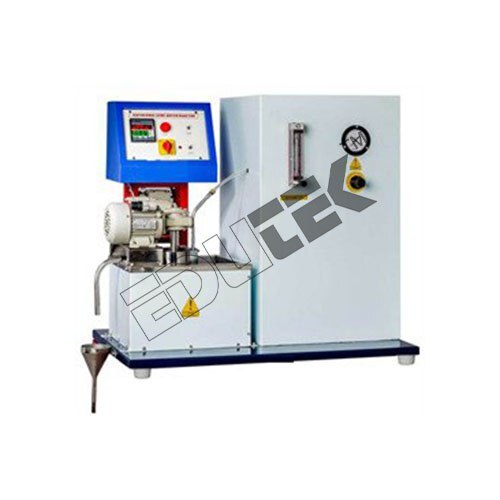
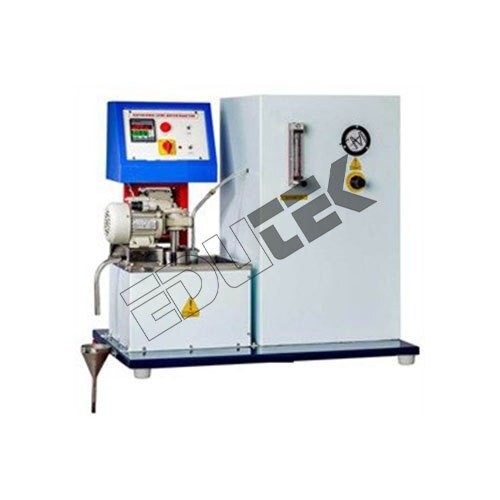
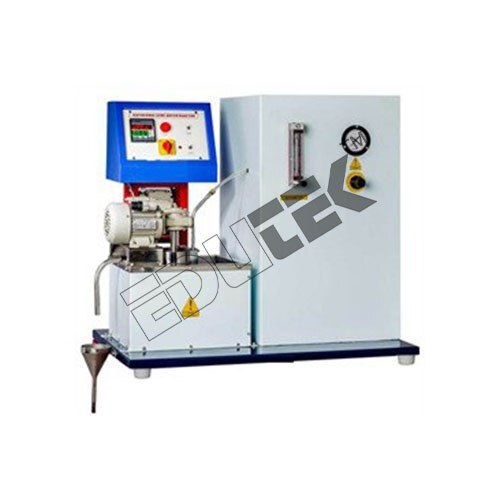
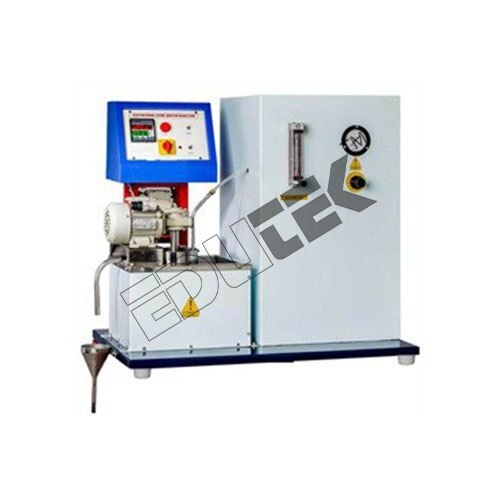
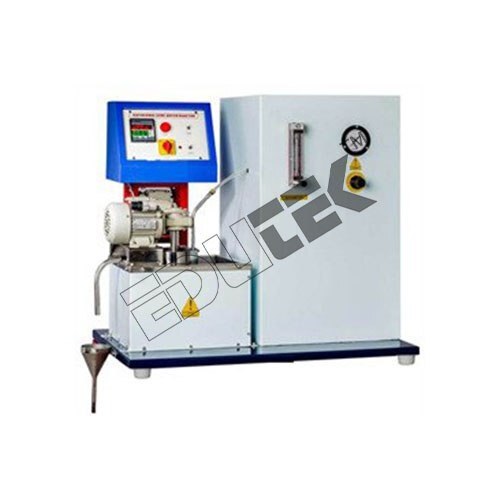
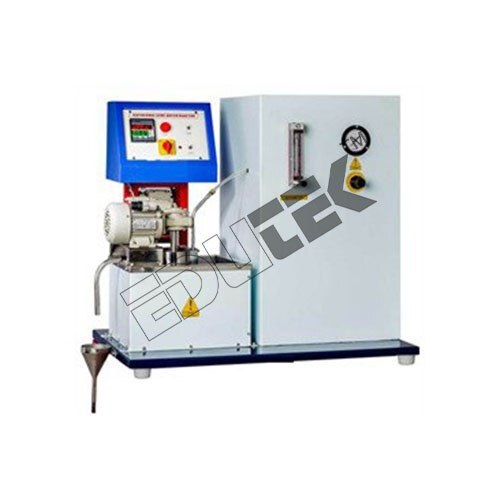
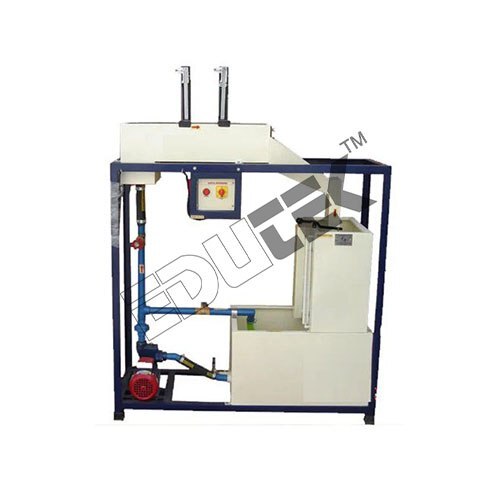
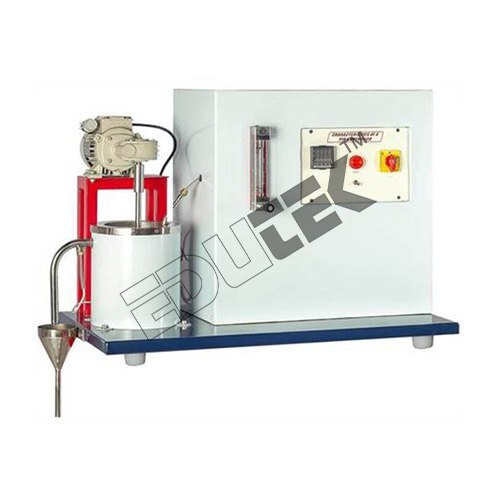
ISOTHERMAL BATCH REACTOR APPARATUS
Description:
An isothermal semi-batch reactor is asemi-closed system with one input stream. It is operated under conditions likeIsothermal (Temperature of Reaction Mass remains constant) and perfectly mixed(composition of reaction mixture is uniform throughout).
This set-up is used to study anon-catalytic homogeneous reaction under isothermal condition. The set up consistsof a Reactor fitted in a constant temperature water bath. Before starting the reaction,the reactor is charged with measured quantity of one reactant.
From a feed tank another reactant isfed to the reactor. Using a sampling pipette samples can be taken out foranalysis after fixed interval. Peristaltic Pumps are provided to measure theindividual flow of Chemicals. One stirrer is fitted for mixing the reactants inreactor and other is fitted in water bath to keep the uniform temperaturethroughout in the bath. The temperature of bath can be maintained from ambientto 70C with the help of Digital Temperature indicator Cum Controller.
Experimentation:
To study a second ordersaponification reaction in a Semi-Batch Reactor.
To determine the Reaction RateConstant.
Product Details:
Voltage: 220 Volt (v)
Power: 500 Watt (w)
Material: Metal
Usage: For Laboratory
Equipment Materials: SS
Precise Temperature and Process ControlThis reactor apparatus provides exceptional temperature regulation from ambient up to 80C, utilizing double-walled insulation and a PT-100 RTD sensor. The system enables controlled feed introduction through a graduated tank and dropping funnel, paired with adjustable magnetic or mechanical stirring, ensuring uniform mixing and accurate reaction data. The digital interface and selectable manual or automatic control offer flexibility in operation.
Safety Features and Robust ConstructionSafety is a priority, with an over-temperature cutoff, emergency stop button, and double-walled reactor design. Its borosilicate glass or stainless steel construction ensures chemical resistance and durability. The flanged vessel lid includes multiple ports for sampling, pressure measurement, and reagent addition, while the bourdon-type pressure gauge provides real-time monitoring. This apparatus is built for consistent performance under demanding laboratory conditions.
Versatile Applications and User BenefitsIdeal for engineering education, research, and industrial process development, this semi-batch reactor accommodates single specimens up to 2 liters. Users benefit from a comprehensive instruction manual, variable feed input, high-resolution (0.1 ml) measurement, and rapid response time (<1 second). This facilitates in-depth kinetic studies, optimization, and scale-up of chemical processes, making it a valuable resource for laboratories and manufacturers.
FAQs of ISOTHERMAL SEMI-BATCH REACTOR APPARATUS:
Q: How do I operate the Isothermal Semi-Batch Reactor for a typical experiment?
A: Begin by assembling the reactor using the included instruction manual, ensuring all ports are securely fitted. Add the required reactants to the vessel, adjust the feed system to deliver input batches through the controlled dropping funnel, set the desired agitation speed (up to 100 rpm), and program temperature controls. Monitor progress via the digital LED display and utilize the sampling port to collect reaction samples at intervals.
Q: What materials is the reactor vessel made from and what are its advantages?
A: The reactor vessel is constructed from high-quality borosilicate glass or stainless steel. Borosilicate glass provides excellent chemical resistance and thermal stability, while stainless steel enhances durability and allows operation with a broader range of reagents and process conditions, ensuring reliability in chemical testing and industrial applications.
Q: When should the safety features be utilized during operation?
A: Safety features such as the over-temperature cutoff and emergency stop should be engaged anytime abnormal conditions arise, such as rapid temperature increases or equipment malfunction. Routine use of these features ensures operator safety and protects the apparatus from damage during unforeseen incidents.
Q: Where is the apparatus best installed for optimal performance?
A: This semi-batch reactor is designed as a table-top unit and should be placed on a stable, level surface in a well-ventilated laboratory or research facility. Ensure proximity to a 230 V AC, 50 Hz power supply, and that humidity does not exceed 90% RH (non-condensing) to maintain performance and user safety.
Q: What benefits does the variable feed system offer in engineering experiments?
A: The precisely controlled feed system allows users to add reactants at variable rates, enabling better control over reaction kinetics and process optimization. This flexibility enhances the study of semi-batch operations, supports detailed kinetic modeling, and aids in the scale-up of chemical processes from laboratory to industrial scale.
Q: How is process monitoring and data recording handled during reactor operation?
A: Process variables such as temperature, pressure (02 bar), and conversion rates are monitored in real-time via digital LED displays and accurate sensors. Measurements can be accessed via analog or digital interfaces, facilitating easy data recording for analysis, reporting, and process optimization.




 Send Inquiry
 Send Inquiry

