About CONVERSION OF GALVANOMETERS INTO VOLTMETERS & AMMETERS WITH ALUMINUM PANEL & DIGITAL PANEL METERS
Specification:
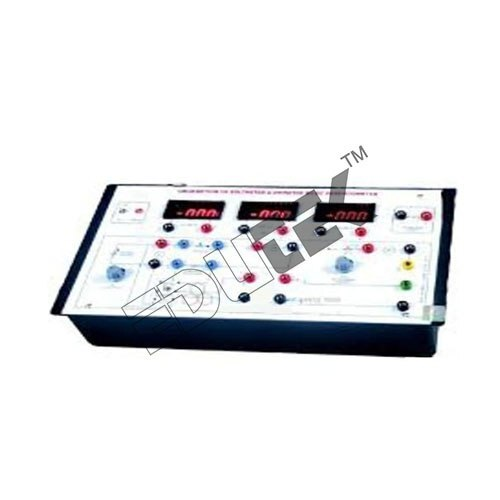
CONVERSION OF GALVANOMETERS INTO VOLTMETERS & AMMETERS WITH
ALUMINUM PANEL & DIGITAL PANEL METERS
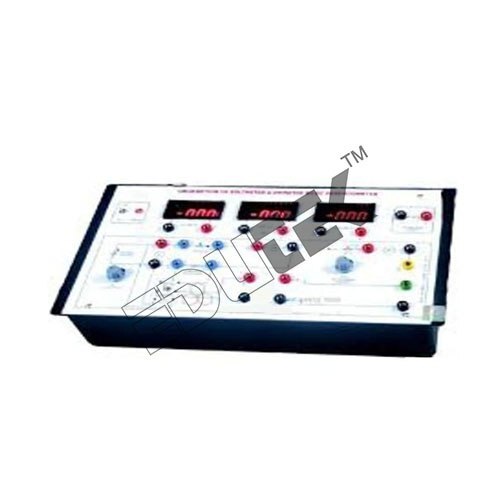
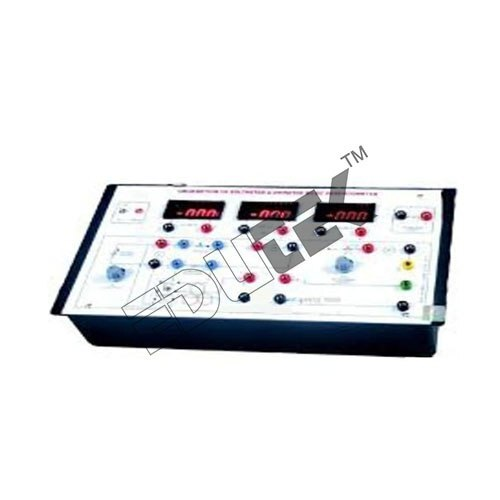
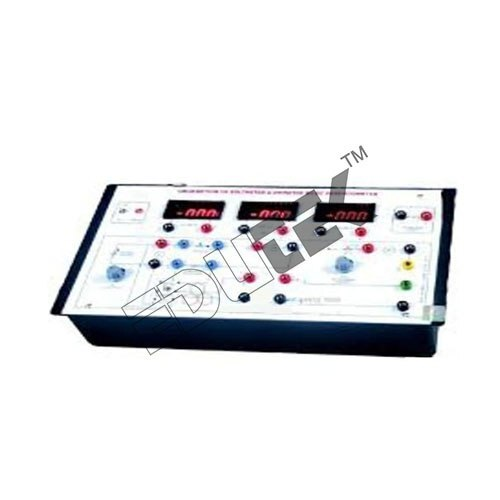
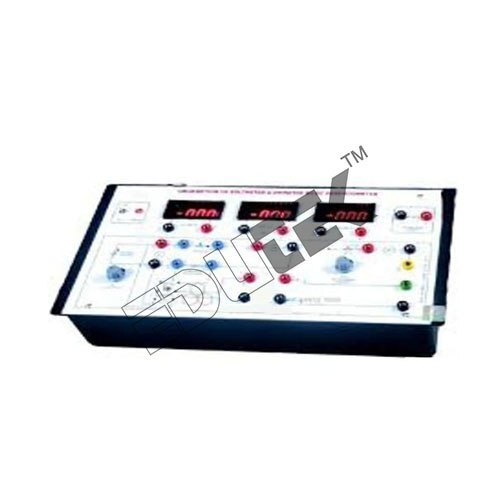
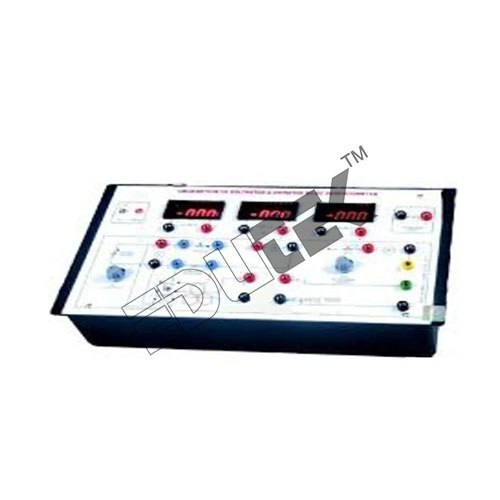
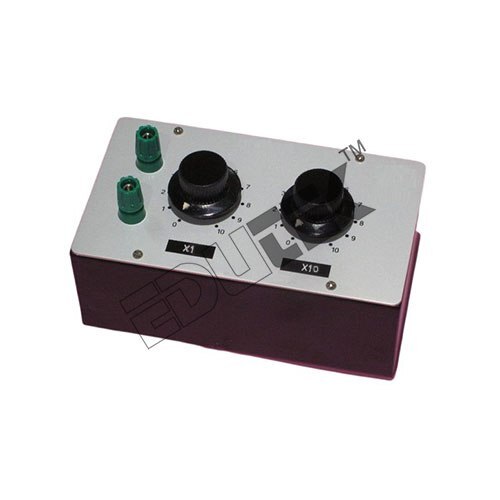
Two meters (One Voltmeter & One Galvanometer), three set of resistances mounted behind the panel, connections of supplies, Meters & Resistances brought out at Sockets.
Comprehensive Training ApparatusDesigned for educational environments, this versatile module helps students and trainees understand the process of converting galvanometers into voltmeters and ammeters. The use of both an analog (galvanometer) and a digital panel meter illustrates classical and modern measurement methods effectively.
Robust and User-Friendly DesignFeaturing an aluminum front panel, along with securely mounted resistances and accessible connection sockets, the device prioritizes durability and ease of use. The setup enables thorough, repeatable experiments essential for student learning and engineering lab courses.
Reliable Indian ManufacturingAs a leading exporter, manufacturer, and supplier from India, we offer quality engineering educational instruments backed by a one-year warranty. This ensures customers receive dependable products that support academic excellence in electronics studies.
FAQ's of CONVERSION OF GALVANOMETERS INTO VOLTMETERS & AMMETERS WITH ALUMINUM PANEL & DIGITAL PANEL METERS:
Q: How does this instrument convert a galvanometer into a voltmeter or ammeter?
A: This device enables conversion by connecting external resistances in series or parallel with the galvanometer, as appropriate. The selected resistance values, mounted behind the panel, adapt the galvanometer's sensitivity to measure larger currents or voltages, thus functioning as an ammeter or voltmeter.
Q: What advantages does the aluminum panel provide in this setup?
A: The aluminum panel offers superior durability and insulation for academic environments. It ensures safe handling and longevity, even with frequent student use. Its sturdy construction also keeps mounted components securely in place during repeated experiments.
Q: When should I use this conversion apparatus in engineering electronics courses?
A: This instrument is best utilized during instructional modules on meter conversion techniques, measurements, and instrument calibrations. It is an essential tool for practical sessions in electronics and electrical engineering curricula.
Q: Where are the resistance connections and meters installed for easy access?
A: Three sets of resistances are mounted securely behind the panel, and all connections to power supplies, meters, and resistances are brought out to clearly labeled sockets on the front. This design allows for quick and mistake-free setup during laboratory exercises.
Q: What is the process involved in using this product for experiments?
A: Start by connecting the desired resistance set through the appropriate sockets according to the experiment's requirements. Next, connect the galvanometer and either the voltmeter or ammeter setup. Apply the input supply, observe the readings, and compare measured values as part of hands-on analysis.
Q: What are the benefits of using both digital and analog meters in this module?
A: Utilizing both a galvanometer (analog) and a digital panel meter helps students understand foundational and advanced measurement techniques. It provides insight into the evolution of electronic instruments and allows comparisons between traditional and modern measurement accuracy.




 Send Inquiry
 Send Inquiry

