About Consolidation Apparatus .
Edutek are manufacturer and exporter of Consolidation Apparatus for engineering college testing equipment. material testing equipment manufacturer in India.
Use: The One-dimensional Consolidation test is used to determine the
consolidation characteristics of soils of low permeability, consolidation tests to
determine the settlement characteristics of soil over a period of time.
Standard: ASTM D-2435, D-4546; AASHTO T-216.
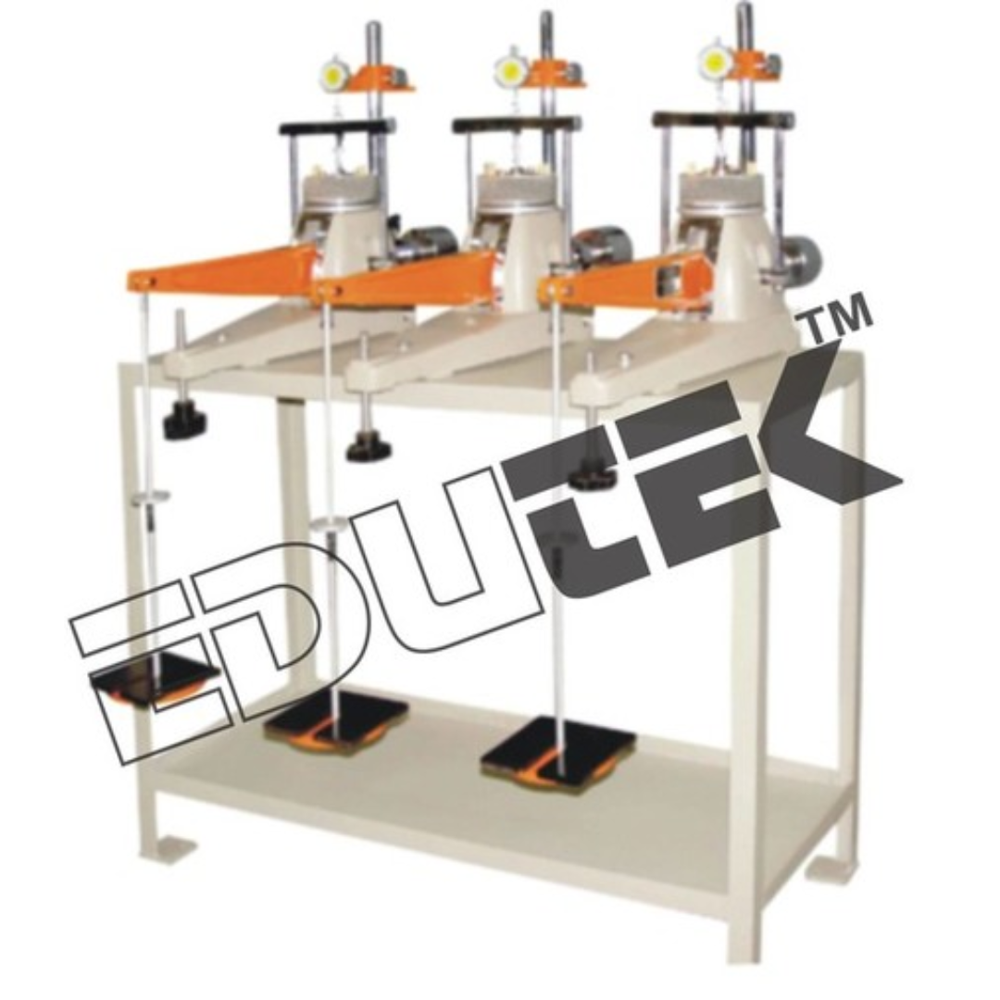
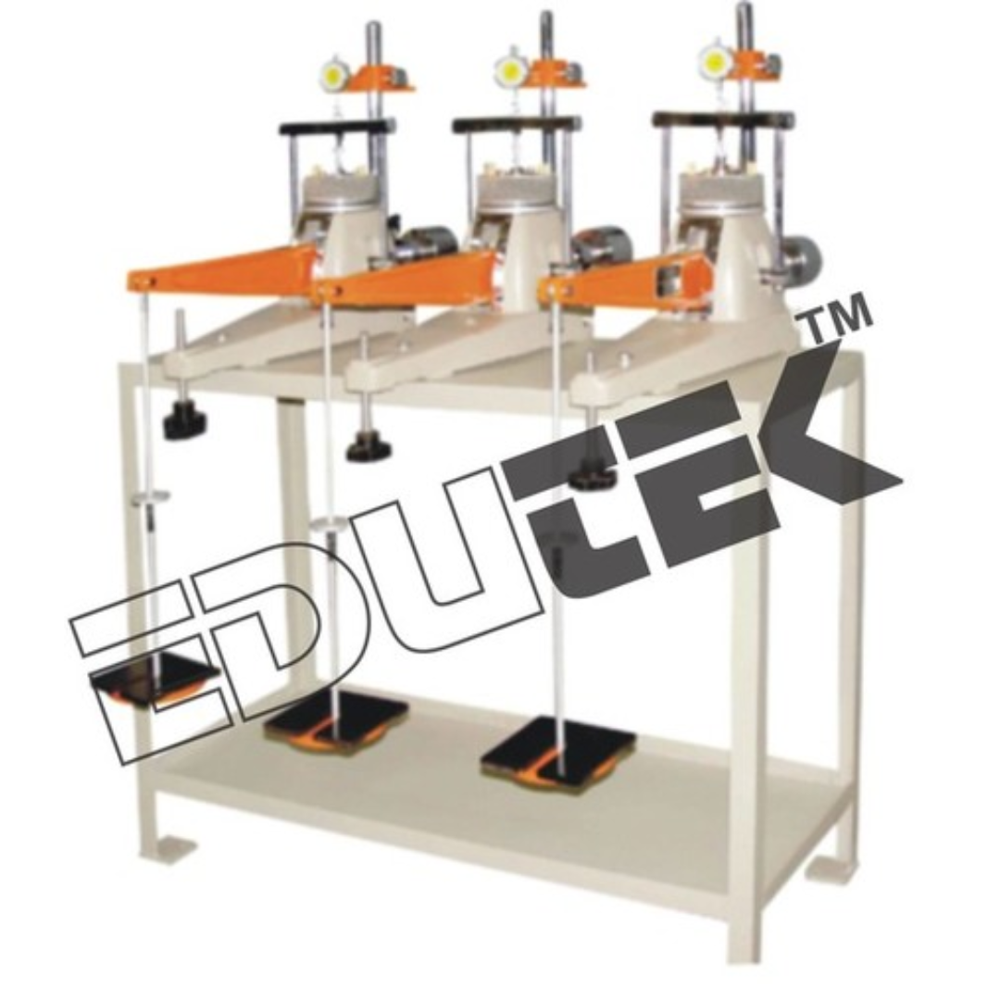
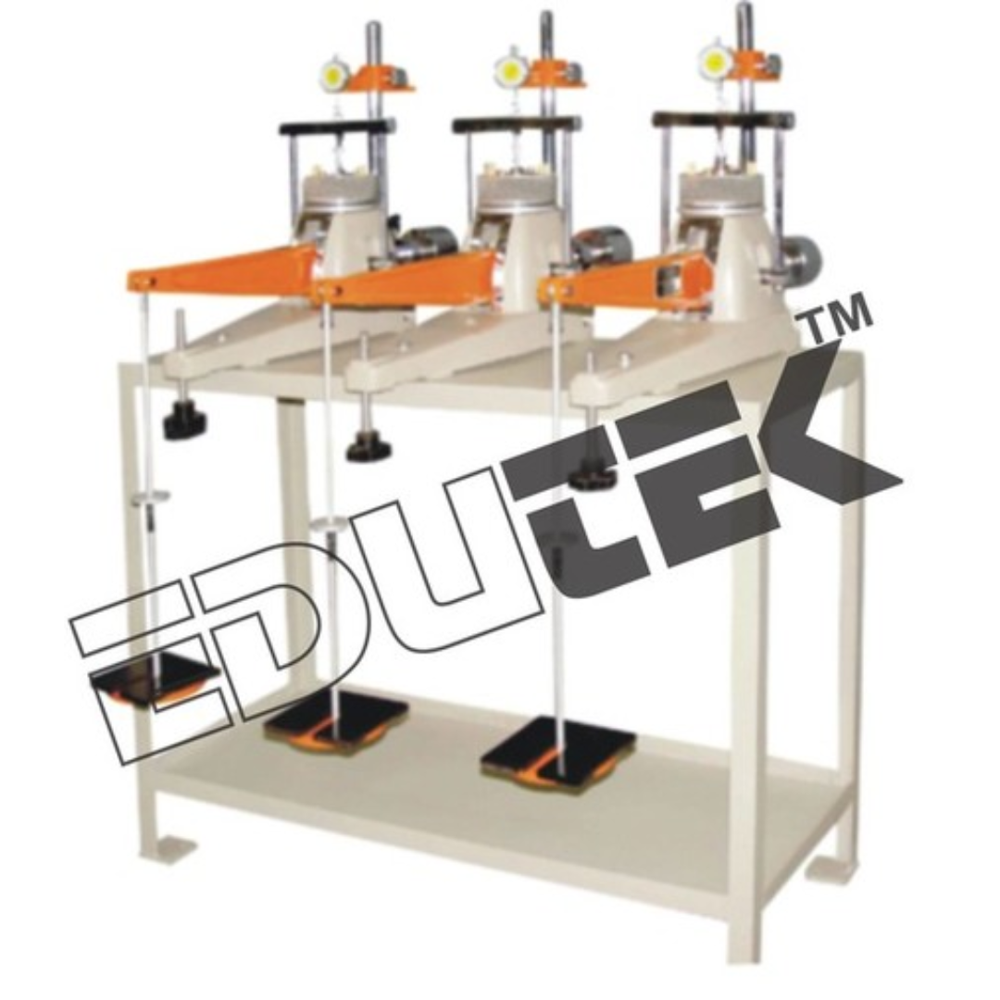
General Description of Consolidation Apparatus
- Loading Pressures on 63 mm (2.5") diameter samples of up to 5,148 kPa(48 tons per sq. ft.) using 11:1 beam ratio.
- Triple beam ratios of 9:1, 10:1 and 11:1 minimize loading weight requirements.
- Rigid frame construction ensures accuracy, repeatability and reliability of test results.
- Integral beam support jack eliminates possible shock to sample during load application procedures.
- Compact, table top design for maximum space savings in the laboratory. Cast aluminum and plated steel construction for rust resistance and long life. The apparatus features a rigid loading mechanism, capable of applying loads for long durations. Load pressures of up to 5,148 kPa (48 tons per sq. ft.) can be generated on 63 mm (2.5") diameter samples.
- The unit incorporates an integral beam support jack that eliminates the possibility of shock to the sample during load application procedures.
Efficient Soil Settlement TestingThis apparatus is designed for laboratories requiring highly accurate soil consolidation data. Its mechanical loading system, combined with interchangeable rings and precision dial gauges, delivers reliable measurement and repeatability. The choice of powder-coated or polished finishes and non-corroding materials ensures longevity and performance under routine use.
Versatile and Reliable ConstructionFrom standard sample sizes (60 mm, 100 mm) to custom options, the device accommodates diverse soil testing needs. Its core componentsloading frame, weighing beam, porous ceramic stones, and cutterare crafted from high-quality materials like mild steel and brass for durability. The apparatus is manually operated, making it suitable for environments that do not require electrical connectivity.
User-Friendly Design and AccessoriesIncluded accessories such as water reservoir, tamper, weight set, and extraction tool streamline the testing process. Whether operating a single or three-gang cell unit, users benefit from easy setup and robust construction. The apparatus is supplied with clear analog displays and can be easily maintained in typical laboratory ambient temperature conditions.
FAQs of Consolidation Apparatus:
Q: How does the Consolidation Apparatus measure soil settlement with high accuracy?
A: The apparatus uses a precision dial gauge with a least count of 0.002 mm to measure vertical settlement. Its robust mechanical loading system and interchangeable rings allow for accurate and repeatable results, essential for laboratory soil consolidation studies.
Q: What sample sizes and configurations are available for the Consolidation Apparatus?
A: Standard models accommodate 60 mm and 100 mm sample sizes. However, custom sizes can be provided upon request. Both single-cell and three-gang configurations are available to suit varied laboratory requirements.
Q: When should a higher vertical load capacity be considered for testing?
A: Higher vertical load capacities, beyond the standard 20 kg/cm, may be necessary for soils requiring extensive compression analysis or specialized research. These can be requested as per the specific project or research needs.
Q: Where is the Consolidation Apparatus typically used?
A: The apparatus is widely utilized in geotechnical and civil engineering laboratories across India and globally. It is suitable for academic, construction, and research institutions focusing on soil mechanics and consolidation studies.
Q: What is the process for using the Consolidation Apparatus in soil testing?
A: First, the soil sample is placed in the interchangeable consolidation ring and mounted within the cell. The loading system is used to apply vertical pressure while settlement is monitored using the dial gauge. The water reservoir and porous ceramic stone help maintain consistent saturation, and accessories support sample extraction and handling.
Q: How does the apparatus benefit laboratory soil consolidation research?
A: Its highly efficient design, durable construction, and 100% accuracy ensure reliable data output, aiding in precise analysis of soil behavior. The manual operation eliminates the need for electrical power, making it accessible in various laboratory environments.
Q: What maintenance is required for the Consolidation Apparatus?
A: Routine cleaning, calibration of the dial gauge, and inspection of non-corroding components help maintain performance. The powder-coated or polished finishes protect against environmental wear, ensuring longevity.




 Send Inquiry
 Send Inquiry

