About Compression Testing Machine
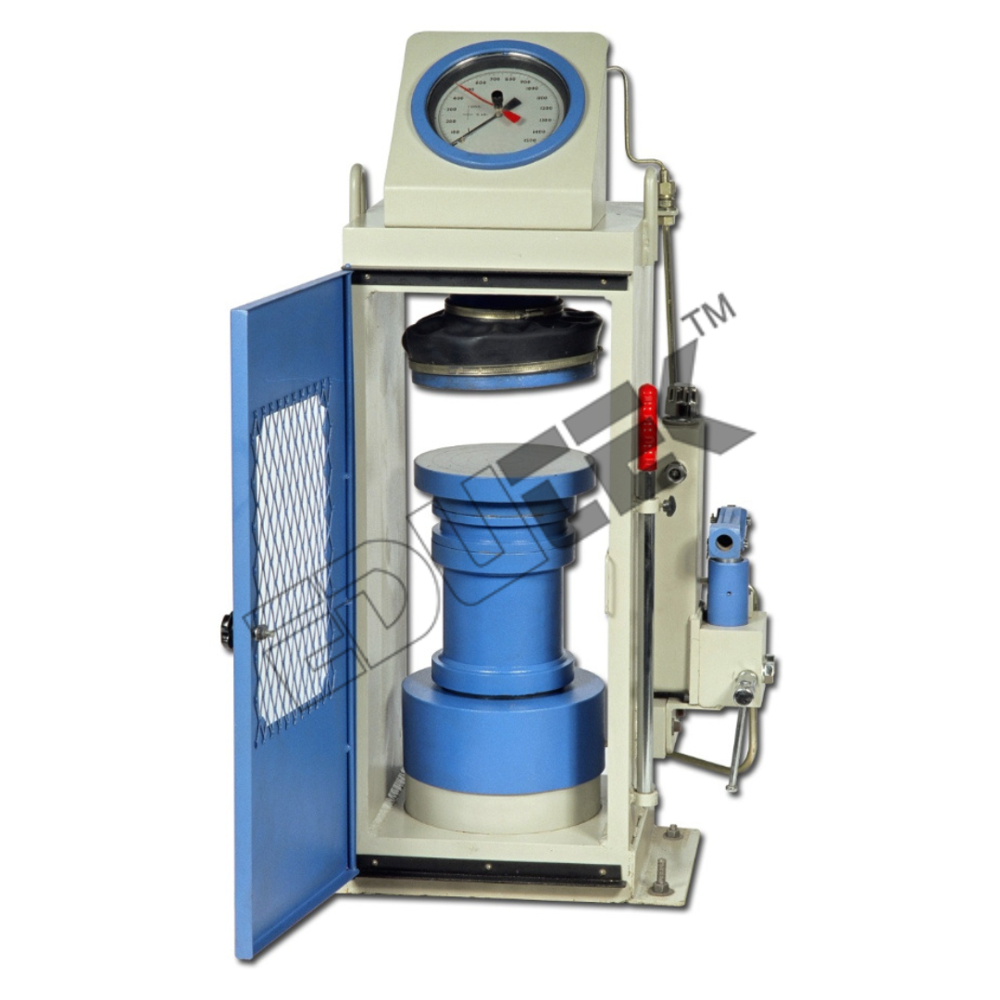
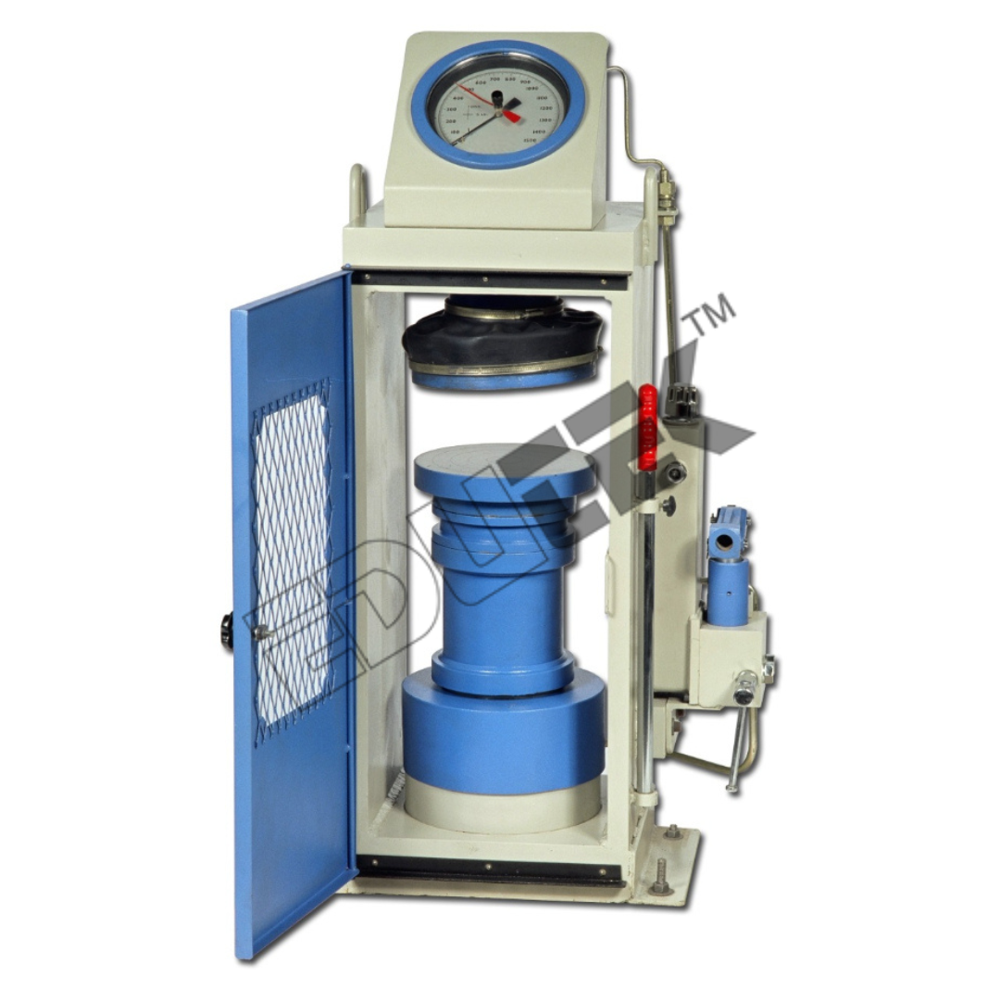
Compression Testing Machine
Specification :
- 1500 KN.
- Designed to test 100 mm, 150 mm and 200 mm cubes and cylinders up to 320 mm.
- Ball-seated upper platen lower platen.
- Positively located on the loading ram.
- Marked to allow centring of both cubes and cylinders.
- Frame fitted with mesh guards at front and rear to protect operator.
- Stable, compact welded steel load frame.
- Height 920 mm.
- Width 390 mm.
- Max. Vertical Clearance 330 mm.
- Max. Ram Travel 50 mm.
- Weight 400 kg.
- Depth 350 mm.
- Distance Pieces Supplied 200 mm, 50 mm and 25 mm.
Precision Testing with Digital IndicatorsEquipped with a digital load indicator featuring a peak hold function, the compression testing machine facilitates highly accurate measurement of compressive force. Users can confidently test a wide range of specimens, as the machine provides real-time feedback and stores maximum readings for analysis. The digital system ensures efficiency and reliability for critical strength assessments.
Rugged and Reliable ConstructionThe compression testing machine is constructed from heavy-duty mild steel, coated with a powder finish for superior durability. Its welded frame withstands the rigors of daily laboratory use, while its natural air-cooled system ensures consistent performance even in ambient temperatures up to 50C. Thanks to its robust build, the compression testing machine requires minimal maintenance and has a long operational life.
Versatility in Testing ApplicationsDesigned for flexibility, the compression testing machine accommodates both cubes and cylindrical specimens, making it optimal for evaluating both cement and concrete. Its adaptable hydraulic and electrical control modes, along with a practical platen size and adjustable pressing speed, suit a variety of laboratory needs. It is an excellent solution for manufacturers, suppliers, exporters, and testing facilities in India seeking dependable results.
FAQs of Compression Testing Machine:
Q: How do I operate the Compression Testing Machine?
A: To use the compression testing machine, place your test specimen on the platen, select the control method (hydraulic hand operated or electrically controlled), and set your desired pressing speed. Initiate the test, and the digital load indicator will display real-time load values. Follow safety procedures, including activating the emergency stop if required.
Q: What types of specimens can be tested with this machine?
A: The compression testing machine is compatible with 150 mm cubes, 100 mm cubes, and cylinder specimens, allowing for extensive testing of concrete and cement materials according to various international standards.
Q: When should overload protection and emergency stop features be used?
A: Overload protection automatically engages if the load exceeds machine capacity (2000 kN), preventing damage and ensuring safety. The emergency stop can be manually activated at any point during testing to immediately halt machine operation if an unsafe condition arises.
Q: Where can the machine be installed and what are the space requirements?
A: Install the compression testing machine in a well-ventilated laboratory or workshop. With dimensions of 700 mm x 600 mm x 1200 mm, ensure adequate floor space and access to a 220240 V power supply. Natural air circulation suffices for cooling; air conditioning is not mandatory unless operating in extreme temperatures.
Q: What is the process for conducting a compression test on concrete with this machine?
A: Begin by preparing and measuring your specimen. Place it centrally on the lower platen. Adjust the upper platen, select the control mode, set the desired speed (15 mm/min), and start the test. Monitor the digital load display, recording maximum load (peak hold) to calculate compressive strength upon specimen failure.
Q: What are the main benefits of using the compression testing machine model?
A: It offers high accuracy (1% of the indicated value), robust and reliable construction, versatile testing for various specimen sizes, digital monitoring with peak hold, as well as essential safety features. It minimizes maintenance needs and ensures consistent, reliable testing results for construction material evaluation.
Q: Who typically uses this compression testing machine?
A: This equipment is widely used by construction laboratories, quality control departments in cement and concrete manufacturing, research institutes, as well as contractors, exporters, and material testing facilities throughout India.




 Send Inquiry
 Send Inquiry

