
EDUTEK INSTRUMENTATION
GST : 06AEWPJ6896D1ZU

Call us
07313726362
Call us
07313726362
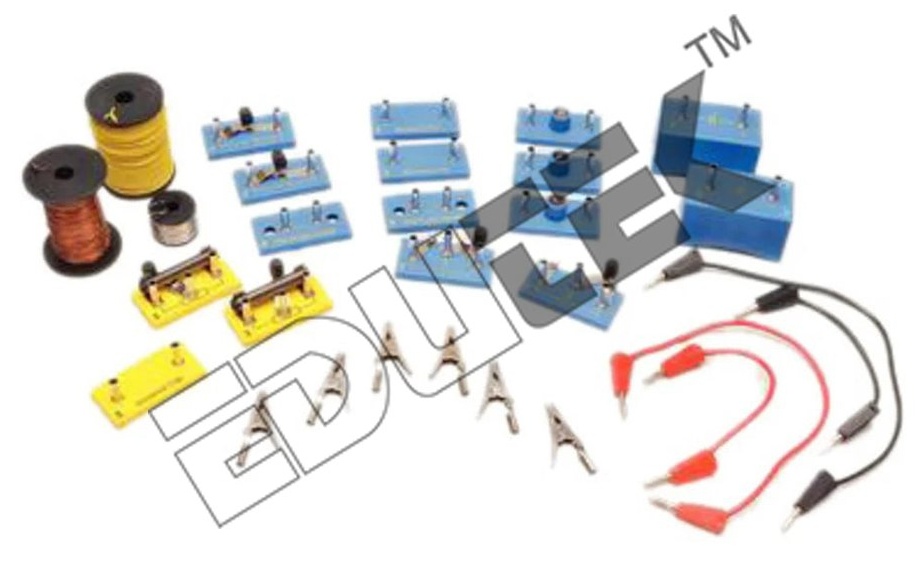
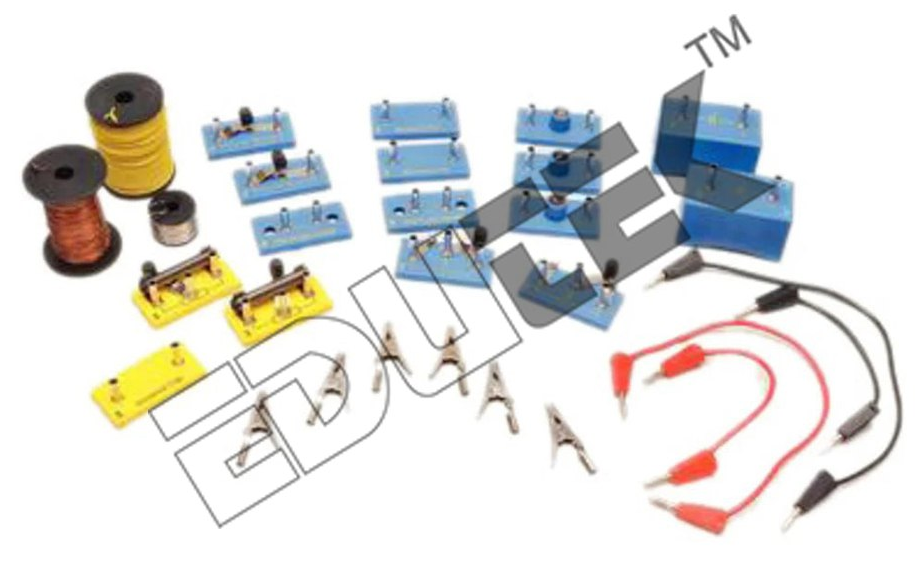
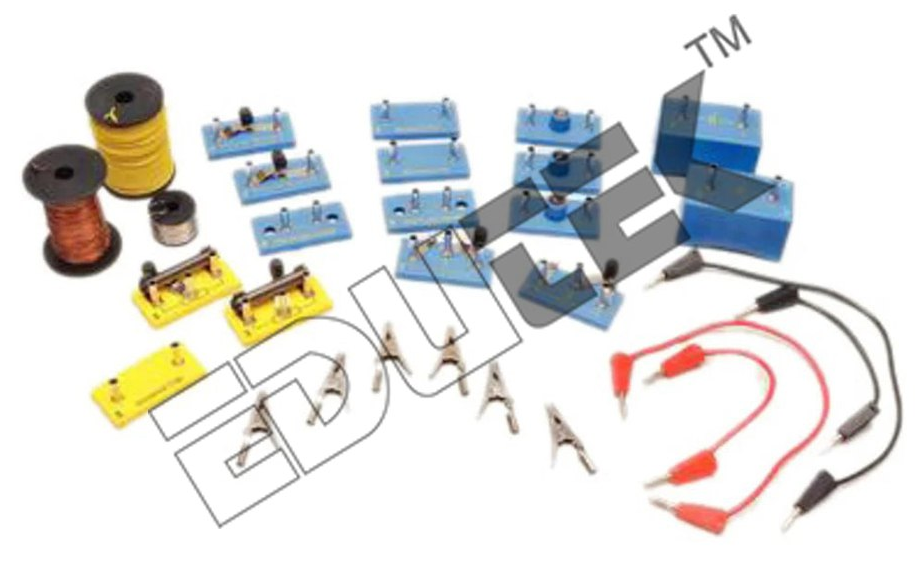
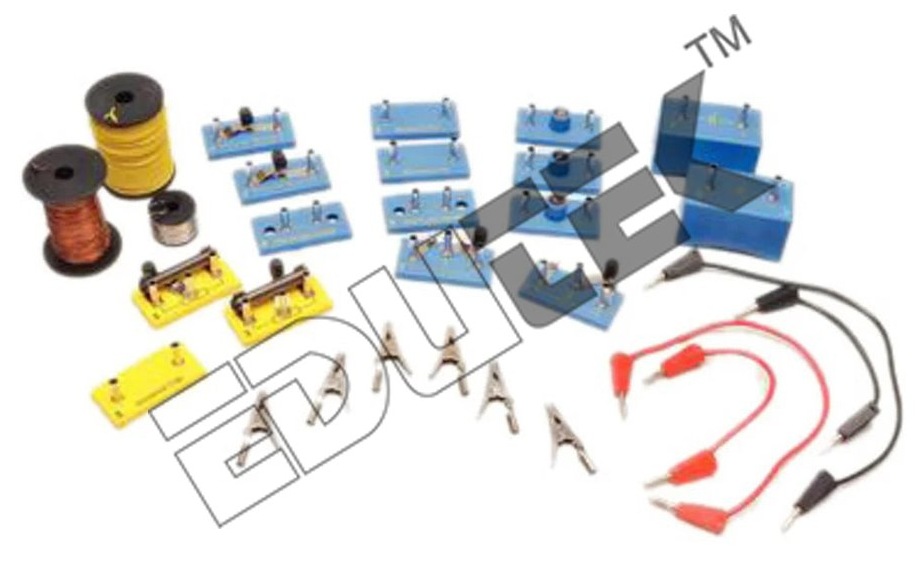
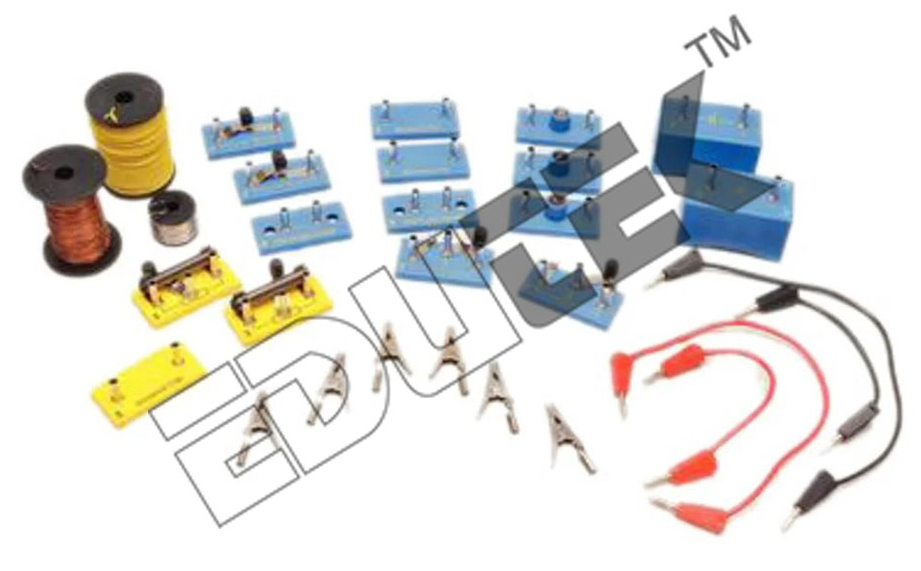
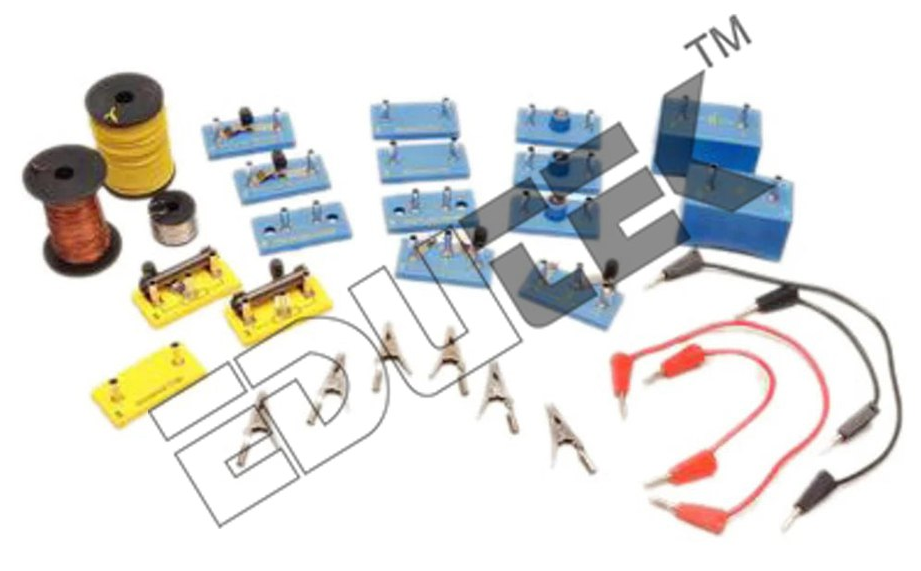
Designed as a resource for the teaching of introductory electricity, these kits include well structured instructional material and robust components mounted on tough, yellow plastic bases, each with two 4 mm sockets. The panels are formed into circuits by connecting them together using 4 mm stackable leads. Kit A is for a group of up to 6 students, while Kit B contains additional items and consumables which could be issued by teachers are required. Only one Kit B would be needed by a class. A Teacher's Manual is included in Kit A which introduces each items of equipment and a range of tasks and investigations. Topics covered are bulbs and cells, switches, electromagnets, motors and buzzers.Components of Kit A: 6 cell holders (without cells), 6 bulbs in holders, 3 press switches, 3 two-way switches, 18 connecting leads, Primary Electricity Kit booklet.Components of Kit B: 20 replacement bulbs, 4 variable resistors, 3 motors, 3 buzzers, 2 electrodes holders, 3 diodes, 3 fixed resistors, 4 universal clips with 8 crocodile clips, 6 steel rods, reel of plastic coated wire. Supplied in a robust polystyrene box.

Price:
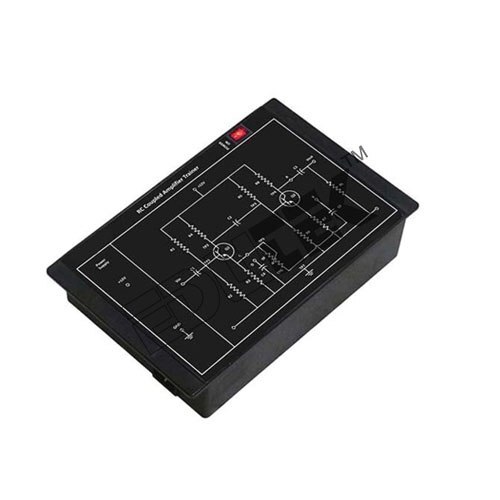
Price 1500.0 INR / Piece
Minimum Order Quantity : 1 Piece
Features : Easy to Use, Prewired, Reusable, Safe for Classroom
Function : Signal Amplification
Application : ENGINEERING ELECTRONICS INSTRUMENTS
Product Type : RC COUPLED AMPLIFIER
Minimum Order Quantity : 1 Piece
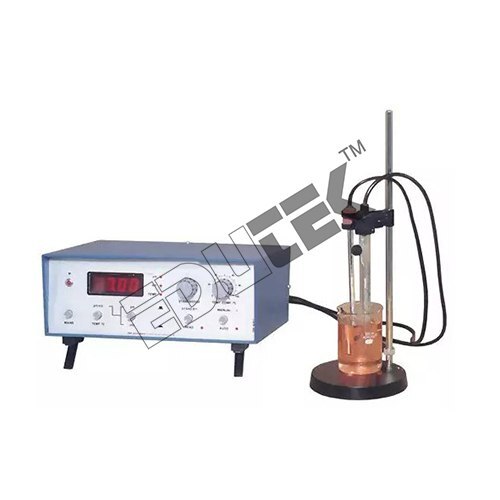
Features : Automatic Temperature Compensation, Portable Design, Easy Calibration
Function : Measures the pH value in liquids accurately
Application : ENGINEERING ELECTRONICS EQUIPMENTS
Product Type : DIGITAL PH METER
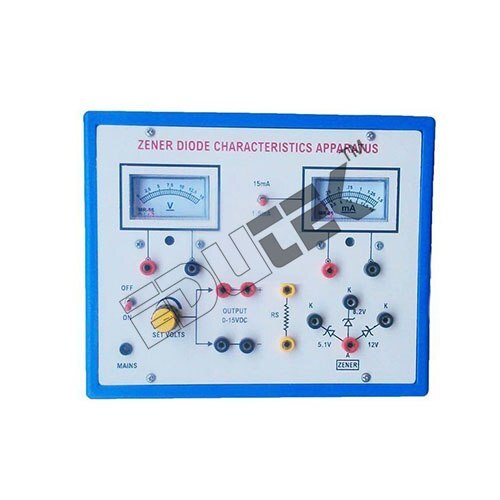
Minimum Order Quantity : 1 Piece
Features : Aluminum panel, square analog meters, protected circuit, userfriendly design, forward & reverse bias.
Function : To study the VI characteristics of a Zener diode in forward and reverse bias.
Application : ENGINEERING ELECTRONICS INSTRUMENTS
Product Type : ZENER DIODE VI CHARACTERISTICS APPARATUS WITH ALUMINUM PANEL & SQUARE METERS (FORWARD & REVERSE)
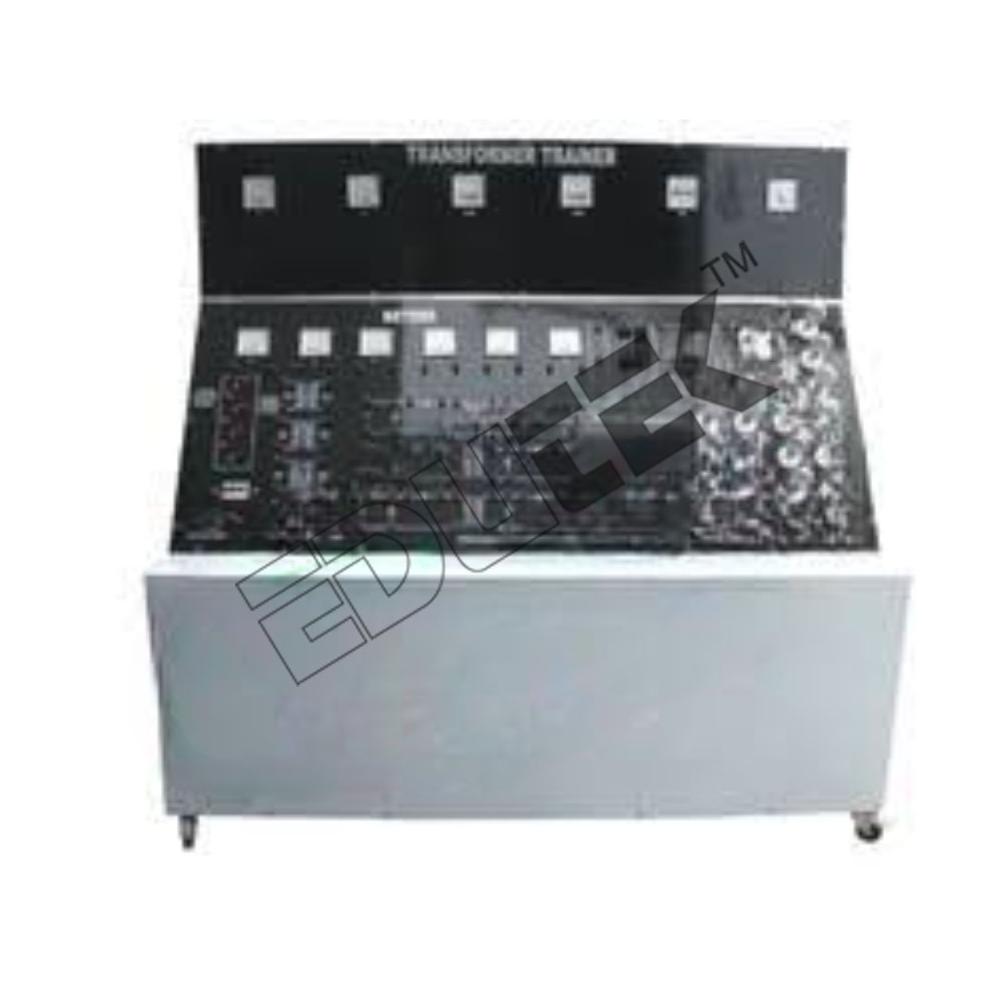
Minimum Order Quantity : 1 Unit
Features : Short circuit and open circuit testing, transformer winding demonstration, clearly labeled connections, onboard protection, educational graphics, portable case.
Function : Demonstrates working of a power transformer, winding connections, and voltage transformation.
Application : Transformer Trainer
Product Type : Teaching Equipment

 Send Inquiry
 Send Inquiry

