About Barometer Fortins
Barometer Fortins
Specifications for Barometer Fortins
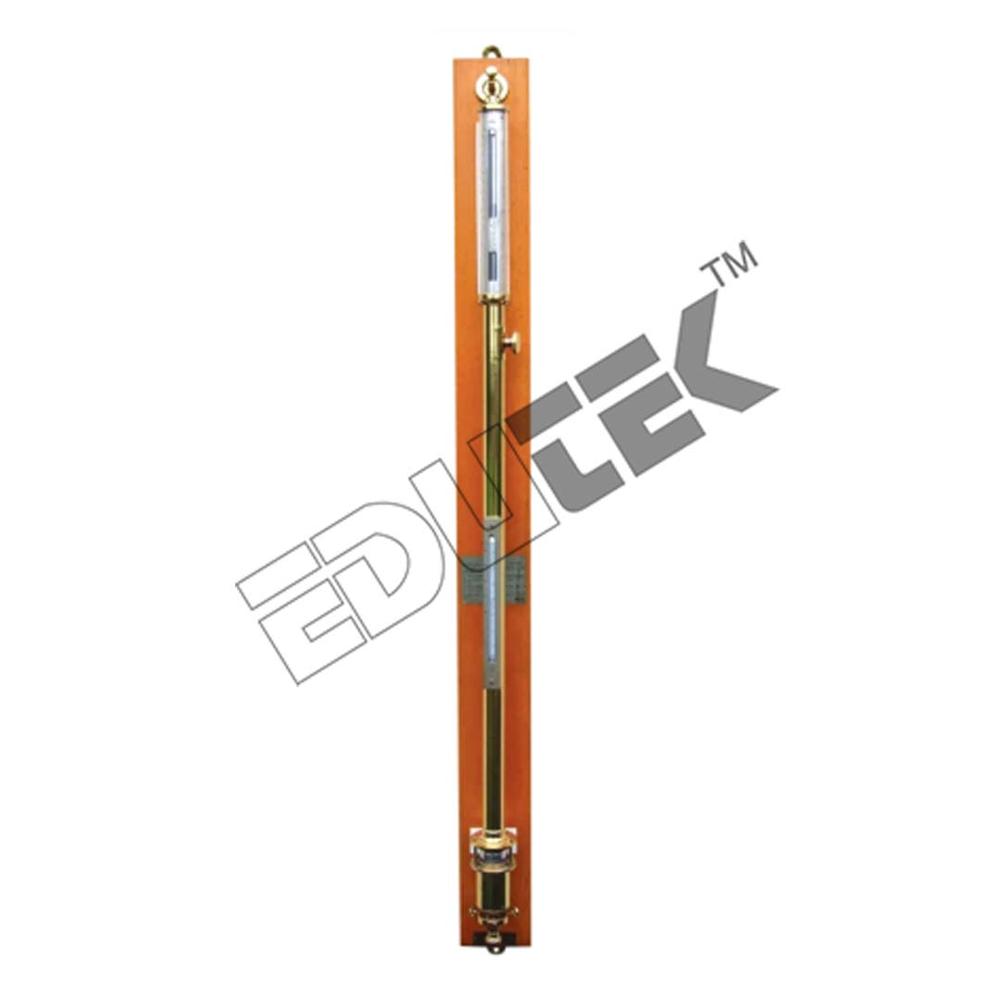
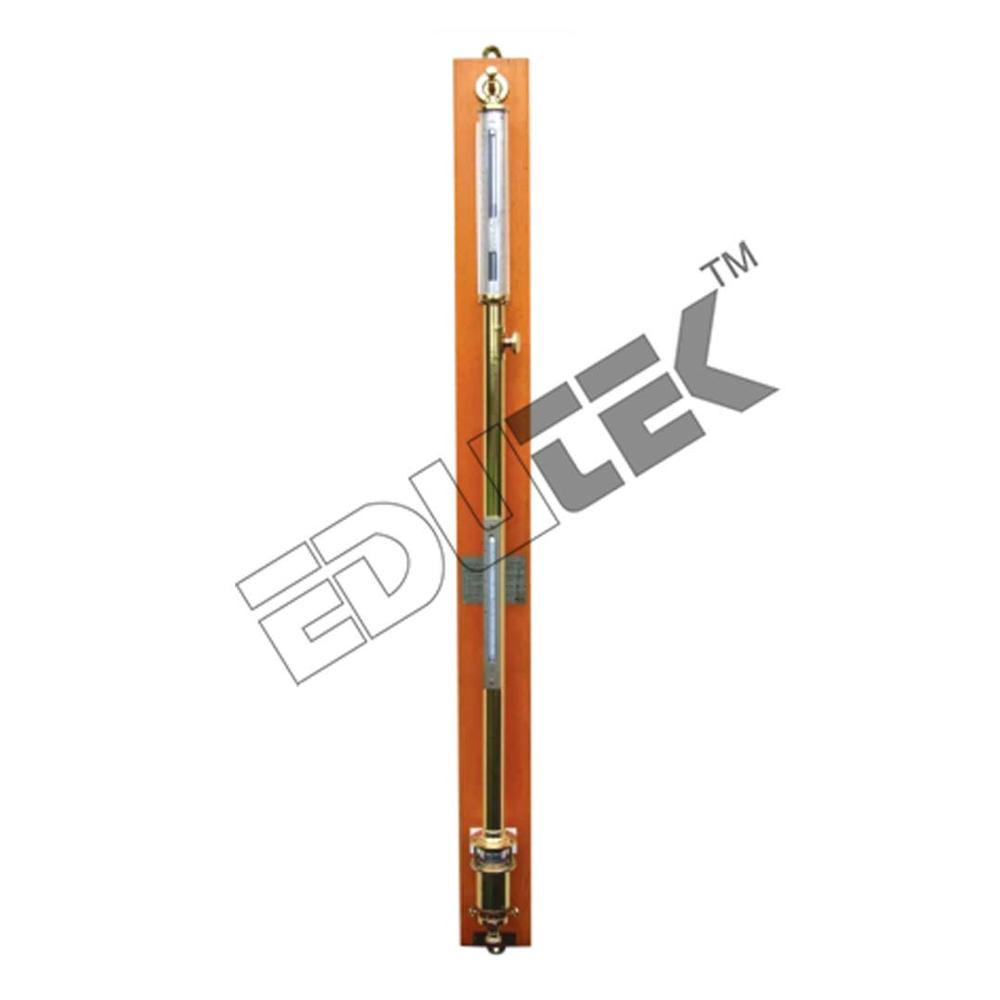
For school/college laboratories. Nominal 6 mm bore glass tube. With engine divided dual scales 675 to 820 x 1 mm Hg and 26.5 to 32. x 0.05 inch Hg. Verniers reading 0.05 mm and 0.002 inch. Mounted on polished wooden board for wall mounting. Supplied without mercury but with instructions for filling.
High-Accuracy Atmospheric Pressure MeasurementThe Fortins Barometer is calibrated to provide readings with an accuracy of 1 mm Hg, making it suitable for meteorological and laboratory uses. Its manual fill and adjustment allow for precise controls, while the analog engraved brass scale ensures clear and reliable readings for professionals and researchers alike.
Robust Construction for LongevityCrafted from durable brass and borosilicate glass, this barometer withstands temperatures up to 80C and is built for frequent use. The sturdy frame and transparent tube combine resilience with visibility, delivering a reliable instrument for routine atmospheric pressure monitoring in various environments.
Simple Manual Operation and MaintenanceOperating without electricity, the Fortins Barometer uses a manual screw mechanism for adjusting the cistern and filling mercury. This setup allows users to easily calibrate and maintain the device, ensuring ongoing measurement accuracy without the complexity of electronic components.
FAQs of Barometer Fortins :
Q: How is the pressure measured using the Fortins Barometer?
A: The Fortins Barometer measures atmospheric pressure by observing the height of mercury in a borosilicate glass tube, which is adjusted manually using the cisterns screw mechanism. The value is read against the engraved brass scale marked in millimeters of mercury (mm Hg).
Q: What makes the Fortins Barometer suitable for laboratory and meteorological applications?
A: Its high accuracy (1 mm Hg), durable brass and borosilicate glass materials, and pre-calibrated scale make it ideal for precise atmospheric pressure measurements required in research, laboratories, and meteorological stations.
Q: When should the barometer be recalibrated or adjusted?
A: Routine recalibration is not often necessary due to the pre-calibrated scale and precise adjustment mechanism, but its recommended to check calibration after extensive use or if the device has been relocated or subjected to temperature fluctuations.
Q: Where should the Fortins Barometer be installed for optimal performance?
A: Install the barometer on a stable, vertical wall in a controlled environment, away from direct sunlight or sources of vibration, to ensure accurate and undisturbed pressure readings.
Q: What is the process for manually adjusting the cistern in this barometer?
A: Users adjust the mercury level by turning the screw mechanism on the cistern. This enables fine-tuning of the reference point for measurement, ensuring consistency and precision with each reading.
Q: How is the mercury safely filled and maintained in the barometer?
A: Filling and maintaining the mercury are performed manually with careful handling, making use of the transparent tubes visibility and the manual control system to prevent spills and ensure user safety.
Q: What benefits does the Fortins Barometer offer over other atmospheric pressure instruments?
A: It provides exceptional durability, high measurement accuracy, easy manual operation, and clear analog scale readings, along with temperature resistance and a polished brass finish for both aesthetic appeal and longevity.






 Send Inquiry
 Send Inquiry

