About Metre Rule
Specifications of Metre Rule
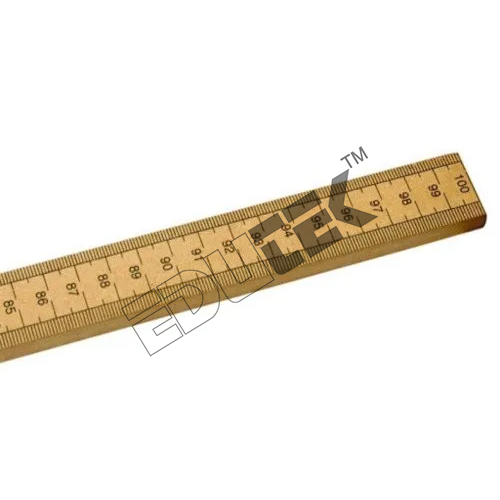
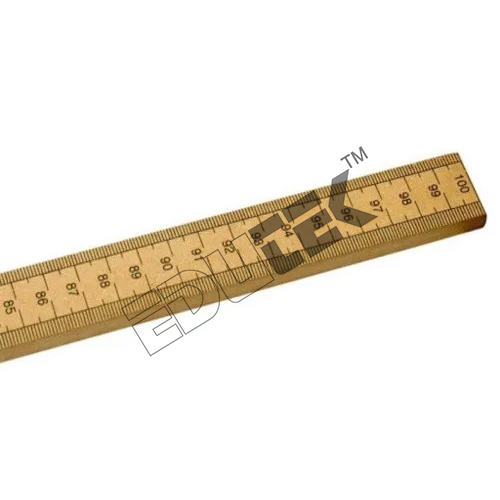
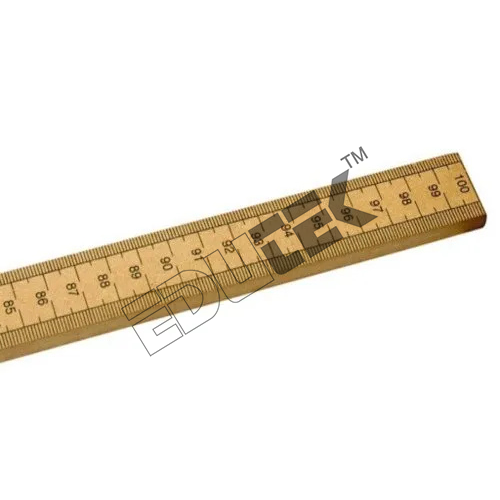
Non-warping wood, 25 mm wide, double scale in mms, figured every cm. The scales on the two edges read in opposite directions.
Versatile and Durable ConstructionWith options in stainless steel, aluminum, or sturdy plastic, this metre rule is engineered for long-lasting use. Its non-magnetic properties and rust resistance make it suitable for a variety of environments, including laboratories and workshops where accuracy is paramount. The smooth finish and straight edges provide both safety and ergonomic handling during repetitive measurement tasks.
Clear Graduations and Reliable AccuracyGraduated in both millimeters and centimeters, this rule offers enhanced clarity and convenience. Permanent black ink or laser-engraved markings guarantee excellent visibility and fade resistance over time. The device maintains an impressive 0.5 mm accuracy to ensure dependable results in educational, industrial, or craft applications.
FAQs of Metre Rule :
Q: How do I use the metre rule for precise measurements?
A: To use the metre rule, align the rules straight edge with the starting point of the object you intend to measure. Use the clearly marked millimeter or centimeter graduations to read the measurement directly, ensuring your line of sight is perpendicular to avoid parallax errors.
Q: What materials are available for this metre rule, and how do they benefit different users?
A: The metre rule is available in stainless steel, aluminum, or high-quality plastic. Stainless steel and aluminum offer superior durability, rust resistance, and a polished finishideal for laboratories and workshops. Plastic versions are lighter and more suitable for educational environments.
Q: When is it suitable to use a metre rule instead of other measuring instruments?
A: A metre rule is optimal for tasks requiring precise, manual linear measurements up to one metercommon in educational settings, laboratories, and workshops. Its rigid, straight form makes it preferable over tapes or flexible rulers for measuring straight edges or drawing accurate lines.
Q: Where are these metre rules commonly used and why?
A: These metre rules are frequently employed in schools, scientific laboratories, engineering workshops, and quality control settings where accurate, durable, and easy-to-read measuring instruments are necessary for consistent results.
Q: What process ensures the durability and legibility of the scales divisions?
A: Each rule utilizes either permanent black ink or laser engraving to mark graduations. Both methods ensure crisp, clear divisions that resist fading and abrasion, supporting long-term accuracy and visibility.
Q: What are the benefits of having both millimeter and centimeter graduations on the rule?
A: Having both graduations allows users to measure with greater precision and flexibility, accommodating different measurement preferences and requirements within a single tool. This dual-scale design enhances user convenience in various applications.





 Send Inquiry
 Send Inquiry

