About AIR-CONDITIONING COMPONENTS AND OPERATION
AIR-CONDITIONING COMPONENTS AND OPERATION
- Air-conditioning Components and Operation
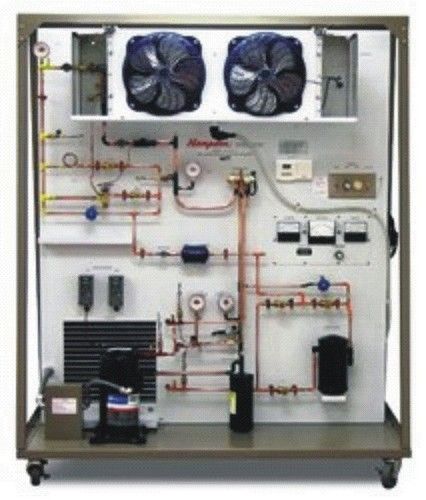
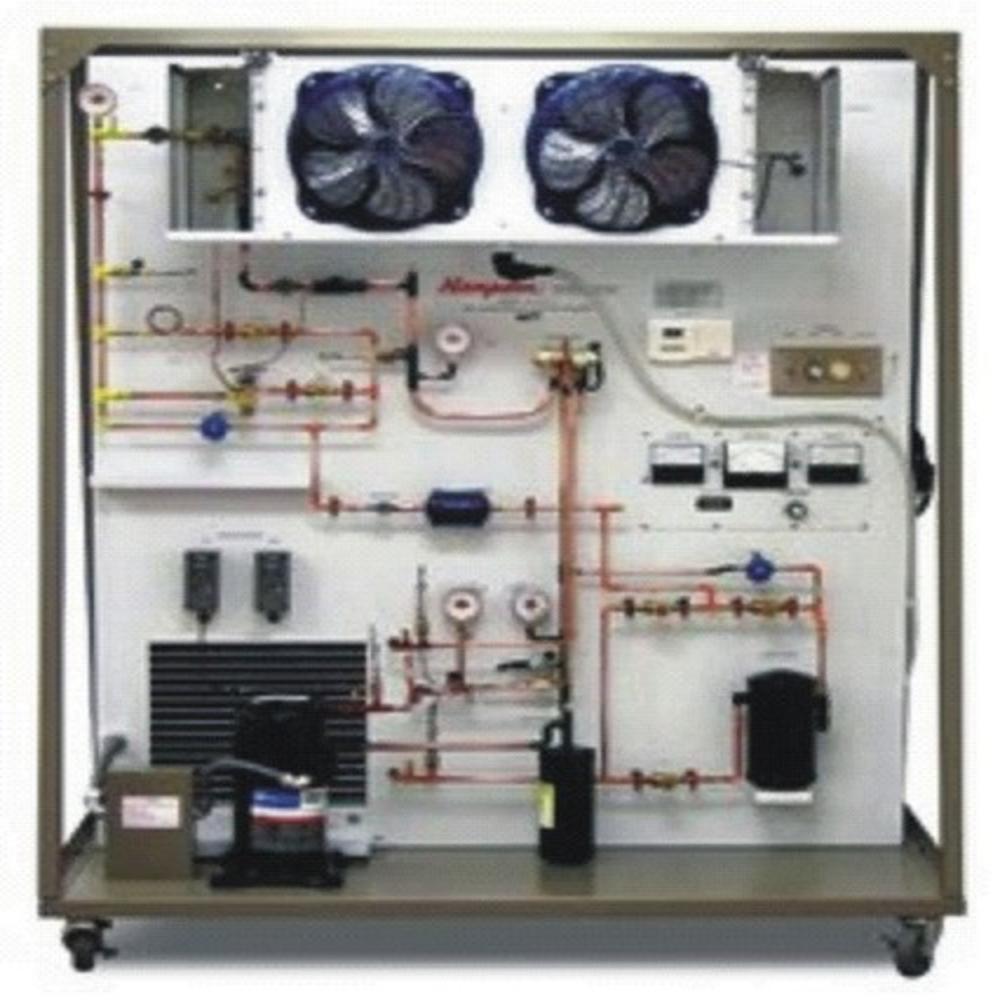
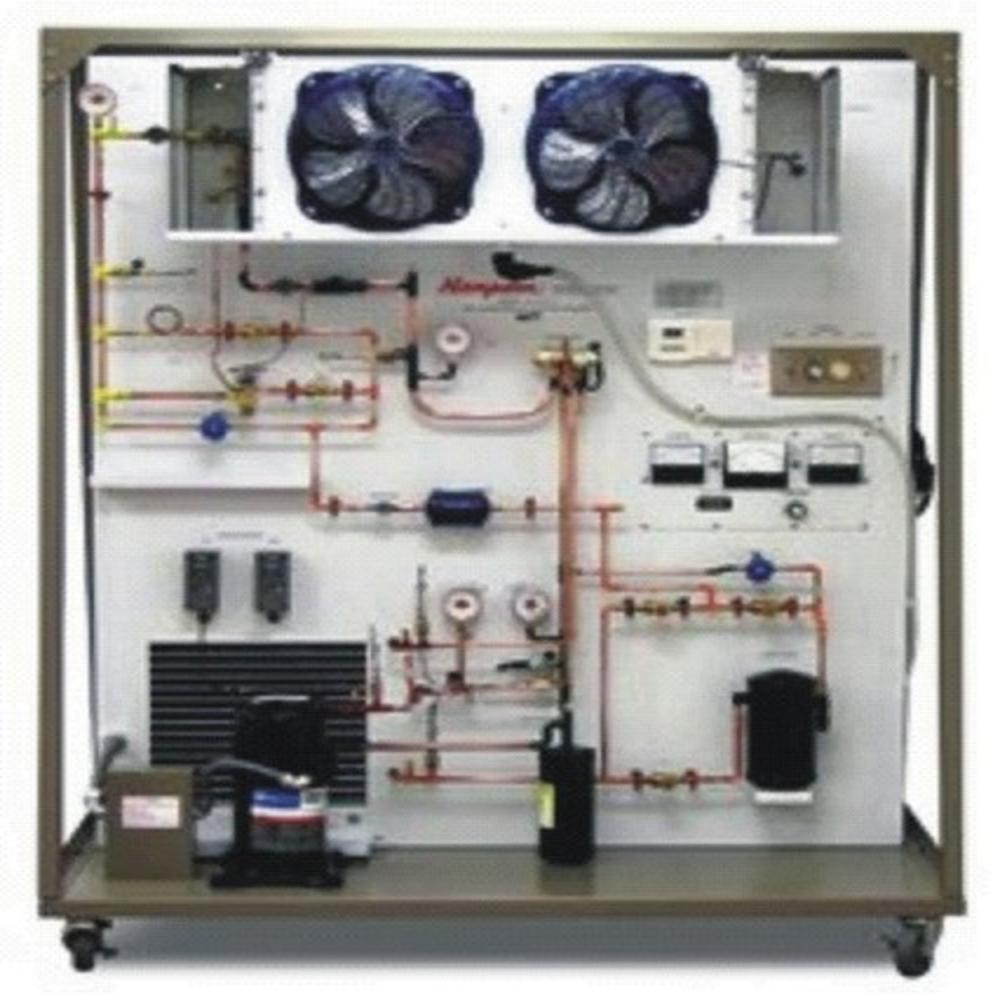
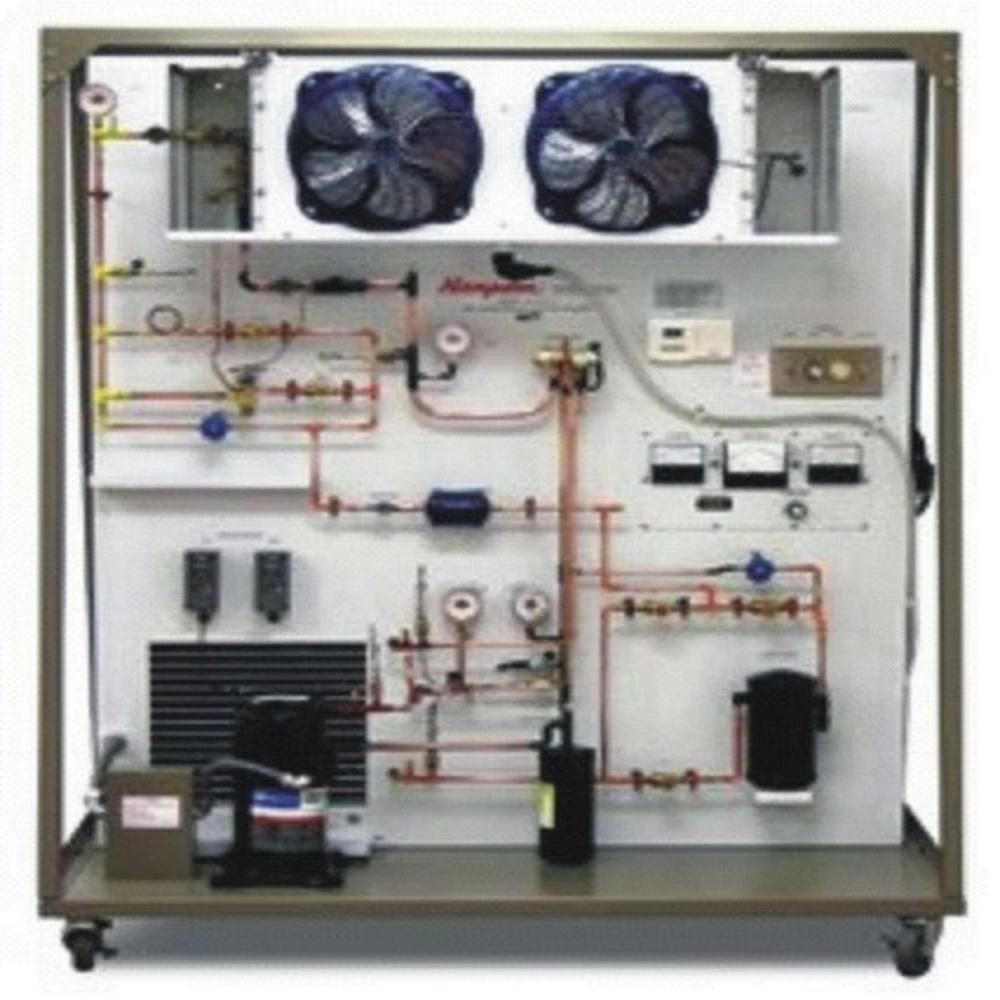
- This module is based around a complete automotive air-conditioning system mounted in a steel frame.
- The unit features a dashboard electrical/vacuum control system and having a single-phase electric motor to drive
- the a/c compressor.
- Following the computer-based instructional material that is supplied with the unit, the student is able to study
- operation of the a/c system.
- Special sight glasses are fitted to the high pressure and low-pressure line, these shall allow the student to see the
- two states of the refrigerant.
- It is possible to use the unit with an industrial standard recharging station allowing the student to service the entire
- a/c system. (Recharge station not supplied with the module)
Topics covered includes:
- Topics covered must include.
- Air Conditioning Trainer Familiarization.
- Air Conditioning System Performance Testing.
- Introduction to Air Conditioning Servicing.
- Leak Testing an Air Conditioning System.
- Advanced Air Conditioning Servicing.
- Electrical Compressor Controls.
- Removing A/C Compressor Belts and Pump.
- Evacuate and charge A/C system.
- Diagnose A/C system conditions that cause the protection devices (pressure, thermal, and PCM) to interrupt.
- system operation; determine necessary action.
It has also address:
Identifying an organization's products and services. Determining a customer's individual needs. Scheduling tasks to meet customer needs. Developing communication skills for an international audience. Cultural differences in the business world.Item Code Item Description / Specifications:
Quality assurance issues.
Company policies.
Projecting a professional business image.
Interacting with customers and colleagues in a professional manner.
Handling customer complaints effectively.
Handling merchandise returns.
Key information systems.
Using customer databases.
Marketing concepts.
Customer surveys.
Representing the organization to the public.
Interdepartmental relationships.
It contains:
1 x Ignition Systems module.
1 x Customer Relations Module.
1 x Remedial Mathematics Software Package.
1 x Air-conditioning System Components - Complete Tool.
Package, including:
AC Recharge Station.
General Wrench, Socket and Screwdriver Set.
Multimedia Workstation.
Pentium IV 1.6GHz Processor.
10/100 LAN Adapter.
20 GB HDD, 52x CD ROM drive, 128 MB RAM.
8 MB ATI Rage Graphics, 17 Monitor.
Speakers, (2) Headphones w. Splitter.
Keyboard, Mouse.
Designed specifically for environmental testing, research facilities, and educational laboratories, our air conditioning units guarantee efficient climate control. The combination of air or water cooling systems with advanced compressor technology delivers precise temperature regulation across a wide range. Supported by digital displays and automatic operation, these systems facilitate reliable, hassle-free use in intensive applications.
Quality, Flexibility, and Low NoiseBuilt with high-grade stainless steel and copper, our units deliver long-lasting performance and resilience against corrosion. Low-noise operation makes them suitable for installation in noise-sensitive zones. Flexible mounting solutionswall or floorensure compatibility with diverse laboratory layouts, and customizable dimensions accommodate specific spatial requirements.
FAQs of AIR-CONDITIONING COMPONENTS AND OPERATION:
Q: How does the cooling method (air-cooled or water-cooled) affect laboratory air-conditioning operation?
A: The choice between air-cooled and water-cooled systems influences heat removal efficiency and installation requirements. Air-cooled units use ambient air to dissipate heat, ideal for locations with limited water supply, while water-cooled systems utilize water to enhance cooling capacity, suitable for settings requiring higher thermal loads.
Q: What types of compressors are used, and what benefits do they offer?
A: Our air conditioning units use hermetic and semi-hermetic compressors, both known for reliability and efficiency. Hermetic compressors are fully sealed, minimizing leak risks, while semi-hermetic models allow for easier maintenance and repairs, extending operational life in demanding laboratory conditions.
Q: When is professional installation necessary for these air conditioning systems?
A: Professional installation is required to ensure accurate setup, proper integration with laboratory infrastructure, and compliance with electrical and safety standards. Qualified technicians guarantee optimum performance, adherence to energy efficiency ratios, and secure mounting, whether floor or wall installation is selected.
Q: Where can these air conditioning units be used?
A: These units are suited for environmental testing labs, research facilities, and educational institutions. Their configurable capacity and mounting options allow adaptation to a wide range of laboratory spaces, both standard and custom-designed.
Q: What are the main advantages of low noise operation in laboratory air conditioning units?
A: Low noise levels promote a comfortable, distraction-free environment crucial for sensitive research activities and precise measurements. This feature enhances productivity and supports a better working atmosphere in scientific and educational settings.
Q: How does the digital display improve usability and accuracy?
A: The digital display provides intuitive access to operating modes, real-time temperature, and humidity data within the range of 10-45C and 0-100% RH. This ensures precise adjustments and accurate monitoring, meeting the stringent demands of laboratory control protocols.
Q: What is the benefit of high energy efficiency ratio in these units?
A: A high energy efficiency ratio reduces electricity consumption while maintaining superior cooling performance, leading to lower operational costs and supporting sustainability initiatives in research environments.




 Send Inquiry
 Send Inquiry

